Luther 1849 Burbank
plants, plant, produced, potato, results and scientific
BURBANK, LUTHER (1849- ). In fairy stories we read of magic wands with which rags are turned into satin garments and rocks into precious stones.
The modern magic wand is science; and one of the most famous of scientific conjurers is Luther Bur bank, who turns weeds into beautiful flowers and poisonous plants into sweet fruits. He can take two different plants and produce from them a new vege table or fruit unlike anything that has ever been known before. He has developed a plum without pits, another with the flavor of the Bartlett pear, a white blackberry, a plumcot (made by crossing the plum and the apricot), and the wonderberry ( a cross between the raspberry and dewberry). He has made crimson poppies out of yellow ones, improved the rose and the lily, and produced the beautiful Shasta daisy. Most wonderful of all, he has taken the thorny desert cactus, and bred it until it has become a thornless producer of nutritive food for man and beast—capable, he believes, of turning arid deserts into rich pastures and affording food for twice the number of people now on the earth.
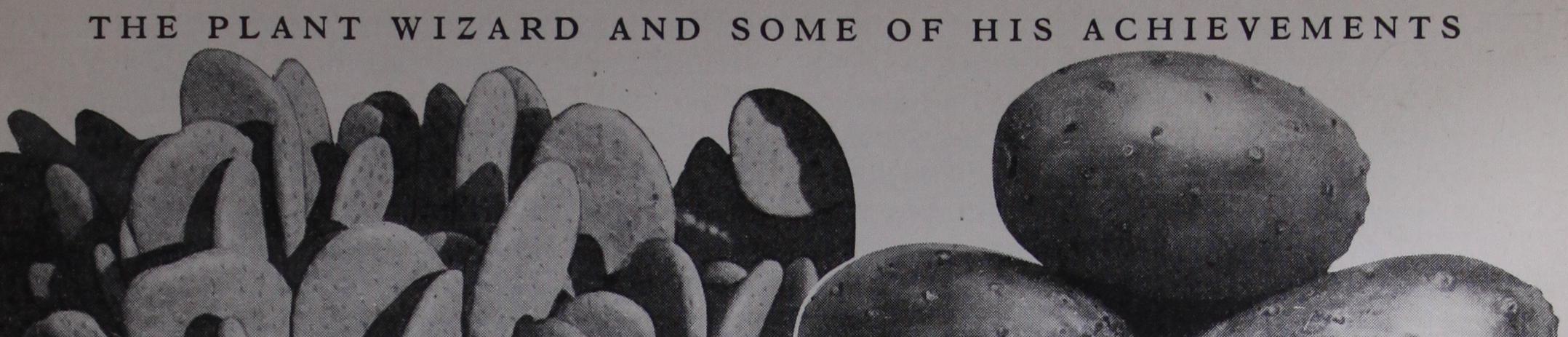
Probably the best known of the plant wizard's work is the Burbank potato, which, it is estimated, has already added $20,000,000 to the wealth of the United States. Noticing that the potatoes in Massa chusetts, his early home, were small and irregular in shape, he set about improving them. Among the plants which he was raising, one alone bore a seed ball. By planting these seeds and then using the seeds of only the best plants which they produced, he evolved in a few years a larger and more regularly shaped potato. This is called breeding by selection, and is practiced to some extent by every good farmer.
The usual method now used by Burbank, however, is to cross different plants or different species of the same plant to secure variations. This process is known as hybridization, and the results are hybrids.
Having produced numberless forms, he runs his eye over the product and with amazing quickness and sureness of judgment picks out a few—some times only one among thousands —which are to be allowed to live and reproduce. The others are thrown away. (See Plant Life.) Burbank was born in Lancaster, Mass., of Eng lish-Scotch stock, received a grammar and academy education, and went to work in a plow factory. He showed that he had inventive powers even then, but he left that work for the kind of activity which he was to follow the rest of his life—market-gardening and seed-raising. His poor health demanded a milder climate; and using the $150 which he had received for his rights in the Burbank potato, he went to Santa Rosa, Calif. There, after doing handy work about the faims in the neighborhood, he established a nursery, which he sold in spite of its being very profitable, in order that he might continue his experi ments with plants.
Burbank is not primarily a scientist; he is chiefly an experimenter in plant breeding. His practical results in new flowers, fruits, and vegetables had, unknown to him when he began, found their scientific explanation in 1869 in the work of Mendel, an Austrian monk. Burbank's great success is due to his persistence and devo tion, and above all, to his marvelously keen eye for discovering the one exceptional plant or sport" amid thousands in a whole field.
The fame of his achievements has reached the far corners of the world. Foreign ex perts are sent by their governments to study the methods of the "wizard," and so numerous have been the calls upon Burbank's time by interested visi tors that he has had to deny himself to most callers, living almost like a cloistered monk in the midst of his beloved plants. While his work has been confined to practical experimenting, his results have contributed also to the general scientific theories regarding heredity and other branches of biology.