Robert 1812-1889 Browning
brownings, bruces, heart, douglas, story, life, land, holy and reading
BROWNING, ROBERT (1812-1889). Although he " has been called "the scholar's poet," and not without good reason, no poet was more intensely alive and human than Robert Browning, nor felt more keenly the joy of life and living.
Browning's life was happily free from poverty.
his father, a man of strong literary and artistic tastes, encouraged the boy in his love for books and art and music. Given the run of his father's great library, in his boyhood home at Camberwell in the outskirts of London, he read not only Byron and Shelley and Keats, but many books far beyond his years. Before he could write he had begun to compose verses, and by the time he was 12 he had already completed a volume of poems. His first published poem, 'Paul ine', appeared when he was 21.
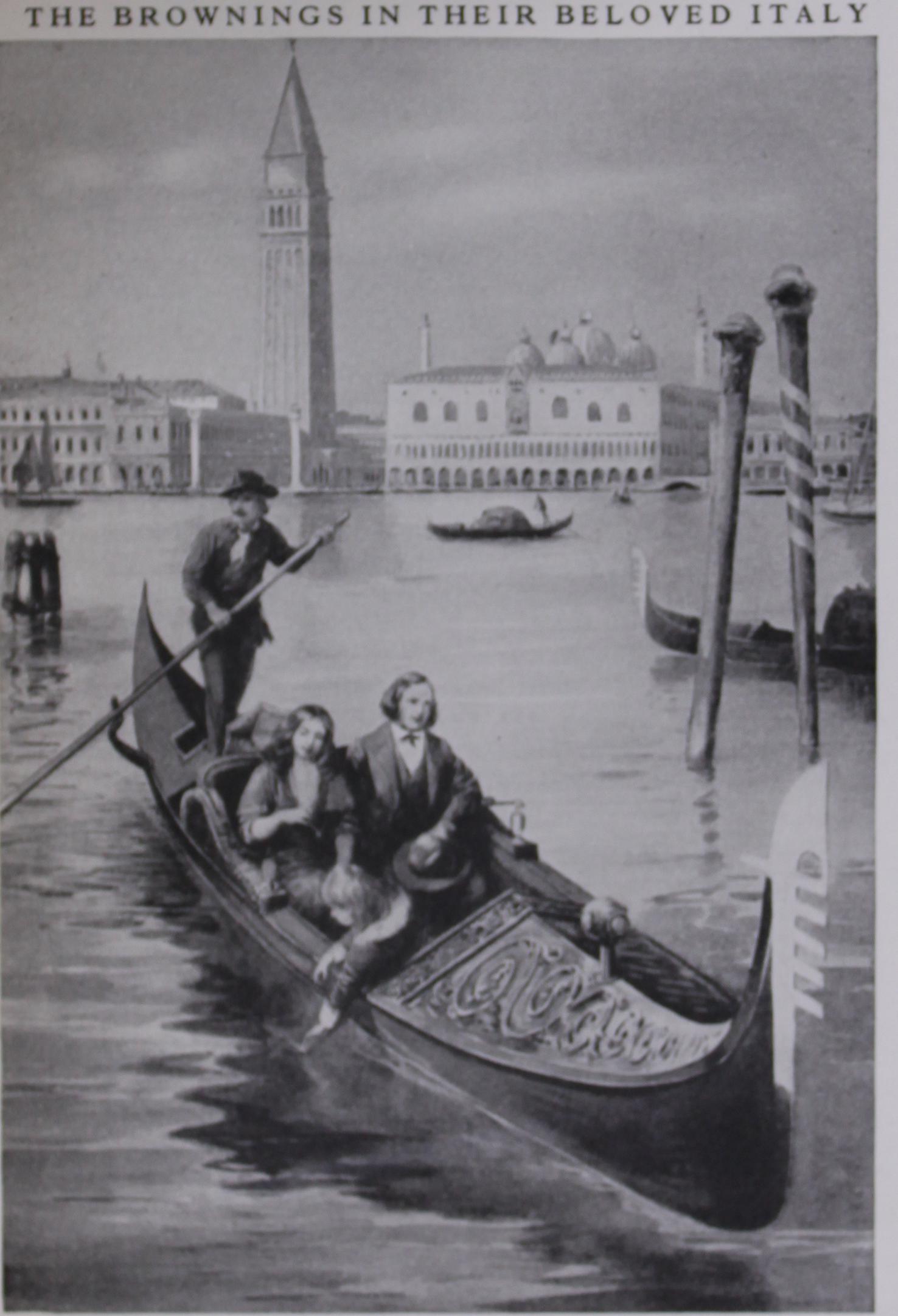
Ills meeting with Elizabeth Bar rett was the beginning of the most beautiful romance in literary his tory. After their marriage in 1s-16, they went to Italy, and lived an ideally happy life there until Mrs.
Browning died in 1s61. Bearing his loss with steadfast ciairage, Browning turned to writing with even greater energy than before.
:lost of his time was now spent in England, with occasional visits to Italy. Ile died ill Venice, not long after writing the lines which describe himself so faithfully: One who never turned his kick, but mangled breast forward, Never doubted clouds would break, Never drentned, tho' right were wormt ed, wrong would triumph.
Held we ri24e, are butileil to light hot tar, Sleep tA, WRICP.
Niue!' has lwen said about the difficulty of reading Browning It is true that he is often obscure.
Ile
is MO filled with the thoughts ht. wishes to express that be in not always no careful as he might be about the form, and sometimes these thoughts are too profound or too subtle to be expressed with exactrwss. Many Of poemsare crowded with allusions t4? t he Otam of-the-way information which he picked up in his reading, and which means nothing to the ordi nary reader. Probably the most obscure of all his works is 'Sore dello', of which Tennyson sairl that then. were only two lines he could understand, the first, "Mao will may hear Sor.llo'n story told," and the " Who would luta heard Sortiello's story told," —and theme, he jokingly remarked, vivre both lien. But this will not frighten you, if you know the delightful Pied Piper of Hamelin', the rollicking Cavalier Tunes', and such stirring ballads as Herve Riel', and How They Brought the Good News from Ghent to Aix'. Among the poems which carry a deeper message, and which thoughtful boys and girls will appreciate and love more and more as they grow older, are Pippa Passes', ' The Boy and the Angel', Evelyn Hope', My Star', One Word More', The Lost Leader', Saul', Rabbi Ben Ezra', and Prospice'.
Browning's longest, and, as many think, his great est, work is ' The Ring and the Book'. This poem,
suggested by an old yellow book which he picked up in Florence, tells the story of a murder from 12 dif ferent points of view. It shows Browning's wonderful ability to reveal character from within and to see through the eyes of others. This power of " psycho logical analysis," as the critics call it, would have made Browning a great dramatist, had he not been too much concerned with the inner workings of the mind and too little with outward acts for a successful playwright. Some of his dramas, however, such as The Blot on the 'Scutcheon' and the historical play Strafford', are well worth reading.
Among Browning's chief publications are: 'Pauline' (1833) ; Paracelsus' (1835) ; `Sordello' (1840) ; 'Bells and Pomegranates' (1841-46) ; 'Men and Women' (1855) ; `Dramatis Personae' (1864) ; 'The Ring and the Book' (1869) ; `Dramatic Idyls' (1879-1880) ; `Asolando' (1889).
the mail-clad knights advanced they stumbled in the pits which the Scotch had dug for them, and found themselves helpless before the forest of leveled spears of Bruce's men. Presently from behind the Scottish ranks what appeared to be a fresh army was seen advancing. In reality it was only the servants, drivers, and other camp followers whom Bruce had sent behind a hill, and who now came forward to join the fight. The English were thrown into confusion, and the day closed with one of the bloodiest defeats they had ever suffered. Bruce's throne and Scot land's independence were thenceforth secure.
Bruce proved a wise king as well as a brave warrior, and during his reign (1306-1329) gained the title of "good king Robert." In his later years he longed to go to the Holy Land to fight against the heathen who were again in possession of the Sepulcher of Christ.
He was the more anxious to do this because his soul was troubled at the thought that when a young man he had slain a rival before the very altar of God.
When he knew that he must die without fulfilling his heart's desire, he called his faithful friend Lord James Douglas to him, and begged him to take his heart after death and carry it to the Holy Land.
When Bruce died, Douglas put the king's heart in a silver casket and started with it for the Holy Land.
In Spain he found the Christians hard pressed by the Mohammedans and went to their aid. In the heat of the battle he threw Bruce's heart into the midst of the infidel host, crying : " Go thou before as thou wert wont to do, and Douglas will follow!" The brave Douglas perished in the battle, but one of his knights recovered Bruce's heart. Deeming that it had done full service against the infidel, he carried it back to Scotland, where it is buried in Melrose Abbey.