Robert Bruce
english, spider and fugitive
BRUCE, ROBERT, KING OF SCOTLAND A fugitive lay on a bed of straw, heart-sick with dis couragement. Idly he watched a spider hanging from its web and trying to swing itself from one beam to another of the wretched cottage roof. Six times the spider tried and failed. " If it tries again and is suc cessful," said the fugitive to himself, " I too will make another attempt." On its seventh attempt the spider was successful.
This fugitive was the Scottish hero Robert Bruce, crowned king of Scotland after Wallace was defeated by the English (see Wallace, Sir William).
Taking heart from the spider's success, he now won back one stronghold after another. At last on the memorable day of June 24, 1314, the English and Scotch forces met in the great battle of Bannockburn, which was to decide the fate of Scotland.
The great army of Edward II came pouring over the border. Bruce had not half so many men, but what he lacked in numbers he made up in courage and in skill. He chose a strong position. On one side flowed the little stream called the Bannock, with steep rocky banks; on the other rose Stirling Castle.
In front were bogs and marshes, and wherever the land was firm, Bruce had pits dug to entrap the enemy's horsemen. The poet Robert Burns makes Bruce address his men in these ringing words : Scots, wha hae wi' Wallace bled— Scots, wham Bruce has aften led— Welcome to your gory bed, Or to victorie! The skilled English archers were unsupported by the English cavalry and were forced to retire. When an equally picturesque appearance, but none was so famous or so well studied and visited as Bruges.
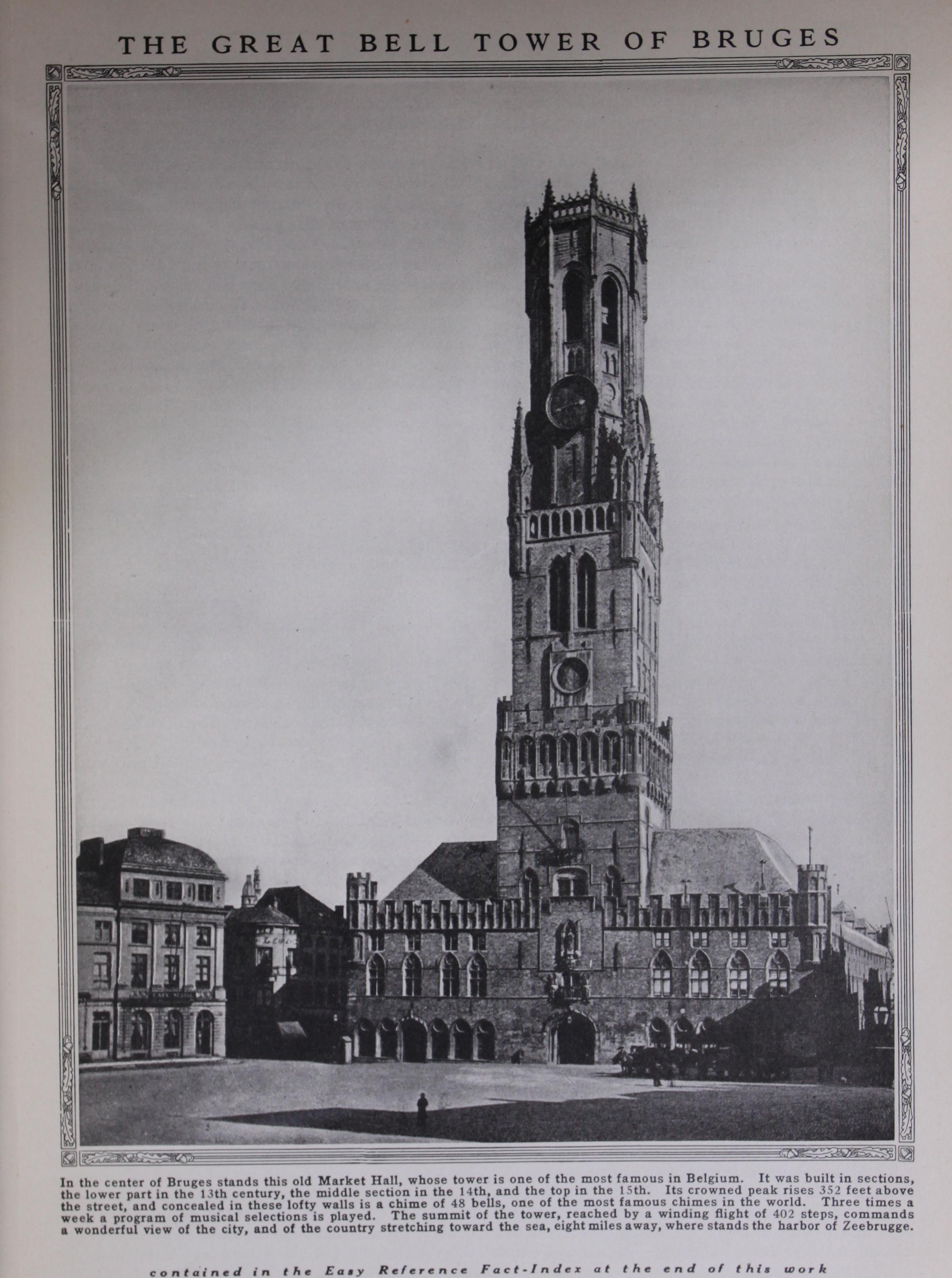
Then in the summer of 1914 the Germans, as they swept across Belgium, occupied Bruges, bringing to the quiet old city an era of bloodshed and ruthless destruction, and leaving in ruins many of its treasures which can never be replaced. Zeebrugge, its port, became an important German submarine base, and there on April 22-23, 1918, occurred a successful Brit i,lr naval raid, intended to bottle up" the Ger man Hibmarines, which has been called "the most thrilling and picturesque naval operation of the war." Population, about 52,000.