Caesar Caius Julius 102-44 Bc
caesars, title and conspirators
Recognizing that the old institutions of the republic were outworn and dead in all but name, he sought to build a new and stronger order in which the supreme power should be in the hands of one capable man.
He had himself made dictator for life, took the title of "imperator," assumed the powers of all the leading offices of the state, and set on foot many far-reaching reforms. But there were still many of the old oligarchy who could not tolerate the idea of a one man rule, even though it brought good government, and they plotted to take his life.
The senate was to hold a meeting on March 15 (called by the Romans "the ides of March"), and the plotters determined that the dictator should die on that day. Among the conspirators was Caesar's friend Marcus Junius Brutus, a Roman of such stern virtue that he was ready to sacrifice his friend and benefactor to what he believed to be the cause of liberty. Caesar was warned by a soothsayer to " beware the Ides of March," and his wife begged him to remain home from the Senate that day; but the conspirators persuaded him to attend the meeting.
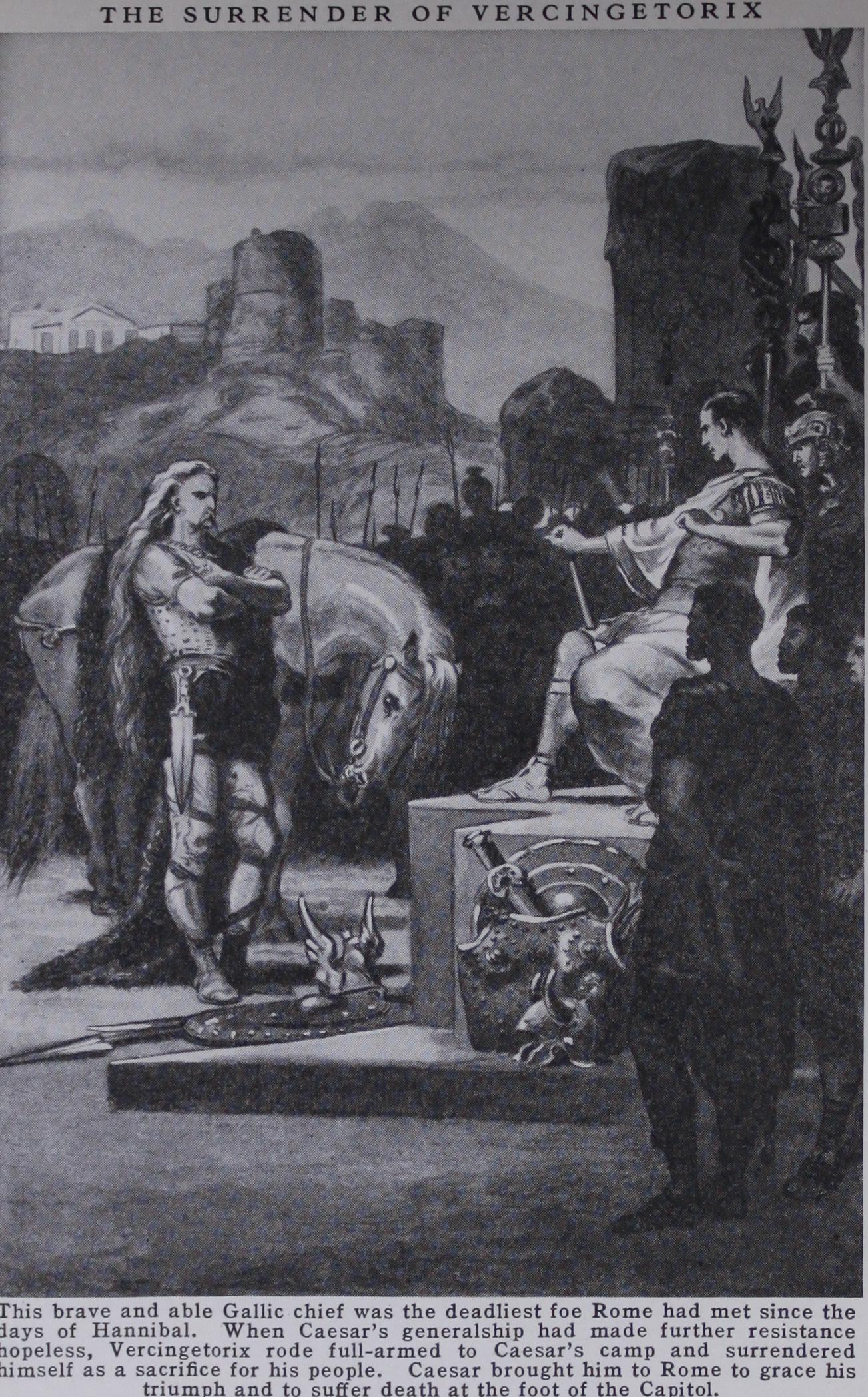
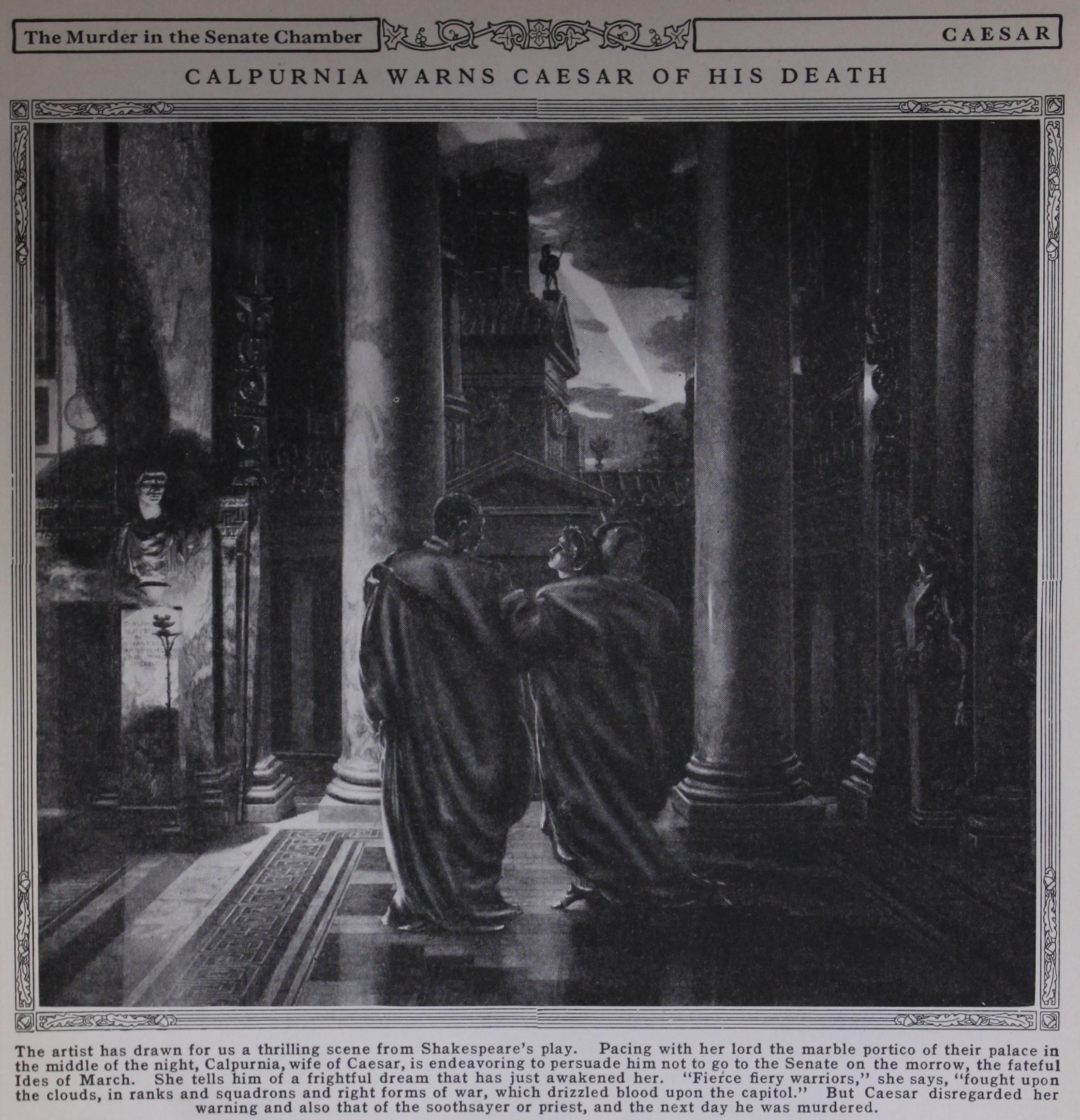
No sooner was Caesar in the Senate chamber than he was surrounded by the conspirators. At a signal they drew their daggers and attacked him. At first Caesar defended himself, but when no one came to his assistance, and he saw his friend Brutus with a dagger in his hand, he gave up the struggle, and with the words, " Thou too, Brutus!" (et tu, Brute!) he fell at the foot of Pompey's statue. Thus Rome lost her greatest statesman and soldier, while the would be saviors of the Republic did not accomplish their purpose, for 14 years later Caesar's nephew Augustus became Emperor of Rome. The next four emperors also belonged to the family of the Caesars, and the imperial name thus gained such dignity that it was retained henceforward as a title of honor, surviving to the World War of 1914-18 as the official title (Kaiser) of the German and Austrian rulers.
Julius Caesar left his mark on literature as well as on history. In the midst of his busiest campaigns his unquenchable energy found time to record the events in which he was taking part. His history of the Gallic wars is familiar to every student of Latin, and is usually one of the first books he reads, because of its interest and simplicity of style.