Canning Industry
milk, canned, machinery and factories
One advantage in home canning is the preserving of food that would otherwise be wasted. Great im portance was placed upon the conservation of foods in this manner during the World War. Home can ning was encouraged, and canning clubs among the boys and girls as well as among the grown-ups added no small amount to the food supply of the country.
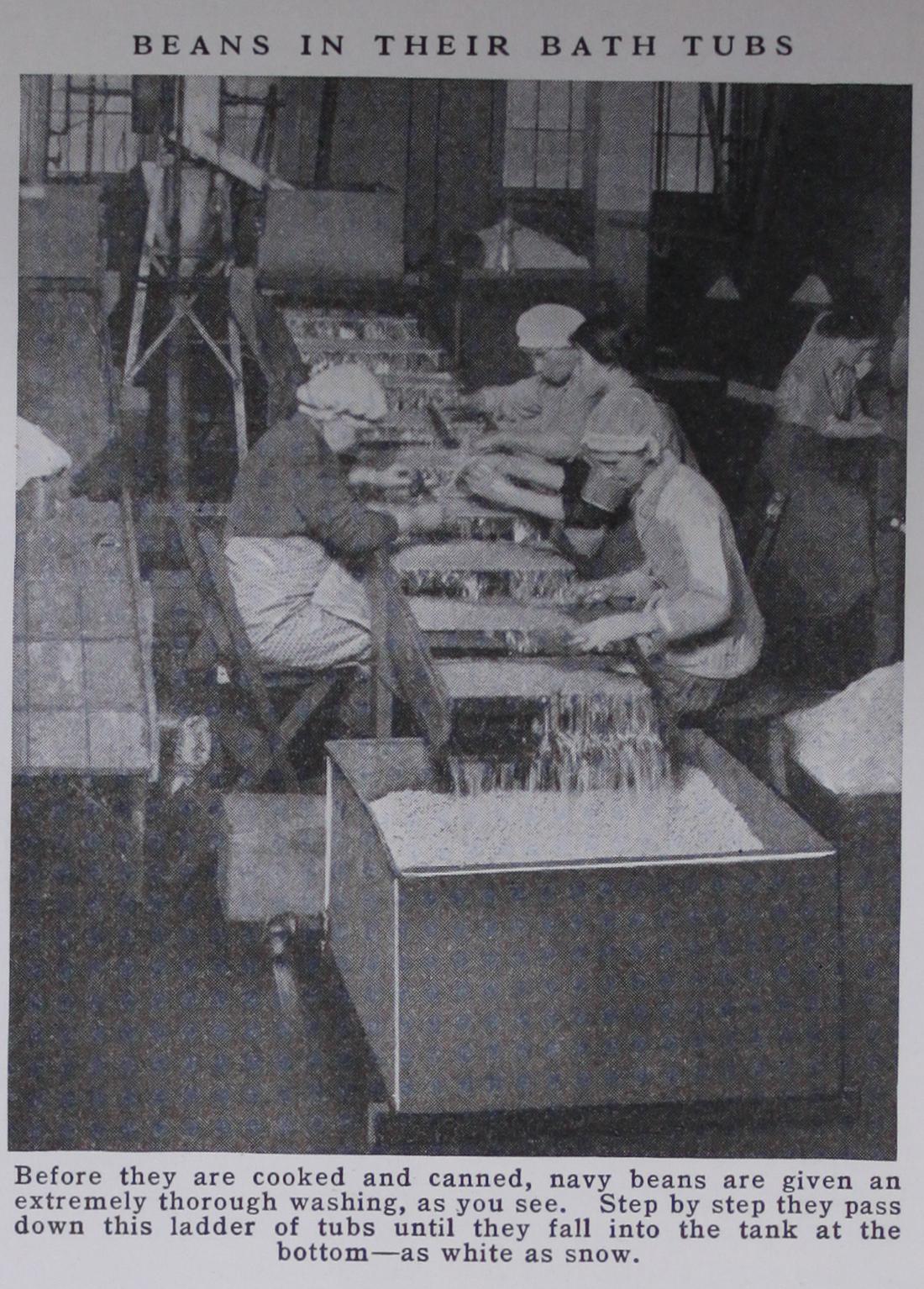
The first canning was done at low temperatures which required a long time for cooking and did not always sterilize the food. Incomplete steril ization caused a large amount of spoilage at first. But when steril izing is perfect, and sealing properly done, the canned foods will keep for a year or more, and there is no need for the use of chemical preservatives. Shorten ing the time of cooking by using super-heated water or steam in " closed kettles" or pressure cook ers increased the possible output of the factories, and many labor-saving devices in other stages of the canning process have kept pace with the cook ing. Peas are shelled and sorted according to size by machinery; corn is taken from the cob and cleaned from the silk by machinery; and the cleaning, peeling, and pitting of fruits also is done by mechanical devices. In the case of soups and other liquids, the cans are dipped and filled by machinery. After the filled cans are heated, an exhaust apparatus takes out the air and the can is sealed by machinery. A machine pastes on the attractive labels, and the cans are automatically packed into boxes ready for shipping.
Great Variety
of Canned Foods There are over a hundred varieties of canned meats on the market besides the great variety of oysters, clams, and fish foods (see Salmon). Fruits and vege tables are canned in great variety, also pickles, pre serves, jellies, and sauces. Milk with part of the water removed by evaporation, either with or with out the addition of sugar, is canned and used for almost all purposes for which whole fresh milk can be used. The condensed milk factories have thus made the production of milk profitable on farms located far from the city markets.Canning factories for the various products are located in the production areas. In the United States they extend from the sardine factories of Maine to the salmon fisheries of Alaska and the Pacific coast, and out to the pineapple canneries of Hawaii. Cali fornia with her wealth of fruits arid vegetables has one-fourth of the canning industry, while the north central states do most of the milk canning, and can ning of peas, corn, and other vegetables.