Horizontal Water-Tube Boilers - Mosher Water Tubes Nearly Horizontal Steam and Water Drums Cross Types Horizontal Curved-Type Single-Tube Non-Sectional
drum and connected
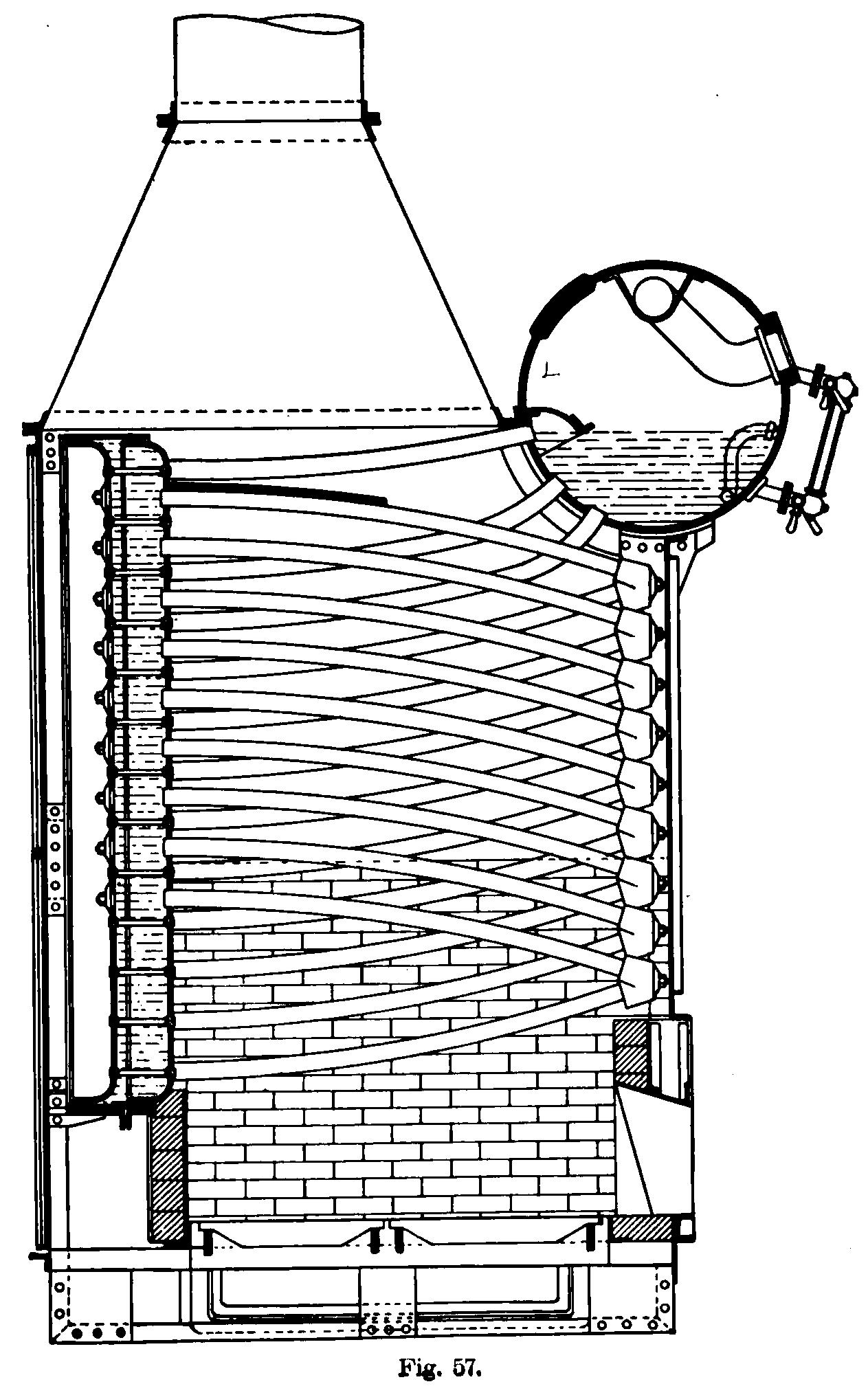
HORIZONTAL WATER-TUBE BOILERS - MOSHER: WATER TUBES NEARLY HORIZONTAL, STEAM AND WATER DRUMS (CROSS TYPES) HORIZONTAL, CURVED-TYPE, SINGLE-TUBE, NON-SECTIONAL The chief differences in appearance between this boiler and those already described are shorter tubes, making a more compact boiler, and the curved tubes. This type is more often used in marine than in stationary work. The boiler consists of a large steam and water drum connected to a smaller water drum by slightly curved tubes. The steam drum is supported by two large circulating pipes (one at each end) which are connected by other pipes to the water drum. Thus the circulation is down these pipes.

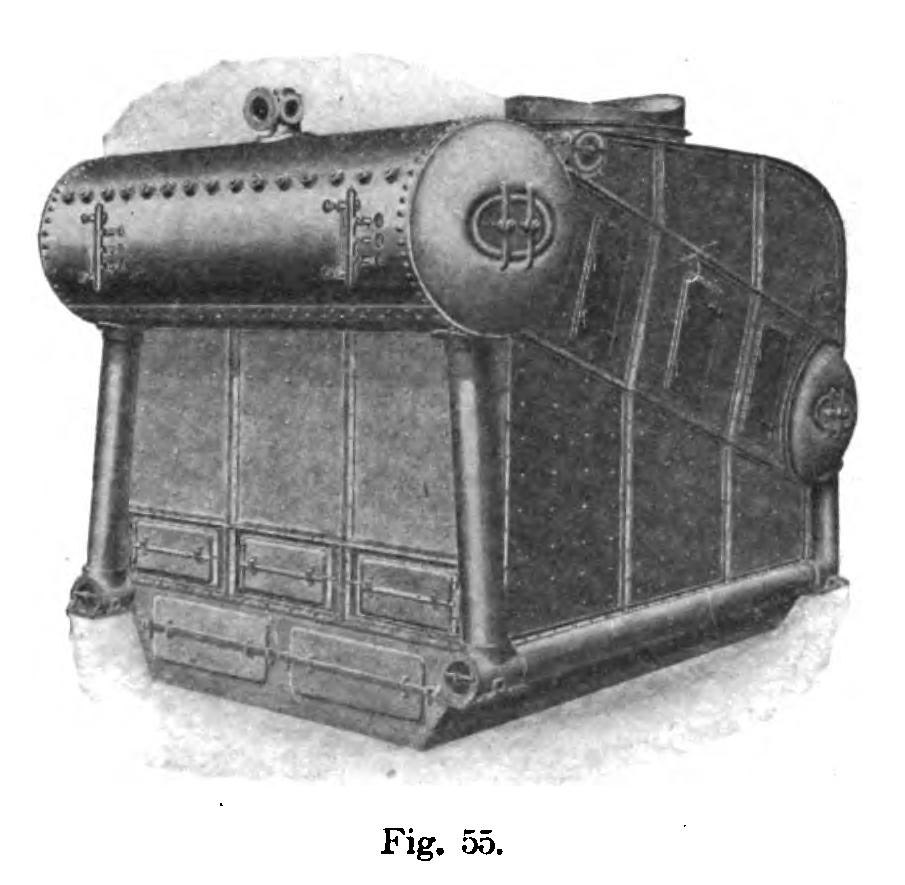
and along the pipe at the bottom (see Fig. 55), up to the water drum and from thence to the steam drum by the tubes which are in contact with the hot gases.
The feed-water heater, shown in Fig. 54, consists of two small drums connected by tubes. The parallel dotted lines in the steam drum of Fig. 54 show how tubes are removed and replaced. Fig. 55 shows the row of plugs for this purpose. These plugs are illustrated in Fig. 56. Each plug is a conical-headed bolt, having a short piece of copper tube, a washer, and a nut. The conical head and the copper tube are inserted in the hole until the washer is in contact with the outer surface of the drum. The nut is then screwed up, thereby flaring the end of the copper tubing as shown.
The steam pressure on the conical head increases the tightness of the joint.