Artificial Fire-Resistance of Wood
fireproofing and service
ARTIFICIAL FIRE-RESISTANCE OF WOOD The attacks which have been made upon wood as a building material, and the desire to increase its fire-resistance, have greatly stimulated studies to devise a cheap and effective means of fireproofing timber. It has been known, of course, for many years, that wood can be impregnated with salts which will make it practically incombustible; and such fireproofed wood has been used to a considerable extent for interior work for a long time. This, however, is quite different from the general fireproofing of shingles and of wood used in building exteriors where it is subject to all the action of the elements. It is not so much a question of the discovery of a fire-resisting material as it is the invention of processes by which large quantities of lumber can be quickly and cheaply fireproofed. Both private and governmental agencies are actively at work on the subject, and no doubt important results will soon be forthcoming.
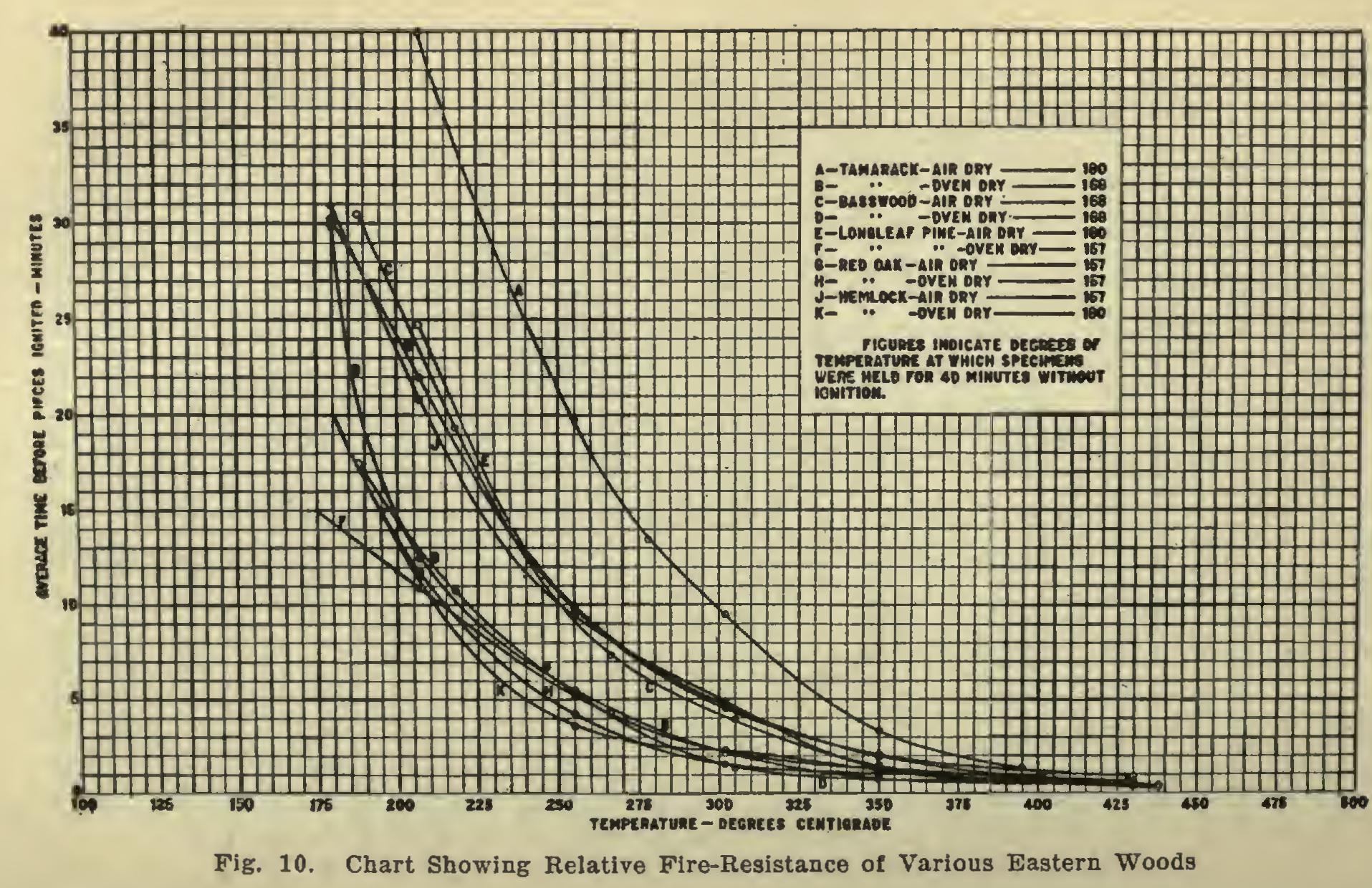
The Forest Service experiments with chemical fire retardants have included tests of sodium carbonate, soda bicarbonate, oxalic acid, borax, and ammonium chloride. The first three did not prove efficient in retarding combustion, and they also weakened the wood. Borax has been found to have considerable value for fireproofing purposes, while wood thoroughly impregnated with ammonium salts could not be ignited under the Service conditions of test. The progress which has been made along this line as the result of only a short period of experimentation, leads the Forest Service engineers to the conclusion that it is possible to devise a reasonably inexpensive method of fireproofing wood, while firms already in the market claim that it is possible to do this on a commercial scale. It is not likely, therefore, that the opponents of wood construction will much longer be able to maintain that it is impossible to make wood resistant to fire where fireproof construction is necessary.