Brick Paving
pavements and size
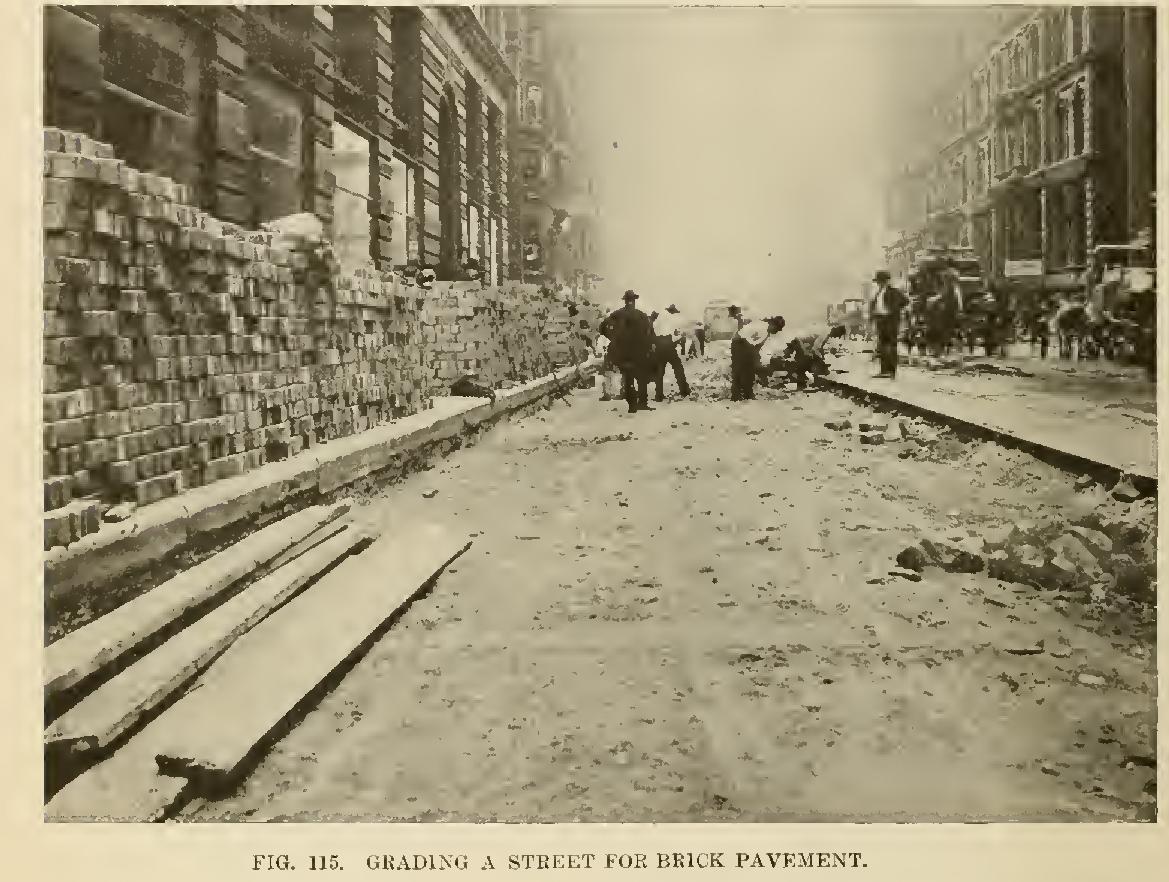
BRICK PAVING The character of street paving exerts a marked influence on property values. A paving in bad condition lowers the civic sense of those who reside in the structures that flank it. Well-built houses and well-built streets are the basic factors in the building-up of what is known as a "good neighborhood;" and rent values and property prices are always at high tide in such districts.
Brick pavements, constructed of brick conforming to the specifications herewith reproduced and laid in the manner set forth in them, are conceded by many municipal authorities to be the most durable pavements in existence. Many brick streets have been down 10 and 15 years; without a cent of repairs having been made on them, the paving surfaces still being in firstclass condition.
Brink paving offers greatest ease of traction under varying season conditions. It is unaffected by animal uric acids and underground gases. It does not of itself originate dust or mud, as do pavements of macadam and stonecompounded surfaces. Brick paving is smooth, yet not slippery.
The brick house is at its best when approached by a brick pavement. Its owner will not be confronted by heavy maintenance costs.
The bricks used for paving, as already stated, are about inches in size. Another size of brick, commonly called a block, is 9x4x3 inches in size.
The general method of laying brick pavements is illustrated in Fig. 117. • The cost of a brick pavement with pitched joints such as shown in Fig. 117 is about $2.60 per square yard; while the cost of the curbing as shown, is about 45 cents per linear foot.