Brick the Best Medium for General Architectural Expression
builder and seemliness
BRICK THE BEST MEDIUMFOR GENERAL ARCHITECTURAL EXPRESSION to effect a perfect and proportionate combination of these three qualities. Brick offers itself confidently to the American architect, dealer, contractor, builder, and house-owner, as the material best adapted to effect a harmonious constructive blending of Service, Symmetry, and Seemliness.
Brick is serviceable at every stage of construction. Its size has been practically uniform in all progressive countries for centuries, always limited by the size of human hands and the length and strength of human arms. The dimensions of brick make it perfectly adaptable to every form and size of construction.
More so than any other building material, brick is serviceable because of its age-long endurance. The earliest records of human history have been preserved to us on bricks of clay, the only survivors of and testifiers to the activitics and glories of the peoples who witnessed their manufacture and profited by their use.
Brick is serviceable because more nearly fireproof than any other constructive material. Of all materials offered to the builder, brick is the only one that has been submitted to an actual fire-test in its manufacture. Subjected as it is to a white heat for several (lays in order that its parts may be securely welded together and its form made enduring, it will be readily understood that it is practically immune from injury by ordinary conflagration.
Because it is weather-proof, retains its color so that it does not have to be Architecture is the structural unison of Service, Symmetry, and Seemliness. With all materials provided by Nature, true architects have accomplished this unison. With some materials, it is much more difficult than with others, painted, and does not require repairing, well-made brick is the most serviceable building material that you can select.

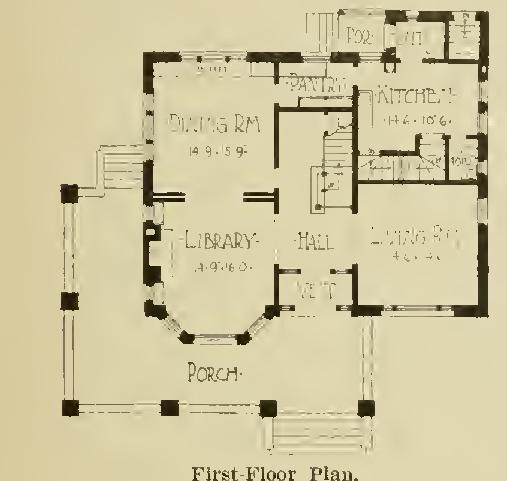
Symmetry of construction is as necessary in a residence or other private or public structure as it is in an animal. To the architect and builder falls the task of duly proportioning the several parts of the structure to each other. Brick, again because of its size and facility of handling, enables the architect and builder to embody their proportioning in closest calculation, without hesitancy.
"Seemliness" in architecture may sound strange to the reader's ear, but the term has been chosen advisedly. The word "beauty" has been too freely used, so that it has lost much of its meaning. The root-formation of the word "seemly" has always meant in all languages—to honor, to befit, to satisfy, to be becoming. Seemliness in architecture will permit beauty of design without extravagance, and conformable to the harmonious requirements of environmental setting. The house that charms, whose memory lingers longest with us, is that one which seems to have taken root in the soil on which it rests, and to focus, as it were, all the charms of its surroundings. Brick, through its material, offers to designer, builder, and dweller the means to obtain perfection of seemliness under all conditions of environment.
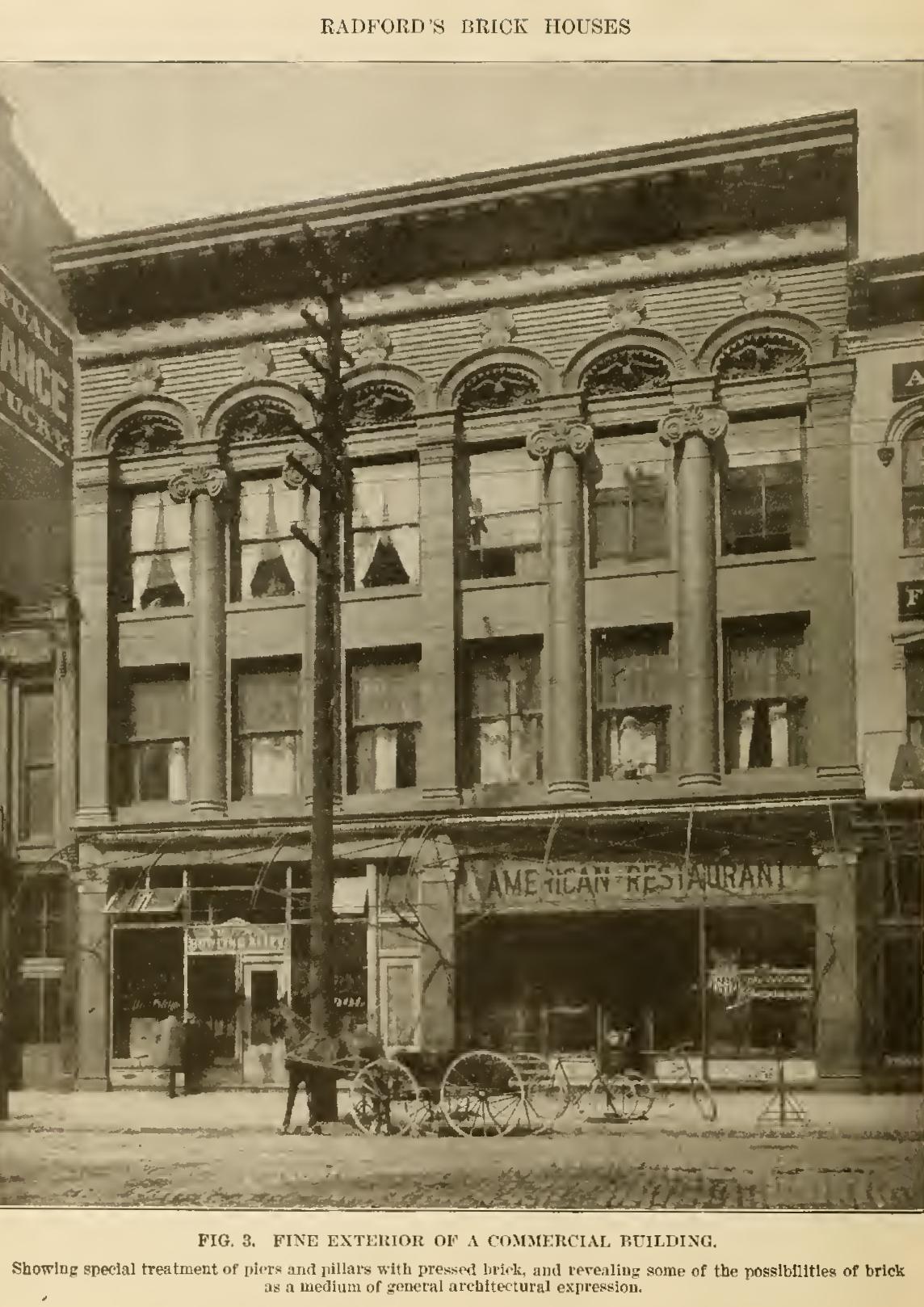
During the past decade, brick manufacturers have emphasized one important word in their literature—"texture." The slavery to uniformity of color in brick walls has been abolished with that of having to hang all pictures in the rooms in pairs. Nature's most Progressive phases of expression are polychromatic—that is, give play to variation in color schemes. The an cients knew and practiced brick texture. The mind and eye of the weaver of fabrics were coupled with the hand of the brick mason, and many of their structural triumphs have remained to instruct and stimulate us. Brick walls, with their thousands of brick-units, offer to the architect and builder a broad opportunity to weave therein their finest conceptions of design and color.