
THE GERMAN EMPIRE The new German Empire had a territory of 541,000 square kilo metres, and its population, including that of the newly acquired districts, was 41,000,00o. The population had been increasing steadily and rapidly ever since 1815, when it was 25,000,00o. By 190o it had reached 56,000,000, and at the outbreak of war in 1914 it was nearly 68,000,000. In 1871 Germany was still mainly an agricultural country; the production of foodstuffs was sufficient to supply the needs of the home population and leave a surplus for export. From the middle of the i9th century onwards, how ever, the industrial districts rapidly grew in importance. Industry was the principal gainer by the period of economic prosperity which set in after 1871, and German manufactured goods grad ually began to compete with British on the world market. German export trade steadily increased, and tended more and more to be carried in German-owned and German-built ships.
Since the rural population still constituted the majority of the nation, its political influence was naturally great. In the districts east of the Elbe the old landed aristocracy maintained its tradi tional predominance ; but in other parts of the country too its power was considerable, for the peasants and agricultural workers were unorganized and tended to follow its leadership. In the in dustrial districts and the old commercial towns a wealthy middle class had grown up, but the industrial workers were rapidly be coming a numerous class and were making themselves felt as an important factor in political life.
Party Politics.—Party divisions in German political life de veloped on somewhat different lines from those which they fol lowed in most other countries. This was due to the important part played by sectarian considerations. The stronghold of the Conservatives was in the north-eastern part of the country, where the influence of the landed aristocracy was predominant. Con servative views also largely prevailed among public officials. As the electoral system in force in most of the States constituting the empire was specially favourable to the land-owning classes, the Conservatives felt their political position much more secure in the States than in the empire, where there was no upper house and the suffrage was general and equal. Most of them were, there f ore, more strongly attached to the State to which they belonged than to the empire. Many of them disapproved of the policy which Bismarck had followed since 1866. They regarded the de thronement of German dynasties as an offence against Conserva tive principles and the Indemnity Act as a concession to Liberal demands. The Conservatives in consequence split up into two groups : the Independent Conservatives or Deutsche Reichspartei found most of their supporters among the public officials and, generally speaking, followed Bismarck, while the Deutsch-Kon servative adhered strictly to legitimist principles and stood for the interests of the great land-owners.
The chief strength of the Liberals was to be found in the larger towns and among the upper middle classes, especially in North west and Central Germany and in the Rhineland. Ever since the beginning of the i9th century the Liberals had been the chief sup porters of German unity and had opposed what they regarded as the unreasonable and reactionary views of those who clung to the system of small States. The fact that political power was in the hands of the Conservatives in the individual States led the Liberals to think of a united Germany as the destined field for the realisation of their ideas. If they had had the sole voice in the drafting of the new constitution, they would presumably have limited the powers of the individual States much more drastically. The new empire however was not their creation, but that of Prussian diplomacy and the Prussian army, and they could only obtain the realization of such of their demands as Bismarck was willing to grant. It may be said in general that German Liberalism has suffered greatly from the fact that it has never been able to attain a position of power and responsibility. It was never able to do more than carry through now one, now another isolated item of its policy by means of compromises wrung with difficulty from the Government ; and as a consequence it inevitably tended to adopt a negative and critical attitude. Even when the Liberals came to terms with Bismarck after 1866, they were obliged to leave the real direction of affairs in his hands. The Liberal Party, like the Conservative Party, split on the vote on the Indemnity Act; the Right wing became the National Liberal Party, while the Left wing retained the old name of the Progressive Party. The latter party remained in opposition because it refused to support any Government which did not take up its stand on the Liberal programme as a whole. The National Liberals on the other hand supported Bismarck's foreign policy in the hope of obtaining con cessions to Liberal policy in return. Liberalism was enormously weakened by the split, and has never fully recovered from its con sequences.
The Democrats or Radicals had endeavoured to set up a United German Republic during the Revolution of 1848, but after the defeat which they then suffered they practically disappeared from public life. Separate democratic parties only continued to exist in the South German parliaments; the Democrats of the North were too weak to form a party of their own, and attached them selves to the left wing of the Liberal Party. They gradually acquired considerable influence in the Progressive Party.
Another important political group was that of the Clericals. Even before the middle of the 19th century there had been Catholic political groups in the various States. In the Frankfurt parliament the Catholic members had met separately for discus sion. It was not however until after 185o that they actually con stituted a party. In 1852 a Catholic party was formed, in the Prussian Chamber of Deputies, and in 1858 it took the name of the Centre Party. Its object was stated to be to combat unbelief and all the resultant phenomena in public life. The Catholic clergy tried to induce every good Catholic to vote only for de puties belonging to the Catholic parties. The Clericals were par ticularly influential in Bavaria. During the war with France, when it seemed inevitable that an empire consisting of the German States without Austria and with a Protestant monarch would be formed, all the Catholics of Germany—they represented about one-third of the population—combined to form a single German Centre Party, and this party succeeded in getting a considerable number of its candidates returned at the elections to the first Reichstag. The Centre Party endeavoured to induce Germany to enter the lists for the restoration of the temporal power of the Pope, and to introduce provisions in the constitution of the empire which would secure the Catholic Church against any form of State interference. In neither of these respects was it successful. The Centre did not actually work against the existence of the new empire, but rather tried to induce it to further the interests of the Catholics as far as possible. The party was strongest in those parts of the country where the population was predomi nantly Catholic and under the influence of the clergy—in Southern Bavaria, the Rhineland and Westphalia, Upper Silesia, Posen and West Prussia.
Side by side with the older parties there gradually grew up a socialistic workers' party. The first organization of this kind was the Allgemeiner Deutscher Arbeiterverein, founded in 1863, of which Ferdinand Lassalle was at first the head. After Lassalle's death the party split up into several groups, but they reunited at the party congresses of Eisenach (1869) and Erfurt (1875) and assumed the name of the Social Democratic Party. Their objects were based on the principles laid down by Karl Marx and Friedrich Engels in the communist manifesto of 1848: the abolition of the whole existing social, economic and political order in favour of a new order based on communal ownership of all the means of pro duction (the land, factories and machinery). They regarded the existing State as nothing more than a capitalist organization, and therefore entirely repudiated it. Only the proletariat, they held, could bring the new social order into being, and therefore, since the interests of the proletariat of all countries were identical, the workers of all countries should be induced to unite in an inter national struggle against capitalism. They considered that wars between nations were caused entirely by economic rivalry be tween the ruling groups of capitalists, and would automatically cease in a socialist society. In 1871 the Socialist Party was still very small ; it had only three members in the first German Reichs tag. In the following decades however it grew rapidly.
There were also a number of political groups which were opposed to the new empire on principle. These included in the first place the representatives of the foreign nationalities which had been incorporated in the empire—the Danes in North Schles wig, the Poles in the eastern provinces of Prussia, and the inhabi tants of Alsace-Lorraine whose sympathies were with France. In addition there were those elements which refused to recognize the forcible abolition of the North German States which had been annexed in 1866—the Guelph Party in Hanover and the Rechts partei in the electorate of Hesse.
The fact that so many parties were in existence prevented any one of them from obtaining a solid majority in the Reichstag. The prime minister thus always had the difficult task of constituting a majority by negotiating with the leaders of the various groups which were prepared to support the measures which he was con templating at the time. Bismarck's ideal was to combine the two Conservative parties and the National Liberals so as to form a permanent majority. This however was exceedingly difficult be cause the right wing of the Conservatives regarded him with dis trust, and objected to any kind of collaboration with the Liberals. A coalition between these parties was moreover not at first abso lutely necessary, because the National Liberals won so many seats at the elections of 1871 and 1874 that they were able to consti tute a majority with the help of the Independent Conservatives and a few Progressive votes. Bismarck therefore found it neces sary to work in close touch with the National Liberals; but as his personal views were nearer to those of the Conservatives, he took care from the outset to prevent the Liberals from becoming too powerful.
The Liberal Period.—In 1873 imperial legislation was ex tended to cover the entire field of civil law. The imperial court of justice was set up in Leipzig in 1879. Work was begun at the same time on the drafting of a civil code for the German empire. A uni form penal code and uniform rules for civil and criminal proced ure were drawn up. Under the Constitution there was only one responsible minister of the empire, the federal chancellor (Bundes kanzler) or imperial chancellor (Reichskanzler) as he had been called since 1871. The secretaries of State, as the heads of the various departments were called, were entirely subordinate to the imperial chancellor. A new act of 1877 empowered secretaries of State to countersign, as representatives of the chancellor, those imperial decrees which related to their particular department. This gave them a greater degree of independence, though they were not placed on a footing of equality with the imperial chancellor, but remained his subordinates. The heads of the various depart ments had no collective responsibility for the general policy of the Government ; such responsibility rested solely with the imperial chancellor.
On other questions also Bismarck did something to meet the views of the Liberals. The Imperial Press Act of 1874 finally abolished the censorship and the obligation of the publishers of newspapers to deposit a guarantee ; the freedom of the press was thus secured. In the economic sphere, new uniform standards for the whole empire were erected by legislation dealing with the cur rency and banks, the protection of trade marks and patents and inventors' rights, and by the foundation of the imperial bank. The reform of the administration which was carried out in Prussia from 1872 to 1875 was also a concession to Liberal views. The new municipal system gave the representatives of the nation a greater share in local government, freed the large towns from the supervision of the Landrat, and handed over the settlement of disputes arising out of the action of the administrative authorities to special administrative courts. These measures met with violent resistance from the Conservatives, and the king was obliged to appoint 25 new members to the Herrenhaus in order to get them adopted by that body.
Bismarck came into violent collision with the Liberals on mili tary questions. The Government considered it necessary to make the maintenance of the army independent of the annual consent of the Reichstag, and demanded that the credits necessary for the upkeep of an army of 400,000 men should be voted without limita tion of time. The Liberals regarded this as an intolerable encroach ment on the right of parliament to control the budget. A corn promise was finally agreed upon at the proposal of Bennigsen the so-called Septennat, according to which the military credits were voted for seven years. At the end of that period the amount of the credit was to be reconsidered. The sums required for the creation of an imperial navy and for coastal defences were voted without much difficulty. The navy was to be used for the protec tion of the German coasts and of German commerce; it was de cided not to create a battle-fleet or high sea fleet, in order to keep military expenditure within bounds.
The Kulturkampf.—On the religious and educational side, the alliance between Bismarck and the Liberals found its expres sion in the conflict which came to be known as the Kulturkampf. The dispute originally arose out of the decrees of the Vatican Council of 187o, which declared the infallibility of the pope in matters of faith to be a dogma of the Catholic Church. Serious objection was felt to these decisions among the intellectual leaders of German Catholicism. Many of them regarded them as a de parture from the traditional spirit of the Catholic Church. They therefore called themselves the Old Catholics, and they refused to recognize the new dogma. The Bavarian Government went so far as to prohibit the publication of the decisions of the council be cause they had not received the royal approval (Regium pla cetum). The German bishops, however, though not without reluc tance, recognized the Vatican decrees, and the great mass of the Catholic population remained quite indifferent to the question; consequently the Old Catholics remained a little group of leaders without followers. They were excommunicated by the pope, and were forbidden to teach or to undertake the cure of souls. The Church demanded that the Government of the States should dismiss from their posts all Old Catholics who were teachers in State educational institutions. Bismarck regarded this as an en croachment by the Church on the sovereignty of the State, and it seemed to him the more dangerous as the Centre Party was at the same time putting forward the demands in the Catholic inter est which have already been mentioned. He was confirmed in his attitude by the fact that the leadership of the Centre Party was tending to fall into the hands of the former Hanoverian Minister Windthorst, who was a supporter of the Guelph movement and consequently an avowed opponent of the new order of things. He refused to dismiss the Old Catholic teachers, and abolished the special section which had previously existed in the Prussian ministry of public worship to deal with Catholic affairs. Fore seeing that the Catholic Church would resist these measures, he tried to introduce radical changes in the relation between Church and State in Germany as a whole. He proposed to take the regis tration of births, deaths and marriages out of the hands of the clergy, and to make the celebration of marriages an exclusive func tion of the State, as well as to abolish clerical supervision over schools and to alter the system of training of the Catholic clergy.
Bismarck's plans were warmly supported by the Liberals, while, as was to be expected, they were strongly opposed by the Centre Party, the Poles (see POZNAN) and the right wing of the Conserva tives. The conflict began when the bishops forbade all Catholics to attend classes or lectures given by excommunicated Old Catho lic teachers. Bismarck replied by expelling the Jesuits from Ger many, and by demanding that all bishops should recognize the duty of implicit obedience to the laws of the State. He withheld their emoluments from all those who refused to make such a declara tion. An imperial act was passed forbidding the clergy to make use of the pulpit or the confessional for purposes of political agitation. In May 1873 the Prussian Landtag passed a number of measures limiting the exercise of ecclesiastical disciplinary and penal meas ures. It was further decided that no cleric should in future be appointed to a benefice unless he had undergone a three years' course of study at a university or a seminary recognized by the State, and had passed a Government examination in philosophy, history and German and classical literature. The State was to have the right to veto the appointment of any priest to a benefice. A special State court of justice for Church matters was set up to try priests who failed to conform to this legislation. The court had power to remove them from their posts.
The German bishops protested against this legislation in Prussia and the similar measures adopted in Baden and Hesse, and called on the clergy and the population to engage in passive resistance. Government inspectors were refused admission to the seminaries, and appointments were made to ecclesiastical benefices without previous notification of the State. The clergy refused to appear before the State court of justice or to pay the fines which it imposed. The archbishops of Posen and Cologne and the bishop of Trier were consequently arrested, and the first-named was de posed by the State court of justice on the ground of contumacy. A number of still more drastic measures were adopted in 1874 and 1875; the State was empowered to appoint its own commis sioners to administer clerical posts which had not been regularly filled, and to withhold State grants from parishes which offered resistance. The article of the Prussian Constitution which con ferred complete autonomy on the Catholic Church was revoked. These measures aroused intense feeling among the German Cath olics ; indeed an attempt on Bismarck's life was made by a certain Kullmann at Kissingen in July 1874. Feeling ran still higher when the pope, on Feb. i 5, 1875, declared the Prussian ecclesiastical legislation invalid and called on the people to resist it because they owed greater obedience to God than to men.
The Catholics felt it as a special threat to their position that the State was attempting to exercise its influence over the train ing of the clergy, to bring them into closer touch with secular cul ture and to prevent their education from remaining wholely in the hands of the Church. Bismarck and Dr. Falk, the Liberal minister of public worship who was his principal coadjutor in this affair, certainly underestimated the power of resistance of the Catholic Church. The Old Catholics had no influence with the nation at large, and the orthodox elements among the Protestants were inclined to support the Catholic point of view on the question of relations between Church and State. The question was whether in spite of this Bismarck would be able to carry the struggle through to the end. For him the main point at issue was always to maintain the strong political position of Germany, and to contrive such a state of affairs among the parties as would ensure that he could obtain the necessary resources. He had entered on the struggle be cause he regarded the alliance of the Catholic Church with the Centre and the Poles as a serious danger; but he himself repeatedly declared later that he had never really meant to go so far, and that the May laws were the work of Falk and the Liberal majority in parliament. Probably he began by demanding more than would really content him, so as to have a margin with which to offer con cessions and thus finally arrive at agreement. Conditions soon be came such as to make him very anxious that an agreement should be reached.
Financial Reform.—It soon became apparent that the revenues which the Empire derived from its own resources would not be sufficient to cover its expenditure. The imperial contributions of the States repeatedly had to be increased. Bismarck consid ered this undesirable, and tried to devise means of finding in creased sources of revenue in the empire itself. His first idea was that the railways, which belonged partly to the individual States and partly to private companies, should be taken over by the em pire. As a preparatory measure, an Imperial Railway Board was set up in 1873. The scheme broke down however owing to the resistance of the States, which were unwilling to part with so valu able a source of income. Bismarck next tried to increase the taxa tion of articles in common use, and to introduce a tobacco monopoly. In this he met with opposition from the Liberals, who objected to any increase in indirect taxation because they regarded it as an encroachment on parliament's right of control over the budget. The only other possible means of raising fresh revenue for the empire appeared to Bismarck to be an increase in customs tariffs. Here again opposition was to be expected from the Lib erals, the vast majority of whom were believers in free trade; but on the other hand it was possible to reckon on a strong protec tionist movement among the great manufacturers and landowners.
German industrialists regarded increased protective tariffs on foreign imports as an assistance to them in their struggle for the control of the home market. German agriculture was beginning to have difficulty in meeting the food requirements of the rapidly growing population ; more and more cheap foreign grain was being imported, and this tended to depress the prices of agricultural products, while at the same time agricultural wages were rising. The landowners were convinced that increased import duties on grain were the only means of keeping prices at a level which would make farming pay. Bismarck accordingly felt sure of sup port from the principal economic elements of the country, and decided to undertake a complete revision of the customs tariffs.
Bismarck would very much have liked to win over the right wing of the National Liberals; the support of the Conservatives was not in doubt. He declared himself ready to include Bennigsen, the principal National Liberal leader, in the ministry if he could bring over the majority of his party to the side of tariff reform. Bennigsen however insisted that two other National Liberals, Forkenbeck and Stauffenberg, should also be given office, and the scheme broke down. Bismarck now saw that his plans for financial and tariff reform could not be carried out with Liberal aid.
Bismarck was no doubt indirectly influenced by these points of view, but it was mainly political considerations that he had in mind. He prepared a scheme for the insurance of workers against sickness, industrial accidents and old age, in which a considerable part of the necessary funds was to be contributed by the empire. At the same time he proposed to make it an offence to engage in agitation for revolutionary or republican objects, or for the sub version of the existing social order. As early as 1875 he attempted to introduce provisions into the act supplementing the penal code laying down penalties for public attacks on the principles of marriage and the family and of private property. The Liberal majority rejected the proposed clauses, and Bismarck then began to consider introducing exceptional legislation against Social Dem ocratic agitation. The Liberals were however opposed both to the introduction of exceptional legislation against one particular politi cal tendency, and to compulsory State insurance of the workers, which was in their view an unwarrantable interference of the State in economic affairs. Since these plans of Bismarck's also were opposed by those who had been his allies, he began to con sider whether some other parliamentary majority could not be won over to his side. Such a majority could only be found among the Conservatives and the Centre Party; but no understanding with the Centre Party could be reached unless the Kulturkampf came to an end. This did not seem impossible, since Leo XIII., who had become pope on the death of Pius IX. in 1878, also manifested the desire to put an end to the regrettable state of affairs which prevailed in the Catholic districts of Germany as a result of the conflict between Church and State.
At the time when Bismarck was considering these possible changes in policy, a journeyman tinsmith, named Hodel made an attempt on the life of the Emperor Wilhelm I. on May i I, 1878. Although the emperor was not actually wounded, and although there was no evidence of any connection between Hodel and the Social Democrats, Bismarck thought that he might make use of the indignation aroused by the attempted assassination of the aged monarch to carry through exceptional legislation against the Social Democrats. The Liberal majority however again threw out the bill. A few weeks later, on June 2, a second attempt was made on the Emperor's life, this time by a certain Dr. Nobiling. The emperor was so seriously wounded that the crown prince had to be empowered to act as his representative for a time. Social Democratic publications were actually found in Nobiling's posses sion, and Bismarck thinking that fresh elections might result in a majority more favourable to his schemes, dissolved the Reichstag. The Liberal parties in fact lost 42 seats, and the Conservatives gained 37.
Bismarck once more submitted exceptional legislation against Social Democratic agitation to the new Reichstag. Meetings, associations, funds and publications intended to promote Social Democratic propaganda were to be prohibited; professional agi tators were to be liable to expulsion from the country; martial law might be proclaimed in districts where the movement manifested itself particularly strongly. The National Liberals, thoroughly alarmed by their failure at the polls, allowed themselves to be prevailed upon to vote for the bill with a few attenuating amend ments ; it was provisionally to remain in force for two and a half years. The Conservatives also voted for the bill, and it was adopted on Oct. 19, 1878 by 221 votes to 149. It did not produce the desired effect. The Social Democrats printed their journals in Switzerland and smuggled them into Germany in large quanti ties; as long as the act was in force (i.e., till 1890) they held their party assemblies abroad. Persecution simply resulted in making their organization stronger.
The breach between Bismarck and the Liberals was now com plete, and the Conservatives and the Centre began to make their influence more and more strongly felt in all spheres. Their task was the easier because Bennigsen failed in his efforts to prevent a split in the National Liberal Party; the right wing desired to regain its position of alliance with the Government, while the left wing joined with the Progressive Party, the two together forming the German Independent Party (Deutsch-freisinnige Partei). Both groups lost more and more of their adherents. The Conservatives became increasingly powerful, especially in Prussia. A ministerial order issued by von Puttkamer in 1882 instructed all officials to support the policy of the Government, and to exercise their in fluence in the elections for this purpose.
The secular examination for candidates for the priesthood was abolished, the competence of the State ecclesiastical court was limited, and the payment of emoluments to the clergy in most cases resumed. Finally, in 1886, the State ecclesiastical court was abolished, together with State inspection of seminaries. The pope on his side induced the archbishops of Posen and Cologne, who had been the two most violent opponents of the State in the recent struggle and had been deposed by the State ecclesiastical court, to resign their office. Peace was finally concluded between Church and State in 1887. The pope recognised the right of the State to veto ecclesiastical appointments if there was any serious objection to them on doctrinal or moral grounds. In return, the State agreed to modify the formula of the oath required of the clergy, and readmitted the Catholic orders with the exception of the Jesuits. Civil marriage was maintained. Certain difficult questions of principle remained outstanding, but agreement was reached on the most pressing of the points at issue.
Whatever may have been its defects of detail, this body of social legislation represents a great achievement and has served as a model for the other countries of Europe. It did not however achieve Bismarck's object of bringing over a large proportion of the workers from the Social Democratic camp and winning their adherence to the existing political order. The workers regarded the concessions which it represented as a sort of payment on account which they were glad to accept because it meant an im provement in their material position ; but it did not persuade them to give up the rest of their aims.
The most serious menace to peace lay in the desire of France to recover Alsace-Lorraine. Within a few years France had paid off its war indemnity of five milliard francs, and it then began to reorganize and strengthen its army and to improve the fortifica tions on the German frontier. France alone would not however have been strong enough to reopen the struggle, and Bismarck therefore regarded it as his first duty to maintain friendly relations with all countries which might have become the allies of France. He endeavoured to strengthen the traditional ties of friendship between Germany and Russia, to bring Austria and Italy into closer relations with Germany, and to establish contact with Great Britain.
Conditions in the Balkan Peninsula constituted another great danger to peace. Here the interests of Russia and those of Austria were in sharp opposition. Russia was striving to establish its hegemony over the Slav states of the Balkans and Constantinople. Austria on the contrary was anxious that Russia should not gain complete control over the lower Danube and the way to the Aegean, and was therefore in favour of the maintenance of Turkey. England threw its weight into the same scale, in the hope of keeping Russia out of the eastern Mediterranean. The mainte nance of Turkey however did not appear to be possible unless the Sultan carried out far-reaching reforms and granted full equality of rights to his Christian subjects. But it was exceedingly doubtful whether this was feasible in a State the very foundation of which was the principle of the exclusive supremacy of Islam. From the point of view of Germany, which was not directly interested in Eastern questions, the main thing was to prevent a collision between Russia and the other Powers.
Bismarck's first idea was to renew the close alliance between Russia, Austria and Germany which had existed some decades ago. For some time this appeared to be successful. The revolt of Bosnia and Hercegovina against the Turks in 1875 however threatened the very existence of Turkey, and in consequence the danger of war between Austria and Russia once more became acute. The revolt spread to Serbia and Bulgaria; Russia inter vened in favour of the Christian peoples of the Balkans and de clared war on the Sultan in 1877. The tzar succeeded in averting the intervention of Austria, but in return he was obliged to leave the administration of Bosnia and Hercegovina to Austria. In the spring of 1878 England seemed to be on the point of entering the field, but this was avoided by Bismarck's mediation. At the Congress of Berlin, which took place from June 13 to July 13, 1878 and over which Bismarck presided, the Powers agreed upon a new settlement of Balkan affairs ; but none of them received full satisfaction, and thus the seed was sown for future complications. Russia above all was discontented at the accession of territory to Austria, and at the fact that the foundation of a Greater Bulgaria had been prevented. It was resented that Bismarck had not sup ported Russian claims more warmly, and the tzar was actually betrayed into uttering open threats in a letter to the Emperor William.
This gave Bismarck an opportunity of beginning negotiations with Austria with a view to a defensive alliance. Count Andrassy, who was mainly responsible for Austrian policy, was in favour of the idea ; but the Emperor William resisted the scheme because he disliked the idea of an alliance directed against Russia and be cause he thought it wrong that Austria should refuse to promise help to Germany in the event of an attack by France. The old emperor finally yielded to Bismarck's threat of resignation, though with great reluctance. The German-Austrian alliance was con cluded on Oct. 7, 1879. It was laid down that either of the con tracting parties would support the other with its whole power in the event of an attack by Russia on one of them. If either con tracting party were attacked by any other Power, the other under took to maintain benevolent neutrality. If, however, Russia should intervene in the struggle on the other side, the obligation to give the fullest assistance would at once come into play.
It was far from being Bismarck's object to adopt a permanent attitude of hostility towards Russia. In June 1881 he succeeded in bringing about a new treaty between the three emperors by which they undertook to support one another against other Powers, and agreed that no alterations of frontier should take place in the Balkans unless they had been previously agreed upon by Russia, Austria and Germany. In the spring of 1884 the treaty was renewed, with slight modifications, for a further period of three years.
Another feature of Bismarck's policy was the establishment of closer relations with Italy. The Triple Alliance treaties between Germany, Austria and Italy were concluded on May 20, 1882 ; they remained in force, with some modifications, until 1914. Austria and Germany undertook to assist Italy with all means in their power in the event of an attack by France ; such an attack did not seem improbable at the time, as the Italians considered their interests to be gravely injured by the French occupation of Tunis. Italy undertook to help Germany in the case of an un provoked attack by France. The existing treaty obligations be tween Germany and Austria were maintained.
Bismarck's system of alliances as laid down by these treaties was only modified in appearance when, after the Balkan conflicts of 1884 and 1885, it became impossible to renew the alliance of the three emperors on its expiry in 1887. In order to provide a substitute, Bismarck concluded the so-called Reinsurance Treaty with Russia on June 18, 1887. He recognised Bulgaria as falling within the Russian sphere of influence, and even promised diplo matic and moral support if Russia found itself obliged to occupy Constantinople. The text of the other clauses shows that a tem porary occupation was all that was intended ; permanent frontier changes in the Balkans could not be made without Germany's consent.
This treaty cannot be rightly judged unless it is borne in mind that at the same time an agreement was being concluded between Great Britain, Italy and Austria, with Bismarck's knowledge but without the participation of Germany, the aim of which was the maintenance of the status quo in the Near East. Moreover, when the Triple Alliance was renewed in Feb. 1887, Bismarck obtained the inclusion of a new clause under which Austria and Italy under took to give compensation to the State concerned if they should proceed to the temporary or permanent occupation of territory in the Balkans. The intention of these mutually complementary trea ties was to prevent either Russia or Austria from engaging in an unchecked policy of conquest in the Balkans. The affiliation of Rumania to the Triple Alliance was to serve the same object. Bismarck was aware of the strong opposition of interests which existed between Russia and Austria and between Italy and Austria, and he thought that peace could best be ensured if he maintained close relations with all the Powers in question so that he could mediate between them if relations became strained.
It was most important at this time that steps should be taken to keep the peace, for the situation had become exceedingly ser ious owing to France's increasing desire for "revanche" and owing to the growing influence of the Panslavists in Russia. Bismarck felt it necessary to strengthen the defences of Germany. In the autumn of 1886 he laid a bill before the Reichstag to increase effectives of the army by 41,000 men and to fix the figure for a further period of seven years. The Reichstag threw out the bill because the Centre would only consent to a period of three years; it was therefore dissolved. At the new elections in Feb. 1887 the Conservatives and National Liberals were returned in greatly in creased strength; they held respectively 122 and 97 seats, and thus they had between them an absolute majority in the Reichstag. They had worked together in the electoral campaign with a view to securing the passing of the Army bill. It seemed clear that if the "cartel" of the two parties could be maintained it would form the basis for a stable parliamentary majority. The Army bill was passed on March 11, 1887. Although Bismarck had repeat edly declared in the Reiclistag that the increase in the army was intended solely to strengthen the defensive power of Germany, it was regarded in France as a threat. Feeling ran so high that a minor incident, the arrest of the French frontier commissioner Schnabele on German soil, nearly led to war. By another law adopted early in 1888, Bismarck raised the age for compulsory service in the Landwehr to 39. This did not involve any increase in the size of the army in peace time, but made it possible to draw on a considerably larger number of trained men in time of war.
Colonial Policy.—Whereas in Europe Bismarck confined his aims to the preservation of Germany's existing frontiers and to the maintenance of peace, he was beginning to contemplate an extension of German territory overseas. Germany was the only one of the great industrial Powers which had no colonies. Since the occupation of Egypt by the British and of Tunisia by the French, the division of territory between the European Powers had begun to progress so rapidly that Bismarck was anxious to obtain a share for Germany before all that was available should have been allotted. He directed his attention only to districts where German traders or colonists had already established them selves firmly. Having first made sure that Great Britain had no rights of sovereignty over the districts in question, he declared on April 24, 1884, that the settlements founded on the south-west coast of Africa by the trader Luderitz of Bremen were under the protection of the German empire. Subsequently the whole of the coast district from the frontier of Cape Colony to that of Portuguese Angola, with the exception of the British settlement of Walfisch Bay, was, with the consent of Great Britain, made a German protectorate. In the summer of 1884 Dr. Nachtigal con cluded treaties with the local chieftains in the Cameroons and Togoland, and in the autumn of the same year similar treaties were made by Dr. Karl Peters in the hinterland of Zanzibar; these districts, as well as the north-eastern part of New Guinea and the neighbouring islands, were also declared German pro tectorates. Bismarck had no idea of making these districts into provinces of the German empire overseas ; their administration and economic development was to be left to special companies, and only if the interests of the German traders there were threatened by the natives or by foreign Powers would Germany intervene to protect them. Later, however, German colonial de velopment was to follow other lines. The German East African Company found itself unable to deal with an important revolt which took place among the natives; the revolt was suppressed by Major von Wissmann, acting as imperial commissioner, and the company had to make over its rights to the empire. The New Guinea Company also made over its rights in 1899, and in 1907 all the colonies were placed under the control of the Colonial Office.
William II. and the Dismissal of Bismarck.—The Emperor William I. died on March 9, 1888, at the age of 91. His reserved and impressive personality inspired universal respect, and did much to reconcile the non-Prussian rulers and populations of Germany to the new regime. He was succeeded by his son Fred erick III., who had already shown his quality as general in the wars of 1866 and 1870, and was specially popular in South Ger many, whose troops he had led to battle against France. For some time, however, he had been suffering from a serious com plaint of the throat, and the doctors agreed that he had not long to live. As a matter of fact, his reign only lasted 99 days. In these circumstances, although he was personally much more sympathetic to Liberal ideas than his father or Bismarck, he left Bismarck a free hand in the conduct of business, and only showed by isolated acts that his real views on questions of internal policy were different. On June 15, 1888, he was released by death from his cruel sufferings.
William II., the eldest son of the Emperor Frederick and the English Princess Victoria, came to the throne at the age of 29. He was a man of quick intelligence and great self-confidence, and was determined to take an active part in affairs. Although he took a great interest in modern technical progress, his general out look was that which prevailed among the Conservative officials and officers. He entertained exceedingly lofty ideas of the position of a monarch, based on religious and mystical assumptions. His father's Liberal tendencies were distasteful to him ; but he did not possess his grandfather's tact and stability of character. He was liable to be swayed by the influences of the moment, and he was very susceptible to skilful flattery. His intentions were ex cellent ; but he was firmly convinced that he was the only person who knew what was good for his country. He had in times past often assured Bismarck of his profound admiration; but this had not prevented occasional minor disagreements. When he came to the throne, he asked Bismarck to remain in office; but it very soon became clear however that Bismarck and the young Emperor would not be able to work together very long.
The immediate cause of the conflict between the emperor and his chancellor was that the former suddenly expressed a desire to have a number of social measures of a far-reaching character introduced, and to announce them in advance by a sort of procla mation. Bismarck had serious objections to such a course, and thought that at the least the probable consequences of the treas ures should first be carefully considered. Differences of opinion also arose on the question whether the Socialists' Act, which was due to expire in the autumn of 189o, should be re-enacted in an attenuated form. Bismarck tried to persuade his colleagues in the Prussian ministry to declare their solidarity with him, but they, regarding themselves according to the traditional view of Prus sian officialdom as being primarily the servants of the monarch, refused to do so. The emperor looked upon Bismarck's action as an attempt to make him subject to the will of his first minister and practically to depose him. Bismarck, on the basis of a cabinet order dating from 185o, forbade any minister to have an audience with the emperor at which he himself was not present. William II. demanded that the order should be withdrawn. Bis marck refused to do so on the ground that the unity of the Gov ernment would be endangered if the prime minister's authority were weakened. The emperor thereupon gave him the choice of drawing up a decree reversing the order or handing in his resigna tion. He chose the latter. In his letter of resignation, dated March 18, 189o, he set forth all his objections to the policy which the emperor had hitherto followed. His resignation was at once accepted.
The decisive factor in the conflict between Bismarck and William II. was not the difference of view between the older and the younger generation or between different political tendencies, but the young emperor's unwillingness to yield to any will but his own. Questions of foreign policy played only an incidental part. Bismarck's attempt to come to an understanding with the old Centre leader Windthorst without the emperor's knowledge, after the Reichstag elections had destroyed the majority of the Conservatives and National Liberals, was an aggravating feature but not the real cause. On Bismarck's side the desire to keep the power which he had enjoyed for the last 27 years played an important part, as well as his distrust of the Emperor's person ality, which he believed to be fraught with the gravest dangers for Germany. How trivial the emperor's immediate motives were is shown by the fact that he completely dropped his schemes for social legislation before more than a small part of them had been realized, and did not even insist on the revocation of the cabinet order of 185o which had been the principal bone of contention.
Caprivi.—As Bismarck's successor in the chancellorship, the emperor appointed Count Caprivi, who had hitherto occupied exclusively military positions, and had no experience either of administration or of foreign policy. The new foreign secretary was Marschall, formerly public prosecutor in Mannheim, who took over that difficult department of State with equally little experience. The man who, from now on, really dominated the Foreign Office was Holstein, an official trained in the school of Bismarck, who had, however, assisted in bringing about the fall of the former chancellor. He was a man of keen insight and comprehensive experience, but solitary and aloof, avoiding pub licity and responsibility, and of a morbidly suspicious tempera ment. His reports exercised a tangible influence on German foreign policy up to 1905.
The first significant act of the new Government was the de cision not to renew the "re-insurance compact" with Russia, which expired in the spring of 189o. Holstein took the view that the compact was inconsistent with obligations to Austria. He insti gated Marschall and Caprivi to advise the emperor to put an end to the compact, in spite of the strong desire of Russia for renewal, which the emperor personally favoured. The result of this step was to clear the way for a rapprochement between France and Russia. Bismarck had throughout considered it his most urgent task to prevent Germany from being placed in the position of having to wage war simultaneously on both fronts. In August 1891 an alliance was concluded between Russia and France, and a year later the alliance was strengthened by a military conven tion.
At the same time, the emperor was endeavouring to effect a rapprochement with England. By a treaty signed on July I, 1890 Heligoland was ceded to Germany, and German sovereignty was recognised in East Africa from Lake Tanganyika to the coast, with a slight extension of the boundaries of German South West Africa; Germany resigned in favour of England the claim to a protectorate in Witu and Uganda and renounced possession of the island of Zanzibar. The treaty removed certain causes of friction, but failed to lead to closer relations between Germany and England. The attempts of Germany during the next few years to bring about an understanding failed because of the conviction entertained by the English Government at the time that the policy of "splendid isolation" was in the best interests of the country.
A serious disagreement between the two Powers resulted from the attempt of England to annex from the Congo Free State a strip of land between Lake Tanganyika and Albert Nyanza, contrary to the Congo Act of 1885, which had been signed by all the great Powers. England was forced to renounce the trans action, and there was strong feeling in London over the attitude of Germany in this matter, and also over the close relations maintained between Germany and the Boer States in South Africa. Marschall's efforts to bring about a more sympathetic under standing with France also failed.
In home affairs, attempts were made to carry out the promises contained in the emperor's manifesto of Feb. 4, 189o, on social policy. The Industrial Courts Act of July 29, 1890 gave juris diction in labour disputes to a court including representatives of workers and employers. An amendment to the Trade Regu lations on June 1, 1891 gave legal sanction to the Sunday rest, limited the right of employers to impose fines and introduced special safety regulations for unhealthy industries. It also pro vided for the institution of committees of workers entitled to advise on matters connected with the internal working of an undertaking, and regulated the employment of women and chil dren. Provision was made for the appointment of special factory inspectors to see that the law was enforced. In order to promote German trade, important commercial treaties were concluded with Austria, Italy, Bulgaria and Switzerland. Germany extended to these countries a reduction in the protective duties on corn from five marks to 3.5o marks on every two cwt., and received in return a reduction of tariffs in favour of German industrial exports. These treaties were concluded for 12 years, and came into force at the beginning of 1892. Rumania and Serbia subse quently entered into similar agreements. Caprivi aroused the opposition of the conservative element by these treaties, which favoured industry at the expense of agriculture. The foundation of the League of Agriculturists in 1893 marked a strengthening of the influence of the large landowners within the Conservative Party.
The chancellor was obliged to obtain the support of the Centre Party in order to obtain ratification of the commercial treaties by the Reichstag, and had to purchase this support with conces sions in other directions. Among these concessions was the intro duction of a new Prussian Education bill, which gave the Church control of religious instruction and introduced Church schools. The bill aroused keen opposition on the part of the Liberal party, and Miguel, the Prussian minister of finance, who had been a member of the National Liberal Party, threatened to resign if it were passed. The emperor intervened, and at the session of the privy council on March 17, 1892 insisted on thorough revision of the bill. Zedlitz, the minister of education, thereupon resigned, and the bill was withdrawn by his successor. The Centre Party returned to the Opposition, and the Government was not certain of a majority either in the Reichstag or in the Prussian Landtag. The difficulty of the situation made itself felt during the debate on the Army bill introduced in the autumn of 1892. It appeared necessary to strengthen the army in view of the change in the position of Germany resulting from the alliance between Russia and France. It was proposed to increase the force by 84,000 men, reducing the period of service from three to two years. The combined opposition of the Radicals, the Social Democrats and the Centre Party resulted in the rejection of the bill on May 6, 1893. Caprivi thereupon dissolved the Reichstag. The elections resulted in a temporary division of the Progressive Party, the "Progressive Association" accepting the Army bill, and the "National Progressive Party" rejecting it. The weaken ing of the Progressive and Centre Parties resulted in the adoption of the bill, with a number of amendments, on July 13, 1893, by a bare majority of 16 votes. But the opposition of the Conserva tive and Centre parties prevented the establishment of a per manent Government majority.
The Socialists' Act had expired in 189o, and the Social Demo cratic Party had resumed its agitation in all directions. In the election of 44 Social Democratic candidates were returned. The emperor, who had anticipated that his social legislation would counteract the movement, was extremely disappointed. He regarded the assassination of Carnot, the French president, in June 1894, as a sign of the growing power of the elements working for the overthrow of the existing order. From that time on, he began, in his public utterances, to declare war against the revolutionary forces, and demanded the introduction of new exceptional legislation. There appeared, however, to be no possi bility of the adoption of such legislation by the Reichstag, and Caprivi decided merely to increase the severity of the general provisions of the penal code. He proposed that any person who advocated the violent overthrow of the State should be punished with penal servitude, and that any person who incited the popu Iation to commit acts of violence against other classes of society should be punished with imprisonment. Violent disagreement ensued between Caprivi and Count Eulenburg, the Prussian prime minister, and in Oct. 1894 the emperor dismissed both ministers.
Hohenlohe's Government was thus also without a reliable majority in the Reichstag. It succeeded with difficulty in securing approval for an increase of the army by 20,000 men (considered indispensable by the military authorities in view of the increasing tension in the international situation), and of the Navy Act drafted by Admiral Tirpitz. This act provided for the building of a high seas fleet, to be completed by 1904 and maintained at the same strength by the replacement of obsolete vessels. The civil code, which had been in course of drafting for many years, was also approved by the Reichstag after a long debate, and came into force on Jan. 1, 1900. An Act was also passed providing uniform procedure for courts martial. In order to obtain the support of the Liberals for these measures, Hohenlohe agreed to the repeal of the prohibition of permanent connections between political associations.
During the same period, relations between Germany and Eng land took a critical turn. On the occasion of the Jameson raid at the beginning of 1896, the German Government felt inclined to interfere on behalf of the Boers. Since Jameson was defeated and captured by the Boers and the English Government expressly de nied having authorized or consented to the raid, there was clearly no excuse for direct intervention. On Jan. 3, 1896, however, the emperor telegraphed to Kruger his best wishes for the successful defence of the independence of the Transvaal. This act aroused keen resentment in England, where it was regarded as an inter ference in the internal affairs of the British empire. No serious clash occurred, but there remained a strong feeling of suspicion on both sides, which was not diminished by the retirement of Mar schall from the Foreign Office in June 1897 and his replacement by Prince Bernhard von Billow, previously German Ambassador in Rome.
Billow was an extremely clever and skilful diplomat and knew how to gain the favour of the emperor, but the Foreign Office continued to be dominated intellectually by Holstein, who had for some time been inspired by strong suspicion of England, which showed itself with far-reaching effects in the following years, when attempts at a rapprochement were made by England.
The British empire had been placed in a position of hostility to Russia by rivalry in the Far East, which was becoming more and more acute, and to France by constant friction over African and East Indian questions. War with France in the region of the Upper Nile seemed inevitable in the near future, and at the same time war with the Boers on a large scale was imminent in South Africa. In these circumstances, Joseph Chamberlain, the English colonial secretary, considered it impossible for England to main tain the policy of isolation pursued hitherto. He believed that it would be easier for England to arrive at a permanent understand ing with Germany than with France and Russia, and made pro posals in Berlin for the conclusion of a defensive alliance between Germany and England, which would become effective if either should be attacked by two great Powers. Negotiations went on with long interruptions from March 1898 to the end of poi, but led to no result in the end. Holstein and Billow feared that England was only trying to involve Germany in a war with Russia, and would always try to avoid active participation herself. They seized the opportunity, however, to obtain concessions in the colonial field. In Aug. 1898 they succeeded in concluding a treaty between Germany and England for the subsequent partition of the African colonies of Portugal, in case Portugal should be forced by financial difficulties to alienate them. The negotiation of the treaty for the partition of Samoa between England, Germany and the United States, signed on Nov. 14, 1899, was also greatly facilitated by the willingness of England to make concessions at the moment. No complete understanding was obtained as regards the recognition of the Yangtse basin as a neutral zone and the prevention of further partition of China among the European Powers. The treaty on this subject concluded on Oct. 16, 1900 was variously interpreted by the parties and subsequently gave rise to many disagreements. A rapprochement seemed to be favoured by the fact that the German Government observed strict neutrality during the Boer War and that the emperor refused to receive Kruger when he sought assistance in Europe (although public opinion in Germany was strongly on the side of the Boers) ; but the confiscation by the English of a number of German ships, alleged to be carrying contraband of war, in Jan. 'goo, aroused resentment which was not entirely removed by the return of the vessels.
In the spring of 190 1 the English Government desired a decisive answer as to whether or no Germany was prepared to enter into an alliance, and the decision could no longer be postponed. Hol stein and Billow were now impressed by a new consideration. They reflected that if Austria and Russia went to war as a re sult of their rivalry in the Near East, Germany would then have to declare war on Russia on account of the alliance with Austria; if France as an ally of Russia then declared war on Germany, England would be able to say that there was no obligation to give assistance because Germany had not been attacked but had de clared war on Russia on the ground of an alliance to which Eng land was not a party. The alliance would thus be of no use to Germany in the very event in which it would be most needed. Holstein thought that this possibility of evasion must be elimi nated beyond question. He believed that the best method of doing so was to propose that England conclude the alliance not with Germany alone but with the Triple Alliance. This possibility had been suggested in London at an earlier date, but it was now decided to reject the proposal. It was feared that after the death of the Emperor Francis Joseph the Austrian State might fall to pieces, and there was no desire to undertake an obligation to de fend Austrian interests in the Balkan Peninsula. The proposal was therefore rejected, and, since the German Government be lieved it indispensable to insist on the inclusion of Austria, the negotiations broke down. Holstein was of the opinion that the alliance would come about in time, when it became clear that England could not arrive at an understanding with Russia and France on account of the colonial sacrifices which would be de manded. England would then have to consent to an alliance on the terms laid down by Germany. Subsequent developments have shown that this supposition was false. The alliance was definitely abandoned, and England entered into the Entente with France and Russia. These negotiations may be regarded as a turning point in international relations. With their failure begins the course of events which led to the war.
Btilow.—On Oct. 17, 'goo Prince Hohenlohe retired from the chancellorship, on account of his advanced age, and was succeeded by the foreign secretary, Billow.
The most important and urgent question of home policy was that of the attitude of the State to labour. In the 1903 election the Social Democrats received over 3,000,0oo votes and 81 seats in the Reichstag; about one-third of all the votes cast were in their favour. Within the Social Democratic Party there had been a revival of the old opposition between the convinced Marxists, who believed that their objects could be achieved only by the radical overthrow of the existing State, and the so-called Re visionists, who wished to introduce reforms on the basis of the existing State and with its help. Externally, however, the Party presented a united front, and its influence over the workers was steadily increasing. An attempt on the part of Friedrich Nau mann to form a new National Socialist Party failed completely.
Billow was now confronted with the question of the renewal of the commercial treaties, which expired in i9o5. Agriculturists were of the opinion that the maintenance of the existing duty on corn would mean ruin to them, and the position of agriculture had, in fact, become very difficult. The Government consequently decided to increase the duty on corn from 3.5o marks to marks on every two cwt. After a stormy session, this proposal was adopted by the Reichstag on Dec. 14, 1902, in spite of the violent opposition of the Liberal Parties. At the same time, the duties on manufactured goods were considerably reduced, and the States with which the treaties had been concluded were ulti mately induced to accept the new tariff. In Feb. i9o5 the renewal of the commercial treaties until 1917 was ratified by the Reichs tag.
This measure was put through by means of the support of the Conservative and Centre Parties. As a result, Billow was obliged to depend on those Parties for a majority in order to carry on the Government. To meet a growing deficit in the imperial budget, he attempted to bring about a revision of the system of taxation, but the bills introduced in 1904 and i 906 were amended in the Reichstag to such an extent that the increase in income was not sufficient to meet the requirements. At the same time, the Centre Party attempted to take an injudicious advantage of the influential position in which it was temporarily placed. Billow agreed to the removal of the ban on Jesuits and to the establish ment of a Catholic theological faculty in the University of Strass burg. The wishes of the Centre Party were also gratified to a considerable extent by the new Prussian Education Act. Pressure from this quarter became, however, more and more irksome to the chancellor, and the attitude of the Centre Party in colonial matters finally led to an open breach.
In the autumn of 1906 the Centre Party proposed considerable reductions in the grants demanded for the suppression of a native revolt in South West Africa, and Dernburg; who had recently been appointed director of the Colonial Office, made a violent attack on the Party. Billow decided to dissolve the Reichstag, hoping to be able to obtain a majority without the aid of the Centre and Social Democratic Parties by consolidating the Con servatives, National Liberals and Progressives. The election took place on Jan. 25, 1907, and resulted in the desired majority. The three Parties obtained altogether 222 seats, as against 185 for all other groups. The Social Democratic representation fell from 81 to 43, from the increase in the proportion of bourgeois voters who went to the polls.
This majority enabled Billow to pass an Associations Act re moving all restrictions on the founding of political associations and the holding of political meetings. He also succeeded in raising the grants for colonial development and in passing an act for the encouragement of German settlement in the Polish parts of Prussia. Conservative opposition prevented, however, the reform of the Prussian franchise in the direction of stronger representa tion of unpropertied classes. It was soon evident that the differ ences of opinion between the Conservatives and the more ad vanced Liberals were so fundamental as to preclude the possibility of lasting co-operation. The breach was precipitated by a re newed attempt on the part of Billow to increase the budget. He called for an increase of 5o0,0oo,000 marks, of which 400,000,00o was to be raised by increasing the taxes on brandy, beer and tobacco, and r oo,000,000 by increasing the succession duties. The Conservatives were uncompromising in their opposition to a heavier burden on property, and united with the Centre Party in the Reichstag in accepting the other taxes but rejecting those on property. Billow felt that his home policy was wrecked, and re tired from office on June 14, i gog.
His decision to resign was due not only to the fact that he no longer had a majority in the Reichstag, but also partly to the consideration that for some time he had ceased to enjoy the per sonal confidence of the emperor, as a result of disagreement over questions of foreign policy.
Morocco Crisis.—Af ter the negotiations with England broke down, Billow had also refused the offer of a Russian alliance. The Triple Alliance was weakening. Italy strove more and more openly for better relations with France, and in November 1902 undertook to give assistance if France were compelled by provo cation to declare war on Germany. The bonds between England and France were tightened by a treaty concluded on April 8, 1904. Germany's position was becoming more precarious. The outbreak of war between Russia and Japan in Jan. 1904 favoured the main tenance of peace in Europe ; the Russian forces were immobilized in the Far East for some time ; France was obliged to avoid any complications so long as her most powerful ally was not in a position to give any assistance. If the German Government had intended to bring about war with France, this would have been the most favourable moment. But neither the emperor nor Billow entertained any such notion. The chancellor proposed to take advantage of the situation merely to prevent France from acquir ing actual possession of Morocco, which had been recognized as lying within the French sphere of interest by the treaty with England mentioned above. He thought that such an extension of the power of France could not be tolerated unless Germany re ceived some colonial compensation. He induced the emperor, against his will, to seize the opportunity of a Mediterranean cruise to land in Tangier on March 31, 1905 and inform the sultan's representative that Morocco was regarded as a completely inde pendent country. The French Government interpreted this an nouncement as calculated to elicit an offer of compensation from France, and attempted to ascertain the extent of the German de mands by direct negotiations with Berlin.
The emperor had, however, informed the king of Spain shortly before that he sought no territorial expansion but merely wished to ensure the political and economic equality of all nations in Morocco, and Billow was thus unable to enter into any arrange ment. He insisted on the convening of a conference of all Powers which were engaged in trade in Morocco and had been parties to a treaty signed in Madrid in 1880, guaranteeing equality of treat ment for all foreigners in Morocco, for the purpose of reaffirming the principle of equality. France wished to avoid a renewal of such a guarantee, which might be an obstacle to future policy, and consequently opposed the conference altogether. In the face of Billow's insistence, a group of French politicians led by Del casse was in favour of refusal, even at the risk of war, believing that they could count on assistance from England if necessary, although there was no definite undertaking on the part of England. In the end, however, pacific opinion preponderated and Delcasse resigned in July 1905. It was arranged that the conference should be held in the following year at Algeciras. (See also MOROCCO; ALGECIRAS CONFERENCE.) In the meantime, Russia was completely defeated by Japan. The tsar met the Emperor William at Bjorko in Finland in July 1905. By agreement with Billow, the emperor endeavoured to persuade the tsar to conclude an alliance, to which France was to become a party under pressure from Russia. The tsar was induced to sign a treaty to this effect, but his Ministers decided that such an arrangement was inconsistent with the terms of the alliance with France, and he withdrew from the agreement under various pretexts. In the meantime a serious disagreement had arisen be tween the emperor and Billow, because the former had altered the wording of the text of the treaty as approved by Billow. The chancellor announced that he felt obliged to resign. The emperor formally requested him to remain in office. Billow gave way, but the emperor cherished a strong feeling of resentment on account of the incident.
The conference held at Algeciras from January to April 1906 did not follow the course desired by Germany. Russia and Eng land were openly on the side of France, and Italy, bent on the annexation of Tripoli, showed more consideration for France than for Germany. Germany could thus count only on Spain and Austria. The majority agreed to recognise the priority of French interests in Morocco, and Germany was forced to consent in order to avoid the complete failure of the Conference which she had herself proposed. The independence of Morocco was formally guaranteed, but in military and economic matters international adjustments were made in which France was specially favoured.
The failure of the German policy in Morocco led to the retire ment of Holstein, who had played a leading part in determining it. There was, however, no appreciable change in the direction of German foreign policy as a result of his retirement.
The German interference in Morocco indirectly affected Eng land, since the consent of France to the complete establishment of the English protectorate in Egypt was conditional on the acquisition of Morocco by France. When the possibility of war arose, the English Government agreed that members of the French and English military and naval staffs should collaborate in prepar ing plans to be carried out in the event of a common war against Germany. Through the mediation of France, England also entered into negotiations with Russia with a view to the adjustment of colonial rivalries. A treaty concluded on Aug. 31, 1907 defined the English and Russian spheres of interest in Asia, and formed a basis for a closer political understanding between the two Powers. Germany was now faced with the danger of having to meet the combined strength of France, Russia and England if a conflict arose. Billow frequently expressed a feeling of uneasiness at this isolation, but saw no means of counteracting it except a further attempt to arrive at a sympathetic understanding with England so far as possible—which was rendered difficult by the suspicion aroused in England by the growth of the German navy. As a result of the understanding with France, a redistribution of the English fleet had taken place, involving a reduction in the number of ships in the Mediterranean and the Far East and an increase in the number assigned to the Channel and the North Sea. In 1906 a new type of battleship, the Dreadnought, was con structed, which went far beyond all previous achievements in size, speed and fighting strength. The other Naval Powers felt obliged to build similar warships in order to be able to hold their own in a battle. Largely for this reason, Admiral Tirpitz pro posed in 1906 an amendment to the Navy Act, increasing the building plan adopted in 1900 by six large cruisers and providing that all new vessels should be of the Dreadnought type. A further amendment adopted in 1908 provided for more rapid replacement of obsolete vessels. Although the complete realization of these plans would have left the German navy considerably smaller than the English navy, the increase was regarded with apprehension in England. If the English naval superiority was to be maintained to the same extent as before, England would have to undertake a vast programme of naval construction, which the Liberal Govern ment desired to avoid.
At the second Peace Conference in The Hague an unsuccessful attempt was made to bring about a general reduction of naval armaments. The English Government then endeavoured to arrive at a direct understanding with Germany. It was proposed that Germany should retard the rate of construction laid down in the Navy Act, and that England should undertake not to exceed a fixed annual number of new ships. The emperor and Tirpitz were of the opinion, however, that the honour and interest of Germany did not permit the extent of her armaments by land or sea to be determined by any standard other than the requirements of her own safety, and the proposals were rejected. Billow was in favour of arriving at an agreement, but was overruled. On the occasion of King Edward's visit to Friedrichshof in Aug. 1908, a conversa tion took place between Lord Hardinge and the emperor but with no effect. The emperor, during his visit to England in the autumn of 2907, had endeavoured by personal conversation with in fluential persons to dispel the apprehension that Germany's naval construction was designed for purposes of aggression, but without success. One of these individuals, with the emperor's consent, published an account of his interview in the Daily Telegraph, and certain remarks contained in it aroused renewed resentment in England.
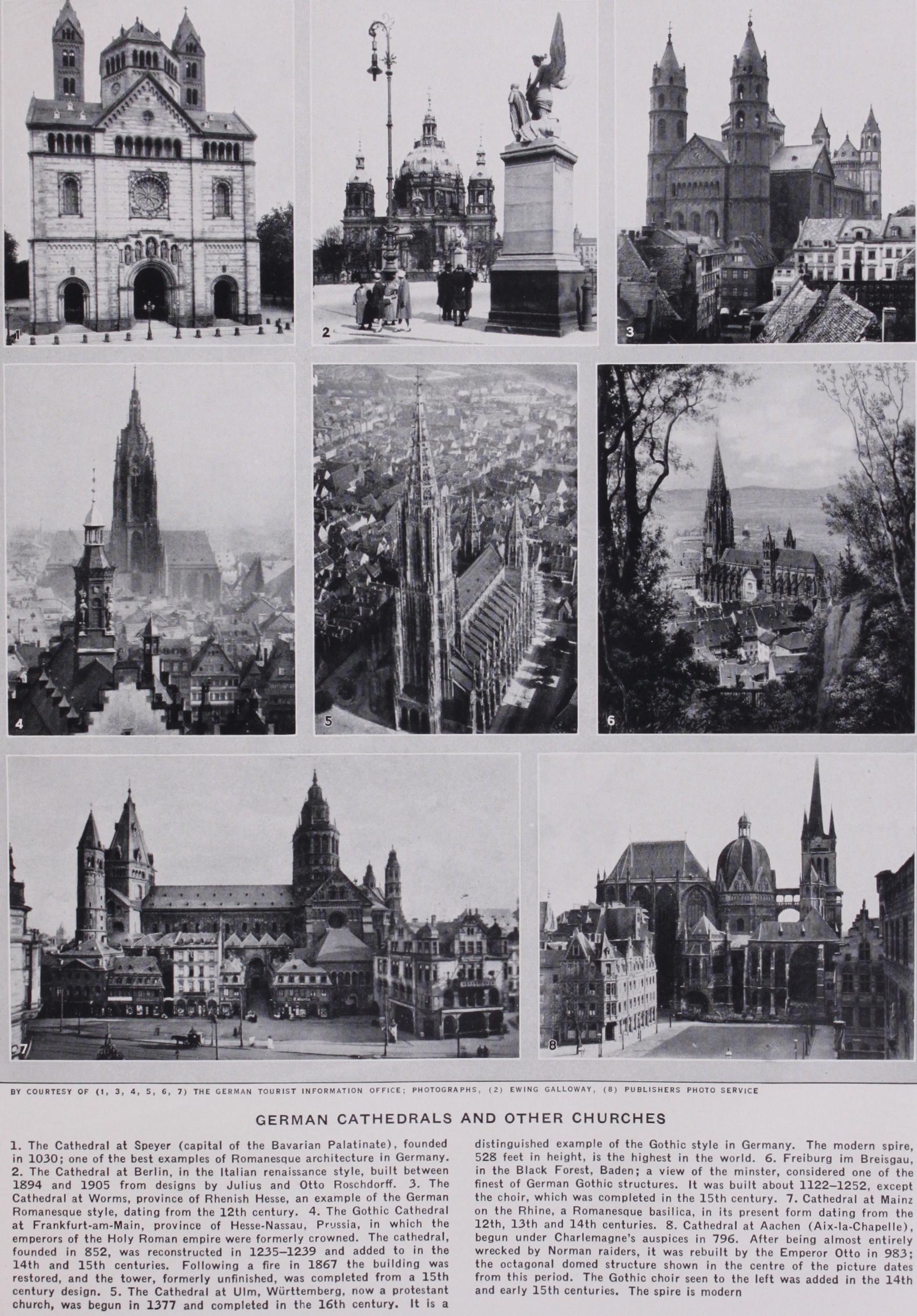
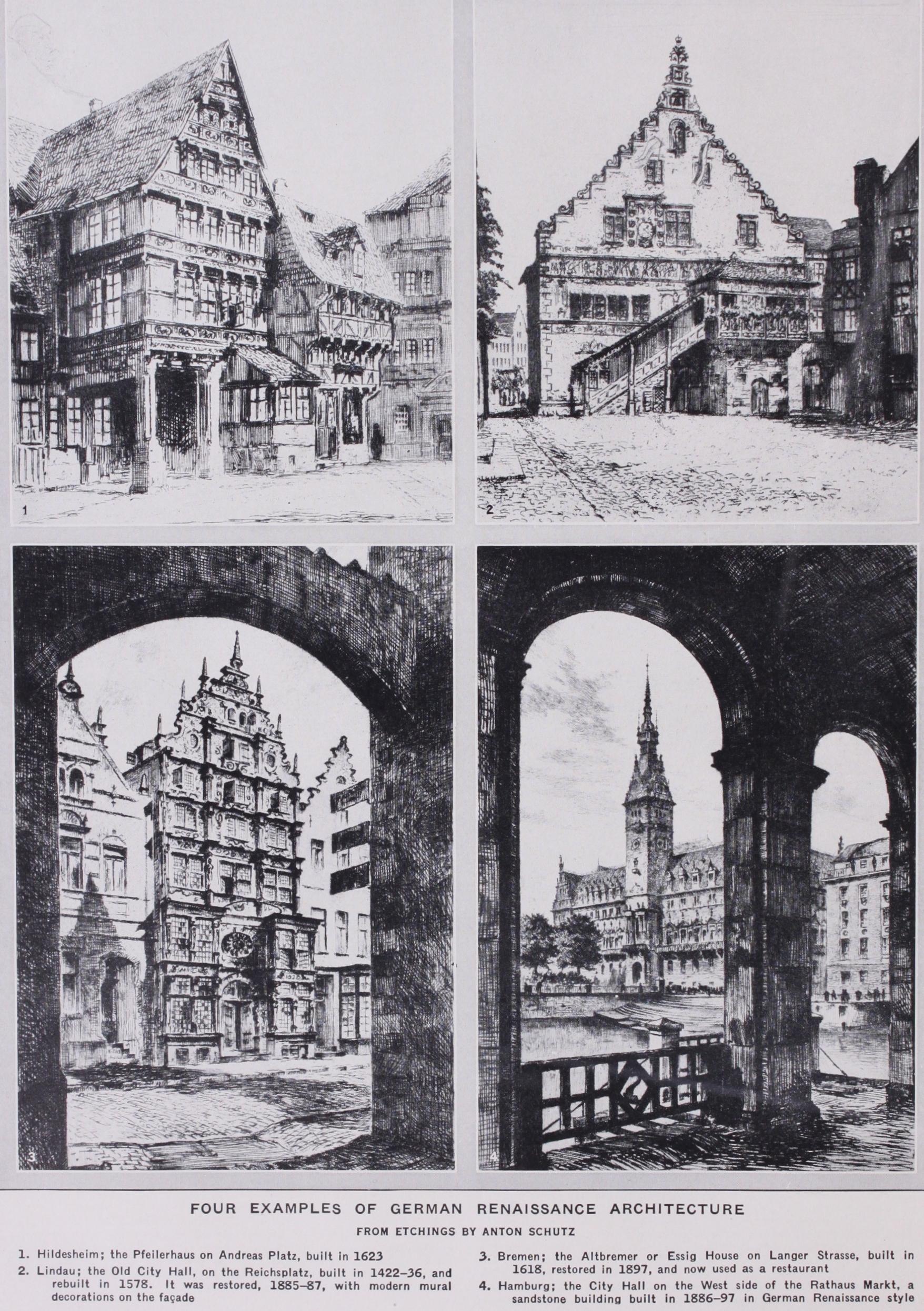
In Germany, this public expression of the emperor's views was regarded as an improper interference on his part in the details of public policy. Before consenting to the publication of the interview, the Emperor had obtained the approval of the Foreign Office in accordance with the usual procedure, but Billow stated in reply to a question in the Reichstag that through inadvertence he had not himself read the article. He offered his resignation, but the emperor declined to accept it in view of the political situation in Germany at the time. On account of the excitement aroused by the discussion in the Reichstag, the emperor announced on Oct. 31, 1908 that in future he would take no action of political importance without the advice of the chancellor. He felt humil iated, however, by Billow's behaviour, and in future placed no personal confidence in him.
England now decided on a considerable increase in her navy. Much ill-feeling had been aroused on both sides, but no one de sired a war, and it seemed still possible to co-operate in important matters in the interests of peace. This was clearly shown in the crisis which was precipitated by events in the Near East.
The Bosnian Crisis.—Since Russia had had to renounce its schemes of conquest in Eastern Asia, it once more became the chief object of its policy to gain control over the Balkan penin sula and the Black sea. Austria however was also anxious to secure permanent possession of Bosnia and control of the road to Salonika in case it should come to the partition of Turkey in Europe. Germany was now more closely interested in Near Eastern questions than before. A German company had begun the construction of a railway to Baghdad through Asia Minor in 1898; it was opened as far as Konia in 1904. Although Germany did not aim at using its economic power in Turkey to gain political control of the country, it nevertheless now had a greater interest in the maintenance of Turkey.
When the Young Turk Revolution broke out in July 1908, Austria considered it necessary to annex Bosnia (Oct. 5). Serbia protested, and was strongly supported by Russia. Austria could not draw back, and the danger of an armed conflict between the two Powers became imminent. Billow and the emperor, who were not informed of Austria's intentions until the last moment, thought Aehrental's action unwise, because they were anxious that the existence of Turkey should not be endangered ; but as Austria was the only remaining ally on whom Germany could rely, they thought that the only course open to them was to support Austria's policy unreservedly. Billow therefore informed Russia that if she did not recognize the annexation she would be held solely responsible for the consequences. After the severe defeat which it had suffered in Asia, and in view of the internal dis turbances which had followed, Russia was not prepared to go to war with Austria and Germany, and it was therefore obliged to yield and recognize the annexation. Austria thereupon withdrew its troops from the Sandjak. In Russia the course which events had taken was ascribed mainly to Germany's intervention, and still more effort was made to establish closer relations with Eng land and to arrive at an understanding with Italy.
Billow fully realized that what had taken place had rendered the situation more acute, and he tried to improve Germany's relations with France by expressly recognizing that the French, as neigh bours of Morocco, must enjoy a privileged position there (Feb. 9, 1909). He also made fresh advances to England, which had offered its offices as mediator in the Bosnian crisis. Before, how ever, he had achieved much success in this attempt, he resigned office.
Morocco: 1911.—The emperor appointed as his successor von Bethmann-Hollweg, who had been secretary of State for home affairs. Bethmann-Hollweg was a conscientious and painstaking official, but he was utterly inexperienced in foreign affairs, and did not possess the strength of will and power of decision which a prime minister needs. He was most anxious to improve relations with Great Britain by an agreement on naval building pro grammes, but he could not overcome the opposition of the emperor and Admiral von Tirpitz. Feeling that he needed a colleague with a diplomatic training to assist him in the conduct of foreign affairs, he induced the emperor in June 1910 to appoint Herr von Kiderlen-Wachter, who had been German ambassador at Bucharest, as secretary of State for foreign affairs. Although the new secretary of State was a man of intelligence and strong character, his imprudent and uncompromising conduct in the Morocco crisis of 1911 helped to make the position of Germany still more difficult.
The French were at this time taking further steps to establish their supremacy in Morocco. Kiderlen said that Germany could not let this pass without protest unless it received compensation. At first he demanded that the whole of the French Congo should be ceded to Germany, and persuaded the emperor, in spite of his unwillingness, to send the warship Panther to Agadir to protect the German subjects in Morocco while the fighting continued (July 1911). The threat which this implied embittered feeling in France, but also aroused anxiety in England, and Lloyd George made a strongly worded speech in the House of Commons. Kid erlen would have been ready to go to war to obtain satisfaction for his demands, but could not induce either Bethmann-Hollweg or the emperor to adopt his point of view. He was therefore obliged to moderate his claims, and an agreement was finally reached on Nov. 4, 1911, by which France ceded a part of its colonies in the Congo in return for full freedom of action in Morocco. Germany thus gained a small accession of colonial territory, but the distrust of its policy which had for some time prevailed in other countries was greatly strengthened. Germany was blamed for being willing to endanger the peace of the world for the sake of a slight advantage. In England in particular it was increasingly thought that Germany was meditating an attack on France, and that in that case Great Britain would probably have to go to war in support of France.
As a direct consequence of the French occupation of Morocco, Tripoli was occupied by the Italians. In Germany this new step towards the partition of Turkish territory was looked upon askance, but it was not desired to protest against the action of Italy because that would have meant the complete break-up of the Triple Alliance. Turkey however resisted, and the war in Tripoli dragged on until the autumn of 1912 ; and the Balkan States, which had formed a coalition under the protectorate of Russia, decided to seize the opportunity in order to put an end to Turkish rule in Europe. They attacked in Oct. 1912, and this opened the first Balkan War.
The Balkan Wars.—At this time when new perils were appear ing on the horizon, Germany began to consider the strengthening of its defensive forces. It was only with great reluctance that Bethmann agreed to the introduction of a new Naval bill under which six new battle-ships in addition to those already planned were to be laid down in the coming years. Serious anxiety was felt in Great Britain when this became known, and an oral discussion of the situation was proposed. Haldane, who was secretary of State for war, came to Berlin in Feb. 1912; he seemed ready to conclude a treaty of neutrality and to make certain colonial con cessions if an agreement on future programmes of naval ship building could be reached. At one time agreement seemed on the point of being attained, but it soon appeared that there had been a misunderstanding. The Emperor and Tirpitz believed that Eng land would be satisfied if the new Naval bill, the exact purport of which Haldane only learned when he came to Berlin, were applied, and an agreement were simply reached on future naval programmes. The British on the other hand considered that such an agreement would only be of value if it came into force immediately, and if the provisions of the German Naval bill were modified accordingly. It was also found impossible to agree on the wording of a treaty of neutrality, for Great Britain was anxious to avoid any drafting which might offend its French allies.
Although the desired agreement was not reached the two coun tries made every effort during the Balkan War of 1912-13 to maintain peace. The complete defeat of the Turks made it appear probable that little would remain of Turkey in Europe. Austria would, however, in no case accept an extension of Serbia to the Adriatic, whereas Russia supported Serbia's demands. France under the leadership of Poincare endeavoured to stiffen Russia in its attitude, even at the risk of war, while Great Britain used its influence to preserve peace. Russia finally made up its mind to give way. A conference of ambassadors of the Great Powers which was held in London in Jan. 1913 attempted to bring about an armistice and to negotiate peace. As, however, Serbia found it necessary to give up the northern part of Albania, it demanded a greater extension in the south-east ; this could only be at the expense of Bulgaria. This question led to a war between Serbia and Bulgaria, in which Rumania, Greece and Turkey came in on the side of Serbia. After a short period of hostilities, Bulgaria was obliged to conclude the Peace of Bucharest (Sept. 29, 1913). In Vienna the question once again arose whether it would be necessary to go to war to prevent the aggrandizement of Serbia. In view of urgent representations from Germany however, it was decided to raise no objection to the Peace of Bucharest. (See