
ARCHITECTURE; INDONESIAN AND FARTHER INDIAN ART) coloured no doubt by both China and Persia in proportion to the invading successes of their various rulers. All this truly eastern art ex pressed itself vigorously in sumptuous colour arrangements : in the buildings by the use of burnt clays, in lacquers by the lavish use of gold, crimson, etc., and quite noticeably in the magnificent costumes embroidered on the richest silk and satin. Marco Polo's amazement at the glories spread before his eyes in his travels through Persia, Turkestan and China was a sincere acknowledg ment of the existence of something at least unusual to a Venetian in the days of the glory of his native city.
Primitive peoples are lovers of colour in precise relationship to their independence of so-called civilized contacts. The artistic ex pression of the tribes of Central Africa, the natives of Polynesia, the Incas of South America, the Mayas of Central America, the American Indians and, finally, the Esquimaux, is shown in bold pat terns of pure colour which cover the most sacred structures and also the boats, tents and domestic vessels. In Asia, the Assyrians produced magnificent tile decorations which are among the gems of the Louvre collection. Egypt in its constant unfolding of its treasures from the royal tombs proves the freedom and versatility of her artists (see EGYPTIAN ARCHITECTURE). The furniture, pottery, glass, jewellery, fabrics, indicate an understanding of the combination of colour and form that is almost incredible. In Persia the magnificent blue dome of Ispahan, the tile, lacquers, rugs of Persian history from the Sassanian period to our day are additional indications of an instinct for colour that has persisted through the historic races of the world.
In approaching contemporary architecture, one is faced with certain preconceived theories as to what is acceptable. If an architect ventures to experiment, even though he directly copies an example of accepted historic reputation, he risks making his build ing conspicuous. The tradition of the monotone has developed so uniformly that the very knowledge of how to experiment seems to be a lost art. The painter theoretically equipped to handle colour has withdrawn to his studio and in his own restricted dignity produces canvases that may or may not eventually deco rate a building. Where the public might gain from the exercise of his ability he refrains, not necessarily from choice but for the obvious reason that where all buildings are monotonous there is no need of a colourist.
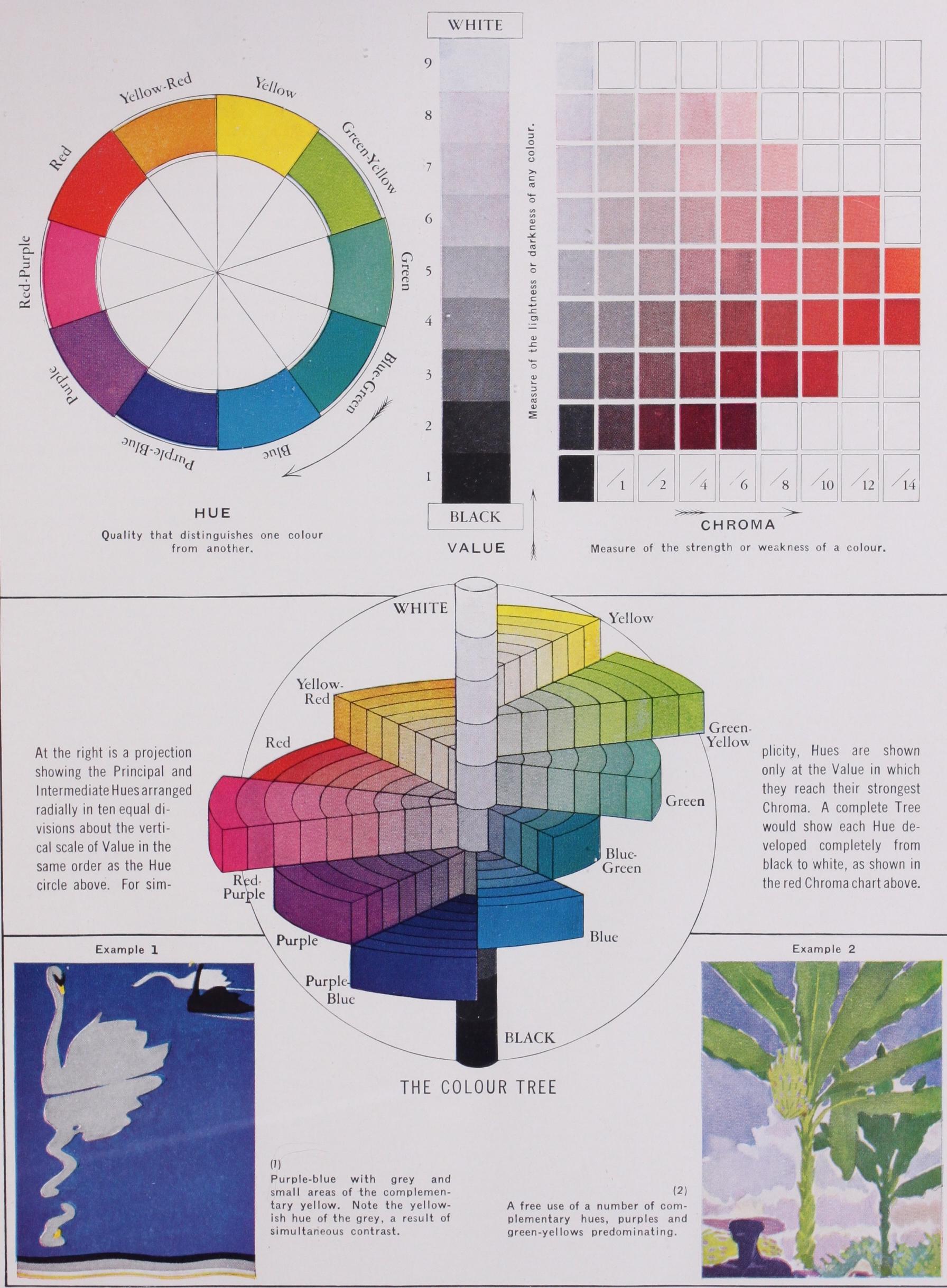
The dream of a coloured city, buildings in harmonious tones making great masses of beautiful pattern, may be less of a vision if the enterprising city developer realizes what it means. There is evident economy of effort in the application of colour in lieu of carved decoration which cannot be seen; and the novelty of a structure distinguishable from its neighbours has a practical value which must appeal without question to the designer and his public. The precise manner of handling colour, whether in masses, adapted as contrasts to the major tone of the building, as accents only, or in the entire structure by reason of its basic material, depends again on the programme of the creative designer ; but a positive conception of the employment of colour cannot countenance mere spots of bright tiles, marbles or other substances used to relieve the sobriety of a facade. The individual must learn what media fit his taste and are adapted to the conditions of his work.
The classic conception of colour was that functional elements should be in base colours, particularly where stone and metal were employed, and that only decoration should be toned. In modern construction, where the entire facade is applied to a skeleton frame of concrete or steel, the design would be false if the artist persist ently 'emphasized classicism where all construction is evidenced on the facade. As he creates his design, if he is willing, he can attempt accents and effects quite in keeping with contemporary building practice.
In recent years little of actual value has been produced that would indicate broad acceptance of the need of colour on buildings. The Radio City buildings in New York, striking as they are in mass and arrangement, carry on the classic principle of grey masses re lieved by richly decorated sculptures and entrance features. They do not indicate a departure from the norm of the stone block.
In exposition architecture, however, the public has been privi leged to see what might be acComplished with the architects en couraged to experiment. Here the painters have been asked to co operate. In Chicago, in 1932, while the results were somewhat confused due to a lack of organization in scheme, the effect was nevertheless striking and had a considerable influence on the many visitors. In New York in 1939, a more carefully analyzed colour scheme, using mural paintings to a degree before unknown and accepting a policy of separating the Fair into broad zones of colour —gold, blue, red, white,—produced a superb effect of mass, that at night, with the added attraction of lights carefully set to pro duce accents on trees, flowers, and the building blocks, developed a substantial result in the use of colour on buildings.
It is important to note the fact that the painters helped materi ally to accomplish this effect. Paint was the main element, for the use of more substantial materials could not be general in view of the cost. To the public the Fair in New York demanded compari son with the white Exhibition of Chicago in 1893, which capti vated the eye as an expression of neo-classicism, and where no colour of any consequence appeared. The World's Fair in San Francisco in 1939 also was designed with similar concentration on brilliant colour masses. The possibilities of colour in large masses have been established.