
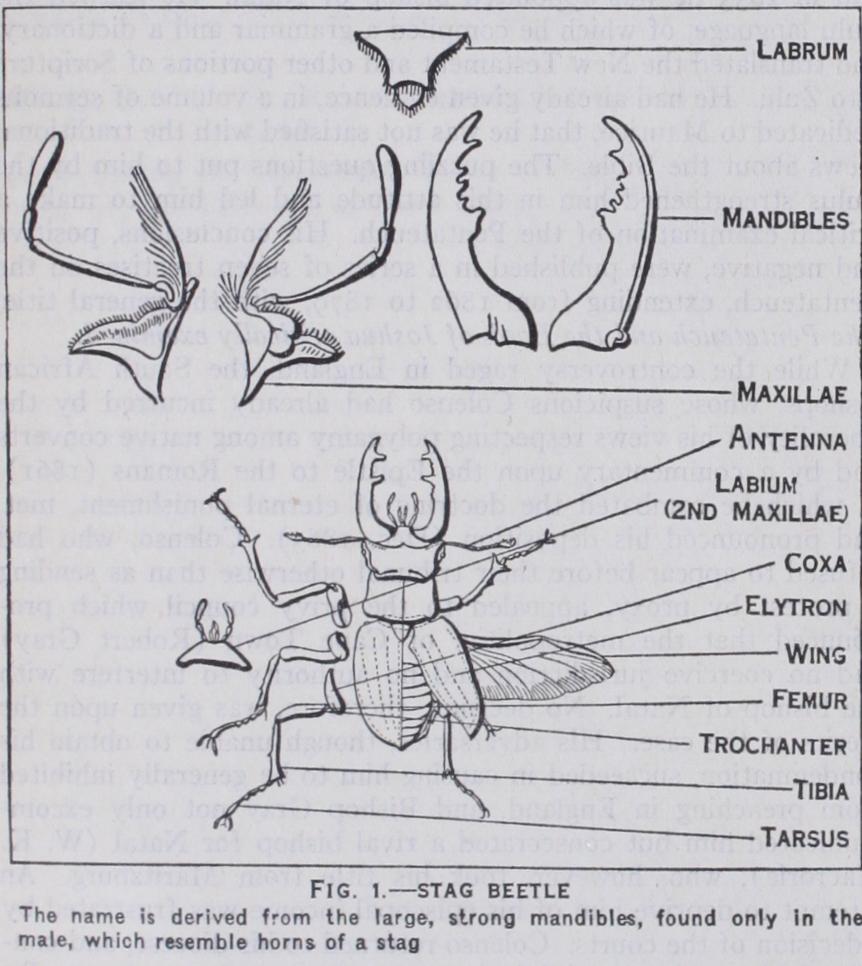
COLEOPTERA, a term used in zoological classification for the true beetles which form one of the best defined and most natural orders of the Insecta. They vary very greatly in size and include some of the largest and also some of the most minute members of that class : thus Dynastes hercules attains a length of 155mm. (6in.) while there are members of the family Trichop terygidae that look like mere specks, less than •5mm. long. The name (Gr. KoXeen a sheath, and IrTEpI, wings) is in allusion to the tore-wings which form horny or leathery sheaths or elytra which serve, when closed, to protect the membranous hind-wings which are folded beneath them. Their mouth-parts are adapted for biting and the prothorax is large and mobile. Beetles pass through a complete metamorphosis and their larvae are very varied in form, but generally possess legs or rudiments of them ; only rarely are they footless. The above general definition will serve to recognize the majority of these insects of which approximately i 8o,000 species have been described. They form, it may be added, the largest single order in the whole animal kingdom : about 3,400 species occur in the British Isles and over 20,000 species are found in N. America. Perhaps the most characteristic feature of beetles is the solidarity of the integument exhibited in so many species, which is an important factor in protecting them against various enemies, and has evidently contributed much towards their domi nance in the insect world. The habits of beetles are extremely varied, but they are more especially insects of the ground and either inhabit the soil or the various decaying animal and vegetable substances present. Consequently dung, carrion, vegetable refuse, rotting wood, and fungi all give sustenance to large numbers of these insects. On the other hand, many beetles, especially those of the metallic or other brilliant colours, are met with in associa tion with growing vegetation and a considerable number are aquatic or sub-aquatic in habit.
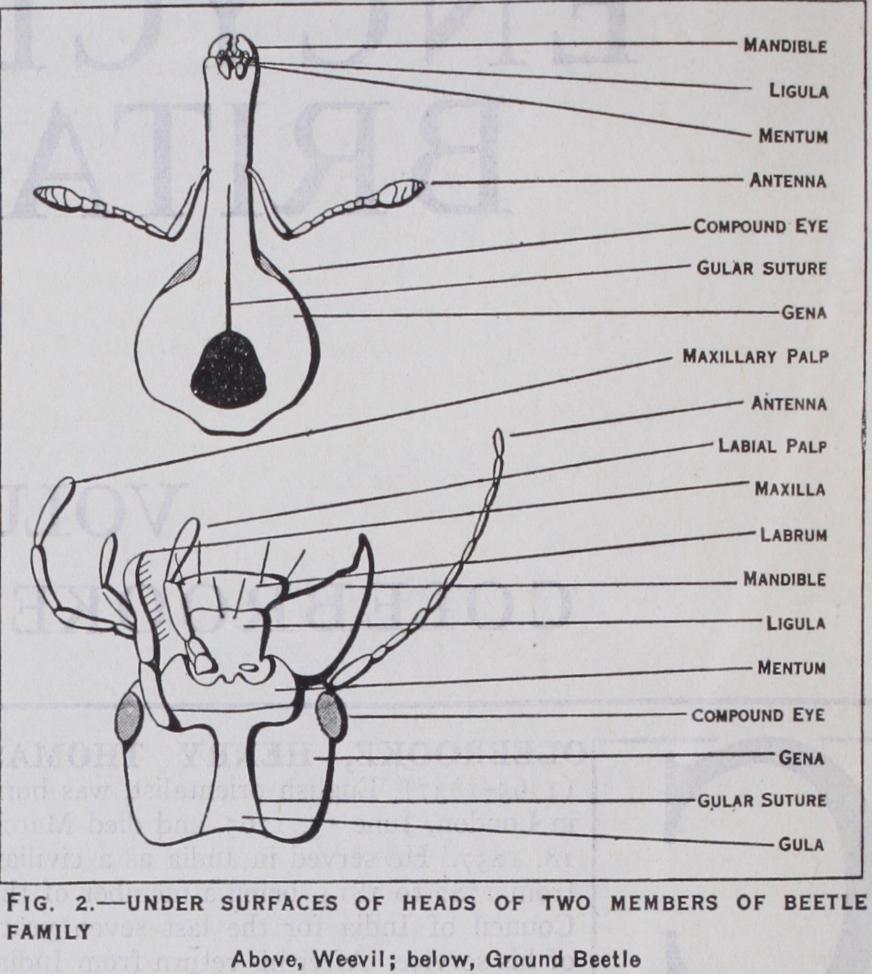
systems of classifying beetles have been proposed and one of the most satisfactory is that of Ganglbauer, who divides them into two main suborders and seven superfamilies, as below.