The Frog Shells
THE FROG SHELLS Genus RANELLA, Lam.
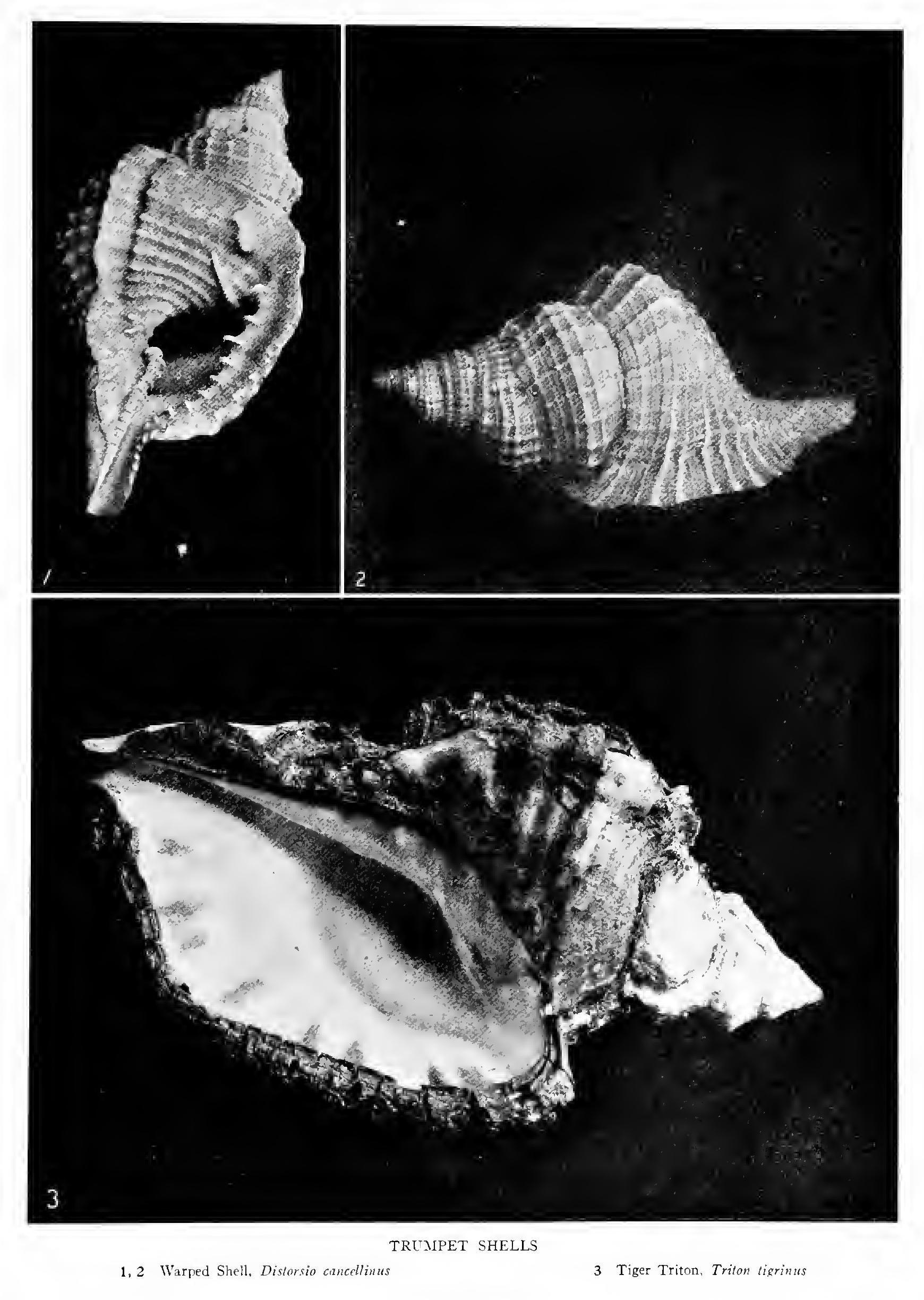
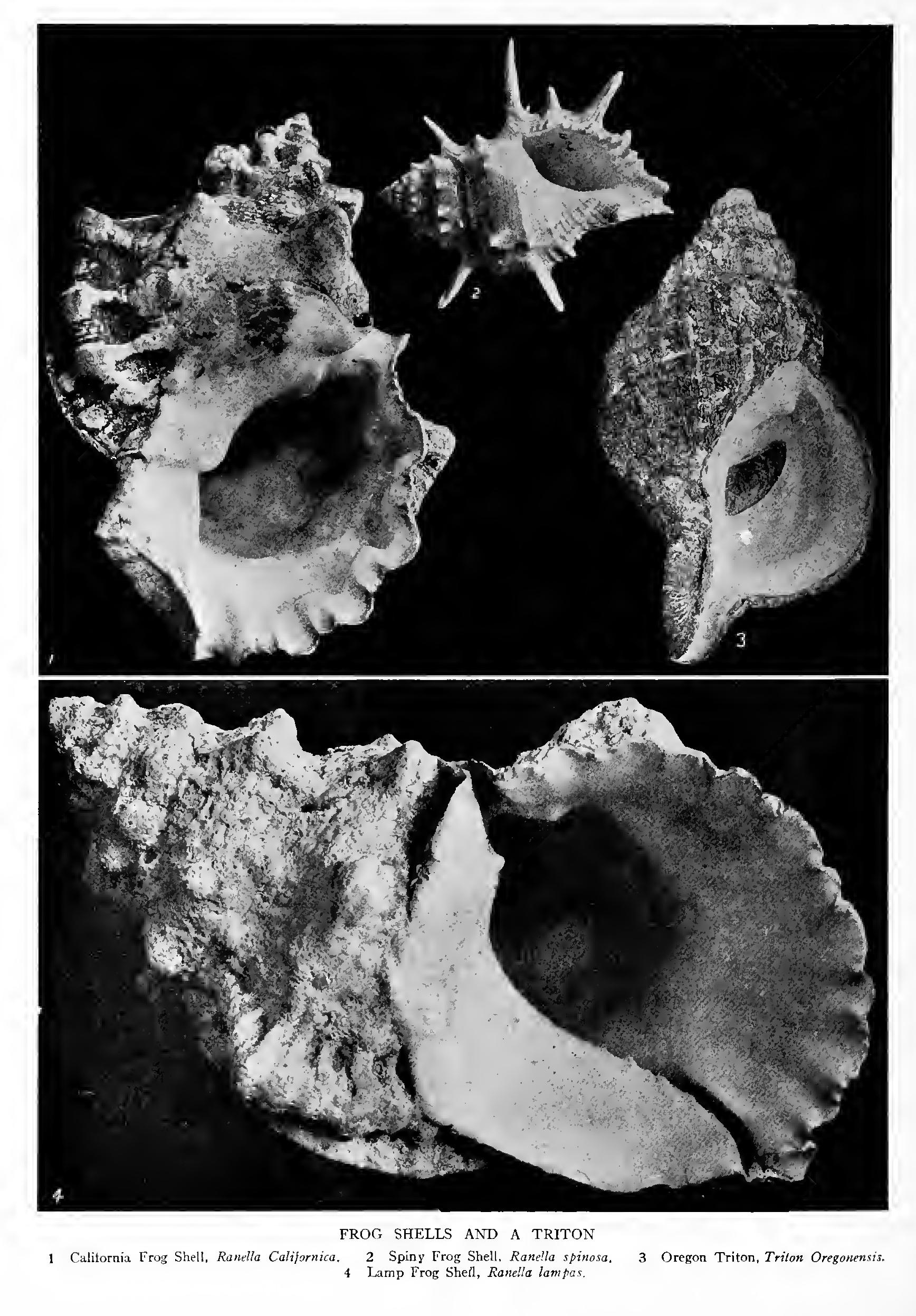
The Frog Shells are mostly large and heavy, with surface granulated and tuberculated. Possibly this warty appearance accounts for the name. Possibly it is the squat shape of some species, with their sprawling leg-like tubercled processes. The genus is distinguished from the Tritons by the uniform presence of a varix on each half coil of the shell. These form thick ridges on opposite sides, making the shells distinctly two-edged.
The genus of about fifty species is distributed in tropical seas. The animals are active in movements, creeping on the broad foot over coral reefs and rocks.
The Spiny Frog Shell (R. spinosa, Lam.) has two thorn like tubercles on each of its varices, and short, sharp spines on the ridges between. The shell is stout, with short spire and canal, and ovate aperture. Colour, light brown mottled with darker. Length, 2 to 3 inches.
Habitat.— Mauritius, Indian Ocean, Philippines.
The Californian Frog Shell (R. Californica, Hdt.) is a fine species, 21 to 4 inches long, with heavy, strongly ridged and tuber culated shell, turreted spire, wide aperture, with flaring lips, and short anterior and posterior channels. The colourless surface is irregularly banded with chestnut; the lining is faintly rosy.
Except for its greater thickness and stronger development of nodules, this species might be mistaken for R. ventricosa, Brod., a Peruvian species with an exceedingly thin shell.
Habitat.— Southern and Lower California.
The Lamp Ranella (R lamps, Linn.), the heaviest shell 54 The Tritons and Frog Shells in the genus, no doubt made a useful lamp for primitive man. Its strong revolving ridges are elaborately set with nodules. The
flaring lip is deeply crenulated. There is a posterior channel equal to the anterior canal. When half grown the shells are heavy and show the adult characteristics. The creamy ground colour is stained with orange brown; the aperture has t flesh tint. In young shells the colours are brighter; the lip and aperture orange-red. Length, 3 to 9 inches.
Habitat.— Red Sea, Indian Ocean, Philippines.
The Argus Ranella (R. Argus, Gmel.) has an ovate, ven tricose shell with nodules of moderate size evenly distributed over its surface, sometimes large and few, sometimes small and crowded. The colourless surface is spirally banded with brown. The eyed appearance is due to wearing off the brown on the nodules. The thick lip is obscurely wrinkled inside, and often bears a tooth at the edge of the anterior canal.
This species feeds by night on the skeletons of seals left by fishermen on the rocks on the Islands of Amsterdam and St. Paul (Indian Ocean). A dead bird or a fish hung as bait over night in water thirty or forty feet deep will capture them without fail. Fresh specimens are covered with a brown, wrinkled epidermis. Length, 21 to 4 inches.
Habitat.— Cape of Good Hope, Chili, Indian Ocean, New Zealand.
The Beautiful Ranella (R. pulchra, Gray) has its varices prolonged into fan-like wings or fins, sculptured by ribs and nodules. The whorls are rounded, the apex elevated, the white aperture prolonged into a considerable canal. The lip and columella are narrow and smooth. Length, iI to 2i inches. Colour, pale yellow mottled with pale brown.
Habitat.— Japan, Philippines.
55