The Oyster Drill Family Muricidae
THE OYSTER DRILL FAMILY MURICIDAE. Genus UROSALPINX, Stimps.
Shell
elongated, oval, longitudinally ribbed or undulated, spirally striated; varices none; aperture ending in short canal; outer lip toothed, operculum semi-cordate, nucleus lateral and a little below middle; lingual ribbon well developed; ova capsules oblong, shouldered, widest near top.
A small genus of twenty recent species differing from Ocinebra in its lack of varices, open canal and smoother shell; resembling Trophon in its dentition and Purpura in its operculum. It seems to Tryon a connecting link between Murex and Fusus. Distri bution, Atlantic coast of America, Cape Horn, Cape of Good Hope, New Zealand, California.
The Oyster Drill (U. cinerea, Say) is a small unobtrusive looking citizen of rocky shores; his modest yellowish gray shell attracts little attention. The solid spire bears strong varicose folds across the whorls; the largest specimen is scarcely an inch long; the stronghold is closed by a horny door. You may find the rocks and drift-wood fragments alive with these mollusks at low tide almost anywhere from Maine to Florida.
This is the "oyster drill," the despair of oystermen, who place it first among the destructive agencies against which the oyster industry has to fight constantly for its life.
The animal has an extremely small foot, with a yellowish border and dotted with gray above. The small head protrudes just far enough to show its black eyes. The siphon reaches scarcely beyond the tip of the canal.
The drill has an insatiable hunger and thirst for oyster pulp, and untiring industry in appeasing its appetite. It moves slug gishly among the helpless bivalves, chooses a victim, and with its strong toothed radula soon bores a neat round hole through one valve near the hinge. It is the method used by all carniv
38 The Oyster Drill orous "snails." Through this hole the soft parts are sucked; the solid flesh may be picked at leisure from between the gapingvalves.
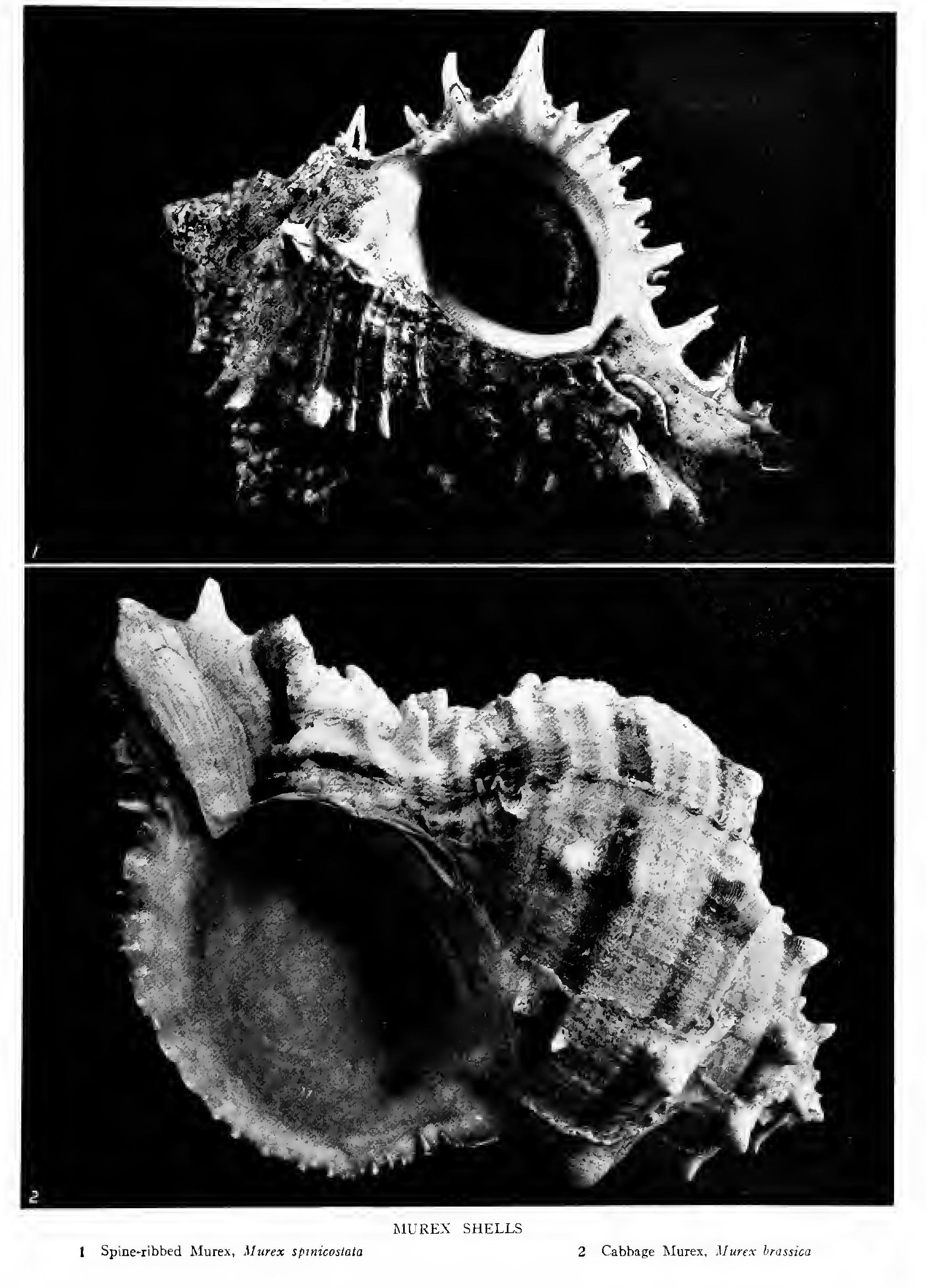
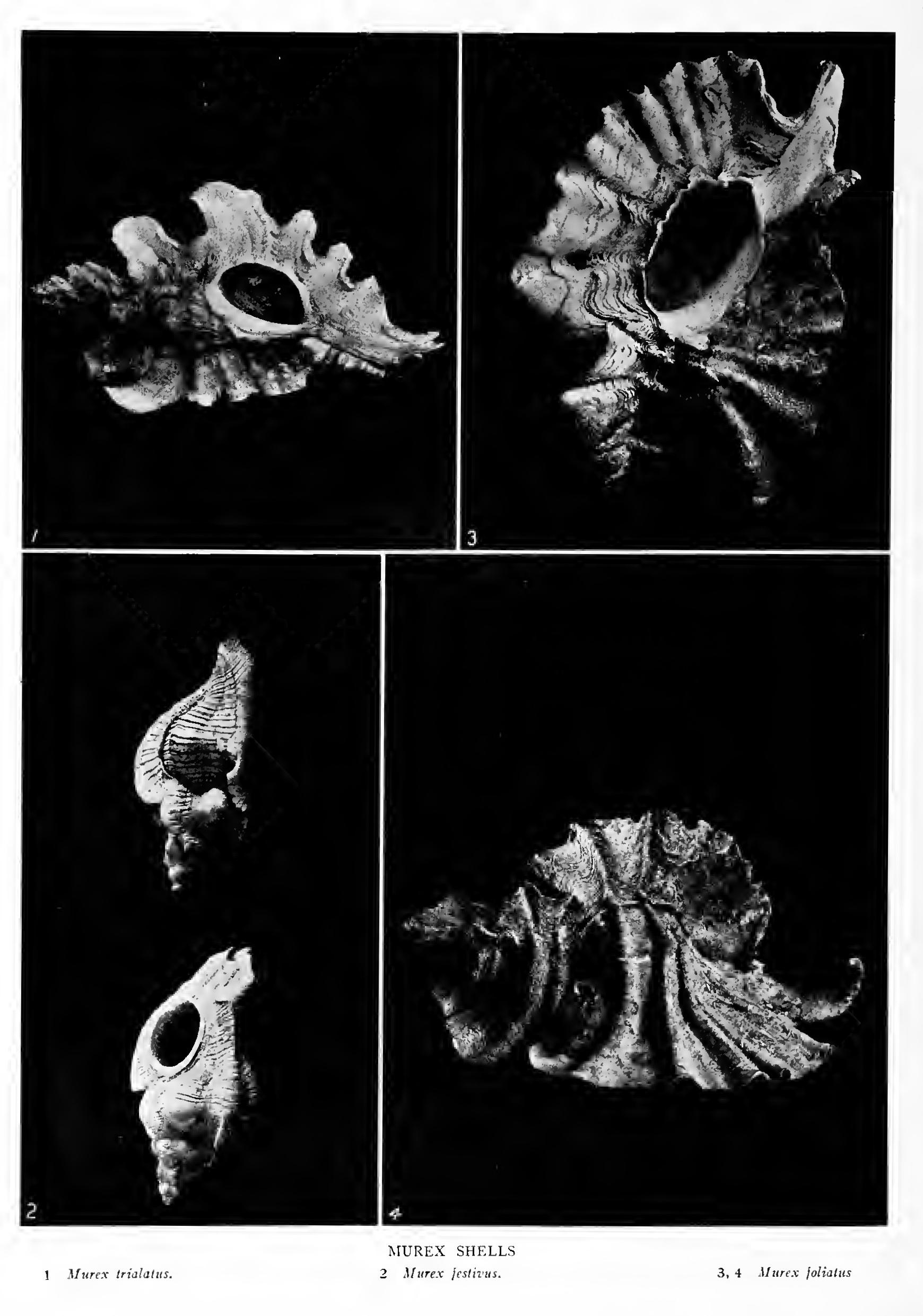
At intervals the oysterman drags his "tangle," a great mop made of untwisted rope fibre, and his dredge over the oyster beds, and destroys all the drills caught up by them. These are not effectual exterminators by any means; but they are the best things yet devised to combat the enemy. The creature's small size, its rapid multiplication and its ravages when present in numbers make continuous warfare upon it the only salvation for the oyster beds.
Chesapeake Bay was probably the original home of the drill. From this locality it has migrated north and south; trans planted with the oysters to San Francisco Bay, it has spread also on the west coast.
Each female lays during a period of several weeks a total of ten to one hundred egg cases. Each one is vase-shaped, vertically flattened and keeled, of clear, parchment-like mem brane, containing about a dozen eggs. The cases are attached by broad foot-like bases in regular rows, forming patches on the under sides of overhanging rocks, or other support, just above low water mark.
The Florida Drill (U. Floridana, Conr.) differs from the Atlantic species in having shouldered whorls, the ribs forming knob-like projections at the angles. The ashy surface is not banded. Aperture, purplish. Length, i I inches.
The Mexican Drill (U. Mexicana, Rve.) has its nodulous sculpture yellowish on a chocolate ground. It is less than an inch long, and resembles U. Floridana.