The Pelicans Foot
THE PELICAN'S FOOT Genus APORRHAIS, Dillw.
Shell spiral with whorls angled and set with knobs; outer lip much expanded, ending in two to three flattened fingers, as 122 The Conch Shells long as the shell proper; posterior and anterior canal prominent. Four species in the North Atlantic.
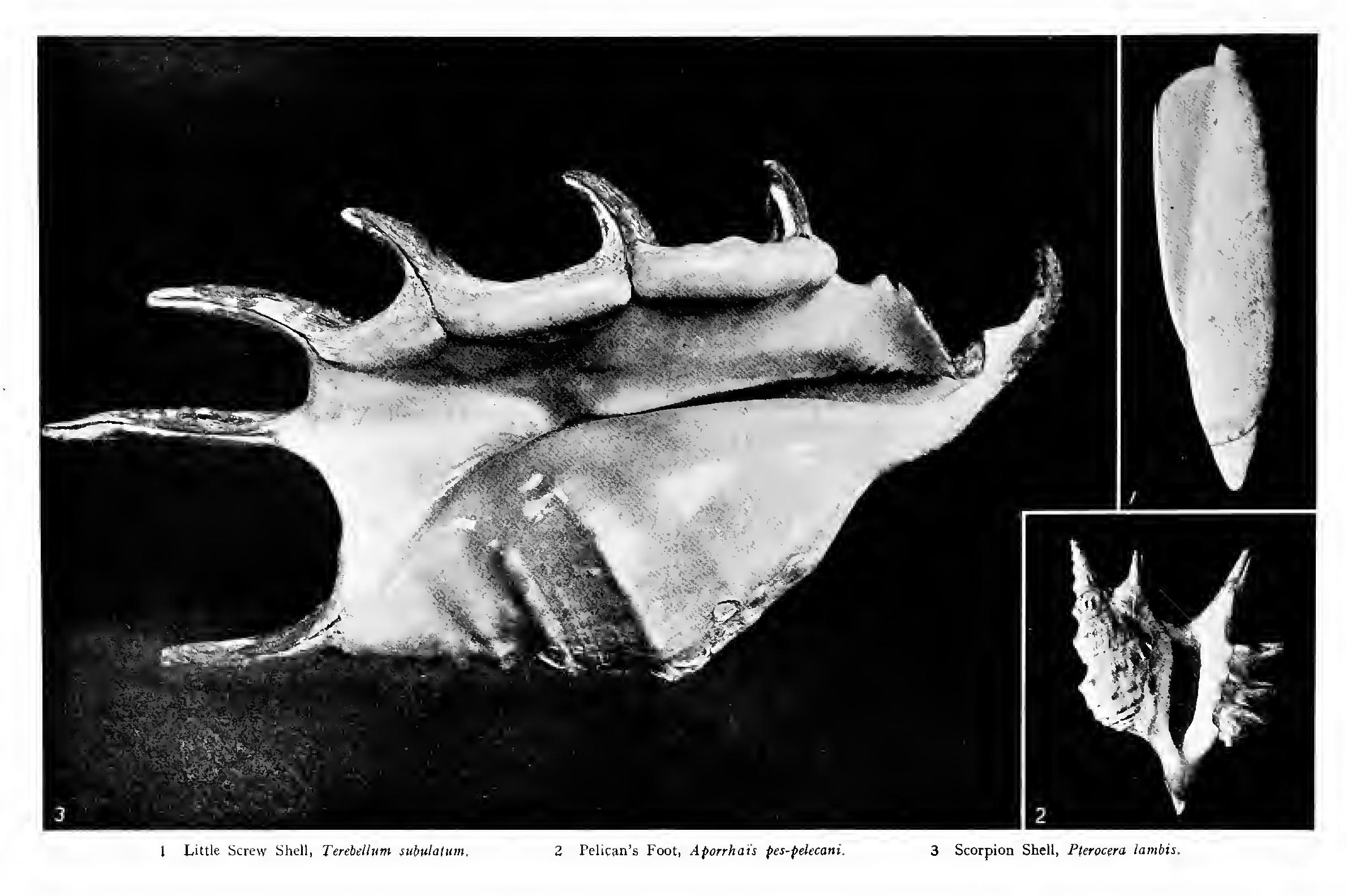
The Pelican's Foot (A. ,es-pelicani, Lam.) is a strange looking customer. The four webbed toes of a pelican's foot are certainly suggested by the modifications of this shell's outer lip. The toes and thin webs extend backward, covering a consider able portion of the body whorl of the shell.
This mollusk is slow and awkward in movement, throwing out its foot and twisting its neck in its efforts to get along. Its forked shell lip is formed late in life, after which it merely becomes thicker. By counting the layers, it is believed, one may determine the age of the individual. The flesh is eaten by the poorer classes
in Venice. In Edinburgh it is called the "blobber-lipt whilk." This peculiar shell is likely to occur in any collection. It is yellowish brown. Length, about 2 inches.
Habitat.— European seas.