The Typical Conchs
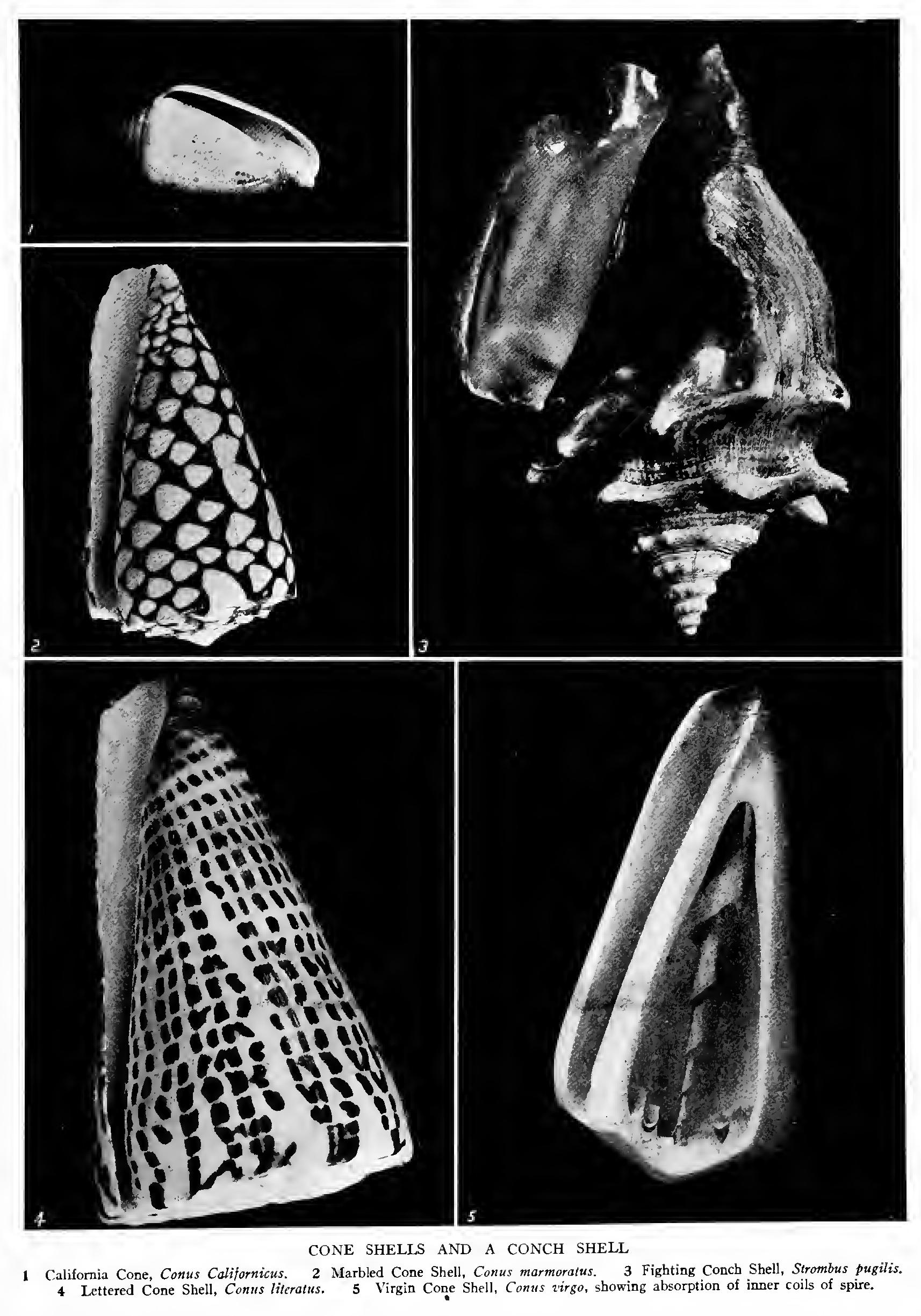
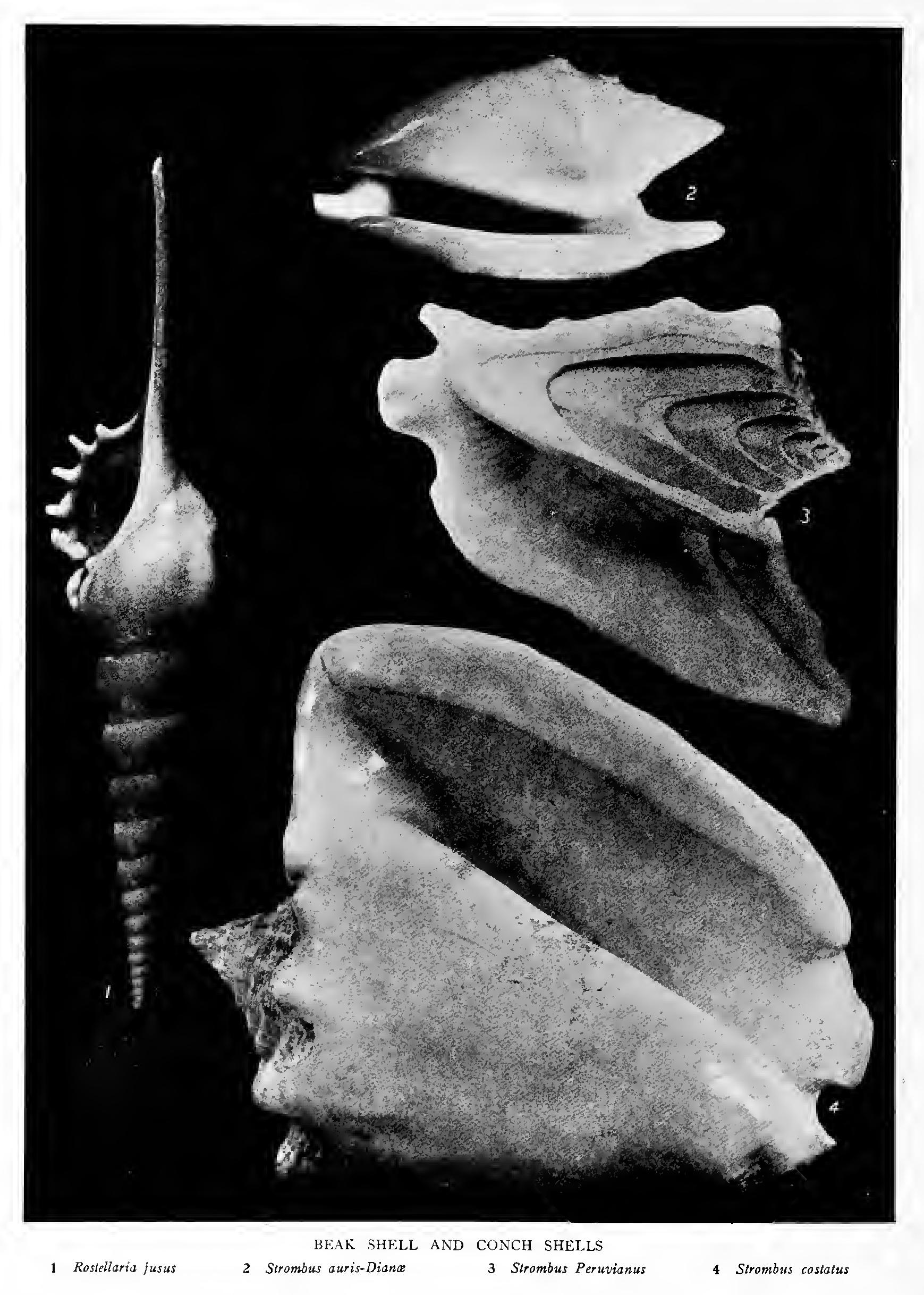
THE TYPICAL CONCHS Genus STROMBUS, Linn.
Shell ovate, solid, usually tubercled, lip dilated only when full grown, polished within. About sixty-five species, chiefly of large size, represented in Florida by a few West Indian species.
The Queen Conch (S. gigas, Linn.) is the largest mollusk native to any part of this country. It ranks with the giant shells anywhere, indeed, for it occasionally measures a foot in length, and attains a weight of five pounds. Moreover, it is a handsome shell, for its horny, rough exterior has polished rosy lips and lining. Valuable pink pearls are found within the mantle folds, though they are but semi-precious, being china like in texture rather than pearly.
The pink outer layer of the lip has a white foundation, and is used by cameo-cutters. Shells which give greater colour contrast between the raised figure and its background are preferred in the cameo trade. The pink fades by exposure to light in both pearls and cameos. In spite of these faults conch shells are much used.
117 The Conch Shells Quantities are shipped yearly to Liverpool and other cities to manufacturers of porcelain. Ground to powder, they are espe cially adapted to this use.
Though it lives only in tropical waters I fancy the conch is pretty well known all over the country. People call it by its name, and are always glad to have specimens. They are a com mon ornament on mantels, and most shell fanciers have them. The first one I ever saw came from the grocer. He had several barrels of them, and presented one to each purchaser of a quarter's worth of a new brand of laundry soap! Few who live near the ocean can realise what a profound sensation this shrewd advertis ing device created among the prairie folk whose largest and most beautiful native mollusk is the dingy, but pearly-lined river clam.
In Florida these giants clamber over the coral reefs, and in still greater number along the coasts of the West Indian isles. The "fountain shell" is a popular name, though I do not know why. You may see the bare walks and flower beds outlined by rows of weather worn and ugly conch shells in many southern cottage gardens, and conch shell hanging-baskets overflowing with trailing vines suspended in windows and from the lower limbs of trees. The dinner horn on the plantation is often a
conch with its spire sawed off. The welcome "shell blow" calls the West Indian Negroes from the sugar cane fields at noon. I have seen these conchs also on Iowa farms and on ranches in Wyoming serving the same purpose. The ancient inhabitants of the islands made, various rude weapons and utensils from this over abundant shell. These have been unearthed from shell mounds in Florida and elsewhere.
Alive among its coral rocks the conch is master of the situa tion. The sheR is massive, but the animal is strong enough to carry it without inconvenience. The muscular body thrusts out the arching foot, which extends forward a thumb-like process, the foot proper, with a creeping disk scarcely larger than a thumb nail. The enlarged hind portion of the foot bears the claw-like operculum on its extremity.
The peculiar foot gives rise to a peculiar gait. The conch is impulsive in temperament. It does not glide, but jumps along, striking the sharp claw into the sand, and flopping the shell from side to side as it proceeds. A most astonishing sight is a frightened conch taking long leaps, and making quick turns to escape capture 118 The Conch Shells when pursued. If placed on its back, it rights itself by a somer sault. A downward slope is a great advantage, for here the weight of the shell becomes a propulsive force, and the foot is kept busy lifting the shell into positions of unstable equilibrium, when a slight, push of the operculum sends it rolling down hill. This is convenient in getting back to the water after being stranded on the beach.
The giant conch is the scavenger of our tropical beaches; it is believed to subsist wholly on carrion. The sense of smell is as keen as the remarkable eyesight. Dead fish and other animal refuse attract great numbers to the spot where it is placed.