Exotic Plums
EXOTIC PLUMS The old-fashioned New England garden with its fine plums— damsons, green gages, and the like—points us back to the time when the colonists came to the New World and brought the fruit trees they had known in the Old. These common plums are varieties of the woolly-twigged, thick-leaved European Prunus domestica, and they still do well in the Northeastern States and on the Pacific slope.
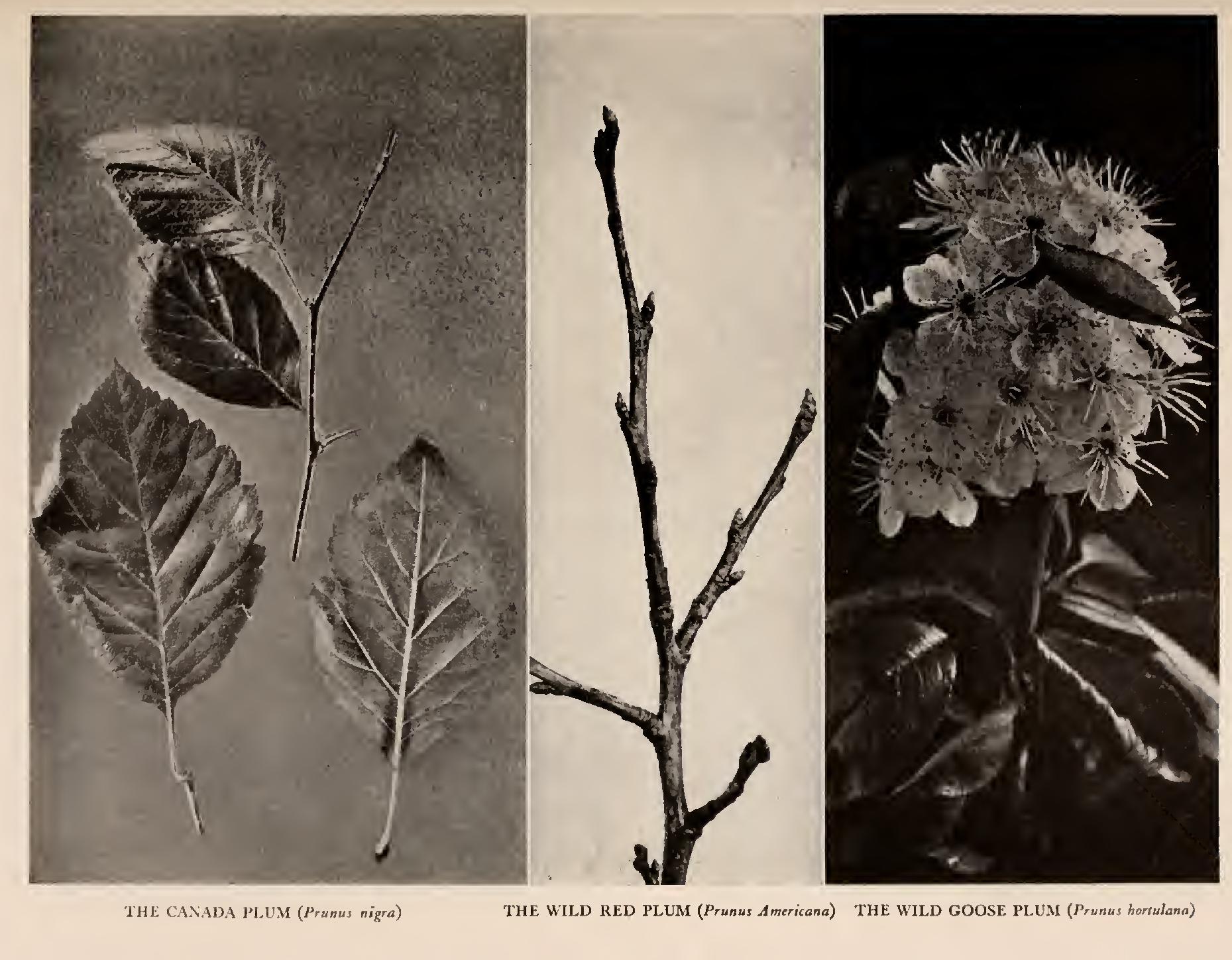
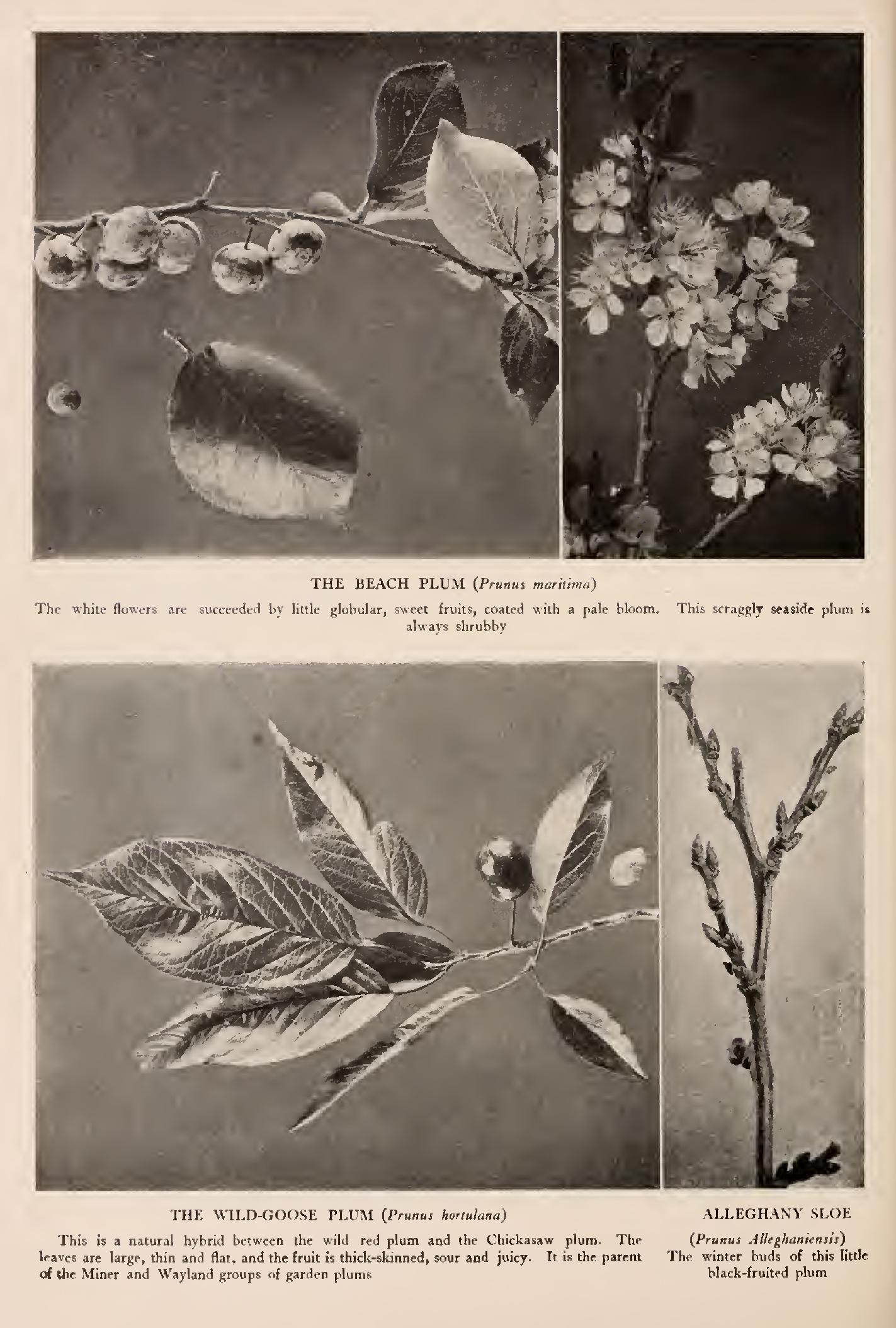
The native plums, improved greatly in the past half century have proved the best for the prairie states and for the South.
Now a fine Japanese plum, Prunus triflora, hardy, prolific and generally immune from the black knot, a fungous disease of native plums, gives promise of thriving in the South and in the Middle West. Its fruit is large and handsome and keeps well, though in quality it is not considered equal to the European varieties. Crosses between the Japanese and the native American
plums promise well. Prune raising as an industry was old in Europe before it came to us. Now France ranks second to California. Prunes are dried plums. Only certain sweet and fleshy species can be profitably dried.
Peaches, almonds, nectarines and apricots, all stone fruits, and Old World relatives of plums, have been introduced into cultivation here. The almond, with its dry, woody flesh, is commercially the most valuable species in the genus. Bitter almonds yield almond oil and hydrocyanic acid. The pit of the sweet almond is one of the most important nuts.