Raising Catalpa Timber
RAISING CATALPA TIMBER The Yaggy plantation of 44o acres of catalpa trees is the best example of what a Kansas fa'rmer's woodlot can yield. It is reported in Bulletin 39 of the Bureau of Forestry, and from this source the following facts are taken: The land lies in Reno County, near Hutchinson, Kansas, in the valley of the Arkansas River. It is a rich, deep, sandy loam, underlaid by soft, sandy clay. Both surface soil and subsoil are several feet thick, and give free range to water and tree roots. The water table is from four to six feet below the surface.
In this excellent cultivated farm land seedling catalpas one year old were set in rows, three and a half feet apart east and west, six feet apart north and south. Mr. Yaggy grew his own stock from seed. The planting covered three years: 120 acres in 1890, eighty acres in 1891, and 240 acres in 1892. Corn was planted between the rows the first year, and the cultivation of the corn three times served the growing trees. They branched and made bushy tops and good root growth. Next year they were cut off at the ground, except strips of three rows each, for each twenty rows, reserved for windbreaks throughout the planta tion. Strong unbranched shoots six to twelve feet high came up the second year, with no cultivation. All but the best one of these sprouts were cut off at the end of the second season—this one to become the trunk. Cultivation was thorough the third summer. The trees branched at eight to twelve feet high, shading the ground and keeping out grass. The leaves formed a mulch this third winter, and cultivation was thereafter discontinued.
After six years of growth thinning was begun, the largest trees being taken out; in the winter of 1897-8 one-eighth of the total number of trees were removed. These trees made two posts each, the larger one four to six inches in diameter, the smaller one two to four inches. There were 15,50o trees cut on the eighty-acre tract in these two years, making twice that number of posts. The lower posts brought ten cents each, the upper cuts four to six cents. The tops yielded some fuel.
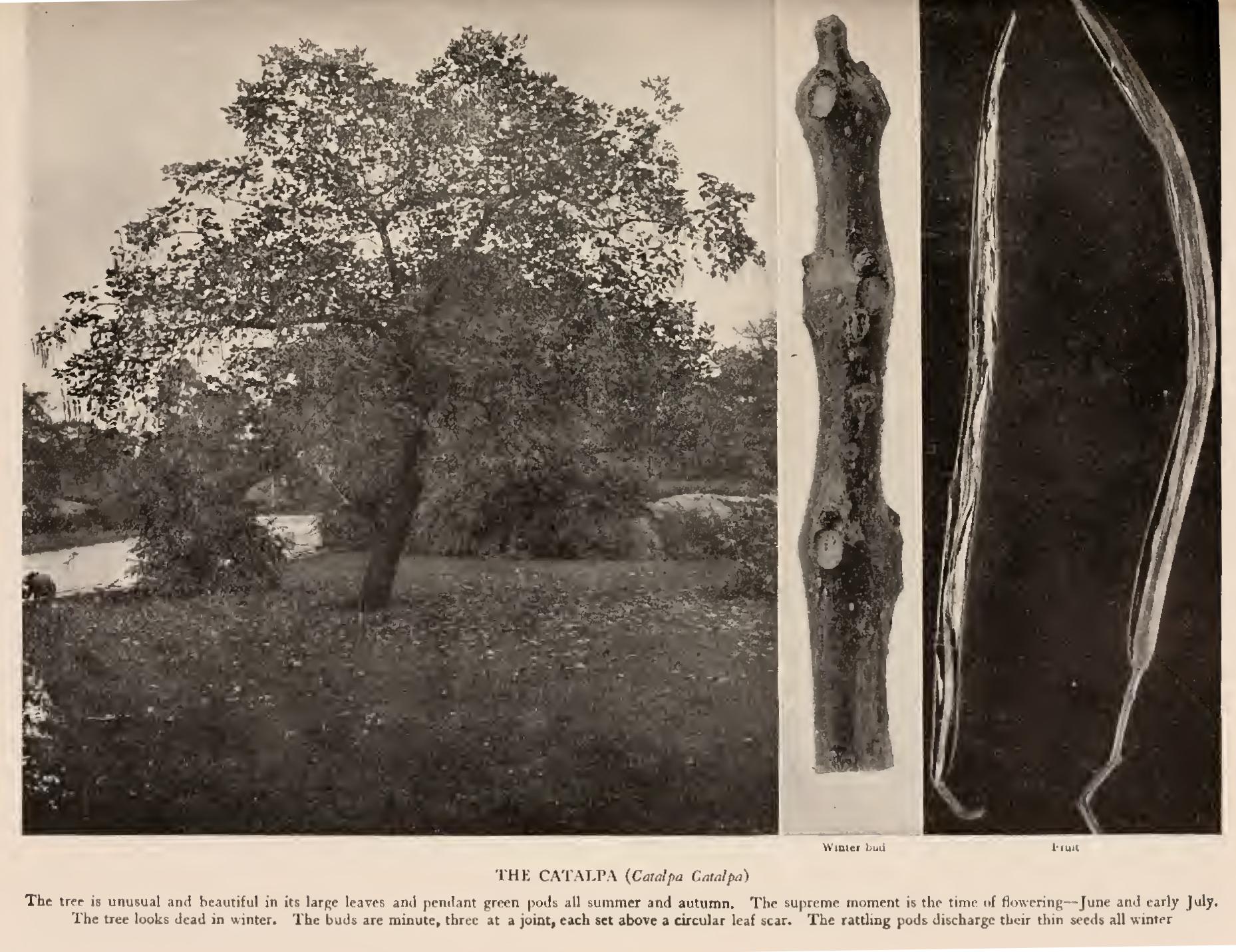
The Division of Forestry made some measurements of typical half-acre blocks on Mr. Yaggy's farm, in 1900. The plantation was eight to ten years old, and a part had been yielding posts and fuel for four years. Careful records of the height, diameter, number and condition of all the trees on the tracts were made. These were reduced to terms of posts, stakes and fuel,
at current market prices. To this record was added the results of four years of thinning, and the total showed a gross value of $267.15 per acre for the crop produced in ten years.
An equally careful record was kept of the cost of every step in the development of the plantation. To the expense list was added rent of the land and compound interest on the invest ment of each year. The cost per acre by this record is shown to have been $69.90 for the ten years. This deduction from the gross value leaves a net gain of $197.55 per acre, at ten years.
The cutting off of all the trees would bring in this handsome return, but it would be the greatest folly. As posts bring better prices than fuel, so railroad ties are better than posts, and telegraph poles than ties. Trees big enough for cross ties are salable for general lumber purposes. A post worth ten cents can be grown in six years. At fifteen years the same trunk makes a tie worth fifty cents and two or three posts besides. At twenty-five years it is fit for a telegraph pole, at not less than a dollar. The general market quotations run from $1 to $50 per pole. The wise owner of a catalpa plantation thins his stand for posts and stakes, holding his best trees until they command the prices of ties or telegraph poles. The wood is as durable as any timber known. It is not inferior when most rapidly grown, as many woods are. While the large trees are maturing, young ones are on from stumps. The plantation is thus a permanent forest.
Hardy catalpa is successfully grown on the deep, porous soil of eastern Kansas and Nebraska, south into Arkansas, and east to the Wabash Valley. Outside of this catalpa belt, locust, osage orange and Russian mulberry, all quick-growing post and tie timbers, are beginning to be commercially grown. Tamarack, bur oak, white and green ash, grow farther north. Black walnut, post and white oak, and the red juniper are all worth growing for profit in the states bordering the Missouri. In fact, the whole upper valley of the Mississippi is in need of tree planting to supply the local needs in the next two or three decades, until a definite forest policy is adopted. There will be demand for all such tree crops, as long as wooden posts and ties and poles are used.