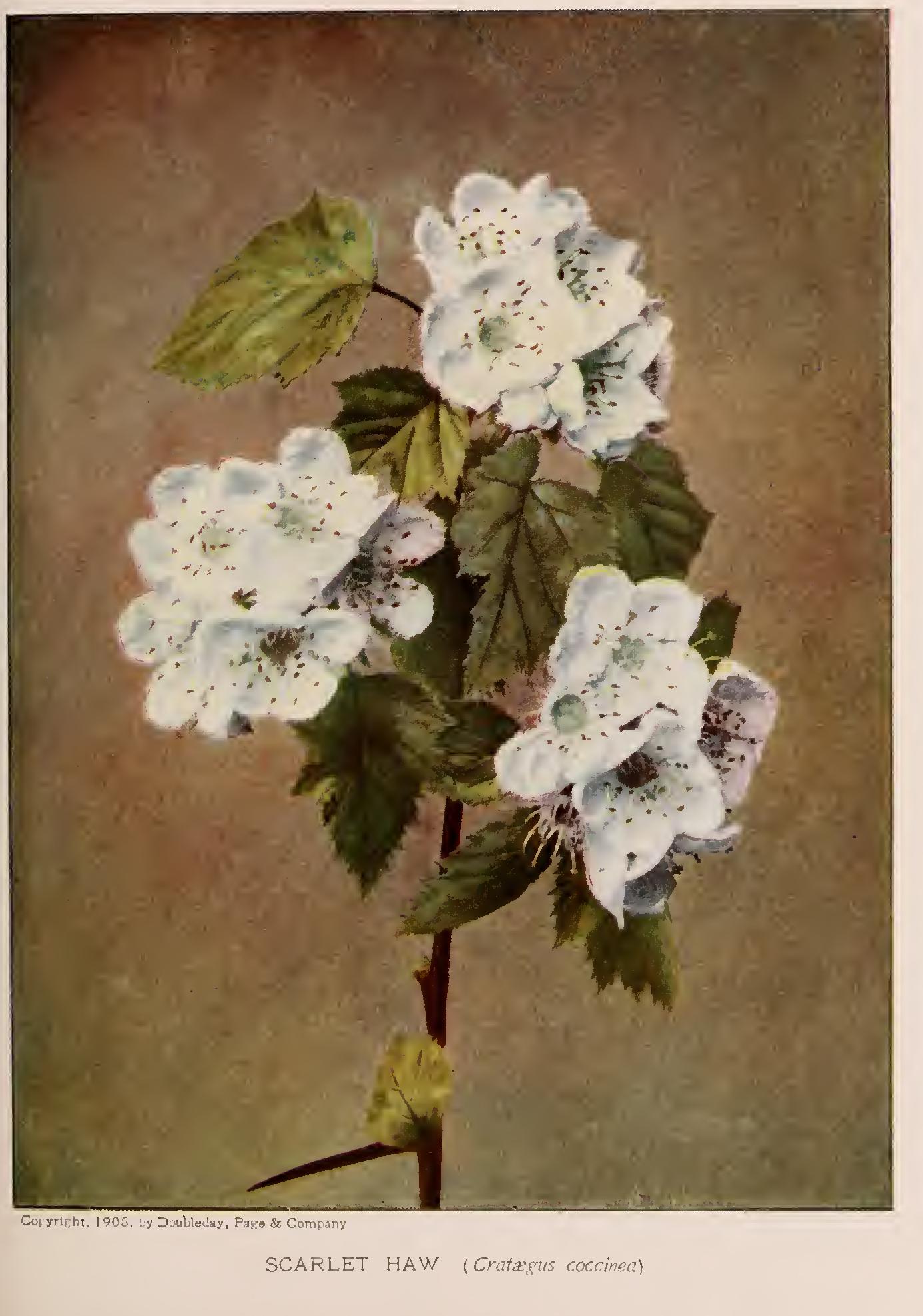
The Hawthorns - Family Rosaceae
A new kind of hawthorn was found growing wild on a hillside within the very gates of the Arboretum. It was evidently related to C. mollis, but was considered sufficiently distinct to deserve rank as a new species. Professor Sargent called it Cratcegus Arnoldiana. A keen-eyed scientist found the same species growing wild along the river banks at Medford, Massachusetts. Does it grow elsewhere? Nobody knows, yet. Seeds from both groups are growing in the nursery. They have shown their foliage. They will be set out in due time, and ultimately will produce flowers and fruit for comparison with the parent trees. If they are alike and "true to type," the inference is that the species is distinct—set off by clear-cut characters from its near relatives. If, on the other hand, these seedling trees closely resemble C. mot hs, rather than their own parents, the variability is evidence against their deserving a distinct name and a place among species. Their seeds must be planted, and seedling trees brought to bearing. What will their testimony be? How will they compare with their parents and grandparents? It takes years of careful study to find out these things. Accu rate records must be kept; each tree has its pedigree and biography written in full in the card catalogue, and a prophecy of its value in cultivation.
Perhaps there are not so many species as are now described.
One student of the genus thinks that the virgin forests kept hawthorns suppressed. The clearing of the land gave them a chance. The multitude of forms now seen, he thinks may be seminal variations, due to the more favourable auspices under which the seedling trees now grow. Until recent years, nobody was making observations on the subject. Now, in many regions, this scientific study is being carried on—independently or in con junction with Professor Sargent. The outcome will be a large body of knowledge regarding the genus.
The horticulturist is beginning to realise the value of the hawthorns. The showy flowers and fruits, the vivid colouring of autumn foliage, and the striking character expressed in winter The Hawthorns by the rigid branches and their menacing thorns, give most of these little trees attractiveness at all seasons. Many species are handsome and effective as hedge plants. Fine individual trees for lawn planting are furnished by others. Hawthorns are quick to grow in any soil and situation, and they show the most remarkable improvement when encouraged by tillage and a little fertilising. They do well in heavy clay. They are trans planted easily when young, from the wild; but having tap roots are hard to dig, and less sure to survive transplanting when older. They come readily from seed, though as a rule requiring two years to germinate.