The Laurels and the Sassafras - Family Lauraceae
Then there is the great green caterpillar with the Cyclopean black eye transfixing the culprit who dares disturb him on the soft silk mattress he has spun for himself on a sassafras leaf. When he is hung up like a mummy we have dared to carry him home, to learn that the "eye" is only a big black spot made to scare away birds, no doubt, which are looking for worms. Did you never see the glorious swallow-tail butterfly that comes out of that plump chrysalis in a day or two? Then you have, indeed, missed another joy, for no tiger of the jungle is more richly banded with black and yellow than this ranger of the meadows; in form and colouring and motions he is as beautiful as the flowers that supply him with nectar.
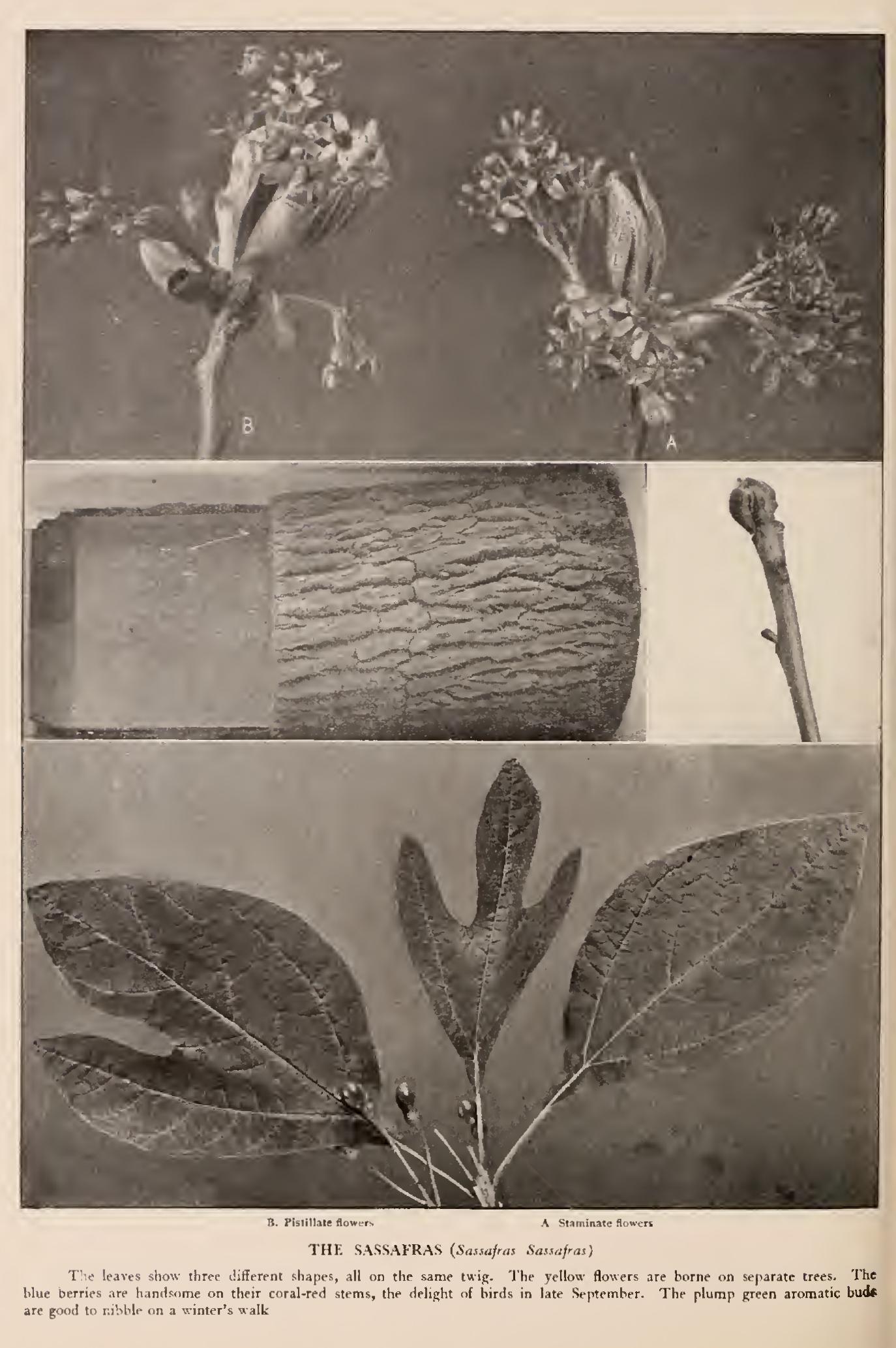
But there is the sassafras tree. When the butterfly is still in its tiny green eggshell, hidden by a provident mother in plain sight on the face of an opening leaf, the delicate greenish yellow flowers come out. The starry calyxes are alike on all the trees. But the stamens are all on one tree, nine in each flower, prominent, with bunchy glands at the bases of the inner ones. Plainly these flowers have pollen making for their duty. The pistillate flowers, with a row of abortive stamens at the base of the central style, grow in numbers on another tree. Here in autumn come
the birds, even before the blue berries have softened on their coral pedestals. To leave them till they ripen would be to lose them to some other bird.
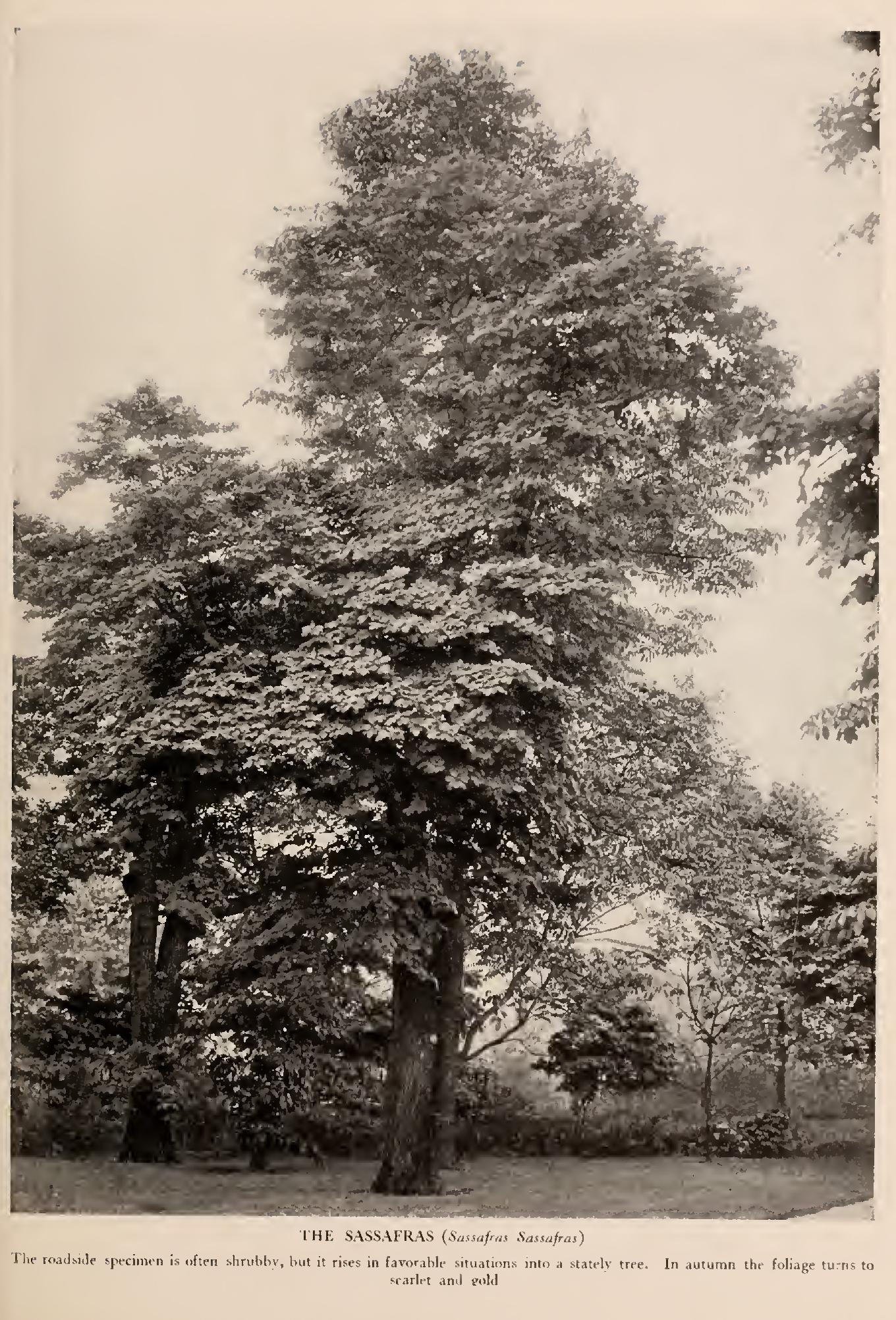
The glory of the autumn foliage of the sassafras is like the glory of a sunset—all mingled with purple and red and gold. The three forms of leaves that fascinated us in summer time are here yet, but the shining treetop is the unit now, and we do not look for individual leaves.
The wood of sassafras is light and tough, and makes good fishing rods. Durable in the soil and in water, it is used for posts and rails, and for boats and barrels. The bark, especially of the roots, is strong in a volatile oil used to flavour medicines. The bark itself is sold in drug stores, and people buy it in spring and make sassafras tea "to clear the blood." The leaves and twigs yield a mucilaginous substance which is used in the South to give flavour and consistency to gumbo soups. The useful properties of its various members are as nothing when compared with the beauty and desirability of the living tree, which is beautiful throughout the year—as a towering tree or a roadside sapling.