The Walnuts
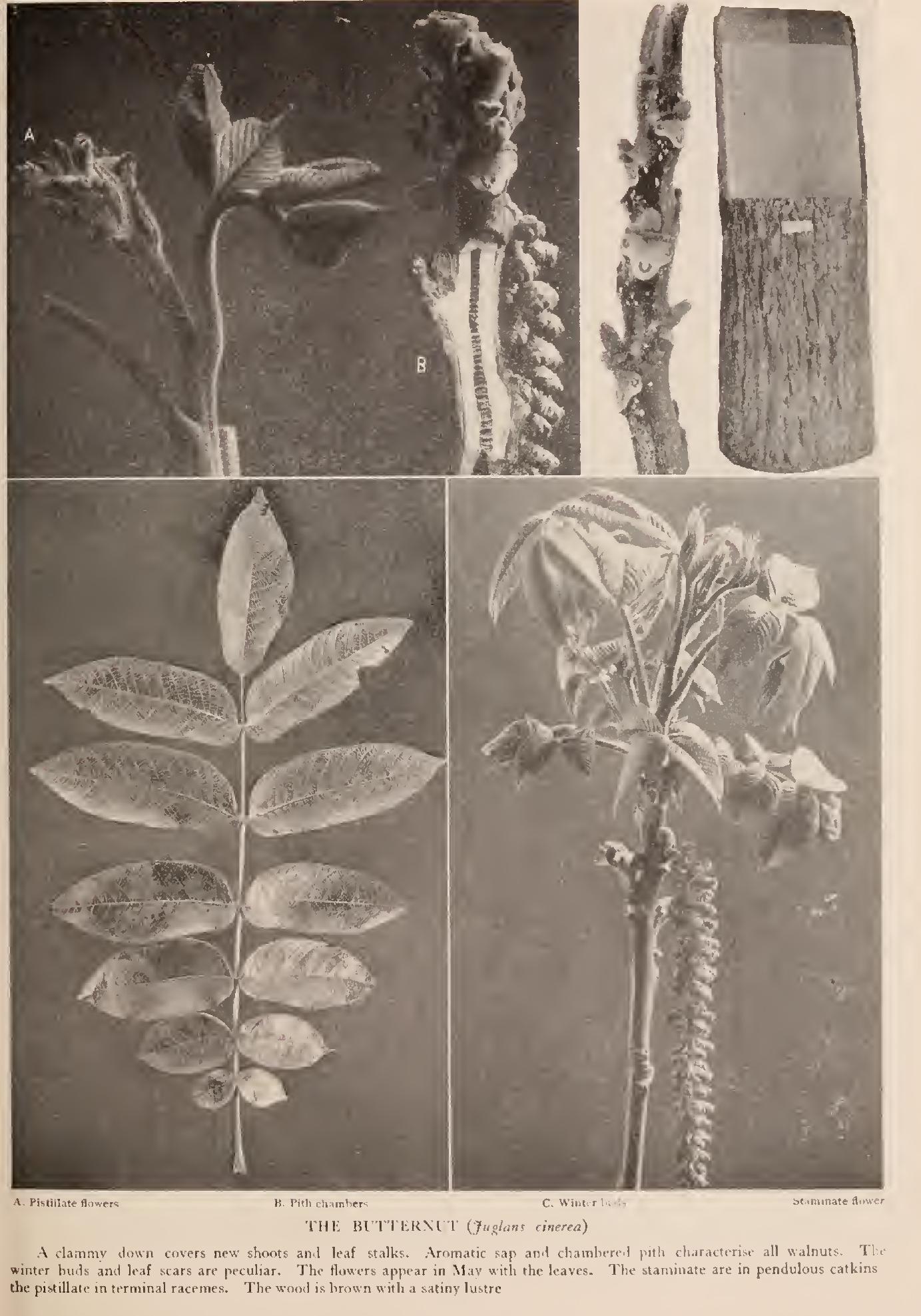
The wood of butternut is not so hard nor so strong as black walnut, but for the interior finish of houses it has a distinct ad vantage. Black walnut is sombre compared with the cheerful browns and fawn colours which this wood shows. The "natural wood finish" brings out these quiet tones and imparts a soft lustre to the grain. I t is a pity that this wood is not more common and more widely employed for this particular purpose. It is made into wooden bowls, and used for veneering bureaus, for carriage panels, and for coffins, posts, rails and fuel.
The frugal housewife in the country looks with interest upon the butternut when it is half grown—when the pale green, clammy, fuzzy fruit hangs in clusters, surrounded by its umbrella of leaves. If a knitting needle goes through husk and nut without hindrance, it is not too late to make "pickled oil nuts," which are a delectable relish with meats in winter. The husk and all are put down in vinegar, sugar and spices. The unpleasant part of this process is the rubbing off of the "fur," after scalding the nuts. This task usually falls to the children.
Butternut husks and bark have long been used in home remedies, and in dyeing woollen cloth. The backwoods regiments in the Civil War were clad in "butternut" jeans. a home-made, home-dyed uniform that worthily stood the hardest service.
Black Walnut (Juglans nigra, Linn.)—A majestic, spread ing tree, 8o to 15o feet high, with tall trunk, 4 to 6 feet through. Bark dark brown, furrowed, scaly. Wood dark purplish brown, with silvery lustre; hard, fine grained, heavy, strong, durable in contact with soil. Buds: terminal, flattened, silky, tomentose; axillary, small, globose, silky; flower buds naked. Leaves alter nate, 12 to 24 inches long, odd pinnate of 13 to 25 leaflets, ovate lanceolate, serrate, pubescent beneath, 3 to 31 inches long, sessile on leaf stem; yellow-green, becoming yellow in autumn; petioles downy. Flowers, May, with leaves, greenish, moncecious, stam inate in catkins 3 to 6 inches long on wood of preceding year; pistillate on new shoots, in axillary few-flowered clusters, or solitary; stigmas red, prominent. Fruit 1 to 2 in almost sessile clusters, globose l to 2 inches in diameter; husk yellow-green, pitted, strongly aromatic, spongy, indehiscent; shell hard, deeply sculptured, kernel convoluted, oily, sweet, edible. Preferred
habitat, rich woods. Distribution, southern Ontario to Florida, west to Nebraska and Texas. Uses: Fine shade and park tree; lumber valuable for veneering furniture, interior finish of houses, gun stocks and coffins, and for boat and shipbuilding. Nuts locally commercial. Husks occasionally used for dyeing and tanning.
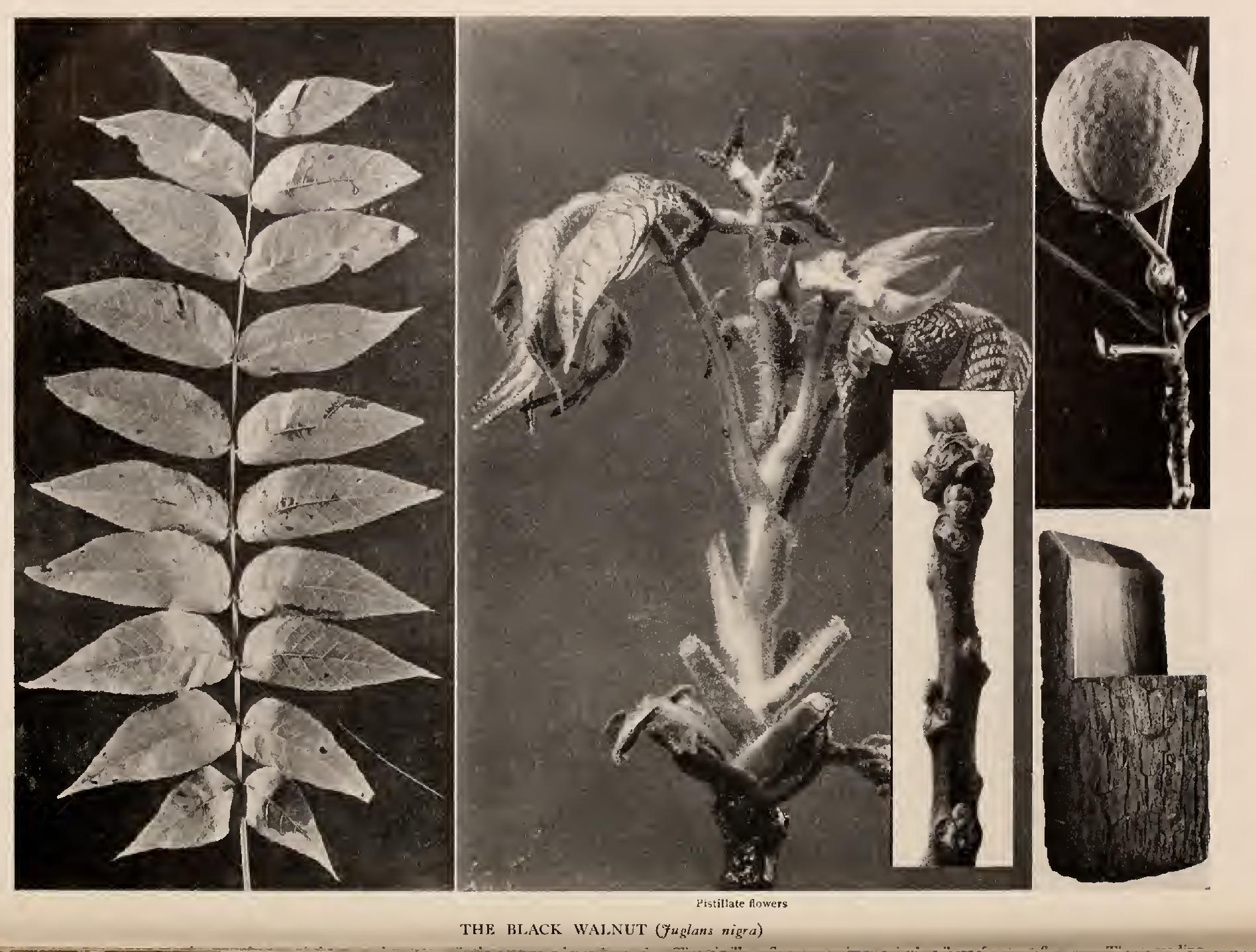
The early settlers did not realise the folly thsy committed by chopping down black walnut trees, rolling them together and burning them. They were clearing the land to make farms, and trees were weeds they had to conquer. They did not discriminate between species in the general holocaust. They knew that black walnut was durable, so made fence posts and rails of it. Besides, this wood split easily.
The peculiar fitness of black walnut wood for gun stocks and for furniture was realised later. Trees were sacrificed by thousands to supply the home and foreign markets, and only Nature planted for the generations to come. The result is the present shortage of walnut lumber, and its excessive price. Enterprising individ uals go into cleared ground and pull the stumps of trees long dead. They are still sound, and there is valuable veneering stuff in the most of them. Old and worn furniture of solid black walnut is bought and sawed thin for the same purpose. Do we realise yet the usefulness and the beauty of black walnut wood? The silvery grain, the rich, violet-purple tones in the brown heart wood, the exquisite shading of its curly veinings, and the lasting qualities of the wood? If we did, we would plant groves of it.
As a fruit tree the black walnut has limitations. The oil in the kernel soon becomes rancid, so that there can be but a local market for the nuts, though they are very good for a time, when carefully dried.
The black walnut is majestic as a shade tree—a noble orna ment to parks and pleasure grounds. It needs room and distance to show its luxuriant crown and stately trunk to advantage. Then no tree excels it. "It unites almost all the qualities desirable in a tree: beauty, gracefulness and richness of foliage in every period of its growth." The bark and husks may be employed in the important arts of dyeing and tanning. The fruit is a food, and yields a valuable oil. The wood is one of the most useful and most elegant.