The Witch Hazel and the Sweet Gum - Family Hamamelidaceae
(Aqua Hanzanzelis) EXTRACT OF WITCH HAZEL Hamamelis roots and twigs . . . to lbs.
Water . ... . 20 pts.
Alcohol-6 per cent. . t pts.
Place Hamamelis in a still, add the water and alcohol, and allow the mixture to macerate twenty-four hours. Distil ten (to) pints by applying direct heat, or preferably by means of steam.
2. Genus LIQUIDAMBAR, Linn.
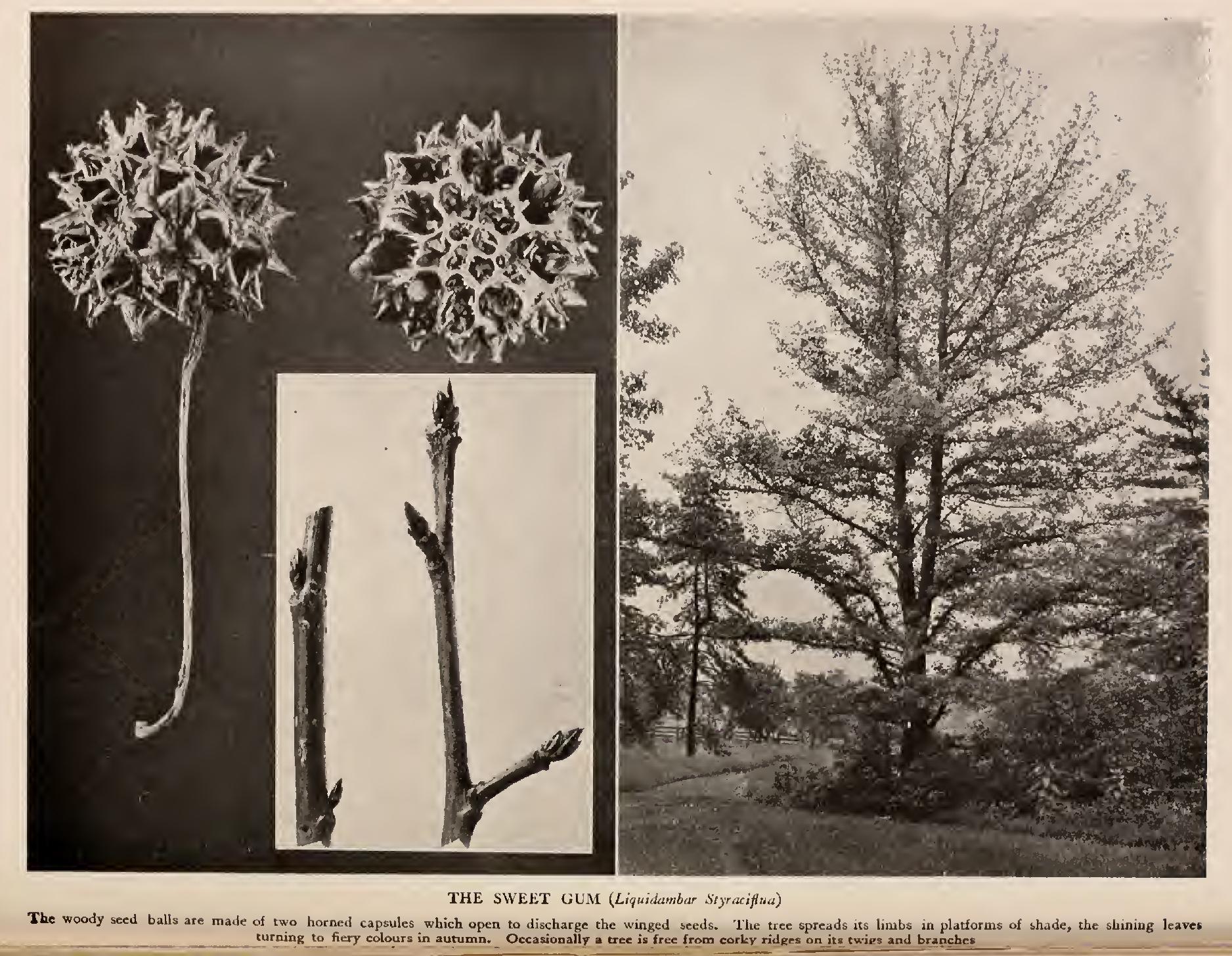
The Sweet Gum (Liquidarnbar Styraciflua, Linn.)----A large tree 75 to 140 feet high, with straight trunk and short, slender branches, forming a pyramidal or oblong head. Bark reddish brown, furrowed, scaly, on old trunks; on young trees, ashy grey, with hard, warty excrescences; twigs, pale, usually with corky wings, which continue to grow for years. Wood bright reddish brown, striped with black, straight, close grained, lustrous when polished, hard, heavy, not strong. Buds acute, reddish and hairy at tips, small. Leaves 5 to 7 inches, long and broadly cleft into 5, rarely 7, triangular-pointed lobes, which are finely saw-toothed; with resinous sap, lustrous when mature, streaked crimson, and yellow in autumn. Flowers after leaves, moncecious; staminate in terminal, hairy racemes, 2 to 3 inches long, set with head-like stamen clusters; pistillate in solitary swinging balls from axils of upper leaves; stigmas conspicuously twisted. Fruits dry, swinging balls, 11 inches in diameter, of the hardened, 2-horned capsules. Single seed, winged, inch long in some cells. Most of the cells filled with minute, aborted seeds. Preferred habitat, low wet woodlands. Distribution, Connecticut to Missouri; south to Florida and Texas; also in Mexico and Central America. Uses: Valuable ornamental and shade trees. Lumber used for railroad ties, paving blocks, shingles, fruit boxes, spools; choice pieces known as "satin walnut," used for veneering furniture and for interior finishing of houses. Dyed black, it imitates ebony, in picture frames and cabinet work.
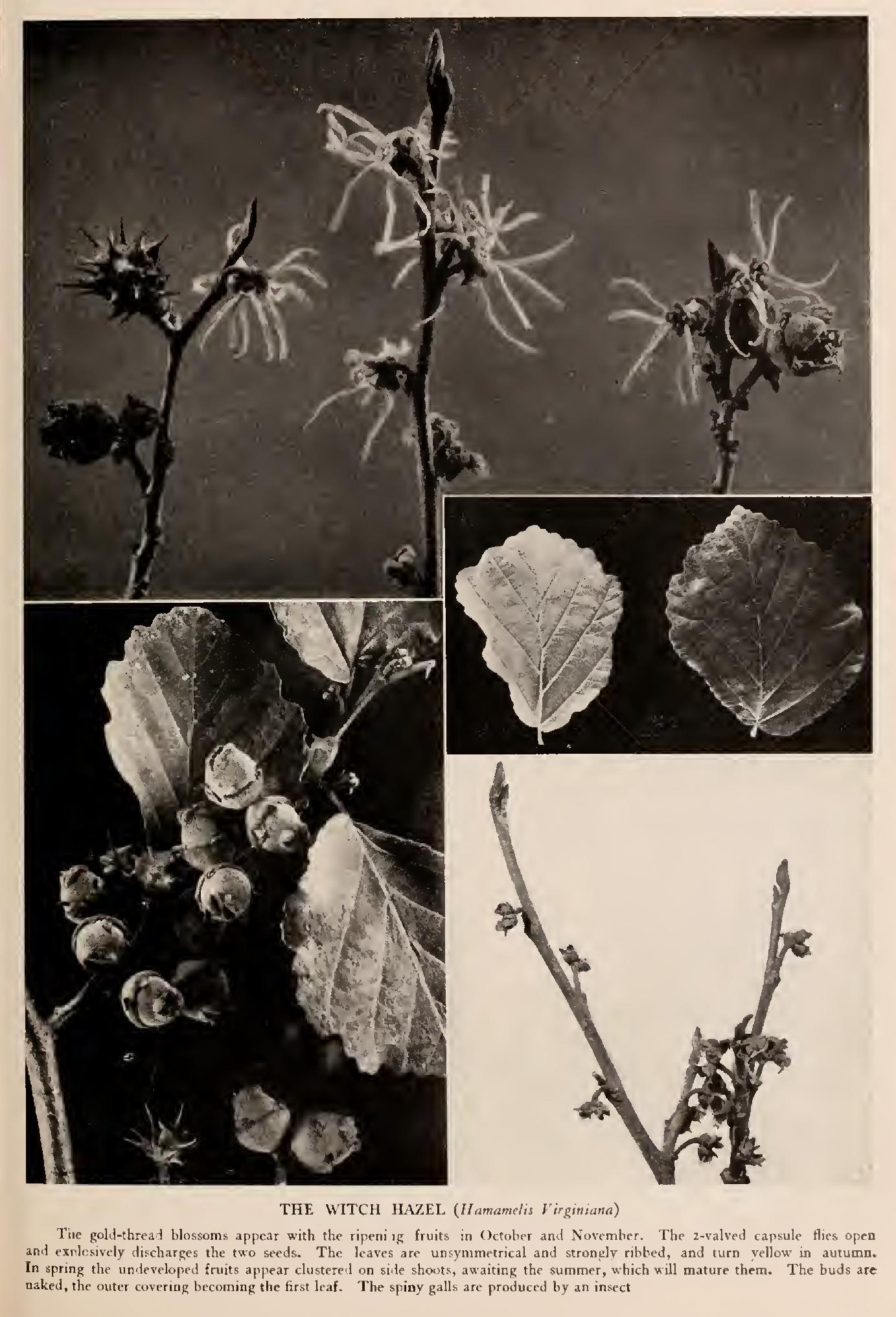
The sweet gum is probably more closely linked with planta tion life in the South than any other tree. It grows in the swamps, and many a slave hugged the slender shaft of a leafy gum tree while he waited all day for the north star to point him the way to freedom. Here the 'possum and the 'coon found similar
refuge from hunters and their dogs; and it was a hollow gum tree that old "Nicodemus, the slave," was buried in to be waked in time for the great jubilee! As a child, I lived in a state north of the range of the most intrepid liquidambar tree. I recall with great vividness an old ex-slave's description and eulogy of the tree, and the song he sang, full of the exaltation his dearly bought freedom always roused in him—especially the thrilling chorus: "Da's a good time comin', 'tis almos' heal", Hit's bin long, long on de way: Run 'n' tell 'Lijah t' hurry up, Pomp', Meet us at de gum tree, down in de swamp; Wake Nicodemus to-day!" Travellers in the bayou country of the Mississippi Valley can easily verify the statement that a hollow gum tree is large enough to entomb a man. Giants exist there to-day, standing in rich bottom lands, or on soil that is inundated a part of the year, whose trunks, 15 feet or more in girth, carry their tops 15o feet into the air. These trees, often bare of branches for half their height, look like great columns set amid the tropical vegeta tion, and towering high above most of their neighbour trees. In its northern range the tree sacrifices size but not beauty.
I t is good to take a whole year to get acquainted with the sweet gum, and it doesn't really matter when one begins. The seed balls swing on the trees in winter, looking like the button balls of the sycamore. A second glance shows the paired "cows' horns" above the gaping pods, and the crowded, undeveloped seeds shake out like sawdust. An easier way to identify the tree is by the narrow blade-like ridges of bark that in most cases adorn the twigs. Strangely, these are on the upper side of horizontal twigs, and all around the vertical ones. The shading of olives and greys and browns in these corky ridges reminds one of the banding of an agate. Now and then you come upon a gum tree whose twigs are all smooth.