Jesus Christ
john, god, baptized, significance, ministry, luke, gospels, matthew and kingdom
Apart from the Birth stories at the opening of Matthew and Luke (the exact significance of which in this respect is ambigu ous) there is nothing in these three Gospels to suggest that their writers thought of Jesus as other than human, a human being spe cially endued with the Spirit of God and standing in an unbroken relation to God which justified His being spoken of as the "Son of God." Even Matthew refers to Him as the carpenter's son and records that after Peter had acknowledged Him as Messiah he "took Him and began to rebuke Him" (Matt. xvi. 22). And in Luke the two disciples on the way to Emmaus can still speak of Him as "a prophet mighty in deed and word before God and all the people" (Luke, xxiv. 19). It is very singular that in spite of the fact that before Mark was composed "the Lord" had become the description of Jesus common among Christians, He is never so described in the second Gospel (nor yet in the first, though the word is freely used to refer to God). All three relate the Passion of Jesus with a fulness and emphasis of its great significance; but except the "ransom" passage (Mark x. 45) and certain words at the Last Supper there is no indication of the meaning which was afterwards attached to it. It is not even suggested that the death of Jesus had any relation to sin or forgiveness. Had the "ransom" saying been suggested by Paul it would not stand as it does in its isolated vagueness.
The Three Stages.
Any attempt to write a "Life of Jesus" should be frankly abandoned. The material for it certainly does not exist. It has been calculated that the total number of days in His life regarding which we have any record does not exceed 5o. And, moreover, the notes of time by which many of the episodes are connected are now seen to form the setting in which each Evangelist has put the different sections of his material, and repre sent rather his narrative-style than the actual time-relation be tween the events. At the same time, the ministry described by the Synoptists falls into three well-marked stages, the first mainly in Galilee, the third in Jerusalem and its neighbourhood, and the in termediate one a period of travel and sojourn either in Peraea according to Mark, or, if we follow the indications of Luke, in the neighbourhood of Samaria. Within this framework we have a con tinuous narrative only in the third section; in the other two a series of events and episodes, utterances, discourses, discussions and parables, the order of which is of less significance than their meaning. For what is true of all of them is conspicuously true of many, that even taken separately they convey an adequate, though it may not be a complete, impression of His character or His teach ing or His significance for men. "It is precisely the greatness of Jesus, and the peculiarity of the tradition regarding Him, that every one of His brief sayings and every one of His parables and the stories concerning Him display His inner character entire, and display it so clearly that even the unlearned men may receive from it the deepest impression.""Jesus was at the outset (of His ministry) about 3o years of age." His birth took place in the reign of Herod (d. 4 B.c.), and His crucifixion probably in A.D. 29 or 3o. These dates confirm the impression produced by careful comparison between the Synoptic Gospels and John, that a duration of nearly three years for the ministry suggested by the data of the latter is probably correct rather than one of some i8 months, which is all we should infer from the former.
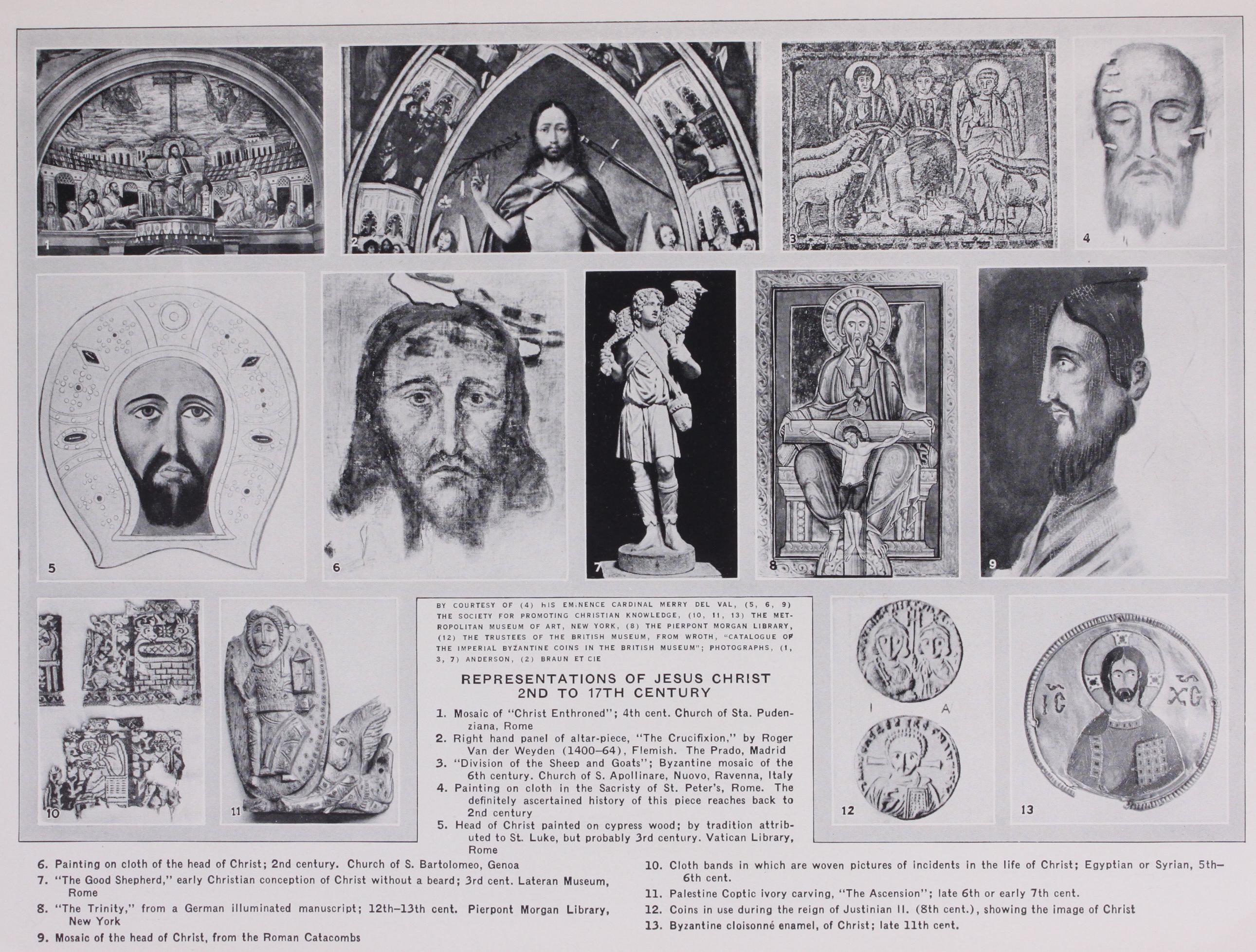
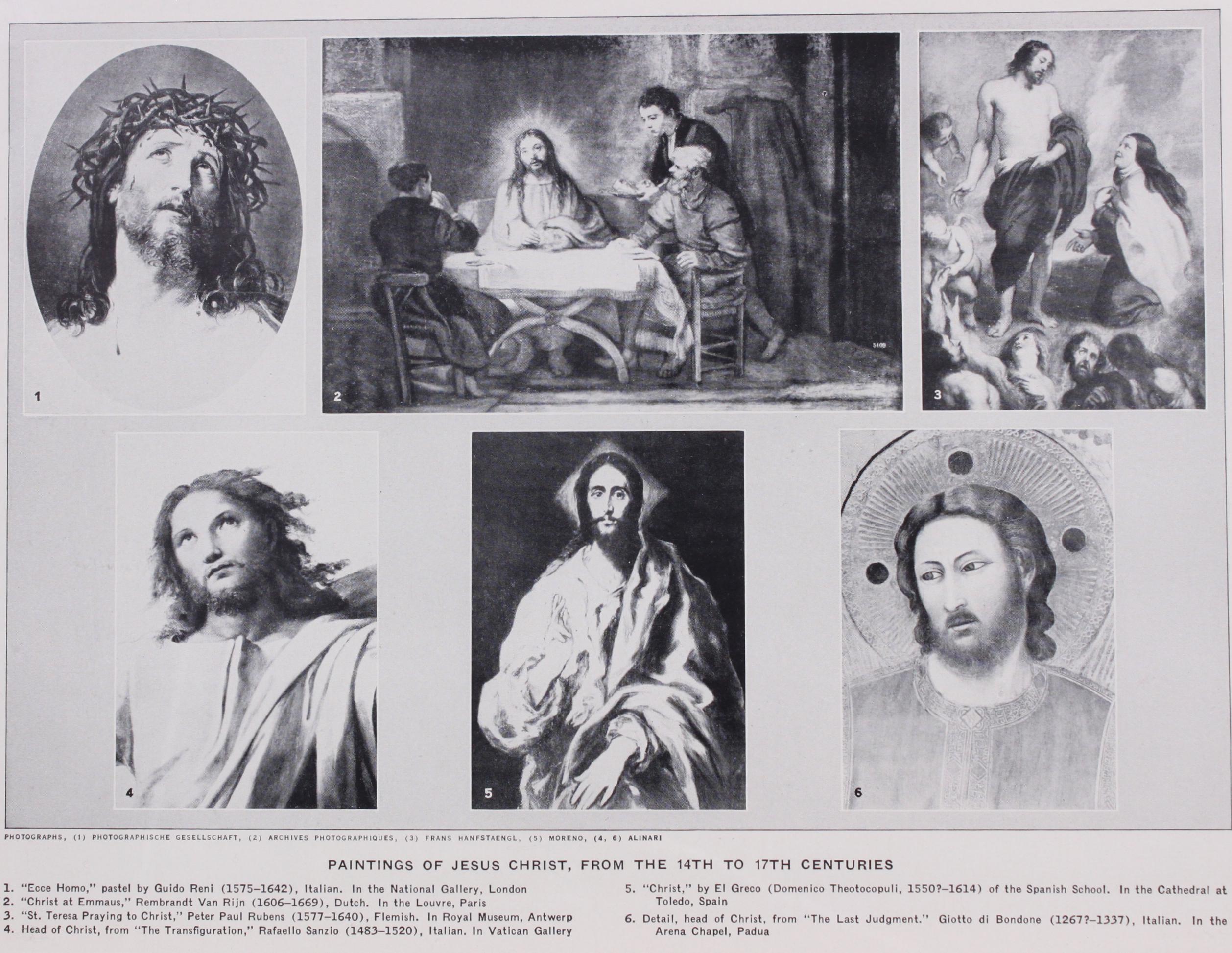
The ministry of Jesus was heralded by that of John the Bap tist, a stern reproduction of one of the ancient prophets such as Elijah. He appeared in the unpopulated district in the Jordan valley proclaiming that the Kingdom of Heaven was at hand, which on his lips meant a day of judgment for the wicked. He called on those who listened to him to repent. And those who so repented he "baptized in the Jordan." This procedure was some thing so novel as to secure for him the description of "the bap tizer"; it was an outward and visible sign of the repentance to which was granted "remission of sins," and probably was under stood to seal admittance to the coming Kingdom. Large crowds flocked to his preaching. Many repented and were baptized. Others who remained at home said, "He has a devil." A further feature of his preaching was the repeated announcement that he was but a forerunner, that he would be followed by one stronger and nobler than he, who would baptize with Holy Spirit, while he himself baptized with water only. According to the tradition pre served by the fourth Gospel John actually pointed out Jesus to two of his own disciples ("Behold the Lamb of God, which taketh away the sin of the world," John i. 29), and they thenceforth quitted John and became followers of Jesus. Nevertheless, the movement started by John survived, possibly as a rival to the Church, against whose claims the writer of the fourth Gospel finds it necessary to protest.
His Baptism and Temptations.—Jesus Himself was baptized at the hands of John. That He thereby exposed himself to misunder standing may be admitted, though the Synoptic Gospels signifi cantly omit any reference to confession of sin in His case. This, however, is not the difficulty referred to in Matthew. It is that John, himself a kinsman of Jesus, shrinks from seeming to claim moral superiority by conferring baptism upon Him. Jesus brushed aside the objection, waiving the claim which John makes for Him, as He afterwards waived the claim to be excused the temple tax. In this ceremony of initiation and consecration to the ideals of the coming Kingdom He is resolved to be one with His brethren, even at the risk of misunderstanding. It is the first public symbol of the self-identification of one who was holy with those who were sinners.