Steam Locomotive Development
engine, boiler, efficiency, weight and speeds
Future Development.
The trend of the steam locomotive development is toward a wheel and running gear arrangement that will provide the maximum ratio of main engine coupled adhesive to total engine weight, and of main engine power to such adhesive weight ; 500 lb. steam pressure ; 85o° F total temperature of the steam ; a uniflow boiler, superheater and two or four outside cylinder arrangement; piston valves and outside valve gear; a i00% furnace volume, evaporation surface and gas area water tube fire-box—fire flue and tube boiler; a fire box header—fire flue superheater; main throttle valve and steam delivery and branch pipes to be placed outside of boiler and smoke-box ; a turbo-fan stack-draft blower ; insulation and jacket ing to have an efficiency of 98%; a mechanically driven feed pump ; an open de-aerating feed-water heater ; a smoke-box economizer, a unit system for automatically burning solid or liquid fuel in suspension ; the use of high-elastic limit, tough, ductile, high manganese-low carbon steel castings, f orgings and plates ; and the utilization of engine and tender leading and trail ing uncoupled truck wheel weight, for necessary starting, accelera tion and light power use, by means of independently operated four-wheel coupled, reversible and relatively high speed and eco nomical steam auxiliaries. High pressure-temperature non-con densing steam locomotives can be designed and constructed at a reasonable cost, to operate safely, reliably and efficiently, at speeds as high as r i o m. per hour under roadway, track and signal conditions suitable for such train speed, and permissible improvements will greatly reduce the existing smoke and noise nuisances. In terms of the heat value of the fuel used, the thermalefficiency at the tender draw-bar can be increased from what we now ordinarily obtain in road service-4 to 6%—to from 13 to 15%. In relation to the unit of work produced, i.e., gross ton miles or draw-bar horse-power hour, this shows the enormous possibilities remaining in the way of increasing steam locomotive boiler, engine and machine efficiency. Pressures will be limited for the time being in locomotive construction to around 500 pounds. The wheel loads to be encountered in 1929 by a loco motive boiler pressure higher than 500 lb. may not increase the efficiency sufficiently to compensate for the added total locomotive weight.

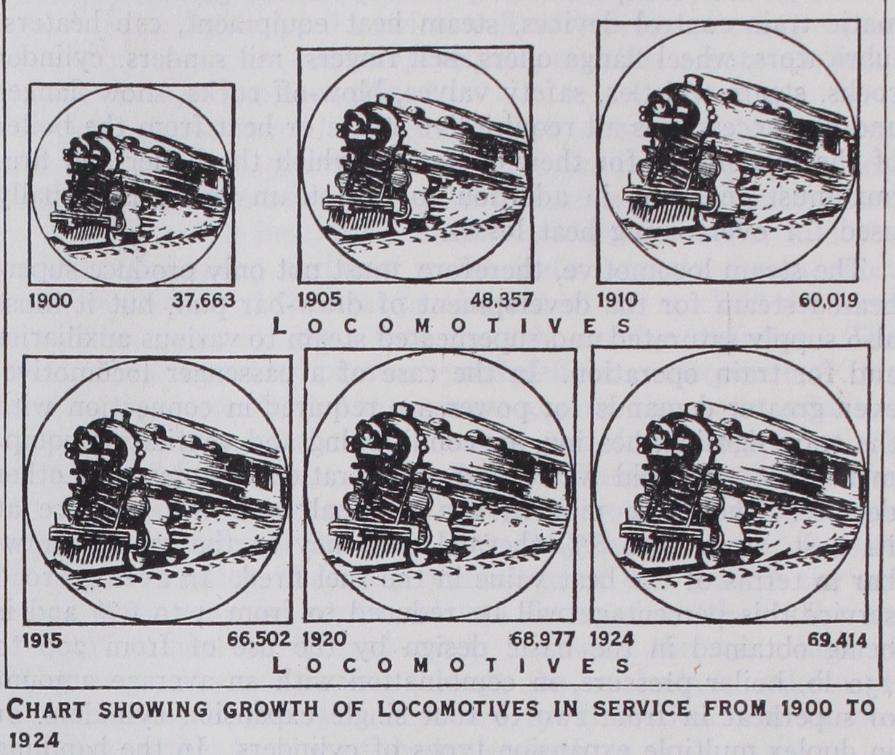
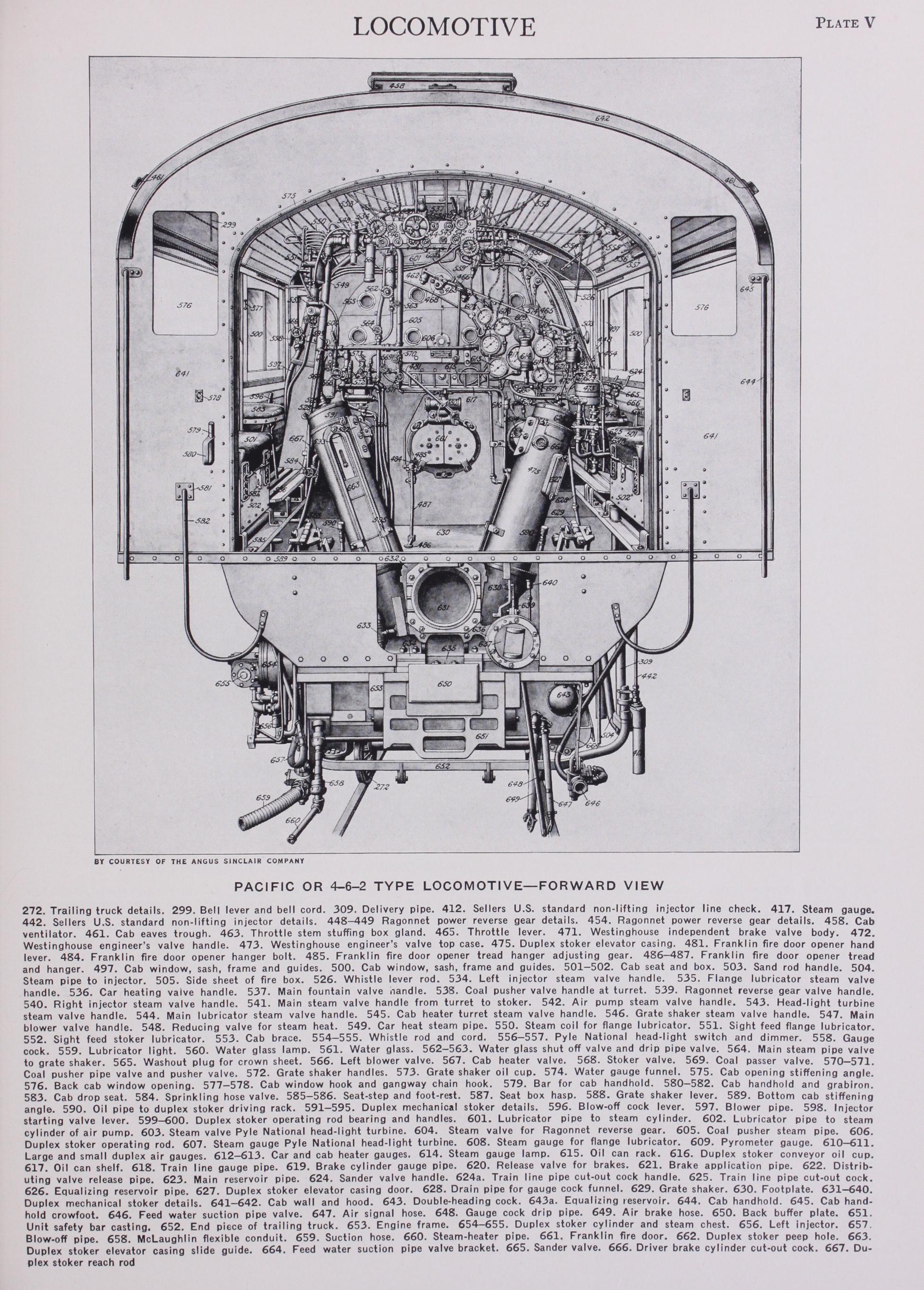
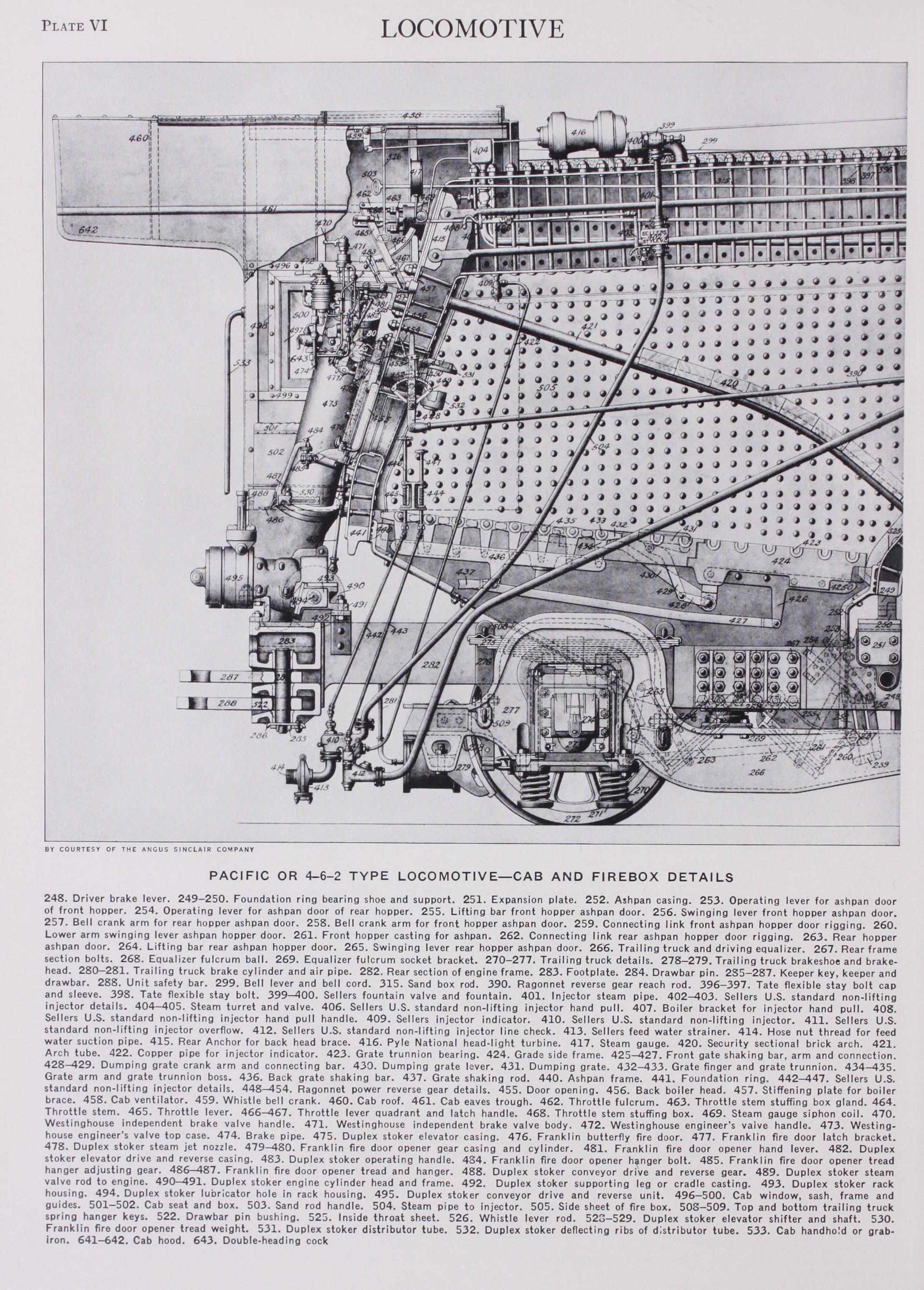
Higher passenger train speeds have brought up the factor of head end air resistance, and numerous designs of streamlining developed and still under advisement are for the purpose of re ducing air and train resistance when trains are operated at speeds of over 75 m. per hour. However, as it is the track curva ture, super-elevation and the track and transportation conditions in general that govern maximum train speeds, it is probable that streamlining will be more a factor of "styling" than of efficiency.
The use of the self-contained high-pressure-temperature steam locomotive, in combination with an improved steam distribution gear, will no doubt be continued indefinitely where heavy trains and traffic must be expeditiously and economically hauled for long distances under all sorts of profile and weather operating conditions. Where they cannot be made suitable Diesel engines or electricity may be substituted. (J. E. Mu.)