Shades and Shadows
shadow, line and plane
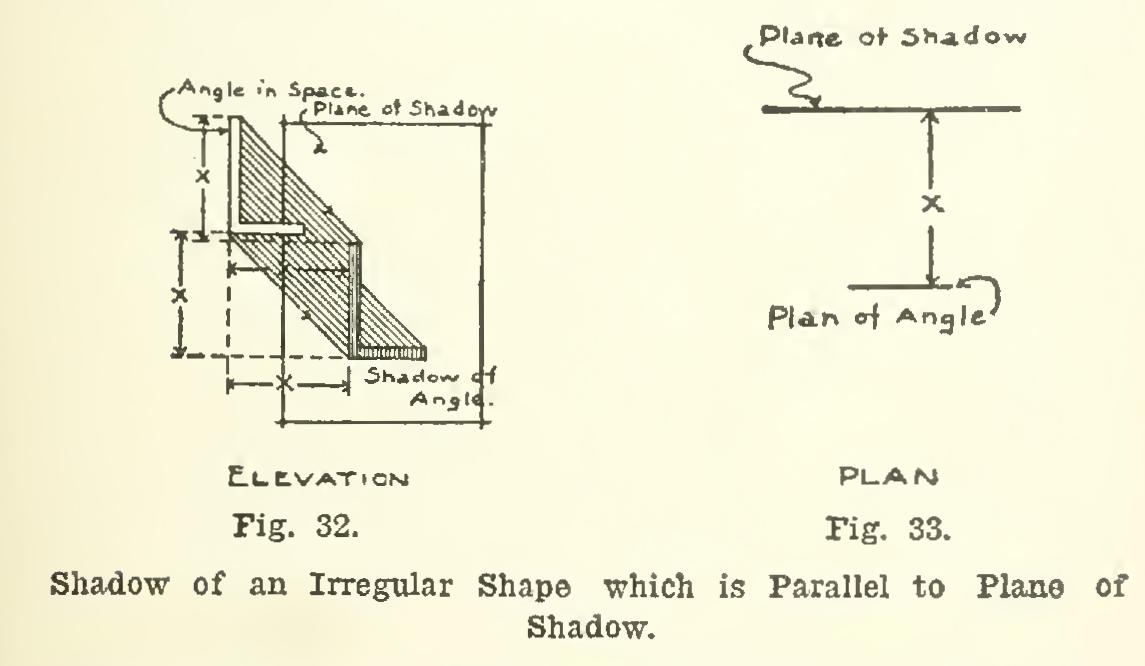
If the line in space is not a straight line, then the shadow of the line may be found by casting the shadows of any number of points on the line, and connecting these. The greater the number of points of shadows cast, the greater will be the accuracy of the work. In Fig. 32 we see the shadow of an angle or L-shape cast on the plane of projection; Fig. 33 shows the plan of the angle.
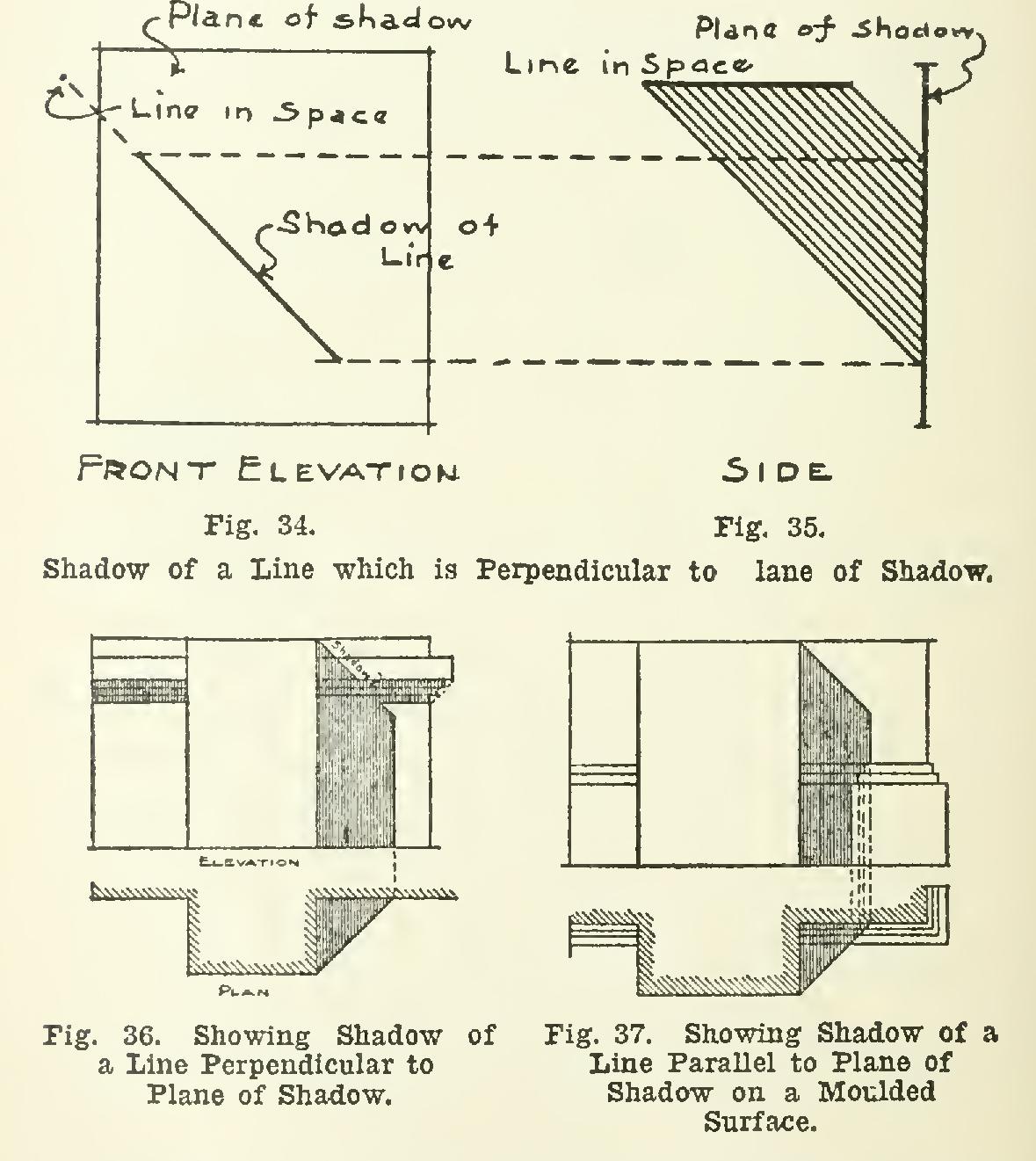
The shadow of a straight line perpendicular to the plane upon which the shadow falls, is a straight line at 45 degrees, no matter what the outline of the surface is upon which the shadow falls (see Figs. 34, 35, and 36).
The shadow of a straight line parallel to the plane upon which the shadow falls, is an irregu lar line giving the true outline of the surface (see Fig. 37).
The shadow of a perpendicular line on a roof is therefore a line which gives the true slope of the roof, since the line is parallel to the plane, and therefore casts a shadow the true shape of the surface upon which it falls.
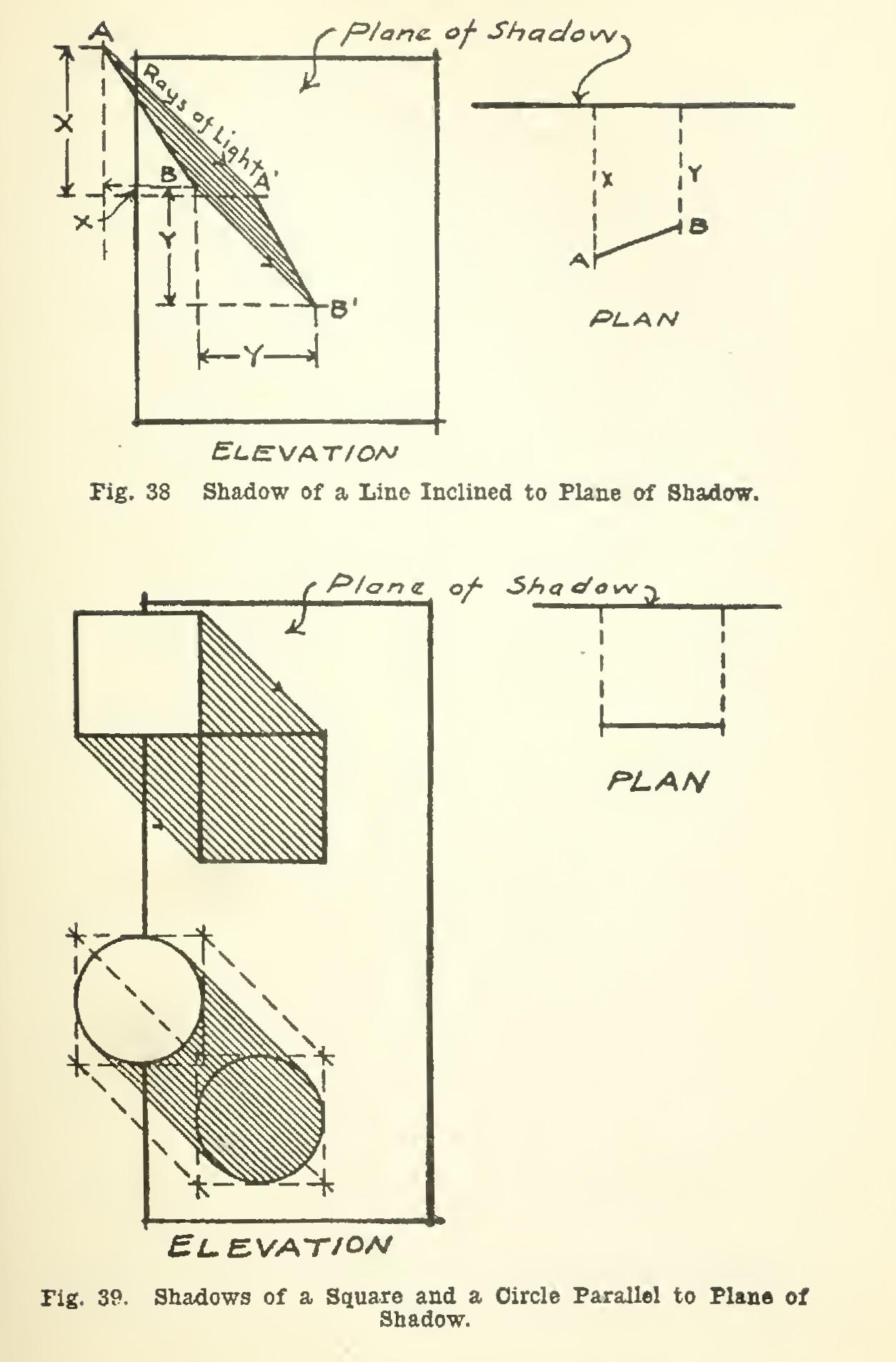
The shadow of a straight line inclined to the plane upon which the shadow falls, is a straight line connecting the shadows of the ends of the line (see Fig. 38).
As in the case of a line parallel to the plane upon which the shadow falls, the shadow is equal in length and parallel to the line, so it is with surfaces—the square, rectangle, octagon, etc. If parallel to the plane of shadows, the shadow will be equal in size and shape to the figure (see Fig. 39).
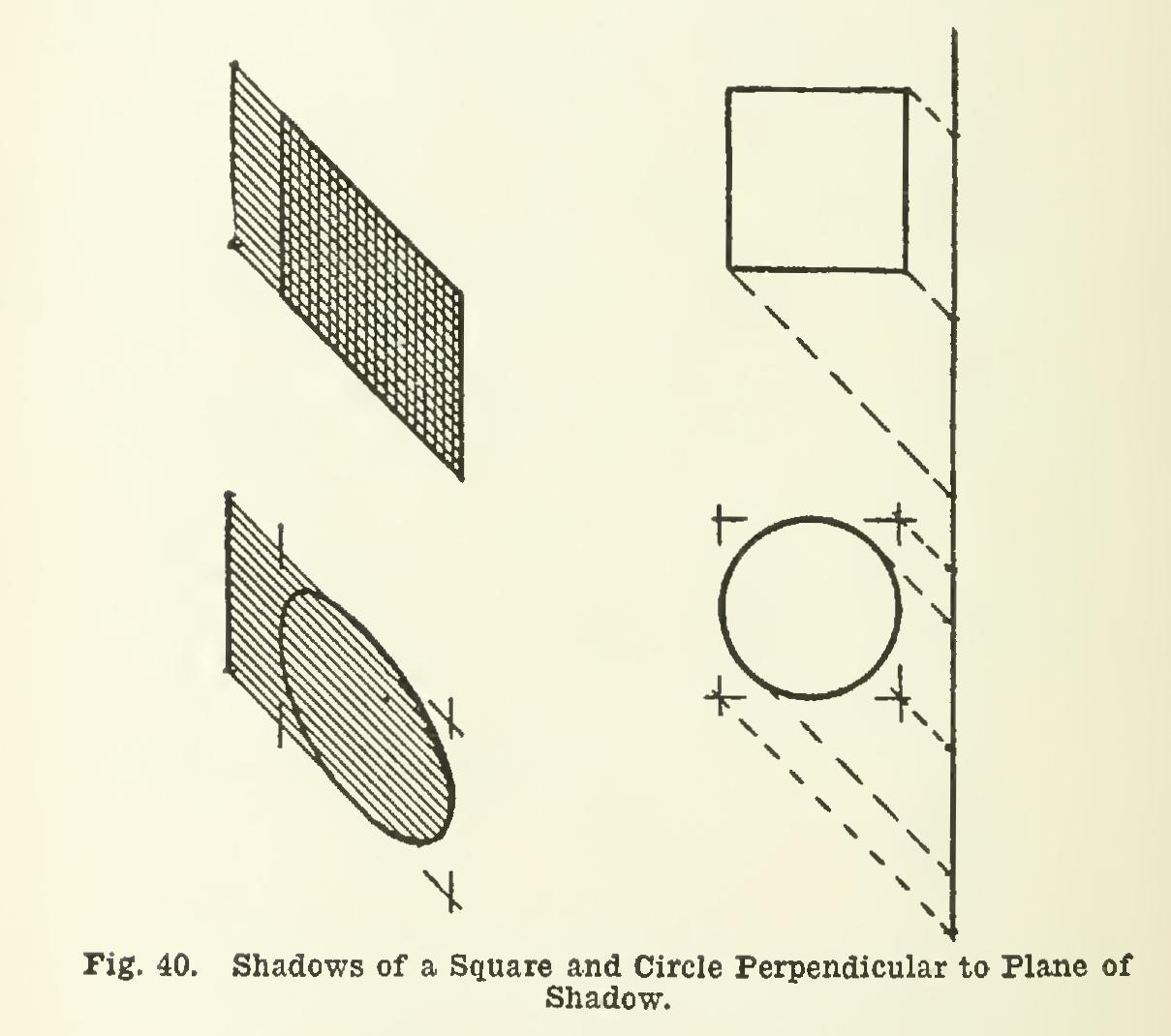
A square perpendicular to the plane of shadow will cast a diamond-shaped shadow, for two of the lines are parallel to the plane, and two are perpendicular to the plane (see Fig. 40).
Having stated a few principles of casting shadows, these will be applied to a few common examples.
Take an example of a brick projecting from a wall (Fig. 41). We apply the principles as stated, to each edge of the brick. The top, bot tom, and side faces of the brick are perpendicu lar to the plane, therefore the shadows will be rectangular in shape.
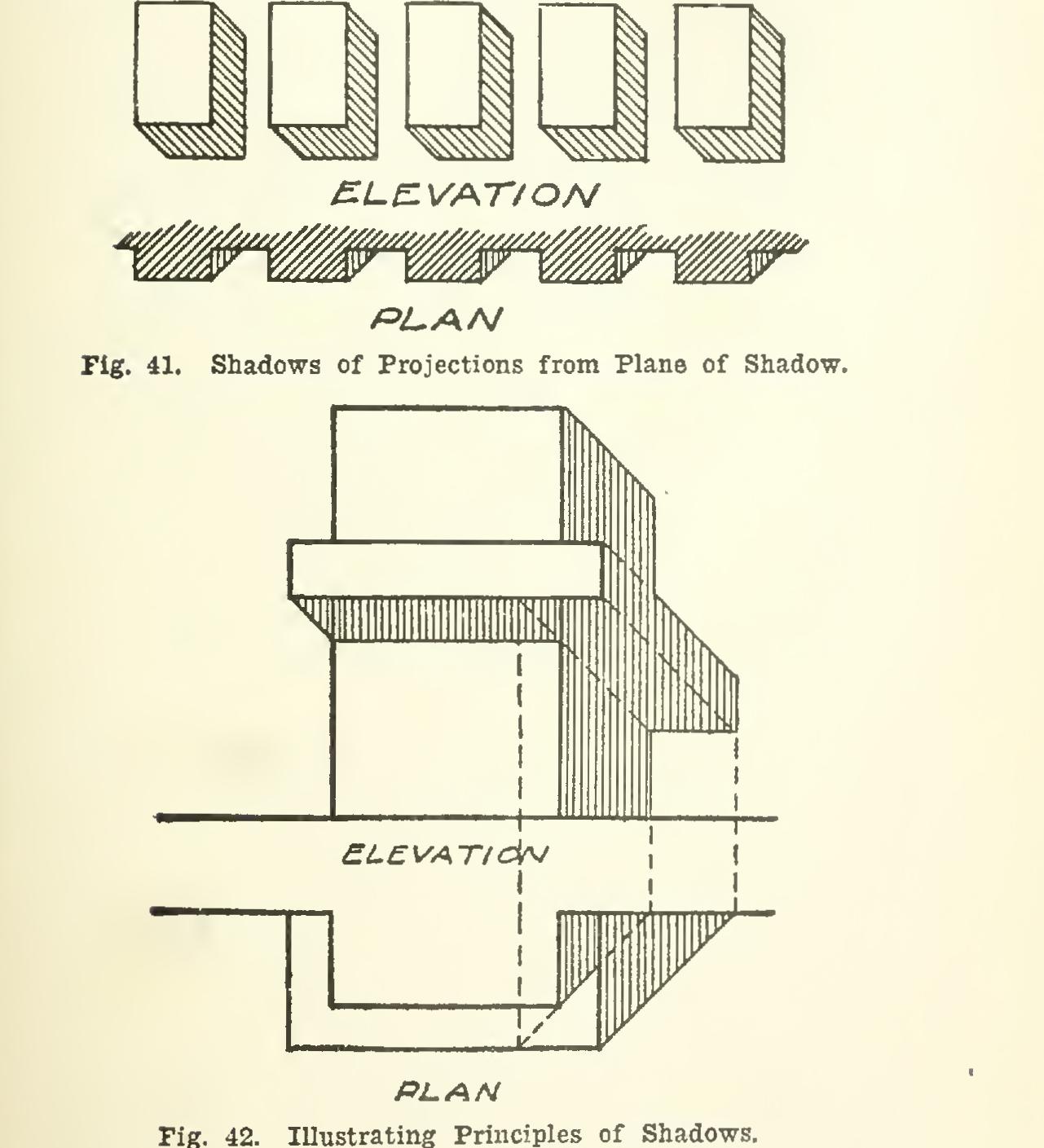
Figs. 42 and 43 show a further application of the foregoing principles.
Plate D shows the shadows as cast upon an Order of architecture, illustrating also how much clearer the drawing is when it has the shadows worked out on it.
The above principles will give a general understanding of the subject.