History of Reinforced Concrete
portland, barrels and cement
In the second place, theoretical studies and practical experiments have now produced ra tional and positive methods for computing the strength of concrete reinforced with steel, so that absolute dependence can be placed upon it.
Briefly, reinforced concrete such as is used for construction of industrial buildings, bridges, retaining walls, etc., consists of Portland ce ment, sand, and gravel or broken stone, mixed with water to a consistency that will just flow sluggishly, and in which steel rods are embedded so as to produce an artificial stone having many of the characteristics of steel.
In the earlier stages of reinforced concrete, and even up to the present time, many patents of a more or less fundamental character have been granted. These have taken the line of spe cial forms of reinforcing metal as well as meth ods of design. Some of the principal styles of reinforcement are illustrated below, under "Re inforcing Systems." While it is not necessary to encroach on any of these inventions in build ing, the field is worth careful consideration from the viewpoint of economy and durability, as to whether or not it may be advisable to make use of them.
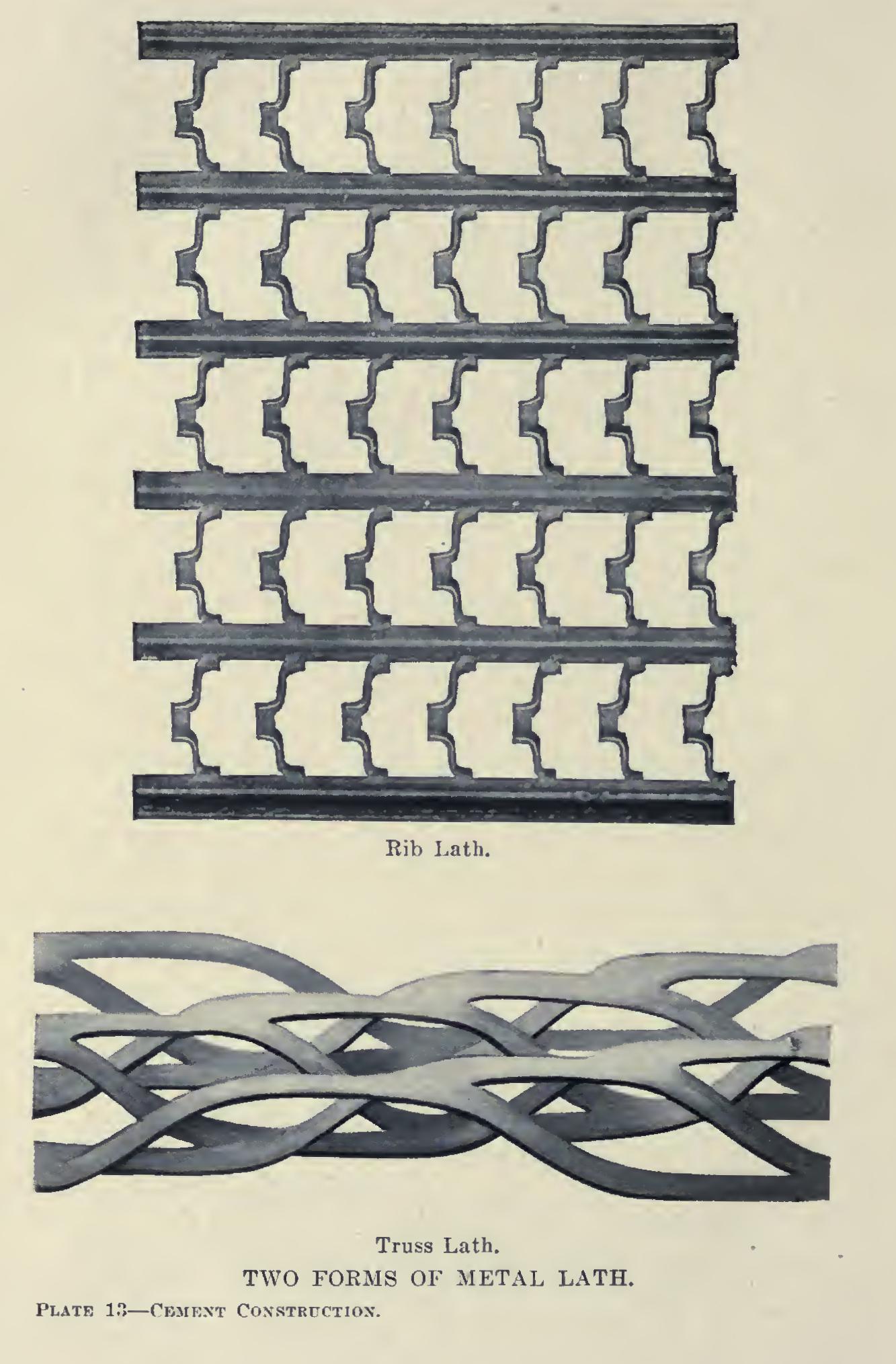
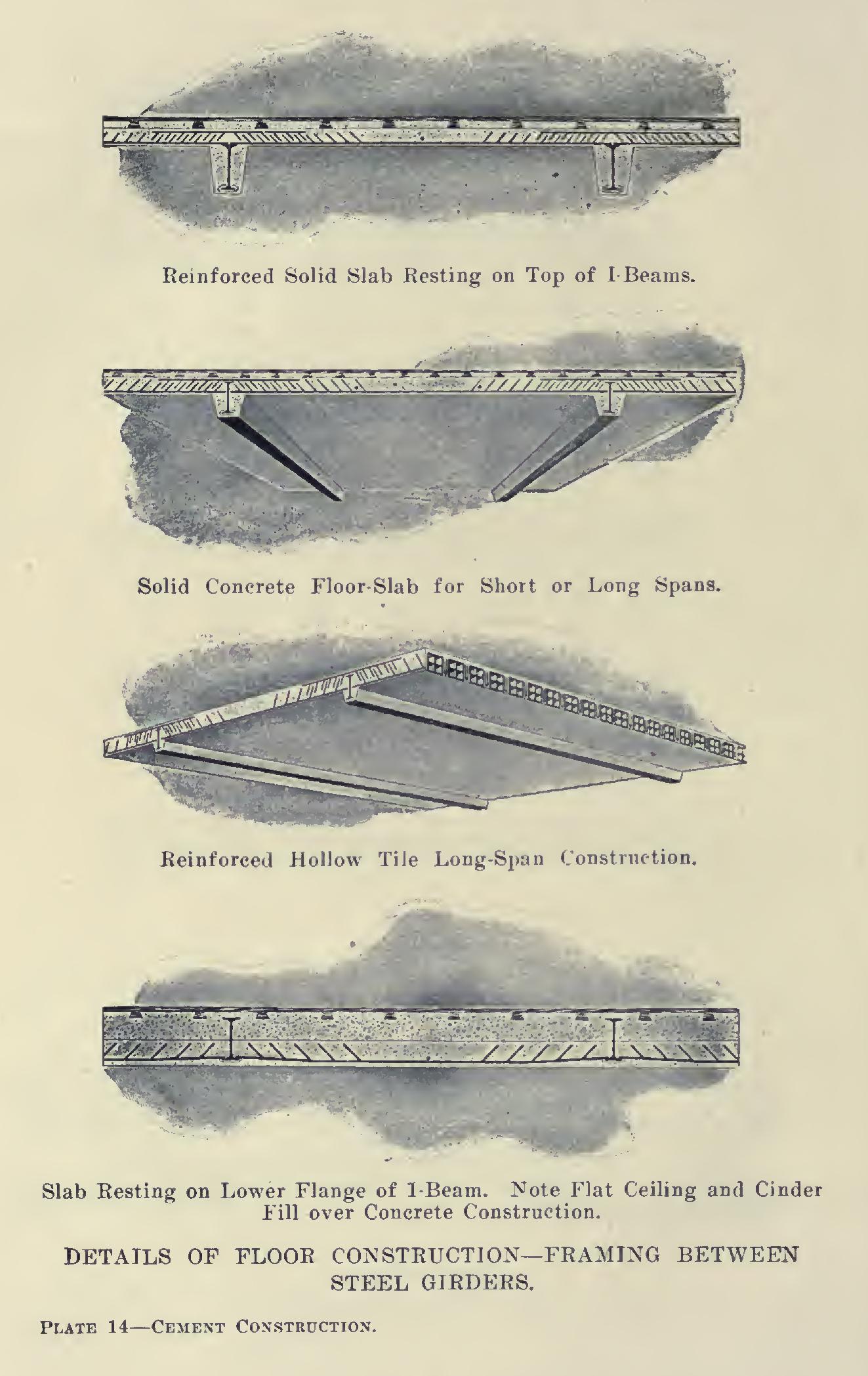
There has been no class of structures, no line of the building trades, which has not been affected by reinforced concrete, and many of them have been revolutionized.
Relation to Portland Cement Industry. It
is interesting to note the relation of the increased use of reinforced concrete construction to the growth of the Portland cement industry. In the twenty years following the exposition of the principles of reinforced concrete design by Earnest L. Ransome in 1885, the production of Portland cement in the United States rose from 150,000 barrels to 36,000,000 barrels per year. In the years following 1897 when the building trades were temporarily hampered by a short age in structural steel, the use of reinforced con crete had gained such a popularity that the out put of Portland cement was raised from 900,000 barrels in 1895 to 8,400,000 barrels in 1900.
This question has already been fully dis cussed in another volume.