Cairo
miles, sand, shops, past, moses, pyramids and world
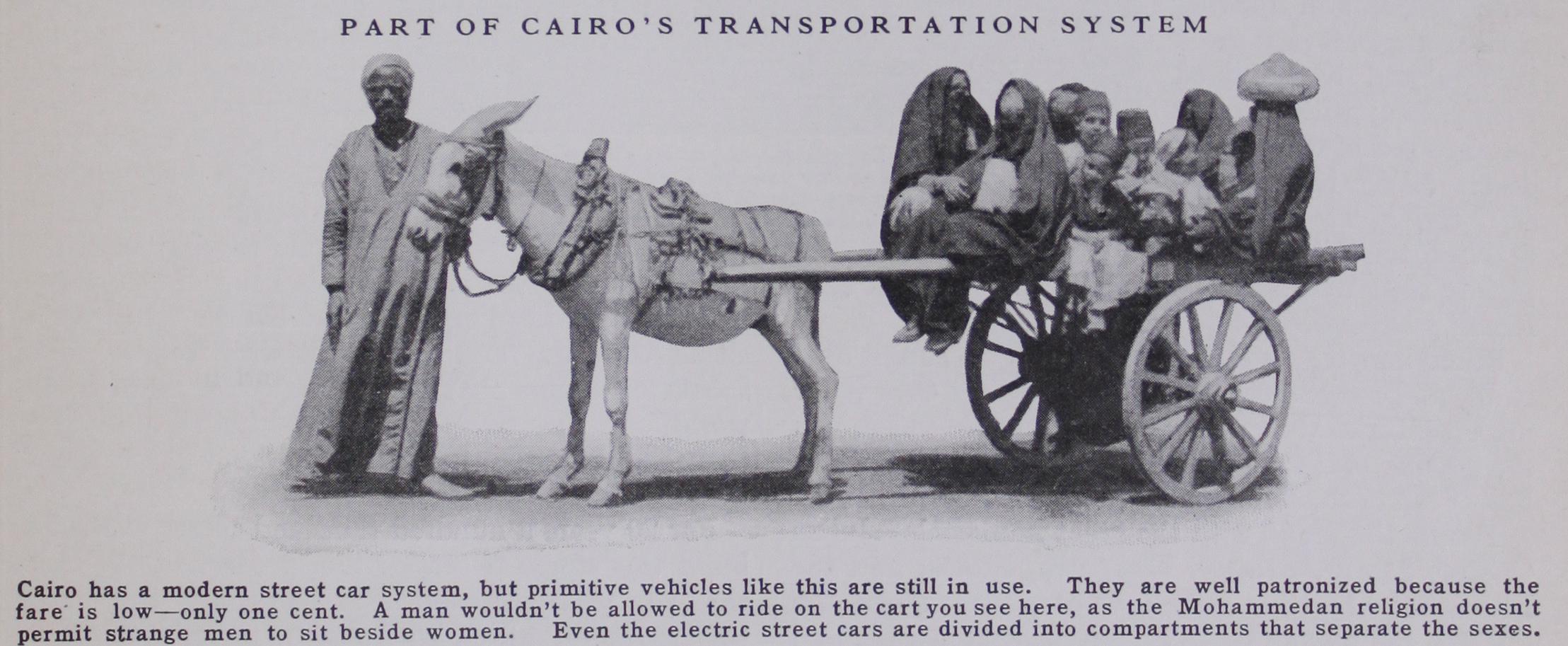
A Many-Colored "Movie" of the Changeless East Cairo itself is wonderful. Only a great artist could hope to give some suggestion of its color and its Hawks fly past you as you walk in the street, buf faloes draw carts and plows, white donkeys and black ones bear half the burdens of the town, boys and girls in flowing robes build houses instead of learning alpha bets. The faithful Mohammedan prays in the fields; the unfaithful cries " Baksheesh !"—asking a gift as you pass. The women hide their faces behind thick and ghastly veils; the children alone seem even as you and I.
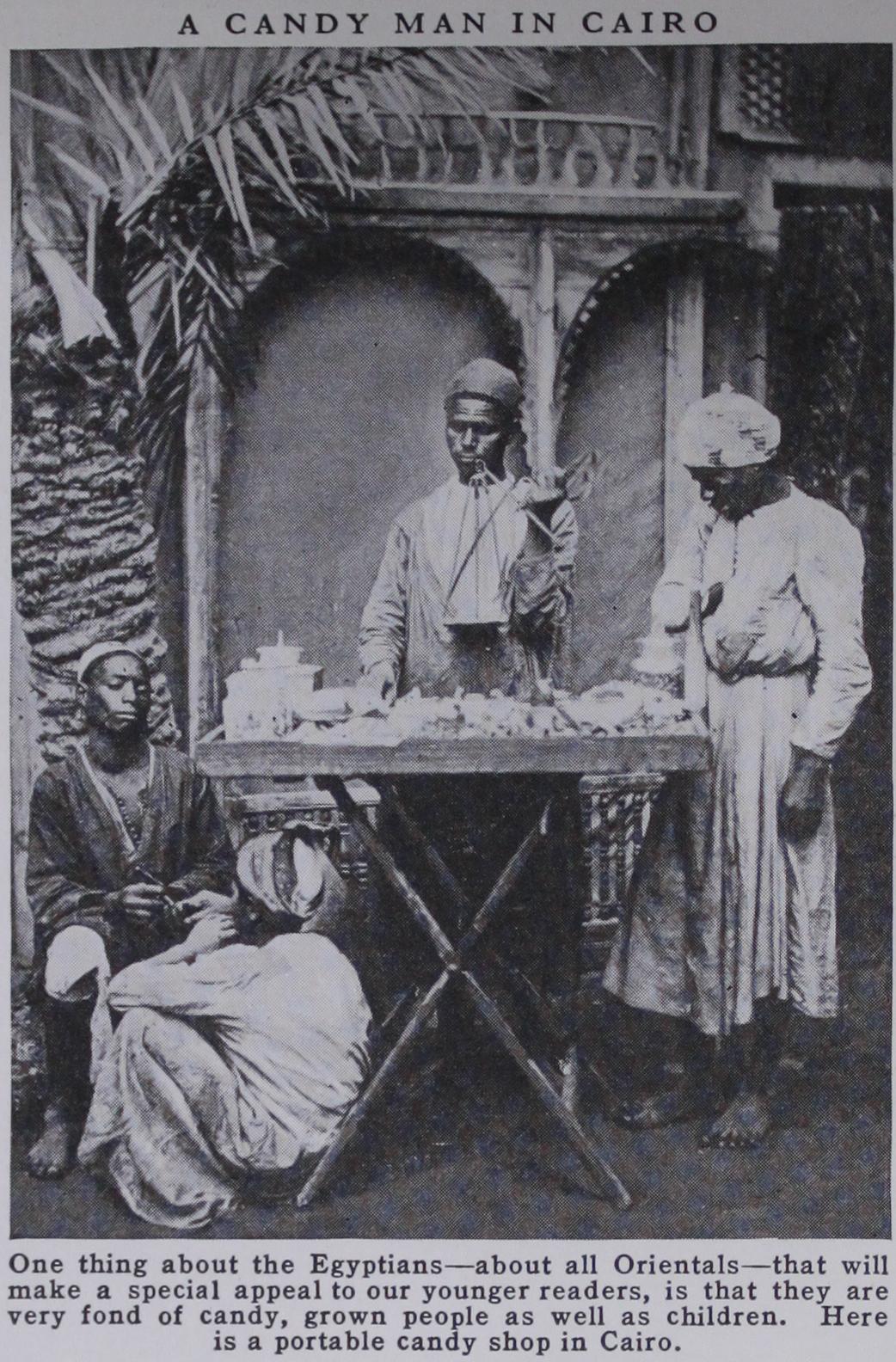
The Egyptian Idea of Department Stores Who can describe these wonderful bazaars, with their thousands of sellers and seemingly no buyers; packed with everything in the world that nobody wants; with the most appalling things to eat and the richest things to wear; with the gaudiest and most miserable jewels; with shoemakers, polishers, tailors, jewelers, coffee-grinders, and a host of busy folk work ing in the doorways or in the open fronts of shops; with every kind of work going on before your eyes; humanity. Was ever such a blending of color, or such a mixture of peoples, or such a living picture of the Old World? You are not surprised to be told that in those bulrushes Pharaoh's daughter found Moses; your surprise is that Moses is not there! You wonder if that group of Bedouin Arabs in the desert are Joseph's brethren; for all the change that has taken place they well might be.
with the filthiest hovels on earth packed with gorgeous color? Who has ever seen, anywhere, such splendid rubbish-heaps? The houses of this motley multitude—do they reach to the sky? And the pavements—are they the fac tories of Egypt? At every turn some little group is busy roasting chestnuts on the curbstones, even at midnight; making coffee for passers-by ; displaying their rings of bread and plates of strange confections on the dirty ground.
See the white donkeys with their blue necklaces, the crowds of cows and buffaloes and camels in the road; hear the cackling hens in the shops, the stray sheep and goats in the busy streets. Hear the moaning of the carpet-man, the solemn dirge of the pray erful man. Feel the misery of these happy people. Smell their streets and shops. Es cape, if you can, from the heap of fish in that win dow, from the basket of onions in this, from the carcass in that butcher's shop. Turn the corner
and see their tobacco shops, the daintiest imag inable. Step inside their mosques; put your feet into their yellow sandals — and see the glory of Cairo, the wonderful, un matched, and unforget able panorama of a hundred square miles of domes and minarets sparkling in the sun! See Father Nile flowing, as he has flowed ten thou sand years, still bearing prehistoric craft past great palaces and banks lined with palms; with the dim background of the distant desert rising against the sky, the great Pyramids of Gizeh, ten miles distant, plainly seen, and those of Sakkara, more distant still, looming beyond.
Stand here on the citadel and watch the sunset over it all, and remember that the sun has set over it for more centuries than you can count years—unless you are getting old; that in the plain before you empires have been born, empires have been lost! People the arena with the great immortals—Julius Caesar, Mark Anthony, Cleopatra, Moses, and the Pharaohs; and then—then walk slowly down the hill, see the human relics of this past greatness, and wonder what life and the world mean. Take a car riage at the bottom, and drive ten miles. Three miles bring you to an avenue lined with trees—" the avenue that never ends"—and about you are oranges, bananas, and dates in the gardens, and buffaloes at work in the fields, led by men in long blue robes.
But let them pass. Ahead, just in front of you, at the bottom of the way, stand the Pyramids. A mile goes past, and then another, and another. Still more miles pass, and more—and still, in front of you, these great things rise. Rub your eyes and be sure you do not dream. Then at last the desert, the greatest structures that were ever built in stone, and the strange ugly Sphinx! We are at the Pyramids, the most famous spot for travelers on all the earth, and we watch the shadow of the Great Pyramid greatest of the three creep along the sand. As we sit in the sand, looking at this huge thing, with neither beauty nor useful ness to plead for it, it is hard to think what we shall say about it. The sun shines down on it to day as it shone on it when Abraham and Moses looked at it, and a thou sand years before. The moon looks down on it tonight as on that night when a mother brought her Child down into Egypt to flee from the cruelty of Herod.