Canada
provinces, canadian, dominion, acres, british, pacific, chiefly, french, industry and western
Plentiful rainfall keeps most of the inland waters well supplied and ensures bounteous crops. On the Most parts of the Dominion have a continental climate with cold winters and warm summers, but the great extremes in temperature are made endurable by the dryness and clearness of the air. The warm winds blowing from the Pacific make the western coast much warmer than the eastern; and the western portions of the prairie provinces have a milder climate than corresponding latitudes in the eastern provinces.
Pacific slopes the moisture is excessive, and only in the southwestern portion of the prairie provinces, where the Rocky Mountains intercept the rain-bear ing winds from the Pacific, are there extensive arid belts. But even there in some sections water is obtainable from mountain streams and artesian wells.
The leading industry of Canada is agriculture, and at least one-half of the population depends upon farming for support. The great development in this industry came in the latter part of the 19th and the beginning of the 20th centuries, with the western extension of the railroads. Before 1885 there were practically no set tlers on the great prairies of Alberta and Saskatchewan, and but few in Manitoba, because of the lack of direct communication with the east. In that year the Canadian Pacific Railway was com pleted, and since then two other rail ways across the continent have been built—the combined National Transcontinental and Grand Trunk Pacific and the Canadian Northern —opening up the vast prairie sections which today are among the greatest grain-growing areas of the world. Wheat is the most im portant, product, but other grains– oats, barley, rye, and flax—are grown. Nova Scotia and Ontario on the east and British Columbia on the west are famous for their fruits, and flax is extensively grown, especially in the western provin ces. Stock-raising is also an impor tant industry of the plains, where some of the large ranches formerly covered thousands of acres, but have been succeeded by smaller though much more numer ous ranches.
The Dominion and provincial governments have contributed largely to the develop ment of Canadian agriculture by spending vast sums on experi mental farms, sub sidizing cold storage warehouses, operating terminal grain elevators, encouraging immigration, and in many other ways. The total acreage under cultiva tion is increasing every year, but even now less than 10 per cent of the Dominion's 450,000,000 acres of arable land is being tilled.
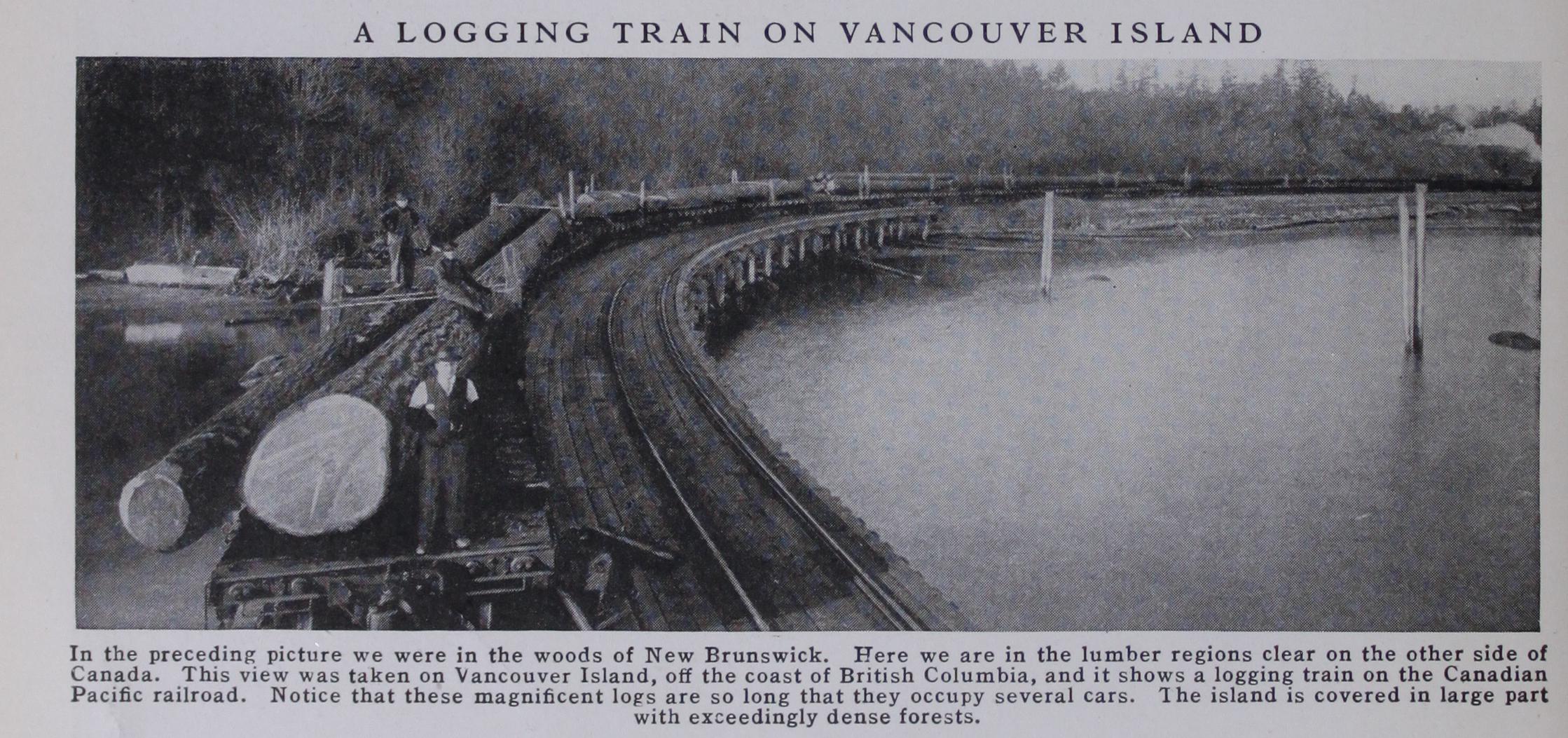
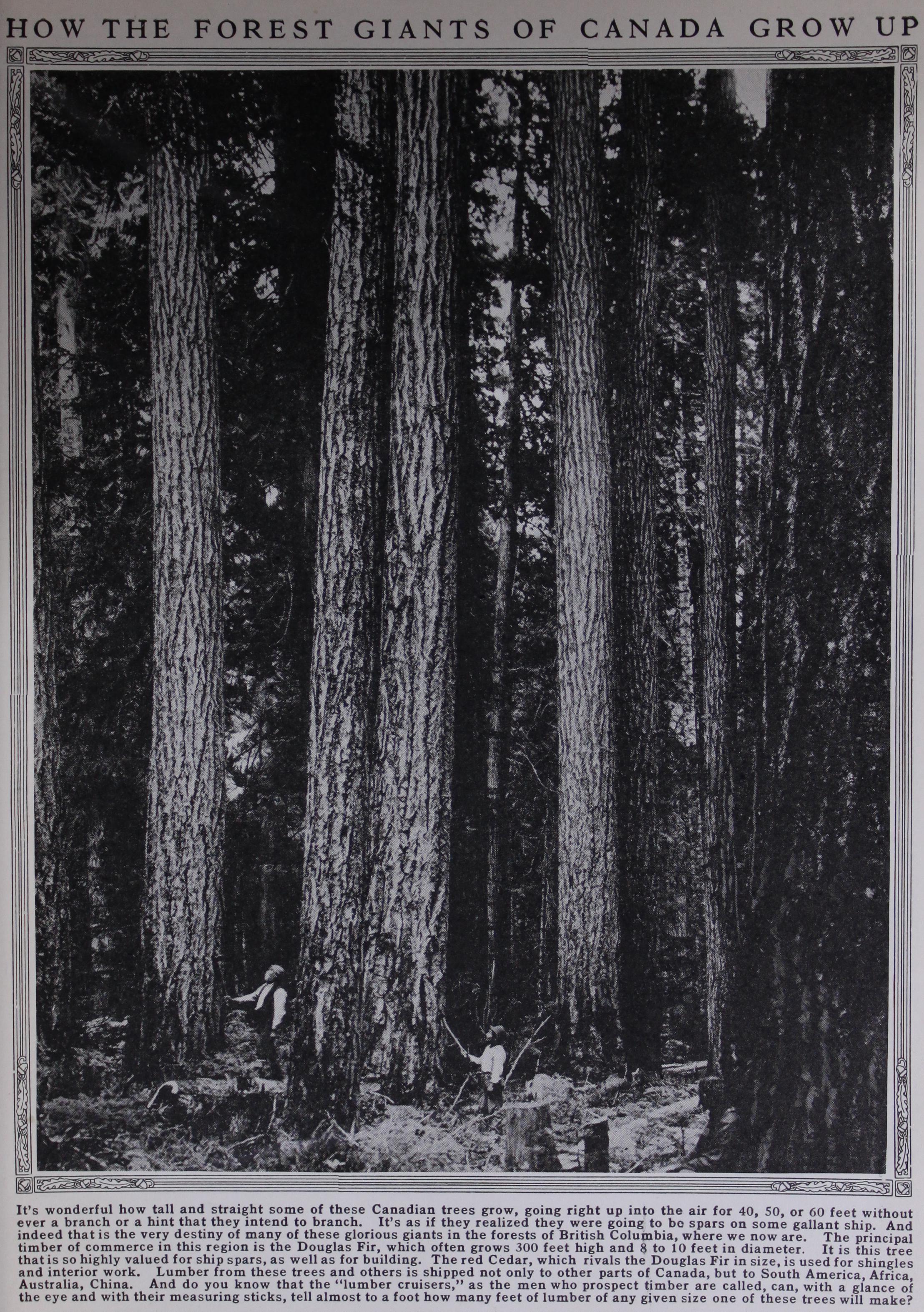
Next in importance in the list of Canada's natural resources are the vast shaggy forests which belt the land diagonally from east to west, covering nearly one-third of the whole surface. So little is yet known of this enormous region that estimates of its extent vary greatly, ranging from half a billion to a billion acres. It is generally agreed, however, that there are from 200,000,000 to 300,000,000 acres of merchant able timber, about one-half of the area and one-third of the supply available in the United States. Warned by the experience of her southern neighbor, Canada is conserving this great resource, and has set aside 159,000,000 acres of forest reserves.
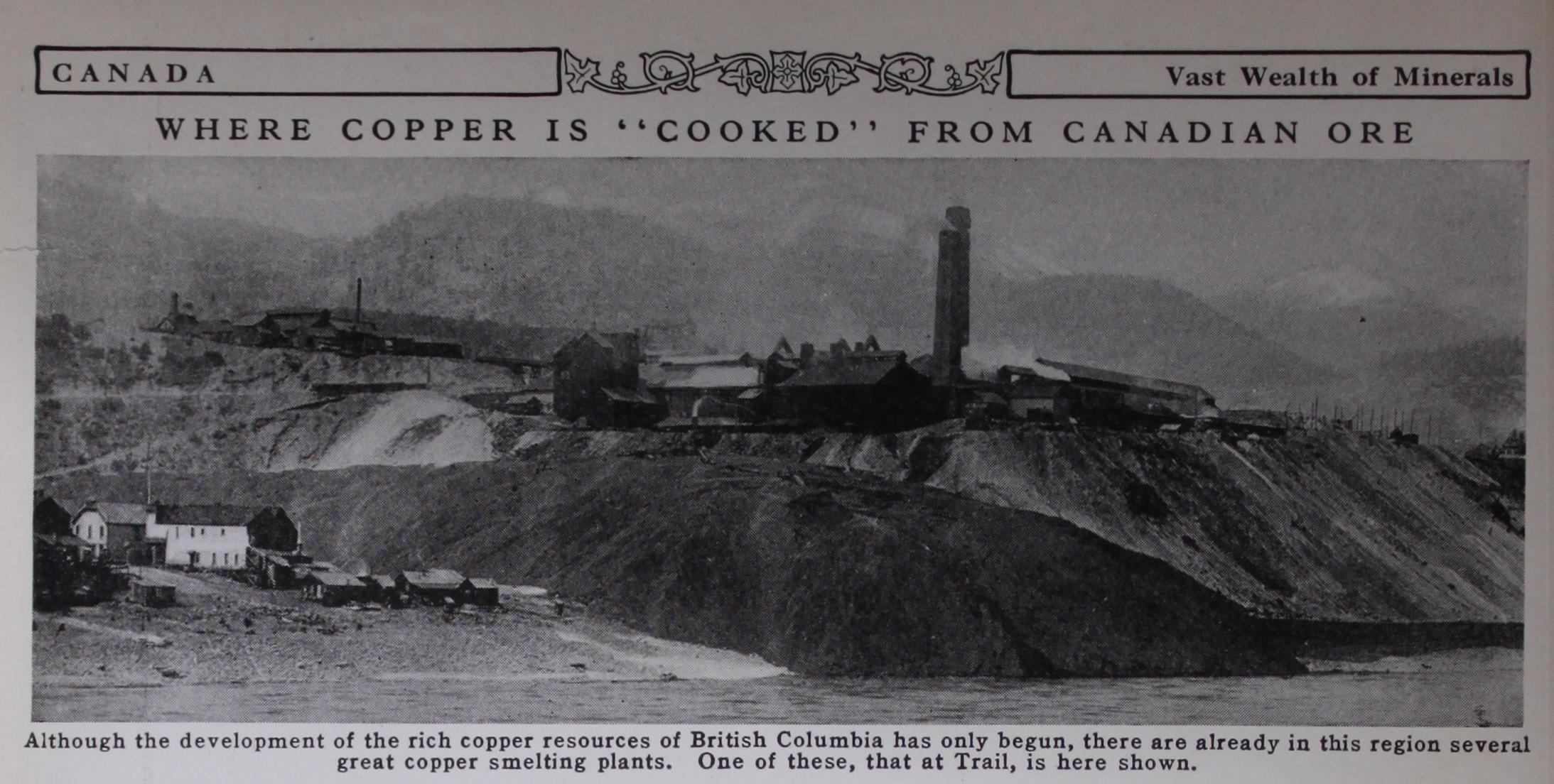
In minerals, too, Canada is richly endowed, though development is still so slight that the country pays more for imported minerals than it receives from its mines. Almost every important mineral is known
to exist somewhere in Canada, though geologists as yet have thoroughly surveyed only the southern regions. Of chief importance are the coal, nickel, copper, silver, gold, zinc, cobalt, and lead deposits.
Practically the whole of the world's supply of cobalt and asbestos and the greater part of its nickel come from Canada. The Dominion has about 70 per cent of the coal reserves of the whole British Empire, but its distribution, chiefly in the foothills and mountains of the west, makes development and transportation expensive. There are also immense deposits of iron, but here too Canada is backward, because for the most part the iron ore and the coal necessary for smelting it are widely separated. Natural gas is found in several of the provinces, chiefly in Alberta and Ontario, and petroleum is also produced in small quantities in these provinces. The great stretches of bituminous sands along the Mackenzie River may become an important source of oil supply.
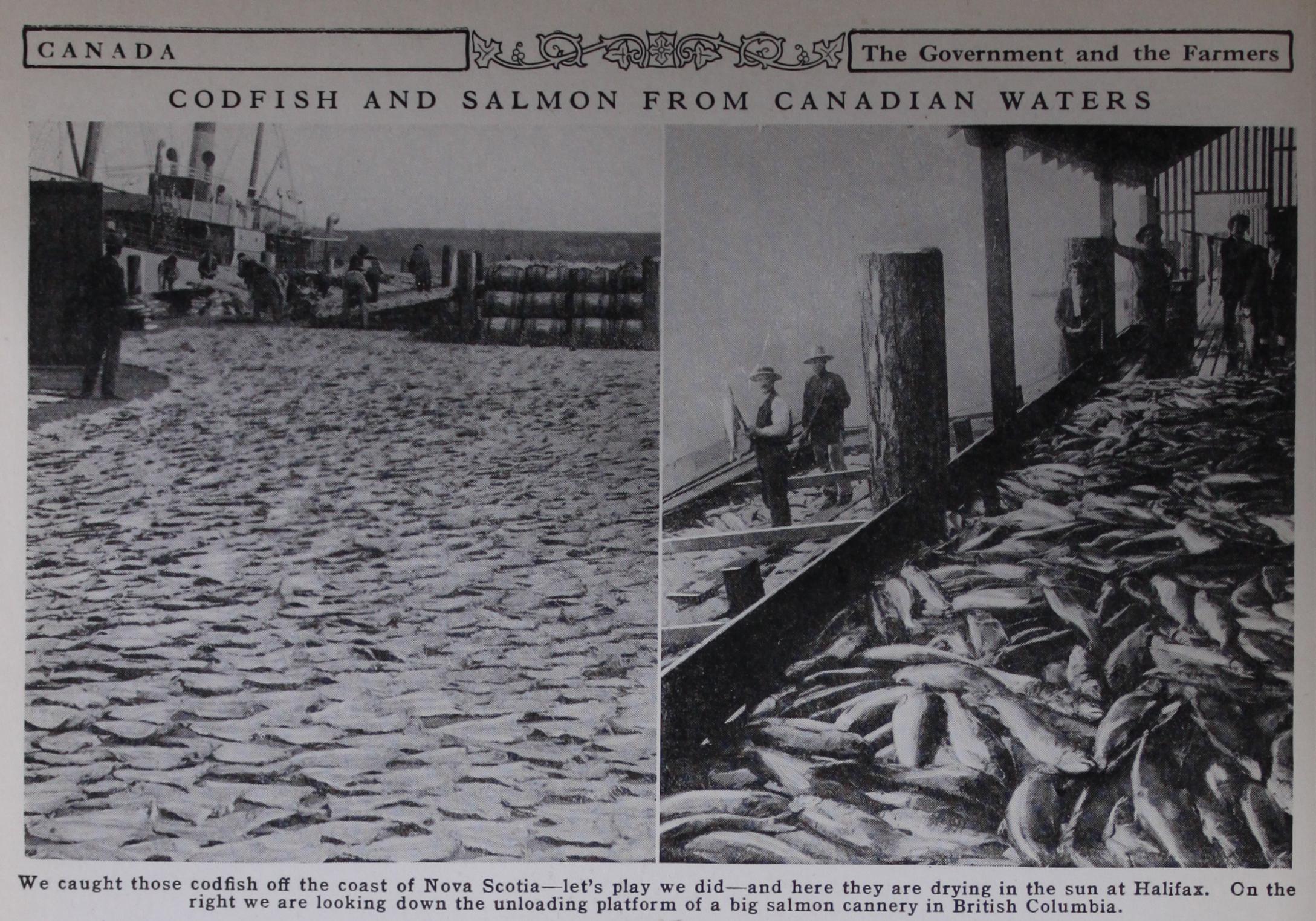
In the extent and value of its fisheries Canada leads the world. The finest food and game fishes abound everywhere, in the lakes and rivers as well as in the coastal waters. Three-fifths of the annual catch is exported, chiefly to the United States. The same far-sighted conservation policy which has been applied so effectively in other lines is in force here too.
Fur-farming is becoming an important industry, as the steady depletion of the world's fur-bearing animals causes the price of furs to advance. Foxes, skunks, minks, raccoons, fishers, beavers, and musk rats are bred chiefly in the Maritime Provinces.
With her limitless and almost untouched natural resources, and her boundless water-power, Canada is destined to become a great manufacturing nation.
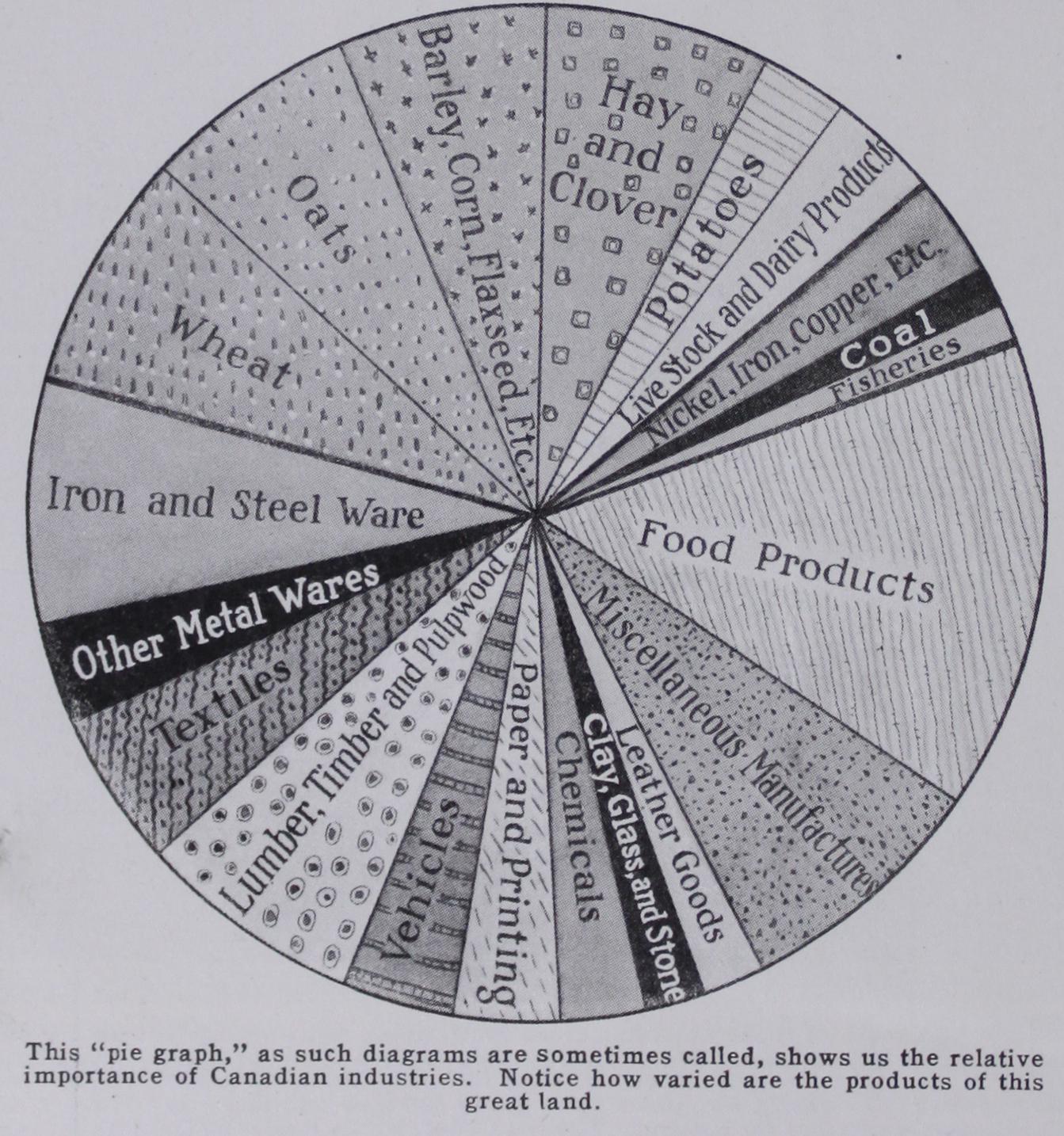
Already the value of Canadian manufactures con siderably surpasses the value of the farm products.
The greatest single item is the manufacture of food products, which uses the farm products as raw ma terial. Canadian manufactures in general are of comparatively late growth, being heavily handi capped by American competition and somewhat limited markets. During recent years, however, they have grown by leaps and bounds, especially under the stimulus of the World War of 1914-18.
More than four-fifths of the people of Canada were born in the British Empire, most of them in Canada itself, though of recent years there has been a large immigration from the British Isles. Yet in spite of this large British-born population, more than one fourth of the Canadian people speak French rather than English. This is due to the fact that the French Canadians of Quebec, though they have been under British rule since 1763, retain the French language as the speech of everyday use. By the act of Parliament which established the Dominion in 1867, both French and English were made official languages of the Dominion Parliament and the Legislature of Quebec, and may be used in any federal court. In all provinces except Quebec English is the only official language.