Catbird
garden and birds
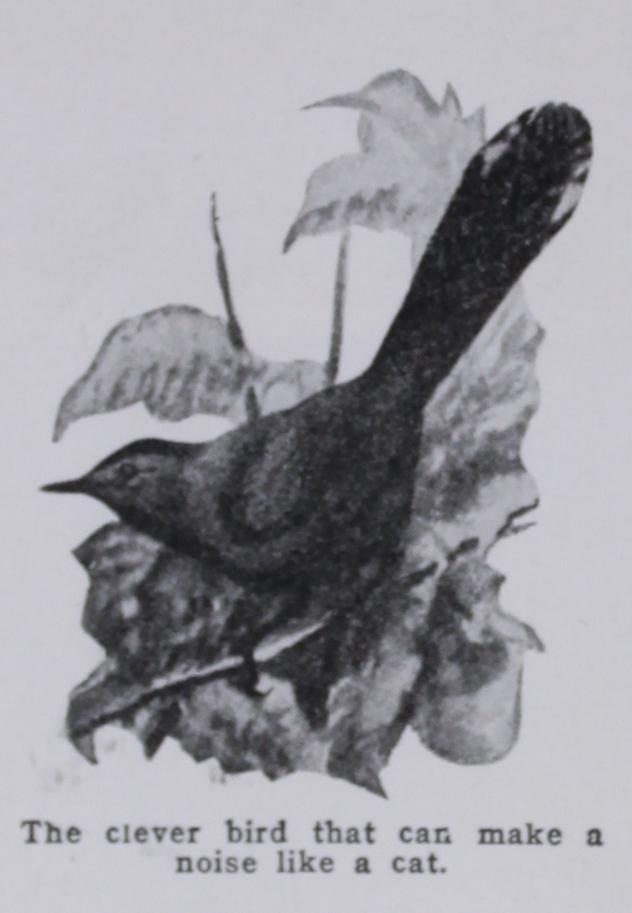
CATBIRD. The catbird is a "grand-stander." He sings best when he is sure that someone is listen ing, and he always poses on the most conspicuous twig in the garden.
There he mimics the other birds with many musical flour ishes, and cat-calls and tree-toad notes thrown in. His name comes from his suc cess in imitating the plaintive mewing of a cat in distress.
The catbird is about nine inches long. It is not showy with bright feathers, but no bird of the garden is clothed with more distinc tion. The whole family—father, mother, and children—have blue-gray feathers set off by a black cap and tail with just a touch of rust color underneath.
The large nest of twigs, dead leaves, and rootlets may be hidden in the shrubbery about the very door of the house, or in swampy thickets. There are four to six eggs of deep bluish-green color. Cat birds eat insects and fruit, sometimes the choice garden berries, but they prefer wild fruit if it is to be had. They are common throughout the greater part of temperate North America. They winter from the Southern States through Central America.
Catbirds belong to the family Miminne and are closely related to the mocking-birds. Scientific name, Galeo scoptet. caratint-nsig.