Centaurs
census, population and ancient
CENTAURS (sen'tars). The Greek legends are full of tales of the fabled monsters called Centaurs, whom they pictured as men to the waist, but with the lower part of the body that of the horse. At the feast celebrating the marriage of the king of the Lapithae, they made an attempt to carry off the bride. A A statistical atlas containing maps and charts which present this information graphically for all parts of the country usually accompanies the report. Think of the difference between this and the first census, taken in 1790, which was printed in a slender book of 56 pages ! Besides the main census report, the bureau also gathers statistics at regular intervals about wealth, debt, and taxation; religious bodies; water transpor tation, electrical industries; mortality and births; as well as many other subjects. Scores of special reports are also issued on such subjects as occupa tions, racial classes of population, population of metropolitan districts, etc.

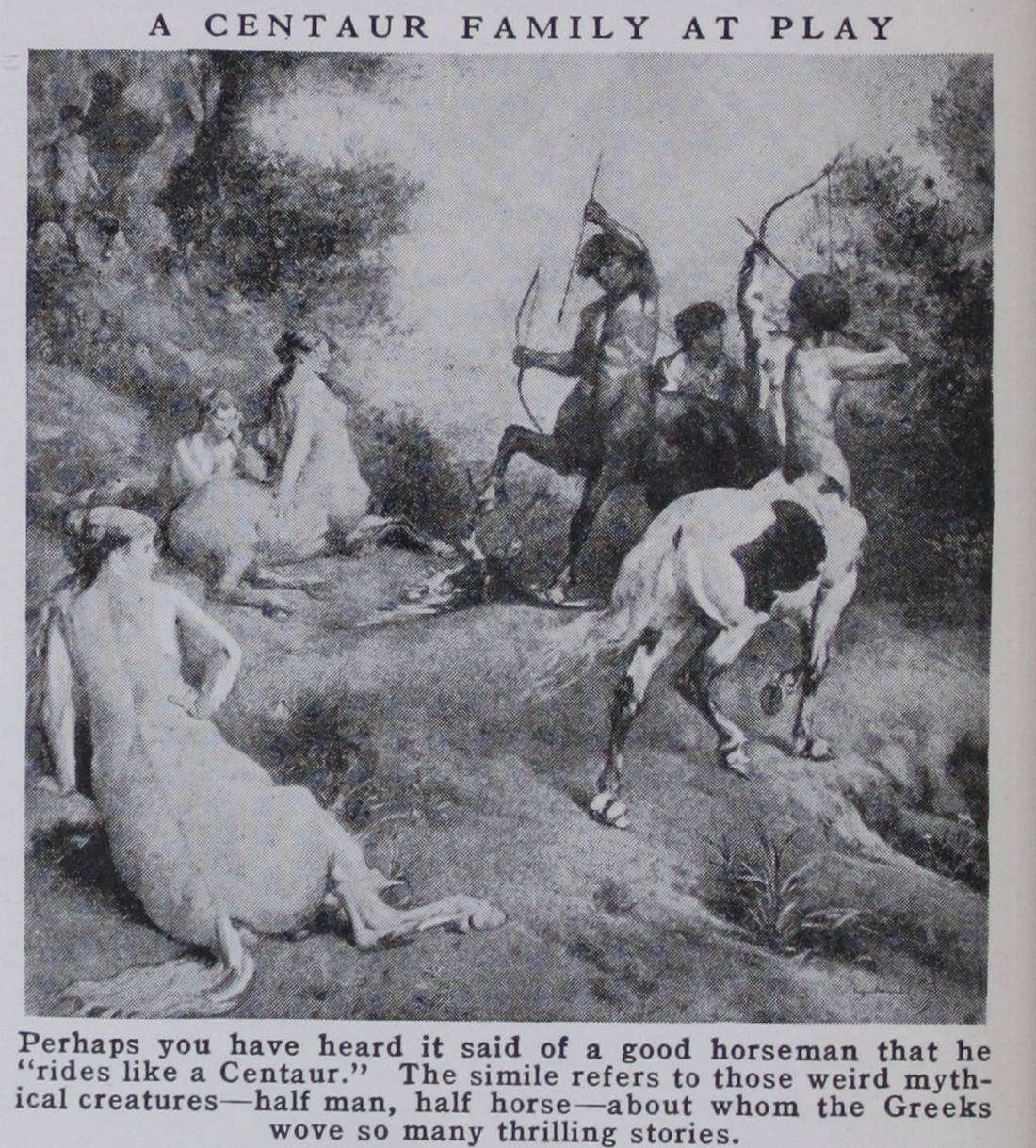
How Uncle Sam Led in Census Taking The United States was the first modern nation to adopt a legal or constitutional provision for the regular taking of the census. The constitution, which went into effect in 1789, requires that a census be taken every 10 years, because each state's repre sentation in the House of Representatives is based on its population. Even in ancient times, however, censuses were occasionally taken. Ancient China took censuses to determine the revenues and the fierce battle ensued between the Lapithae and the Centaurs, but through the assistance of Theseus, the friend of the king, the latter were defeated and the bride rescued. This battle inspired some of the sculptures of the famous Parthenon at Athens.
Very different from most of the Centaurs was Chiron, noted for his learning and wisdom, and said to have been instructed by the god Apollo. To this wise Centaur Apollo intrusted the charge of his own son Aesculapius, who became the patron of physicians.
Many other famous heroes were Chiron's pupils, notably Jason, Hercules, and Achilles.