Holy Roman Emperor 1500-1558 Charles V
spain, italy, time, france, world and austria
CHARLES V, HOLY ROMAN EMPEROR (1500-1558).
In October of the year 1555 a strange procession wound its way through the rugged and hilly region of northwestern Spain. At its head rode an officer with a company of soldiers. Next came a gouty old man in a horse-litter. A body of horsemen followed, and in the rear toiled a long file of baggage mules.
As the train advanced into the more settled regions of the country it became evident that the occupant of the litter was a person of the highest consequence.
Along the road the people assembled to show him reverence. Great lords gathered in his honor in the towns along the route, and in the cities the traveler was greeted by respectful deputations of officials and the bells rang out in merry peals, while enthusiastic crowds filled the streets.
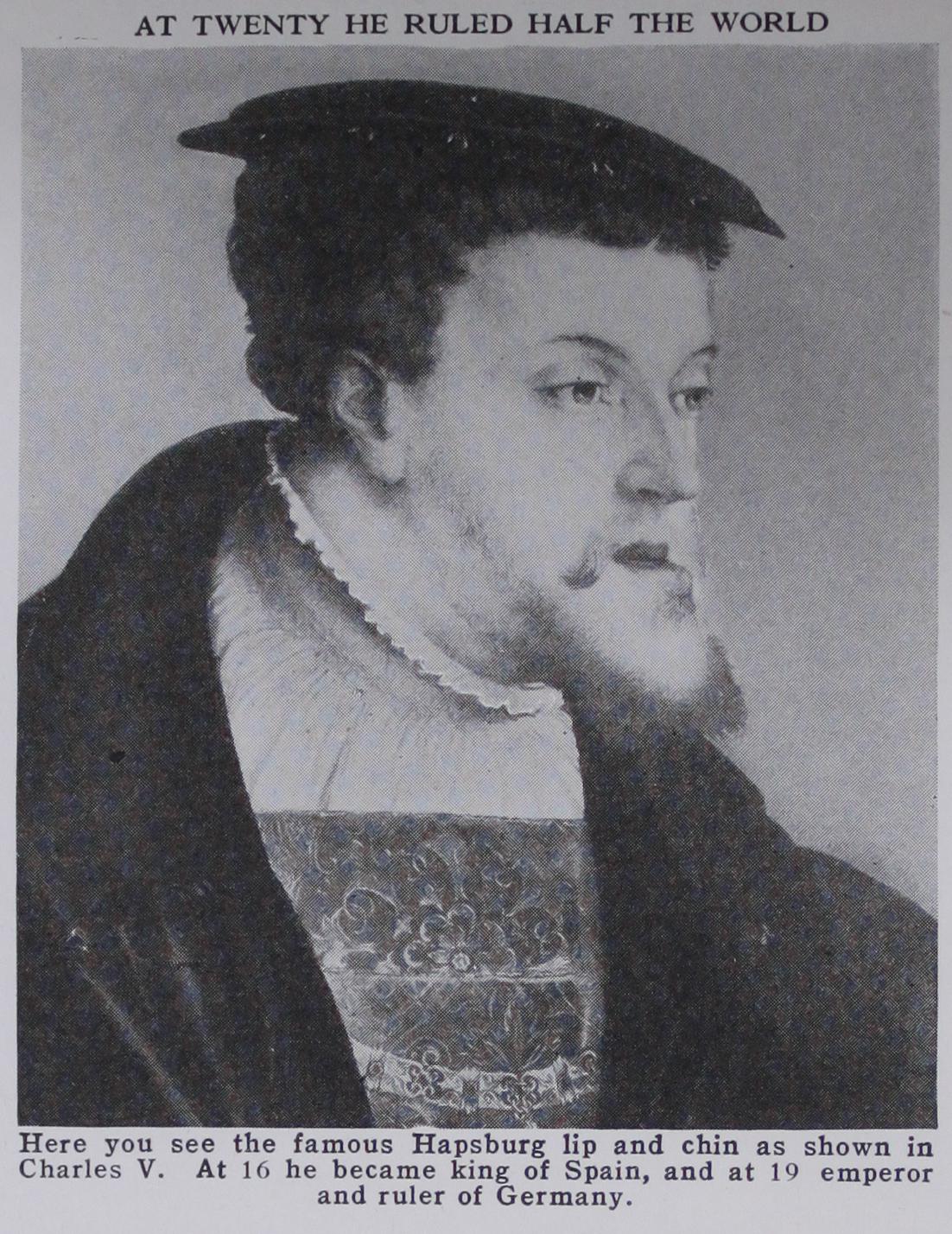
This captive of the gout who thus passed in slow procession through the lands and cities of Spain was His Royal and Imperial Majesty, Charles V, Emperor of the Holy Roman Empire, King of Spain and the Netherlands, ruler of Germany and Austria, King of Naples and Sicily, and lord of the greater part of America. He was the greatest monarch in all the world, being lord of a realm vaster than that of Charlemagne. He had done what few kings have done before or since, voluntarily laid down his numerous crowns in the height of his power— weary of reigning and surfeited with great ness—and was retiring to spend the remainder of his life far from the pomp of courts in the privacy of a simple com munity of monks, at Yuste in western Spain.
At Yuste, according to report, he put in a large part of each day in regulating the large col lection of clocks • and watches which he had gathered with a view to having them keep time together. One day, so the story goes—with how much truth we cannot say—after trying in vain to so adjust his timepieces that they would all show the same time, he cried: " How foolish I have been to try to make men think alike when, do what I will, I cannot even make two timepieces agree!" It is small wonder that at the age of 55 Charles had been glad to exchange his exalted position of emperor for the simple life of the monastery. Never
in the history of the world had a boy been called upon to shoulder such burdens as was this son of Philip of Burgundy and Joanna of Spain, before he had com pleted his 16th year. At an age when most boys are still at school, he had been called upon to rule Spain, the Netherlands, the kingdom of Sicily and Naples in southern Italy, and Spain's vast possessions in the New World. Before he was 20 years old he had inherited Austria, and was elected emperor of the Holy Roman Empire, or Germany—a land of more than 200 states, great and small, which was just entering upon a great religious and social revolution.
Unpromising Youth of Charles We know that this boy, upon whose possessions it might almost be said that the sun never set, caused a great deal of worry to his relatives and friends; for Charles had been a backward retiring lad who could not even speak distinctly. It was even proposed at one time that his younger brother Ferdinand should rule in his stead. But Charles had developed into a shrewd far-sighted ruler who, as one of his subjects expressed it, " had much more at the back of his head than he carried in his face." And he had need in his troubled reign (1519-1558) for all his prudence and foresight. In the first place Francis I, the young king of France, had laid claim to Charles' possessions in Italy, and three times Spanish armies had been obliged to defeat those of France before the French claim was given up. Then while Charles was fighting France in Italy and else where, the Turks had poured up the Danube Valley taking his lands in Austria and Hungary. As soon as he had finished one war he had been obliged to begin another. Mohammedan pirates from northern Africa had also caused him trouble by swooping down on his coast towns of Spain and Italy and plundering them as well as preying upon their commerce.