New York Building Code - Brick Building Practice
walls and partitions
No chase for water or other pipes shall he made in any pier; and in no wall more than one-third of its thickness. The chases around said pipe or pipes shall be filled up with solid masonry far the space of 1 foot at the top and bottom of each story. No horizontal recess or chase in any wall shall be allowed exceeding 4 feet in length, without permission of the Commissioner of Buildings having jurisdiction. The aggregate area of recesses and chases in any wall shall not exceed onefourth of the whole area of the face of the wall on any story, nor shall any such recess be made within a distance of 6 feet from any other recess in the same wall.
Sec. 47. Furred Walls. In all walls furred with wood, the brickwork between the ends of wood beams shall project the thickness of the furring beyond the inner fare of the wall for the full depth of the beams.
See. 48. Light and Vent Shafts. In every building hereafter erected or altered, all the walls or partitions forming interior light or vent shafts shall be built of brick or such other fireproof materials as may be approved by the Commissioner of Buildings having jurisdiction. The walls of all light or vent shafts, whether exterior or interior, hereafter erected, shall be carried up not less than 3 feet above the level of the rocf, and the brick walls coped as other parapet walls. Vent shafts to light interior bathrooms in private dwellings may be built of wood filled in solidly with brick or hard-burnt clay blocks, when extending through not more than one story in height, and carried not less than 2 feet above the roof, covered with ventilating skylight of metal and glass.
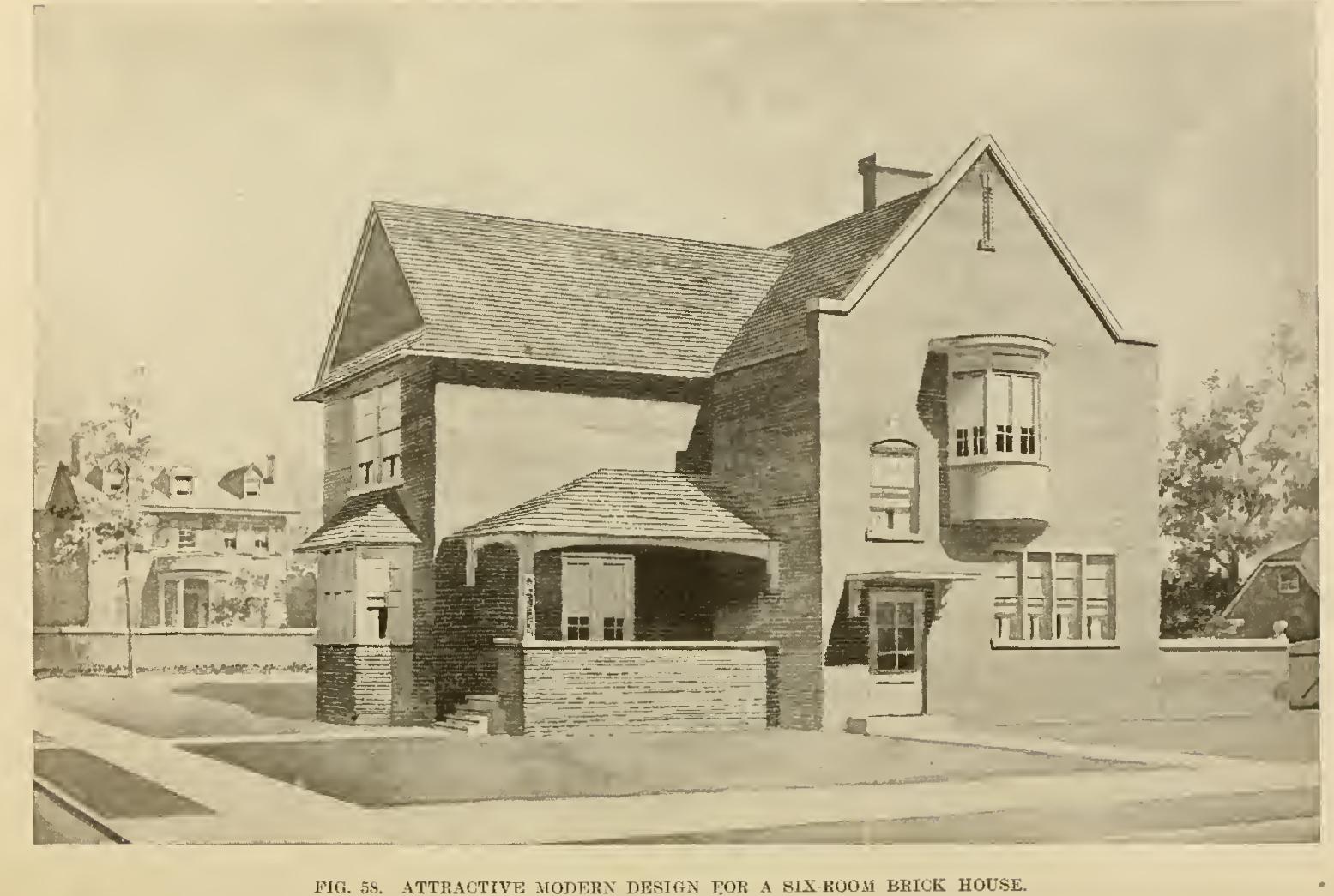
Sec. 49. Brick and Partitions. Eight-inch brick and 6-inch and 4-inch hollowtile partitions, of hard-burnt clay or porous terra-cotta, may be built, not exceeding in their vertical portions a measurement of 50, 36, and 24 feet respectively, and in their horizontal measurement a length not exceeding 75 feet. unless strengthened by proper cross-walls, piers, or buttresses, or built-in iron or steel framework. All such partitions shall be carried on proper foundations, or on iron or steel girders, or iron or steel girders and columns or piers of masonry.
Sec. 50. Cellar Partitions in Residence Buildings. One line of fore-and-aft partitions in the cellar or lowest story, supporting stud partitions above, in all residence buildings over 20 feet between hearing walls in the cellar or lowest story, hereafter erected, shall be constructed of brick, not less than 6 inches thick, or piers of brick with openings arched over below the under side of the first tier of beams ; or girders of iron or steel and iron columns, or piers of masonry, may be used ; or, if iron or steel floor-beams spanning the distance between bearing walls are used of adequate strength to support the stud partitions above in addition to the floor load to he sustained by the said iron or steel beams, then the fore-and-aft brick partition, or its equivalent, may be omitted.
Stud partitions which may be placed in the cellar or lowest story of any building shall have good, solid stone or brick foundation walls under the same, which shall be built up to the top of the floor-beams or sleepers ; and the sills of said partitions shall be of locust or other suitable hardwood ; but if the walls are built 5 inches higher of brick than the top of the floor-beams or sleepers, any wooden sill may be used, on which the studs shall be set.
Sec. 51. Main Stud Partitions. In residence buildings where fore-and-aft stud partitions rest directly over each other, they shall run down between the wood floor-beams and rest on the top plate of the partition below, and shall have the studding filled in solid between the uprights to the depth of the floor-beams with suitable incombustible materials.
Sec. 52. Timber in Walls Prohibited. No timber shall be used in any wall of any building where stone. brick, or iron is commonly used, except inside lintels, as herein provided, and brace blocks not more than 8 inches in length.
Table VII indicates the required thickness of brick walls in the different stories of resiTable VII 'Thickness of Brick Walls, Chicago Building Ordinance for Residences, Tenements, Hotels, and Office Buildings (Thickness given in inches) &Dees, tenements, hotels, and office buildings, according to the Building Ordinance of the City of Chicago, Ill.
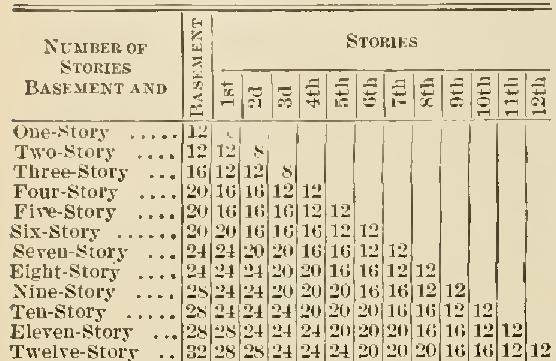
Table VIII gives a summary of requirements of the Building Ordinances of various cities in the United States, as to the thickness of brick walls for mercantile buildings and public stables, and (except in Chicago) for all buildings over five stories in height.