
GRIFFIN, GRIFFON or GRYPHON, in the natural his tory of the ancients, the name of a rapacious creature represented with four legs, wings and a beak—the fore part resembling an eagle and the hinder a lion. In addition, some writers describe the tail as a serpent (from Fr. griffon, Lat. gryphus, Gr. y pink) . This animal, which was supposed to watch over gold mines and hidden treasures, and to be the enemy of the horse, was consecrated to the Sun; and the ancient painters represented the chariot of the Sun as drawn by griffins. According to Spanheim, those of Jupiter and Nemesis were similarly provided. The griffin of Scripture is probably the osprey, and the name is now given to a species of vulture. The griffin was said to inhabit Asiatic Scythia, where gold and precious stones were abundant ; and when strangers approached to gather these the creatures leapt upon them and tore them in pieces, thus chastising human avarice and greed.
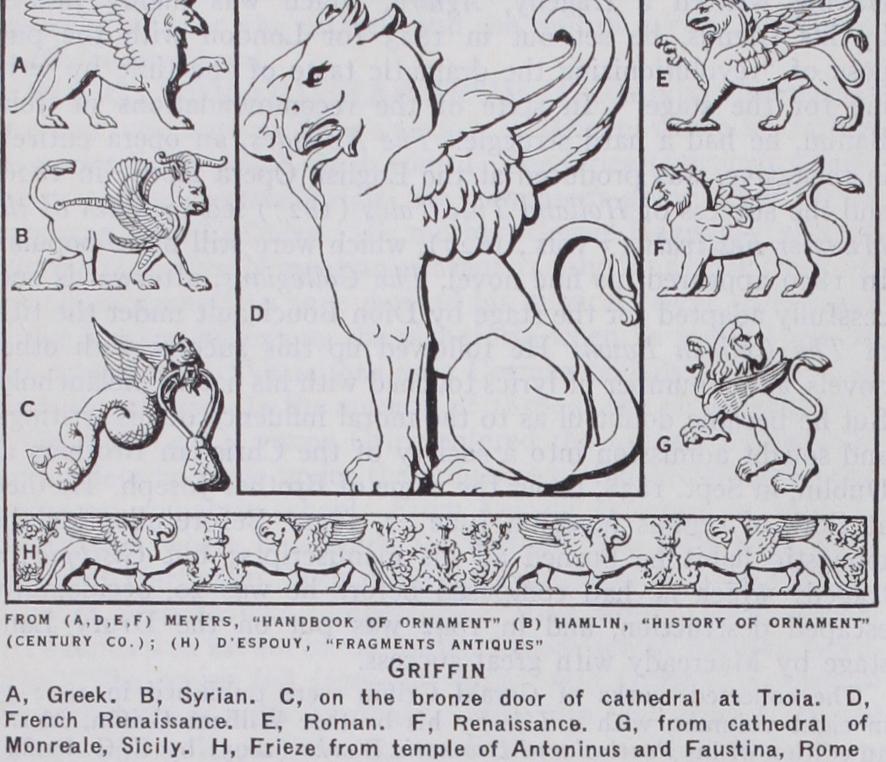
The one-eyed Arimaspi waged constant war with them, according to Herodotus. Sir John de Mandeville, in his Travels, described a griffin as eight times larger than a lion.
The griffin is frequently seen as a charge in heraldry (q.v.).