
CARYOPHYLLACEAE, a family of dicotyledonous plants, containing about 8o genera with 1,300 species, and widely dis tributed, especially in temperate, alpine and arctic regions. The plants are herbs, sometimes becoming shrubby at the base, with opposite, simple, generally uncut leaves and swollen nodes. The main axis ends in a flower (definite inflorescence), and flower bearing branches are borne one on each side by which the branch ing is often continued. The flowers are regular, with four or five sepals which are free or joined to form a tube in their lower portion, the same number of petals, free and springing from below the ovary, twice as many stamens, inserted with the petals, and a pistil of two to five carpels joined to form an ovary containing a large number of ovules on a central placenta and bearing two to five styles ; the ovary is one celled or incompletely partitioned at the base into three to five cells; honey is secreted at the base of the stamens. The fruit is a capsule containing a large number of small seeds and open ing by apical teeth ; the seed con tains a floury endosperm and a curved embryo.
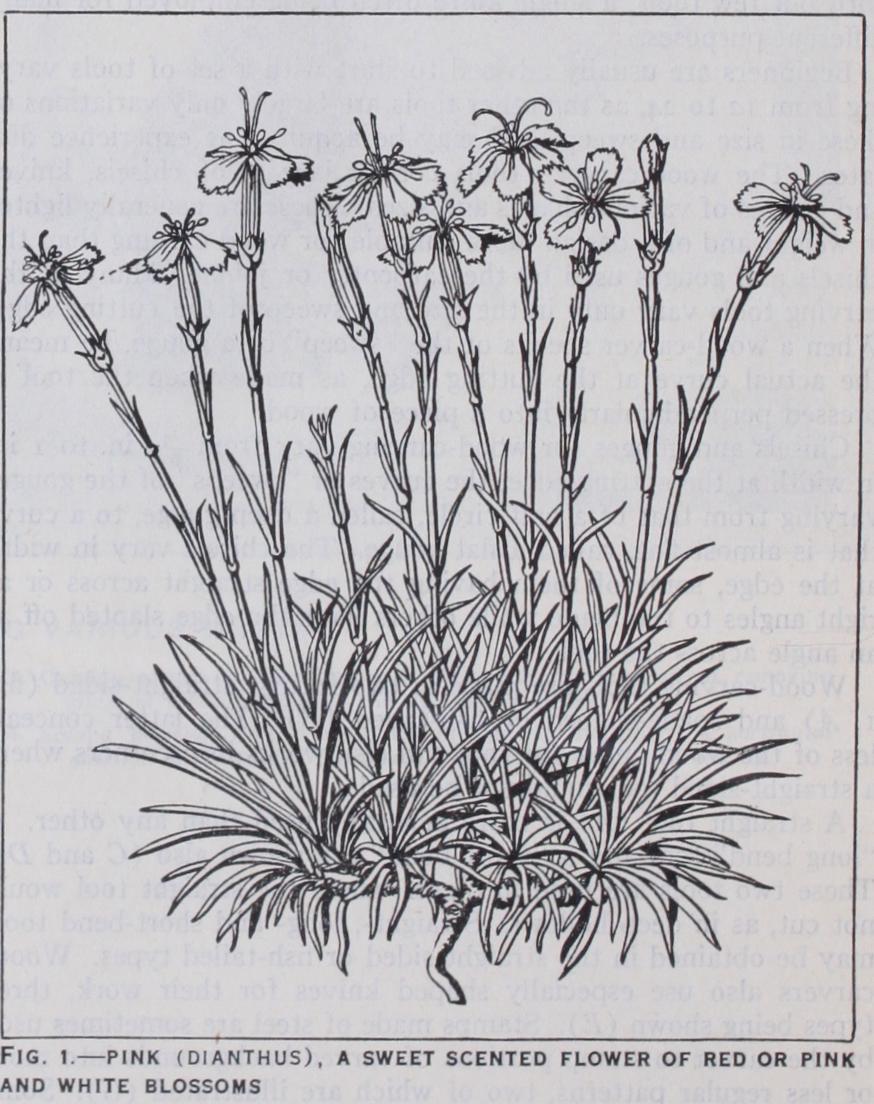
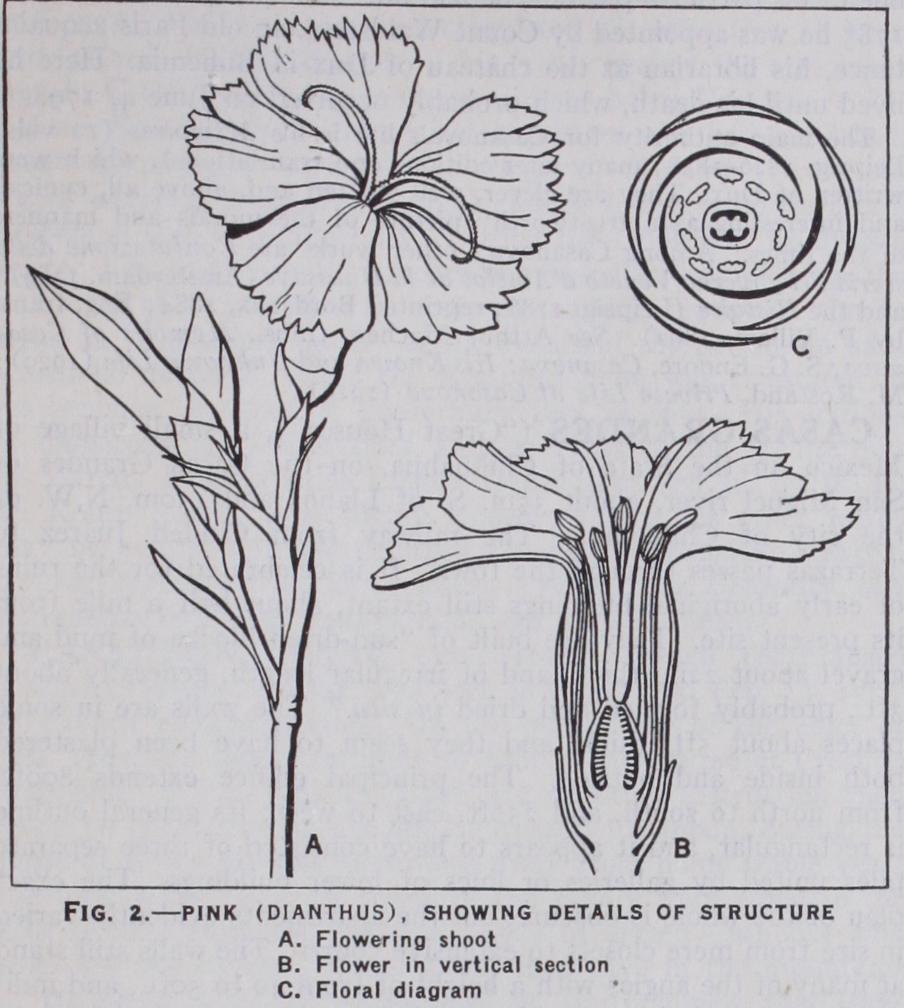
The family is divided into two well-defined tribes which are distinguished by the character of the flower and the arrangements for ensuring pollination.
II. Silenoideae: the sepals are joined below to form a narrow tube, in which stand the long claws of the petals and the stamens, partly closing the tube and rendering the honey inaccessible to all but long-tongued insects such as the larger bees and Lepidoptera. The flowers are often red. It includes several British genera:— Dianthus (pink), Silene (catchfly, bladder campion), Lychnis (campion, L. Flos-Cuculi is ragged robin), and Gitliago or Agro stemma (corn cockle). Several, such as Lychnis vespertina, Silene nutans and others, open their flowers and become scented in the evening or at night, when they are visited by night-flying moths.
In North America the family is represented by about 300 species, most numerous in mountain regions and belonging chiefly to Silene, Arenaria, Alsine and Cerastium.
The plants of this family are of little or no economic value. Dianthus (carnation and pink), Gypsophila, Lychnis and others, are garden plants.