
CATTLE. The word cattle was formerly used to embrace all farm live stock, but is now commonly restricted to oxen or meat cattle. The several animals that may be included under the term, in this narrower sense, are usually divided into the following six groups :—(1) Buffaloes (India, Africa, etc.) ; (2) Bison (Europe and North America) ; (3) the Yak (Thibet, etc.) ; (4) the Gaur, Gayal and Bantin (India and Further India) ; (5) Eastern and African domesticated cattle or Zebu; and (6) Western or Euro pean domesticated cattle. Apart from the two last mentioned groups the India buffalo, yak, gayal and bantin have been domes ticated, and the American bison is being tried as an economic ani mal. Apart from the buffaloes, which constitute a relatively primi tive and rather distinct type, all the species enumerated are rather closely related. The buffaloes do not hybridize with the members of the other groups, but all the rest can be interbred without diffi culty and the hybrids, or at least the female hybrids, are quite fertile. (See also BOVIDAE, BUFFALO, BISON, YAK, GAUR, GAYAL, BANTIN, OX, AUROCHS.) The ox was certainly one of the earliest—possibly the first—of all animals to be domesticated. As regards Western Europe there is no evidence of domestication in paleolithic times but there are plentiful remains in the Swiss lake dwellings and other deposits of neolithic age. Domesticated cattle existed in Egypt about B.C., and possibly much earlier, while Babylonian remains have been assigned to still more remote ages.
In all likelihood the wild ancestors of European domesticated cattle belonged to one or more of the sub-species of the aurochs or urus(Bos primigenius) which was widely distributed in Europe, Western Asia, and Northern Africa in prehistoric times. However, the earliest known domesticated ox in Europe was a very small, slenderly built animal, with short horns, bearing all the marks of a prolonged existence under the care of man and contrasting very markedly with the contemporary wild urus. The conclusion has been drawn that the original domestication did not occur in West ern Europe ; probably the little ox, (Bos longifrons or Bos brachy ceros) together with corresponding types of sheep and pig were brought from Asia by neolithic man in his migrations. Later, in the Bronze age particularly, a new and larger type of cattle, show ing a closer resemblance to the European wild ox, made its ap pearance. Probably the Bos longifrons had been "graded up" by crossing with the wild type. The process was, however, not uni versal, and even to-day breeds like the Shetland, Jersey, Kerry and Brown Swiss show a marked resemblance to the neolithic type.
Whether the zebu had a separate origin from the western ox is not known ; some authorities seek to relate it with the bantin or gayal. In shape, colour, habits, and even in voice, it presents many points of difference from western cattle ; but the most striking of these, such as the presence of a hump, or the upward inclination of the horns, are not constant. There exist in Africa, Spain, China, etc., breeds which are intermediate between zebu and European cattle, but it is likely that some at least of these have arisen by crossing. (J. A. S. \V.) The word "cattle," which ety mologically merely denotes a form of property and is practically synonymous with "chattel," is by common usage a generic term for animals of the bovine race. The history of domesticated cattle begins with the history of civilisation ; indeed, before the days of settled communities nomadic man possessed herds of cattle which represented his wealth. With the beginning of agriculture and the systematic cultivation of the land the ox was harnessed to the plough and it is still the draught animal of the farm through out the greater part of the world. Even in England it has been dis placed by the horse only within the past century and there are many persons still living who have seen oxen ploughing English land. The economic value of cattle arose from the docility of the males for draught and the aptitude of the females to supply milk in excess of the requirements of their offspring. Ultimately they were utilized as food but this was in a sense secondary, and among some races their flesh was regarded for religious or other reasons as unfit for human consumption. The breeding and rearing of cattle for the primary purpose of supplying meat is a modern development.
In the terminology used to describe the sex and age of cattle, the male is first a "bull-calf" and if left intact becomes a "bull"; but if castrated he becomes a "steer" and in about two or three years grows to an "ox." The female is first a "heifer-calf," grow ing into a "heifer" and becoming after two or three years a "cow." A heifer is sometimes operated on to prevent breeding and is then a "spayed heifer." The age at which a steer becomes an ox and a heifer a cow is not clearly defined and the practice varies. Both in the male and female emasculation is practised because the animals are assumed to fatten more readily ; in the case of bulls intended for use as working oxen the object of emasculation, as in the case of stallions, is to make them quieter and more tractable in work.
Breeds.—The exact definition of a "breed" of cattle is difficult, although the term is commonly used and in practice well under stood. It may be said generally to connote a particular type of animal which has for a long period been bred only with those of the same, or closely similar type, and has hereditary characteristics which are transmissible to its offspring. In every breed, however long established, instances of atavism may and do occur, but these are eliminated and do not affect its general purity. Breeds have been established by generations of cattle-breeders aiming at the attainment and preservation of a particular type and working on the principle that "like begets like." It is only within very recent times that the laws of heredity founded on the researches of Mendel have been studied as a science. There are many old-estab lished breeds on the Continent as for example the Charolais and Normande of France, the Holsteins of Holland, the Campagna di Roma of Spain, and many others, but the British breeds are of most interest because of their influence in building up the vast herds which furnish the supplies of beef on which other countries are largely dependent. (See BEEF).
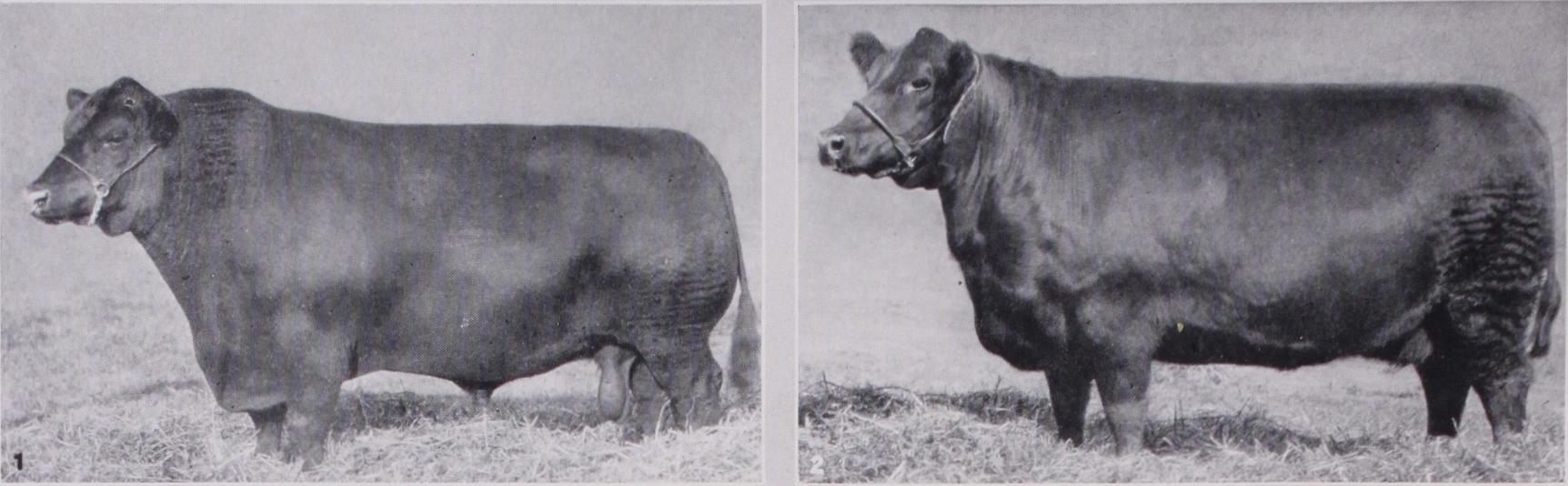
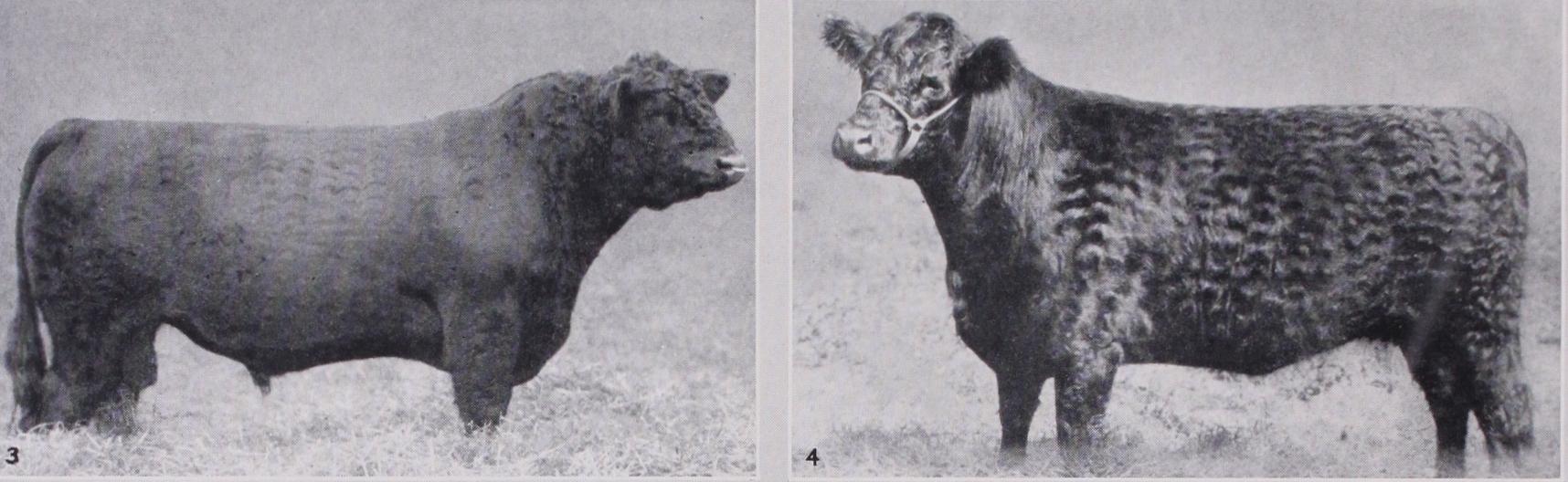
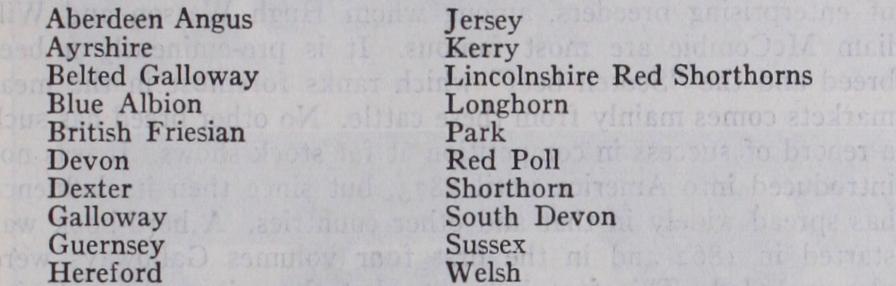
There are in the British Isles 20 breeds recognized by separate classes at the annual show of the Royal Agricultural Society. They are the following : To this list should be added the Highland breed for which classes are provided at the annual show of the Highland and Agri cultural Society of Scotland. Some of these breeds are limited in number and restricted in locality but each has its own character istic merits as may be seen by noting the salient features of the more important of them.
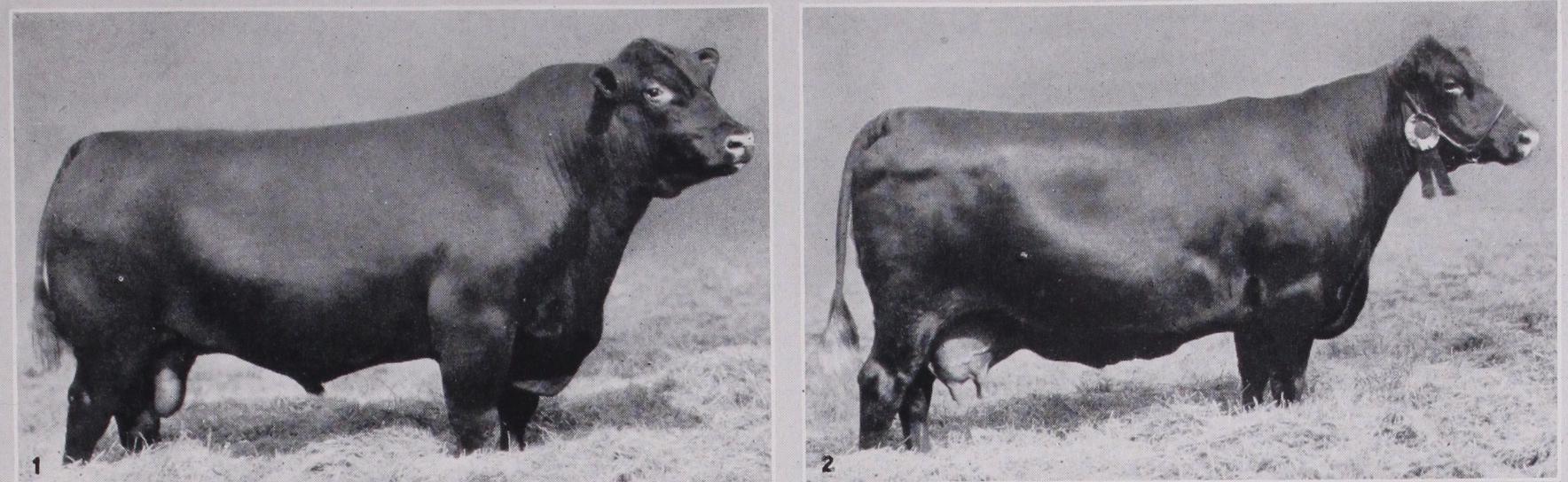
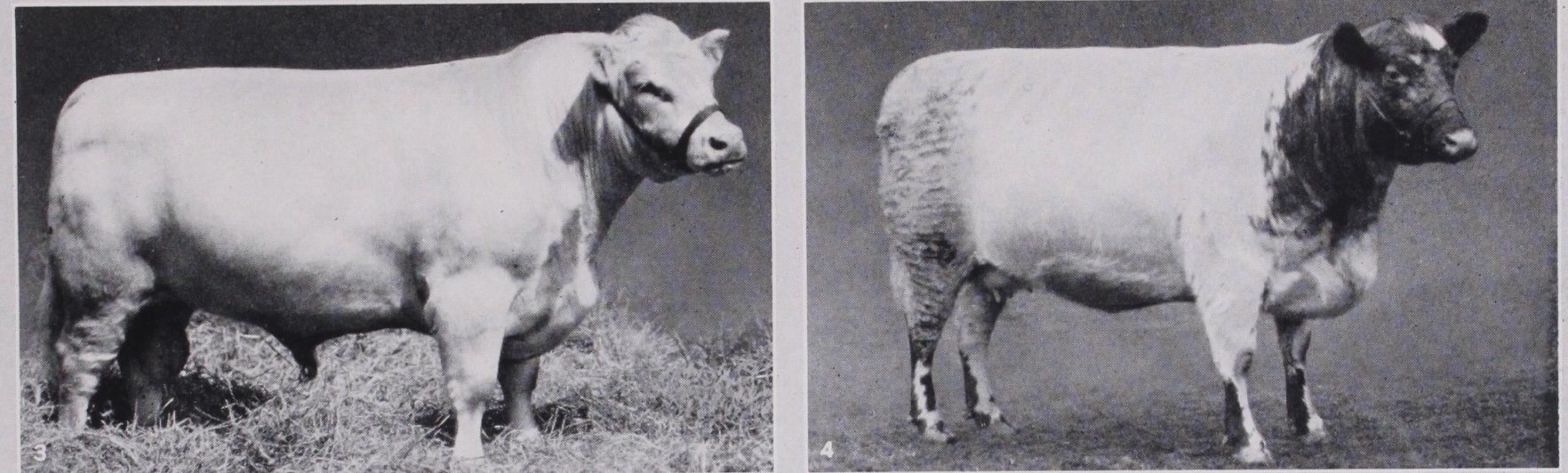
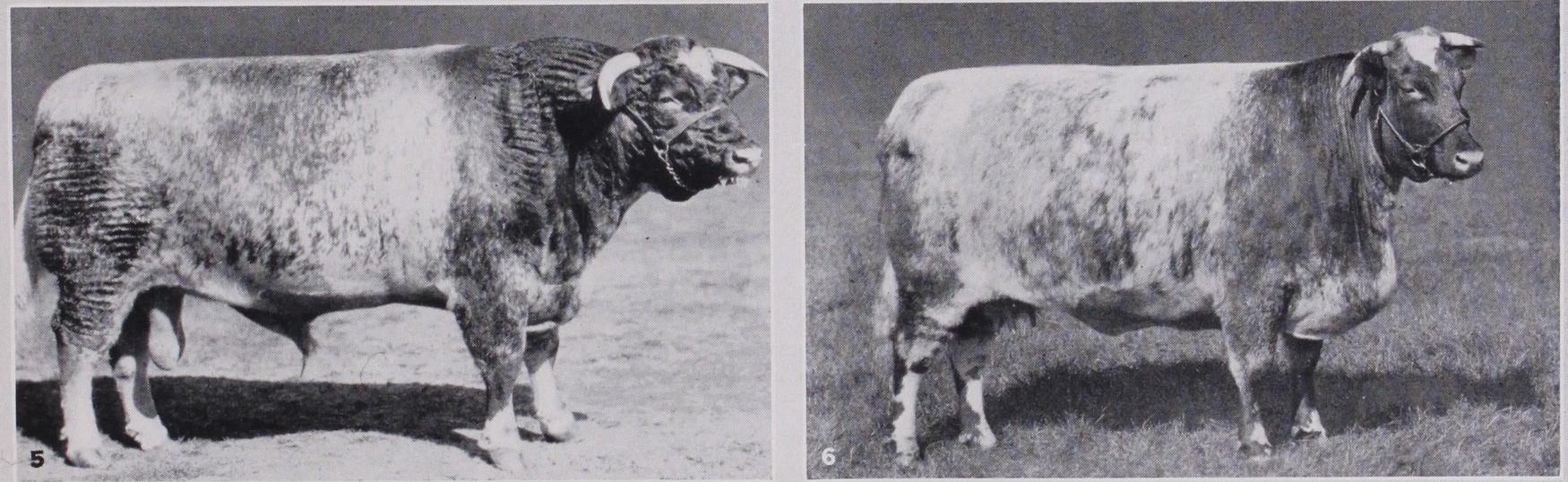
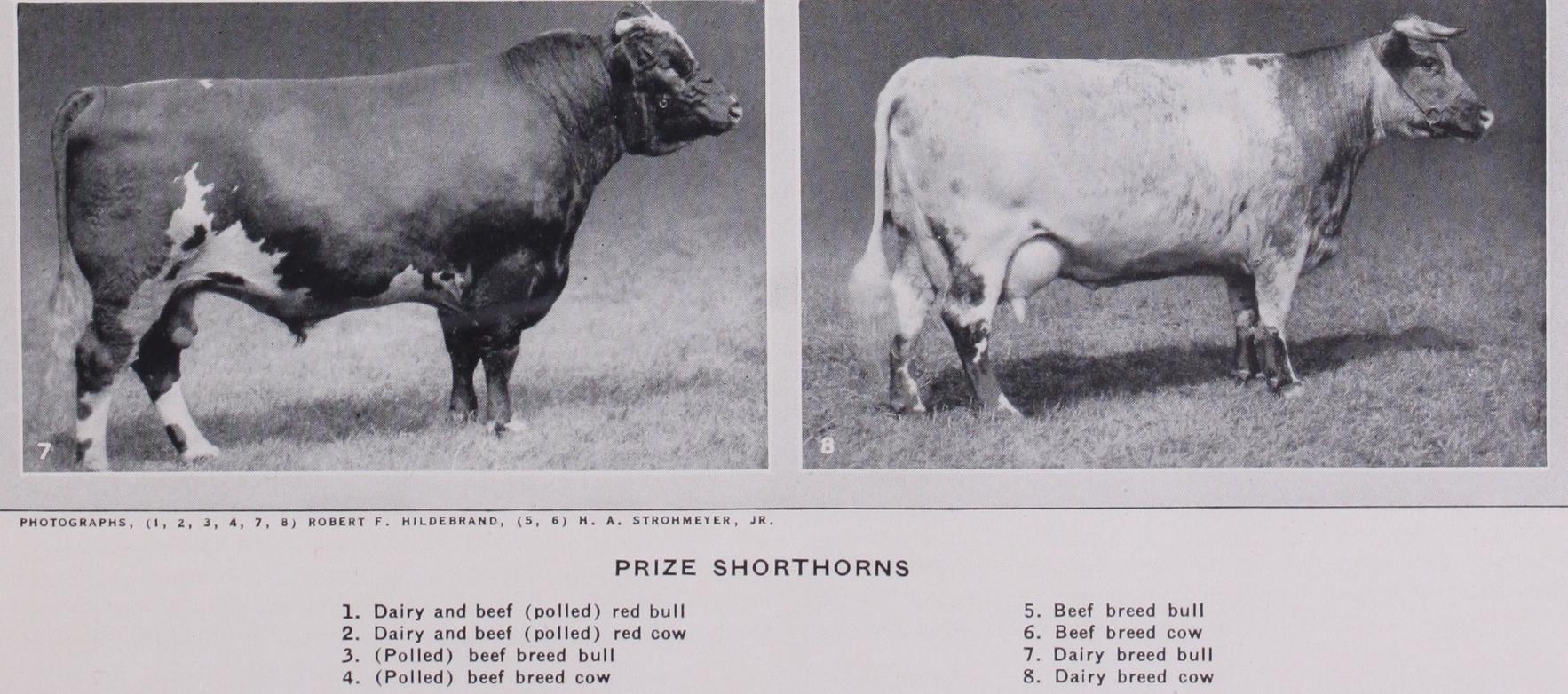
The Shorthorn.—The Shorthorn affords the most notable in stance of the "making" of a breed by a few enterprising and skil ful breeders. In the last quarter of the 18th century two brothers, Charles and Robert Colling, farming in Durham, started to im prove the local cattle of the Teeswater district of that county. From the place of its origin the Shorthorn is commonly known as the "Durham" in countries to which animals of the breed have been exported. By careful selection and breeding they gradually improved the type and their efforts were supplemented by other enlightened breeders, notably by Thomas Booth and Thomas Bates in Yorkshire. These two enterprising men each had his own conception of the precise lines on which the breed should be de veloped and for many years there was keen rivalry between those who preferred the "Bates strain" and those who favoured the "Booth strain." During the middle of the lgth century there was a Shorthorn "boom" which reached extravagant heights. The craze for particular strains and "families" led to excessive in breeding and the general excellence of the breed was endangered by insistence on "fancy" rather than on practical points. The cul mination of what may be termed the Bates and Booth period came in 1875 and thereafter there was a reaction from the tendency to rely on one or two "fashionable" strains, and a reversion to the more utilitarian principles of the founders of the breed. Breeders such as the Cruickshanks and later W. Duthie in Scotland and J. Deane Willis in England restored the constitutional vigour of the breed, which had been temporarily impaired by excessive in breeding.
The most distinctive characteristic of the breed is its adaptabil ity. It will thrive under diverse conditions of soil, climate and situation. A modern writer puts this forcibly: "To suit pasturage that is very productive a large beast can be secured; on the other hand medium, or even small cattle can always be produced from Shorthorns when required. In a harsh climate the breed can be relied upon to grow an abundance of soft, warm, weather-defying coat ; in more favoured climates this faculty is not brought into play. Given plenty of food to force growth, well-bred stock may be relied on for very early maturity ; on the other hand, when "done" only moderately well, the animal will gradually and slowly mature. No other breed can show such adaptability." Shorthorn bulls have also a high reputation for "prepotency," i.e., the faculty of impressing their qualities on their offspring. This is one reason why they are in such widespread demand for improving native stock in all parts of the world. Geographically, Shorthorns are more widely distributed than any other breed. To quote an American writer : "It is generally found in North America; in South America, more particularly in Argentina; in Europe, being the most prominent breed in the British Isles, although bred to some extent on the Continent ; in Australia, where it has long met with favour, and to some extent in South Africa and Asia. In the United States the Shorthorn is the most popular breed. However, on the western range, under severe winter conditions, and where "roughing it" is required, the Shorthorn will not thrive quite equal to the Hereford or Galloway." The Shorthorn Herd-book (the first of its kind) was started in 1822 by George Coates and was published as a private compilation until 1876 when it was taken over by the Shorthorn Society. The American Shorthorn Herd book was first published in 1846. The Canadian Shorthorn Herd book was started in 1867. Over 600,000 Shorthorns are registered in the United States and several thousands in Canada.
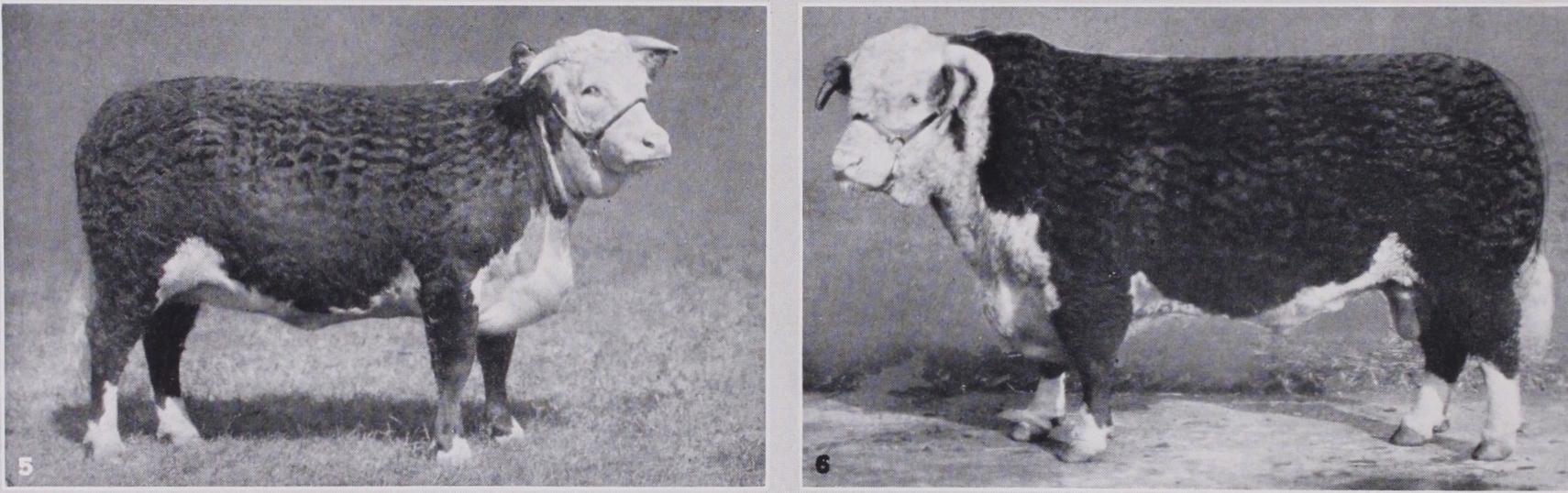
The Hereford.—The temporary decadence of the Shorthorns referred to above, gave an opportunity to the Hereford breed to become established on the ranches of America. Its strong con stitution and thick coat of hair make it specially suited to stand exposure and to thrive under conditions of hardship.
The origin of the breed is obscure but there are good grounds for the claim that it is directly descended from the primitive cattle of the country. It still carries signs that it was for cen turies bred mainly for the plough, and even to-day, after several generations of improvement, a Hereford ox looks more suited for a plough team than any other English breed, with the exception of the Sussex. It is remarkable that its picturesque and very characteristic colour (red with white face and front) has only been fixed during the last half century or little more. When the first herd-book was published, in 1846, the editor grouped Here f ordshires in four classes, viz., mottle-faced, light grey, dark grey and red with white faces. Within the next 25 years all the colours but the last have practically disappeared. The modern development of the Herefords began earlier than that of the Shorthorns, having started with Richard Tompkins who died in 1723. The work was continued by his son and grandson and other breeders, among whom John Price and John Hewer were notable. Herefords were first introduced into America in 1817 by Henry Clay of Kentucky, but they made little progress until the '7os, when T. L. Miller of Illinois pushed them vigorously and successfully. He may indeed be regarded as the founder of the breed in the United States. It was introduced into Canada in 186o by F. W. Stone of Guelph.
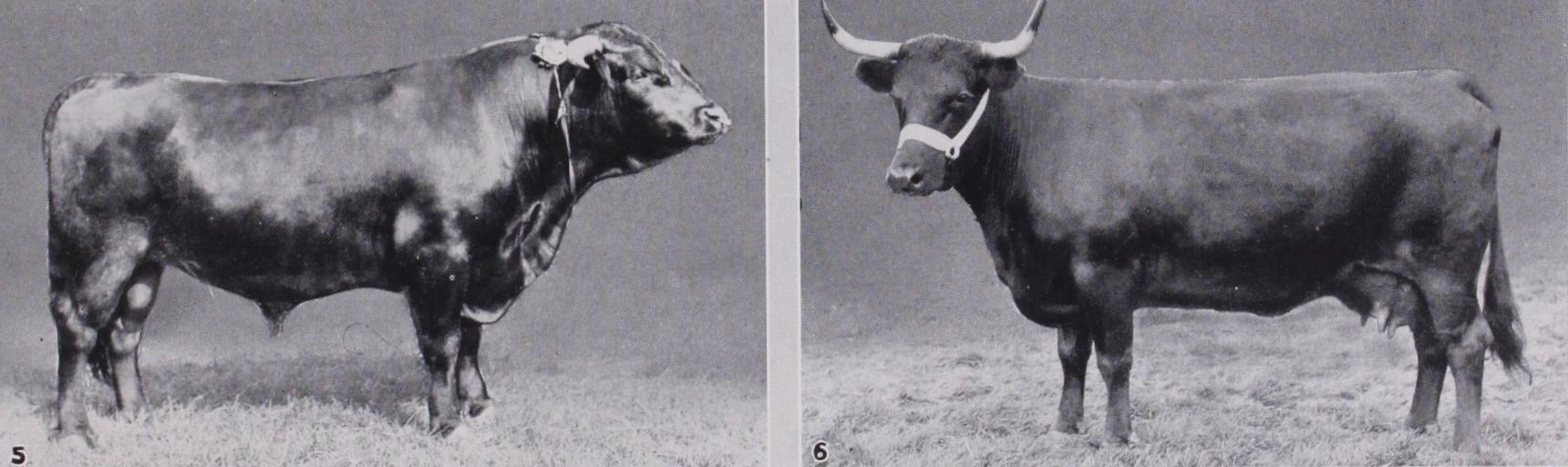
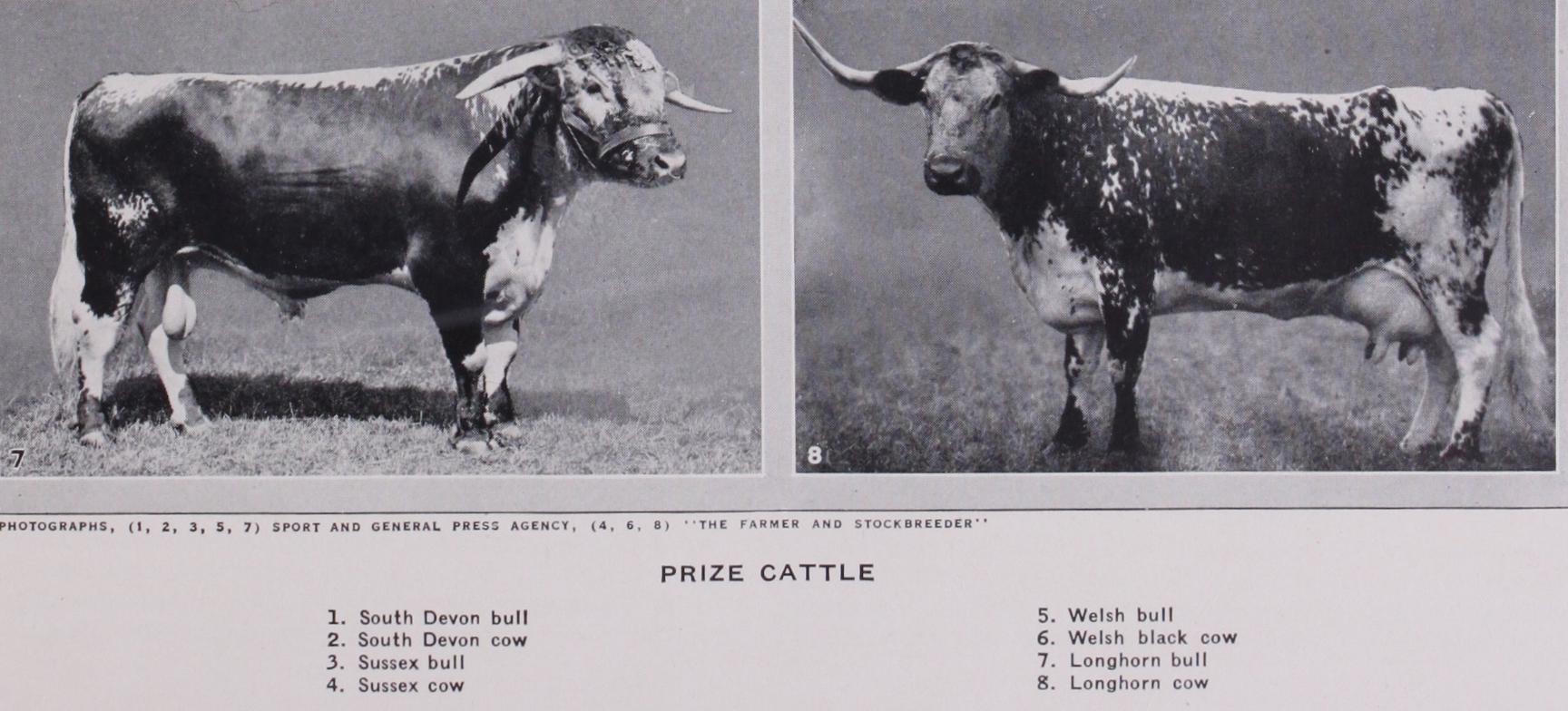
The Sussex.—The Sussex breed is not only in direct descent from the original stock of the country but also has probably undergone little change in outward appearance since the middle ages. Its native home is the Weald and for centuries it supplied the working oxen in that district and other parts. Low, in his well-known book, writing in 1845, says: "The practice of em ploying oxen in the labour of the farm is universal in the county of Sussex, and the native breed is eminently suited to this pur pose, combining weight of body with a sufficient degree of mus cular activity." The use of oxen for farm work continued longer in Sussex, and particularly on the stiff clay of the Weald, than in any other part of the country and this was mainly attributable to the suitability of the native breed for the purpose. The colour of Sussex cattle is a uniform red. They have a good reputation as grazers, and their quality as butchers' beasts has been increased since they began to be systematically improved about the middle of the last century. Mr. A. Heasman published the first three volumes of a Sussex handbook in which pedigrees were given from 1855. In 1888 the Sussex Herd-book Society took over the publication and in the same year the American Sussex Cattle Association was formed. The distribution of the breed is some what restricted and even in England it is not widely kept outside its own county, but there are herds in the United States and Canada where it is successfully used for improving the grazing qualities of native stock.
The South Devon, or as it is sometimes called, the South Ham breed, bears little resemblance to the cattle of the north of the county. It is larger and less symmetrical in frame and of a lighter red in colour. The cattle are excellent for dairying purposes and the milk is not only plentiful but rich in quality. They are better adapted to the lower levels than to the hills, and their natural home is along the southern coast of West Somerset, Devon and East Cornwall. The cows of this breed mainly provide the milk from which is made the well-known Devonshire and Cornish cream. The South Devon Herd-book Society was established in 189o.
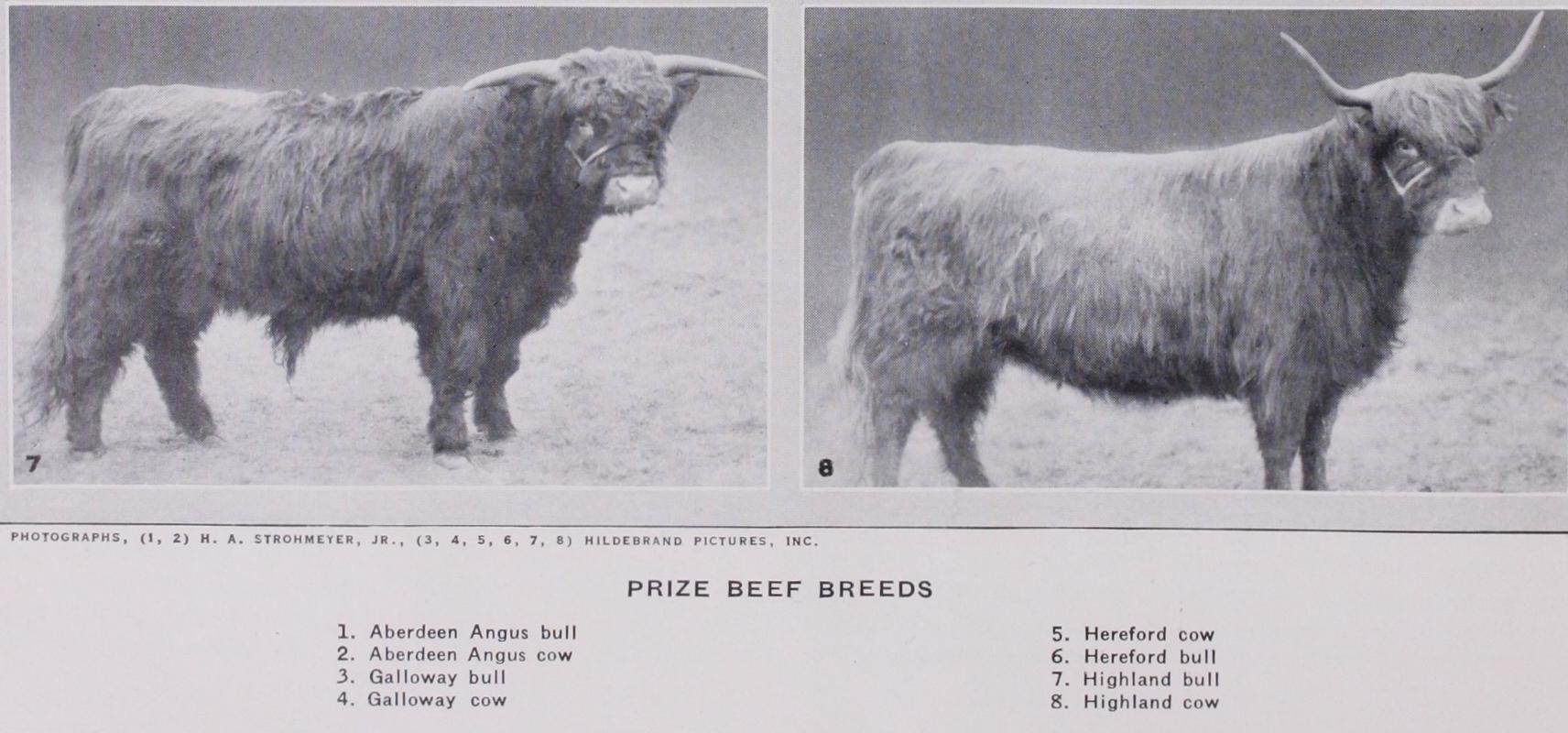
The Highland or West Highland breed, sometimes termed "Kyloes," have their home in the Western uplands of Scotland. It is generally agreed that they are the aboriginal cattle of that district. Their long shaggy coat, sturdy frame, large head and branching horns, thick mane and heavy dewlap make them the most picturesque cattle in the British Isles. The colour varies but a tawny red is the most characteristic. They are very hardy, breeding and living all the year round on the hills, and thriving on scanty pasturage. They are slow in maturing but make beef of the highest quality.
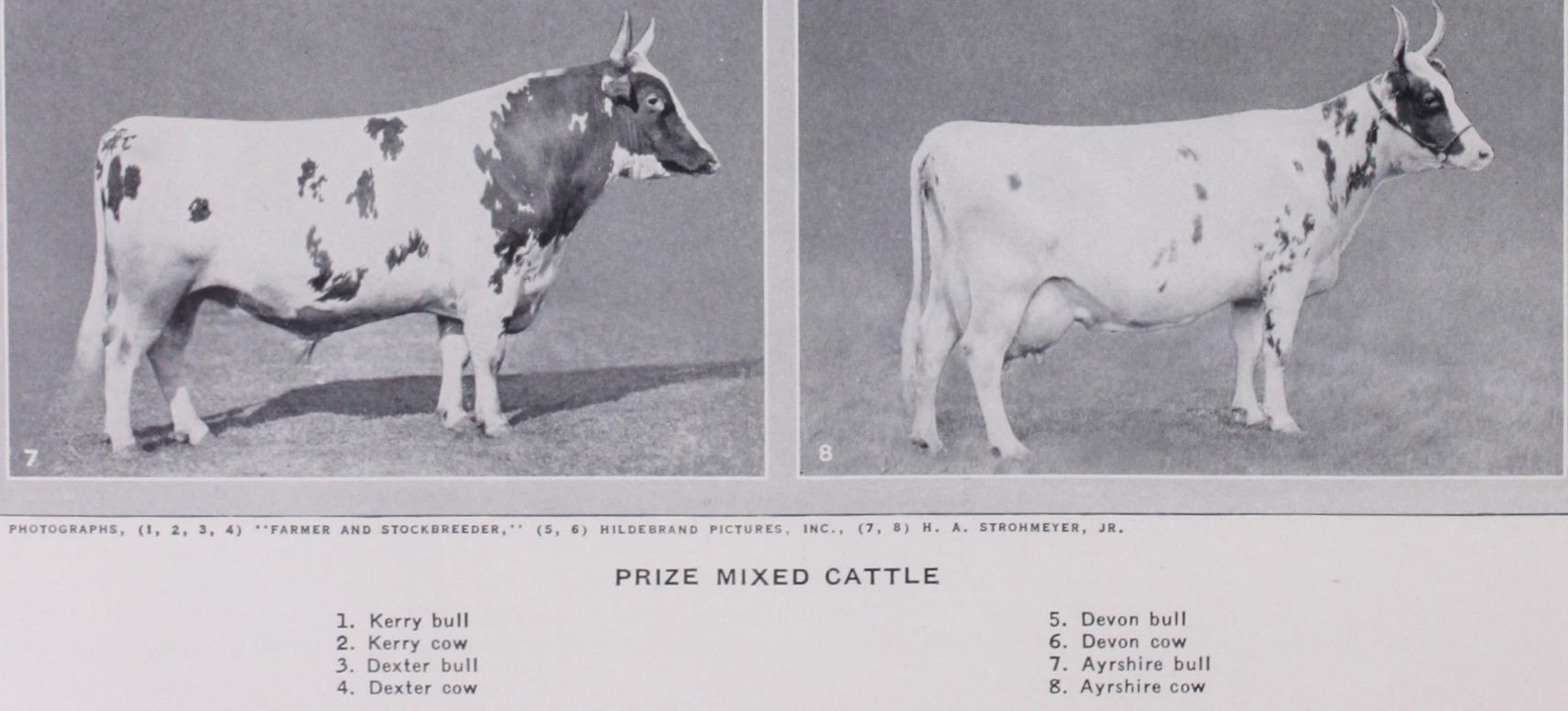
The Ayrshire is the dairy breed of Scotland. It is no doubt de rived from the native cattle of the county from whence it takes its name, but there seems to have been in the early part of the last century a considerable admixture of other breeds, including Shorthorn and according to some writers, Channel Islands cattle. The breed has been steadily developed for milk production and is now famous for the quantity of milk which the cows yield. The milk is largely used in making the cheese for which this part of Scotland is celebrated. The beef-making qualities of the breed are subservient to milk-production, but among the dairy breeds it takes a good position in this respect. The distribution of the Ayrshire is very wide. On the other side of the Atlantic it is most strongly represented in Canada, but it is also to be found on the Continent of Europe as well as in New Zealand. The Ayrshire Cattle and Herd-book Society was founded in 1877 and published the first volume of the herd-book in the following year.
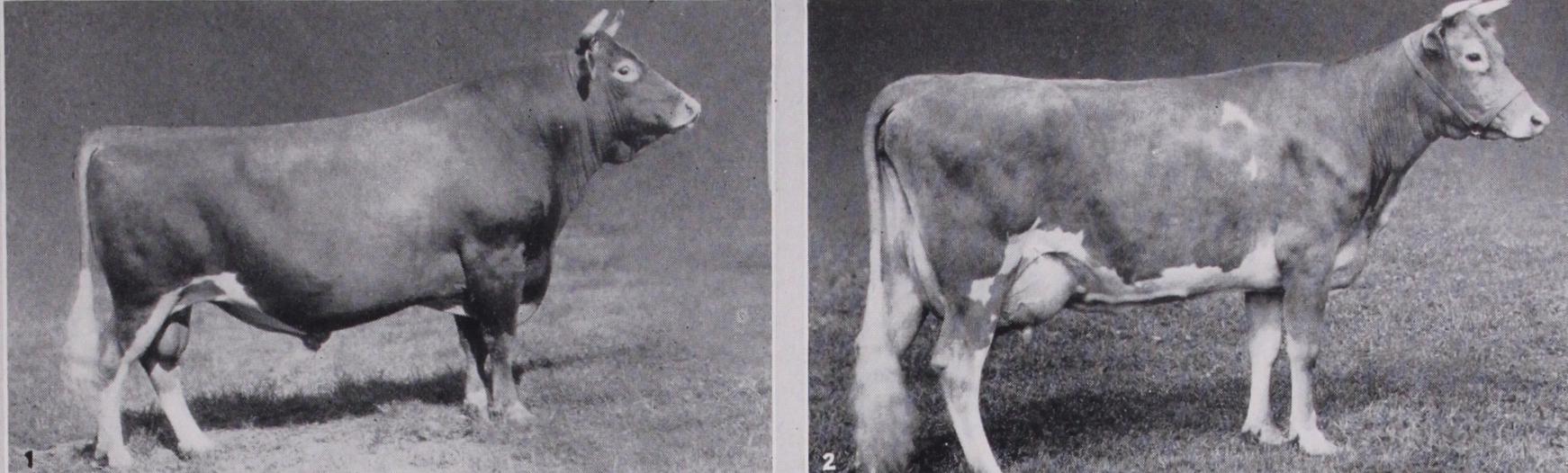
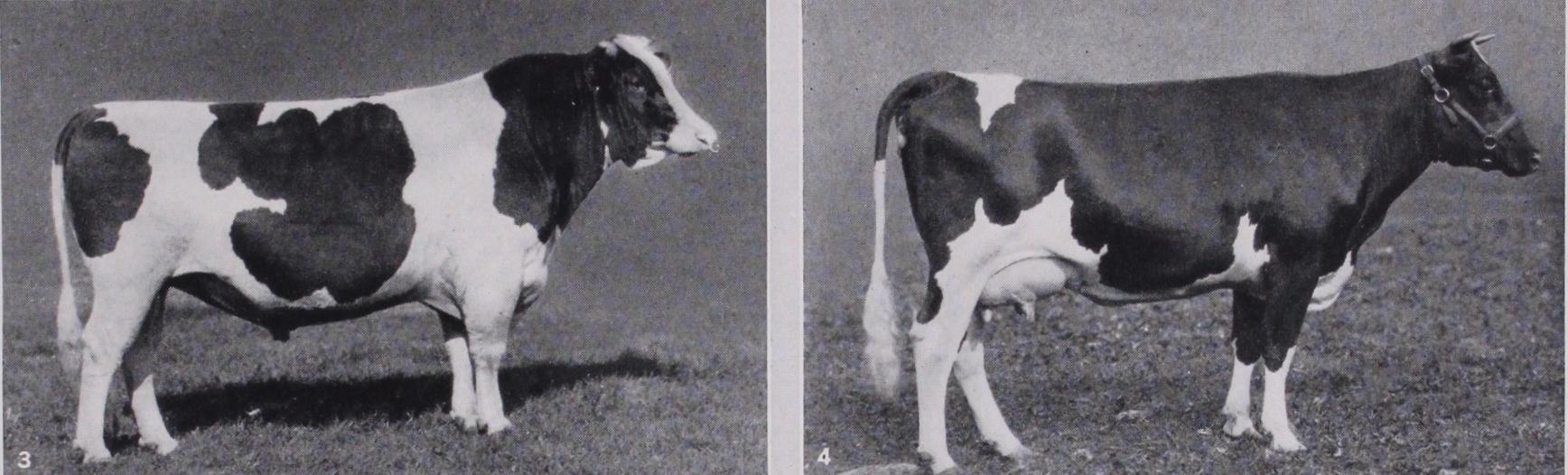
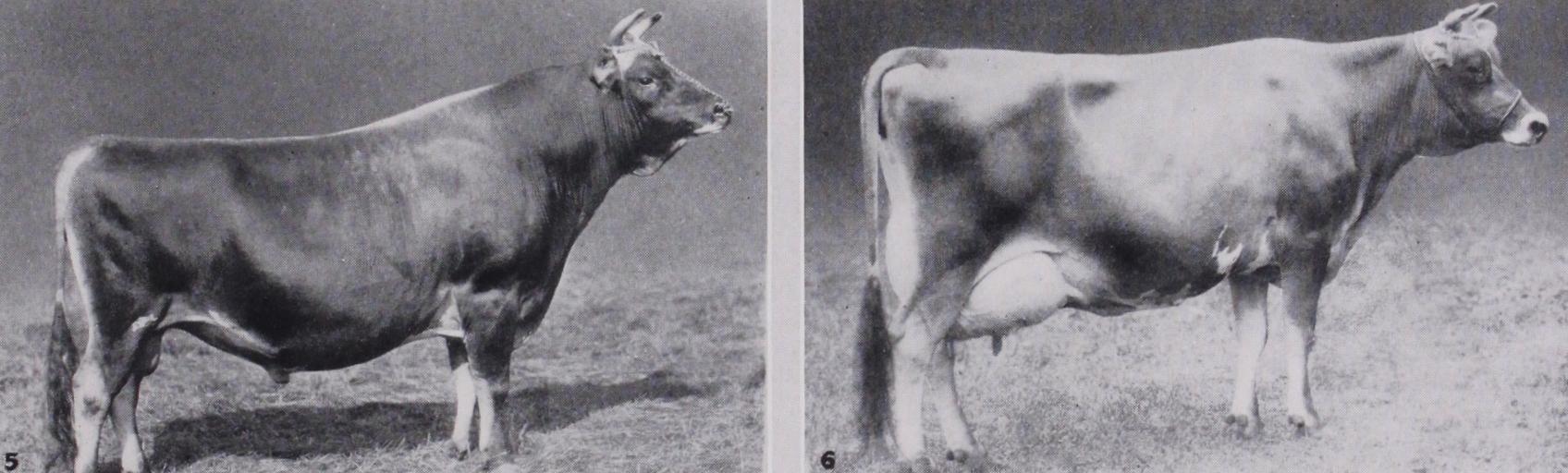
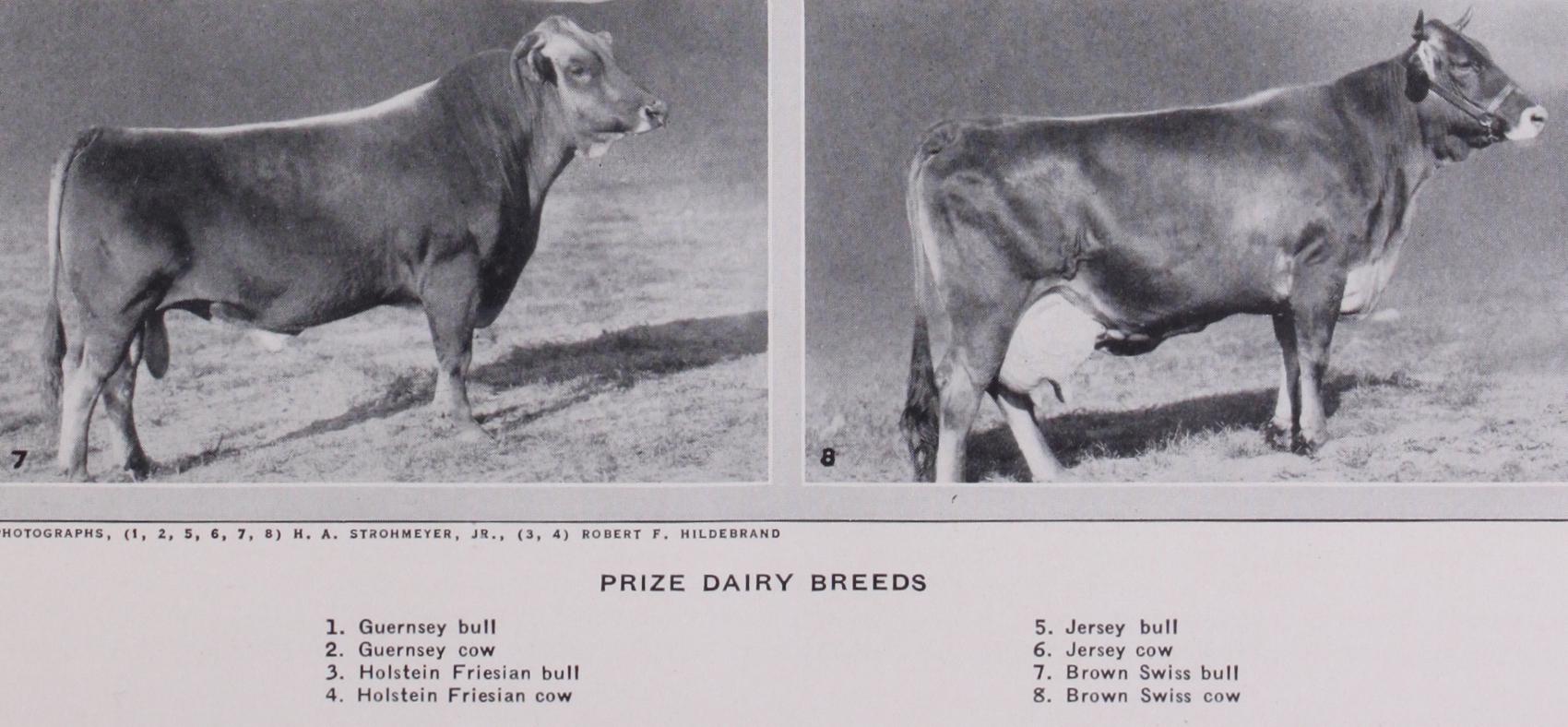
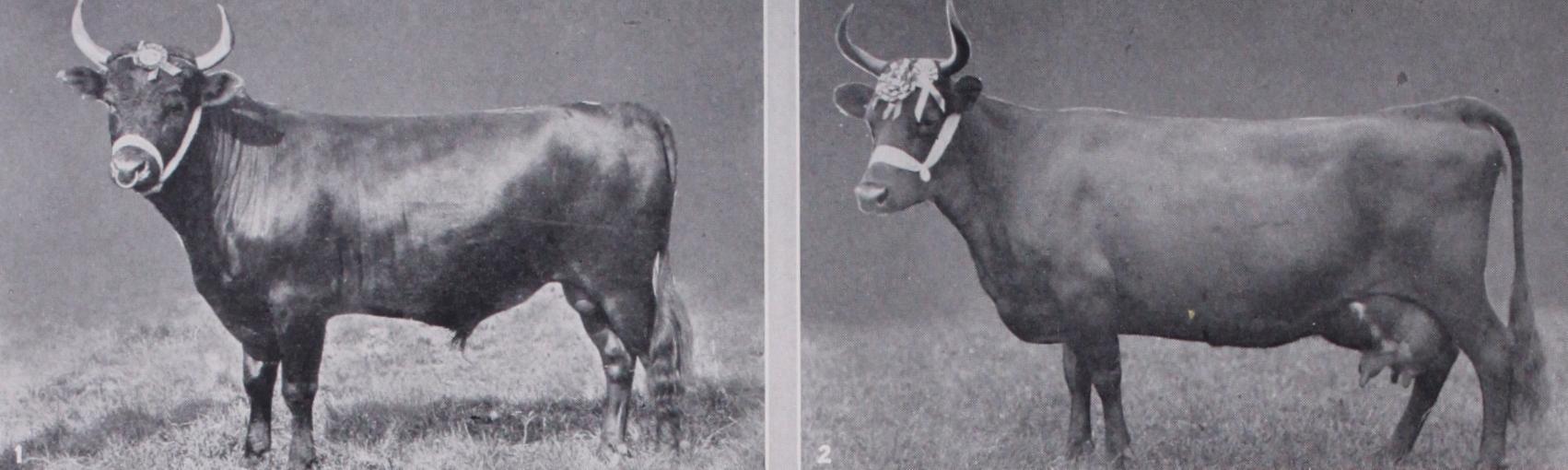
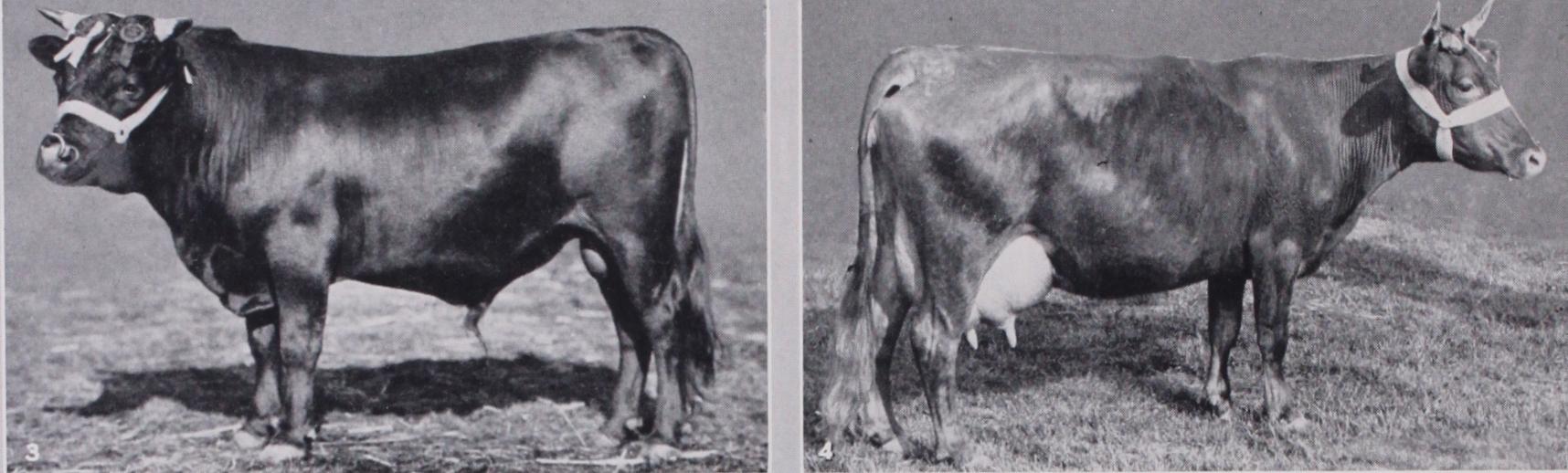
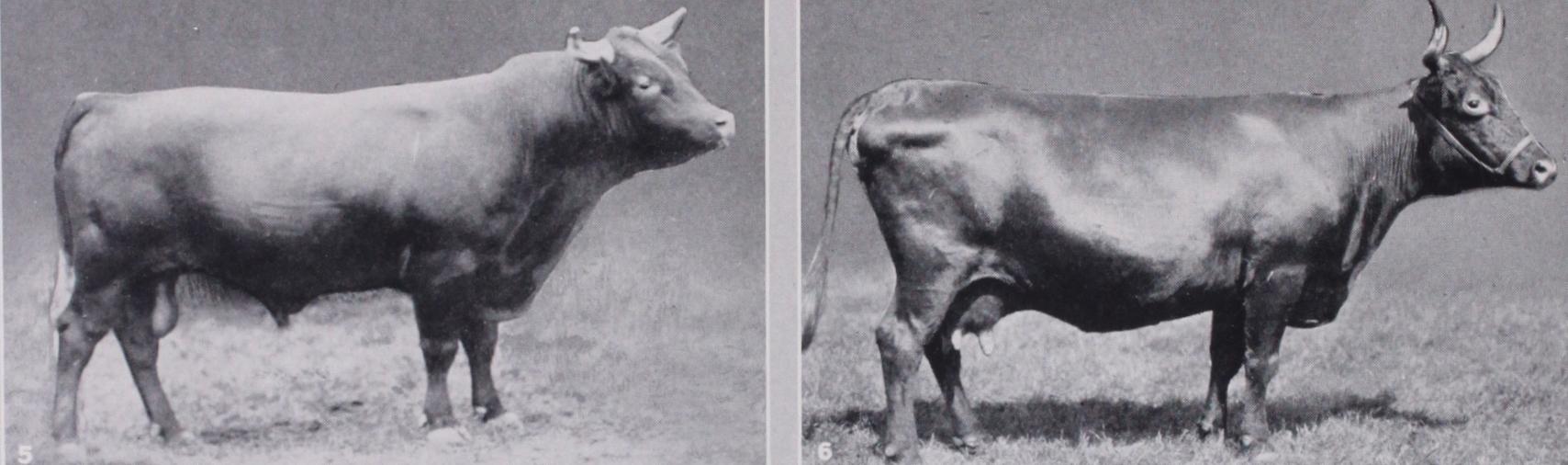
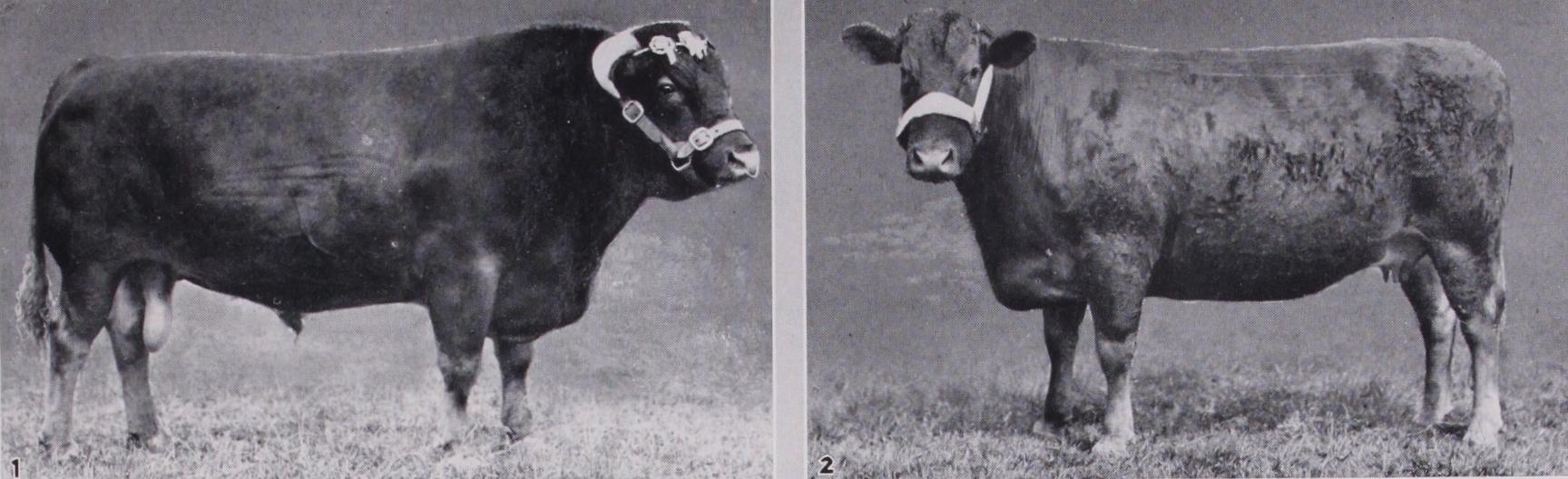
The Guernsey breed is of much the same type as the Jerseys but larger. Its merits for the dairy are practically equal. Cattle from the Channel Islands were long known as "Alderneys," a mistake which appears to have originated in a book on cattle which had a great vogue a century ago. There is no "Alderney" breed, the cattle kept on that island being Guernseys.
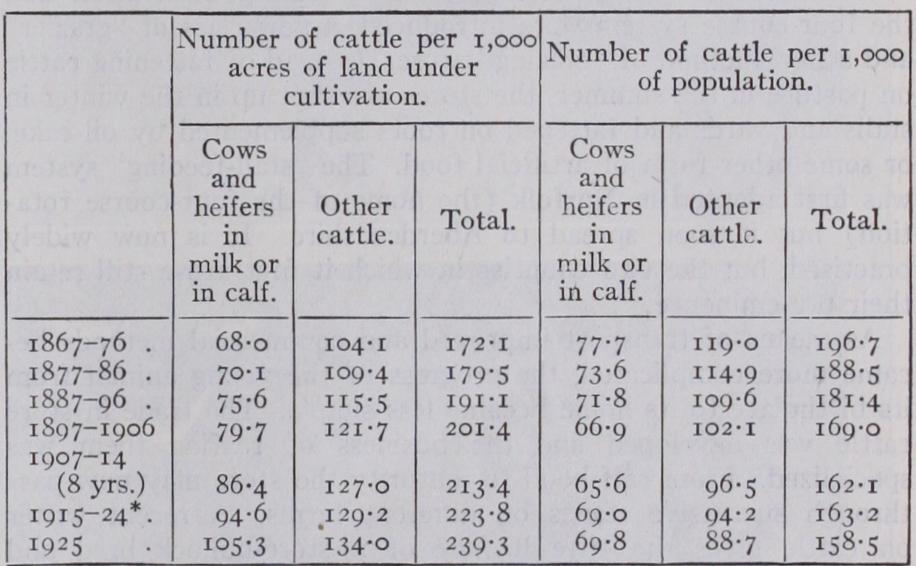
The density of the cattle population varies greatly. In England and Wales as a whole there are, as shown above, 239 cattle per I ,000 acres of agricultural land of which 105 are cows and heifers in milk or in calf and 134 other stock. Wales is more heavily stocked than England, the comparative figures being:— The county which is most densely stocked is Anglesey with 383 head, and the most sparsely stocked is west Suffolk with 89. Cheshire stands first for cows and heifers with 249 and west Suf folk lowest with 32. With other stock Anglesey takes the lead having 266 head per i,000 acres and west Suffolk again lowest with 57.
The number of cattle imported into Great Britain for food was 708,868 in 1926 and 800,144 in 1925. Of these the Irish Free State sent 628,918 in 1926 and 688,12o in 1925. Practically all the remainder came from Canada. The cattle brought into Great Britain from Ireland and a large proportion of those from Can ada are "stores," that is young stock in a more or less lean con dition which have to be kept and fattened for slaughter. The breeding and fattening of cattle are two distinct businesses carried on in the main by separate individuals. One farmer devotes himself to the breeding and another, probably in a different and distinct district, to the fattening. This division of functions arises out of natural conditions. In many parts of the country, particu larly in the west Midland counties and in Wales, the natural pasturage is plentiful but generally poor, but it is well adapted to the breeding of cattle and much of the country being hilly the conditions are healthy, and tend to develop vigorous and hardy young stock. In the Midlands and in one or two other districts there are some of the finest natural pastures in the world on which cattle can be fattened even without artificial food. From these circumstances there developed in very early times a regular trade. Dealers would collect from various farms a number of young store cattle and drive them to the fattening districts, selling them there either directly or at the local markets to the graziers. This was a regular trade not only long before the advent of rail ways but before roads were generally made. The cattle were driven, as we should say, "across country" on the waste land and commons which then spread over so large an area and their regu lar tracks or "droveways" may be traced to this day. Similar droveways were also made by herds of fat cattle sent to the Lon don market from as far distant as Scotland.
As modern farming, and particularly turnip cultivation and the four-course system were introduced, a new class of "grazier" and a new method of "grazing" arose. Instead of fattening cattle on pasture in the summer, the stores are shut up in the winter in stalls and yards and fattened on roots supplemented by oil-cake, or some other form of artificial food. The "stall-feeding" system was first adopted in Norfolk (the home of the four-course rota tion) but it soon spread to Aberdeenshire. It is now widely practised, but the two counties in which it first arose still retain their pre-eminence.
As means of transport improved and commercial methods be came more complicated, the progress of the young animal from its birthplace to its home became less simple. The trade in store cattle was developed and the business of rearing them was specialized. From calf-hood to maturity the store may now pass through successive stages on different farms. A recent writer on cattle gives the "life history of a store-bullock bred and reared on pasture" as follows:— Situation Age On a breeding farm Birth to Medium "store-land" 6 months Medium " " 7-12 " Medium " " . . . . . . . . 13-16 " i3-16 On a store-rearing farm 17-24 Good store-land . . . . . 24-30 " Good " " . . . . . . 31-36 " After this he goes to another farm for the finishing process. This may be regarded as an extreme case, but it fairly indicates the complexity of the store-cattle trade. At the other extreme there is the case, not uncommon and tending to become more popular, of the breeder who rears and fattens his own stores on his own farm.
The cattle dealer as an intermediary between the breeder and the feeder and the feeder and the butcher has played a large part in the organization of the trade in both store and fat stock. But within the last half-century he has been to a large extent elimi nated by the auctioneer. Not only at the ancient cattle markets but in numerous "auction marts" which have sprung up all over the country, sale by auction has supplanted the old methods of sale through intermediaries and also of direct dealing between farmers and butchers.
The life cycle of a beef steer takes him from the Western range, where he is bred and reared till weaned, to the Mid-Western feed lots (enclosures with corn and hay racks), where he is fed for market, thence to a great packing centre like Chicago, where he is made into a carcass of beef, to be transported in refrigerator cars to Eastern cities, where most of the best beef is consumed. The cattle range, which constitutes the chief source of the feeder cattle supply, is an American institution, although duplicated in Australia and Argentina. Grade cow herds, numbering several hundred, are grazed on Government or private lands, io to 4o ac. per head, depending upon rainfall and forest. Under favourable conditions one ton of hay and 4o ac. of grass will support a cow. Pure bred bulls are run with the cows, one mature bull to 20 or 3o cows. Many ranges maintain pure bred herds to furnish their own bulls. Others buy by the carload from the pure bred herds of the central States. Most calves are born in April and rounded up in July to be castrated, branded and usually dehorned, and, with the modern demand for feeder calves to make baby beef, many heifers, as well as steers, are shipped to feed lots in the fall. The ruling demand is for baby beef, and heavy cattle are usually penal ized on the market, although the highest price for 1926-27 was paid for heavy steers. But the demand is very limited for sound economic reasons. The American family is smaller than in previous times, beef is more costly, hence smaller cuts from lighter cattle are bought. Therefore the packer prefers goo to i,000-lb. cattle. The feeder, on the other hand, finds calves much more productive per unit of feed consumed than yearlings or two-year-olds, thus rivaling hogs. Breeders find the cost of wintering calves kept for stock out of proportion to the selling price of the yearling feeders; furthermore, heifer calves are taken almost as readily and at only slightly lower prices than steer calves, not suffering the discrimination made against yearling heifers. Baby beef best serves the interests of all concerned.
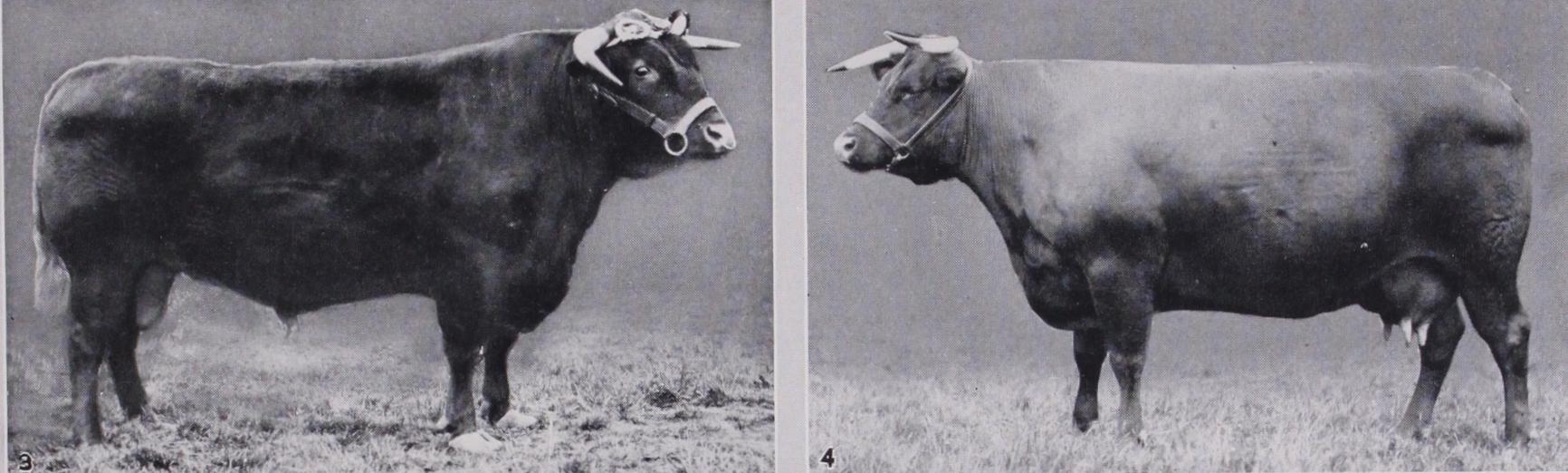
Aberdeen-Angus cattle are not so numerous in America as either Shorthorns or Herefords, but have a higher show record. At the International Live Stock Exposition at Chicago, they have won 14 of 25 single steer grand championships, 17 of 23 steer group grand championships, 21 of 25 fat carload grand championships, 24 of 25 carcass grand championships, and more than 7o% of the total awards in the carcass contest. Galloway cattle have found some favour on the North-west ranches and in Alaska, where they were introduced by the U.S. Government primarily for milk production. There are few pure bred herds. There are few herds of Devons, and of Sussex practically none. West Highland cattle are rarely seen except in parks. Holstein-Friesians are most numerous in the three leading dairy States, and all dairy districts where general market milk is the rule. They hold all records for milk production and have gained more honours for butter fat than any other breed. Guernseys lead in the Grade A milk field. Their promoters are featuring "Golden Guernsey" milk as a special product in effective propaganda. Jerseys were the original butter cows in the United States and are still preferred in many sections, especially the South. Ayrshire bulls have been used less than bulls of any other dairy breed for grading up, but the number of pure bred herds shows substantial increase. Red Poll cattle are in competition with milking Shorthorns as dual purpose cattle, but show little gain in number of herds and merit.
(C. W. GA.)