CEMETERY, literally a sleeping-place, the name applied by the early Christians to the places set apart for the burial of their dead. These were generally extra-mural and unconnected with churches, the practice of interment in churches or church yards being unknown in the first centuries of the Christian era. The term cemetery has, therefore, been appropriately applied in modern times to the burial-grounds, generally extra-mural, which have been substituted for the overcrowded churchyards of pop ulous parishes both urban and rural (see BURIAL).
From 1840 to 1855, attention was repeatedly called to the in sanitary condition of the London churchyards by the press and by parliamentary committees, the first of which reported in The vaults under the pavements of the churches, and the open ground surrounding them, were crammed with coffins. Coffins were placed tier above tier in the graves until they were only just below the surface. To make room for fresh interments the sextons had recourse to the surreptitious removal of bones and partially-decayed remains. The neighbourhood of the church yards was usually unhealthy. In all the large towns the evil pre vailed more or less, but in London it forced itself more readily upon public attention, and after more than one partial meas ure of relief had been passed the churchyards were, with a few exceptions, finally closed by the act of 1855, and the ceme teries which now occupy a large extent of ground to the north, south, east and west became henceforth the burial-places of the metropolis. Several London cemeteries had been established by private enterprise before the passing of the Burial Act of (Kensal Green cemetery dates from 1832), but that enactment forms the epoch from which the general development, of ceme teries in Great Britain and Ireland began. Burial within the limits of cities and towns is now almost everywhere abolished, and where it is still in use it is surrounded by such safeguards as make it practically innocuous. The increasing practice of cremation (q.v.) has assisted in the movement for disposing of the dead in more sanitary conditions; and the practice of bury ing the dead in more open coffins, and abandoning the old system of family graves, has had considerable effect.
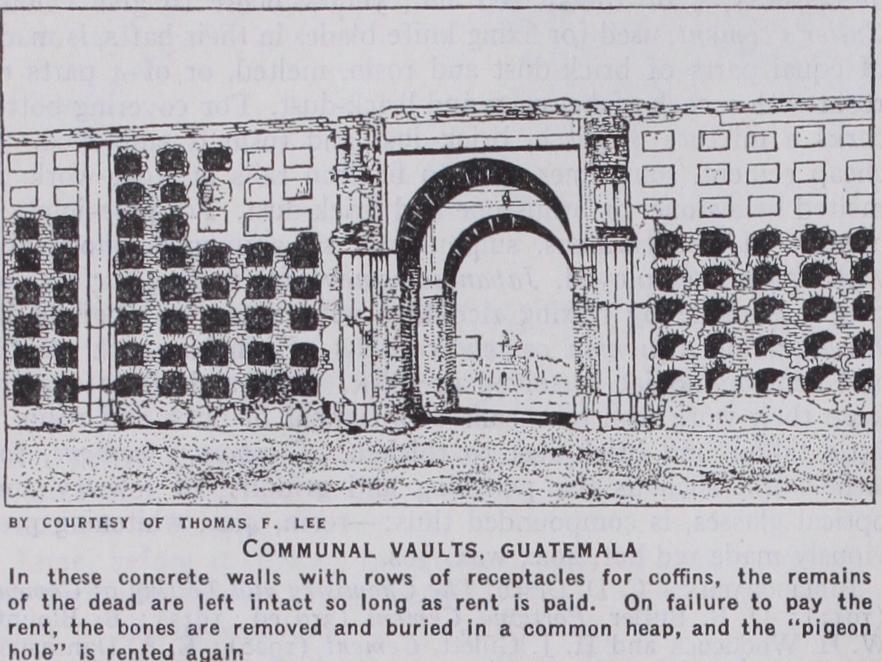
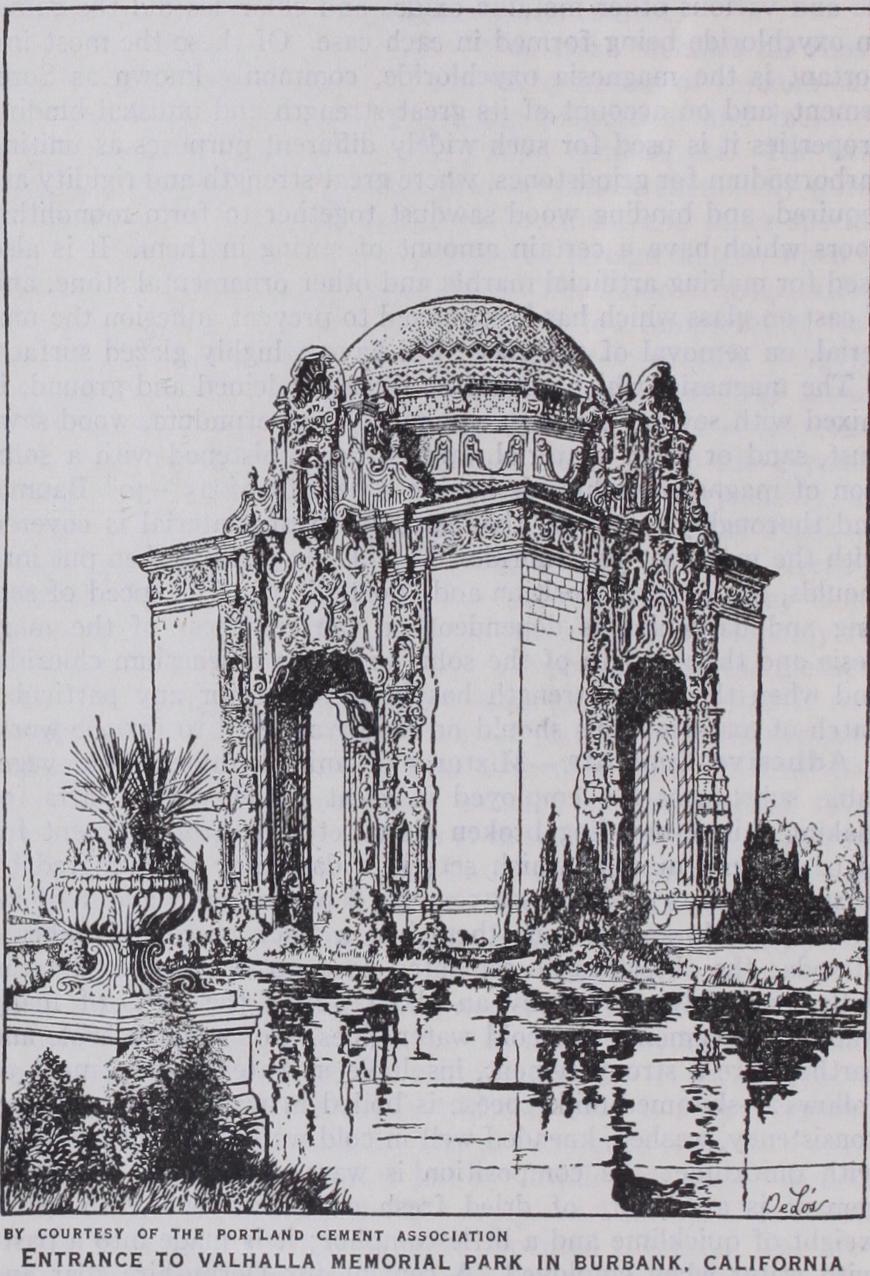
In England a cemetery is either the property of a private company incorporated by Act of Parliament or of a local authority and is subject to the Cemeteries Clauses Act 1847, the Public Health Act, 1875 and the Public Health (Interments) Act, By S. 33 of the Burial Act, 1852, a burial board under such con ditions as it thinks proper may sell the exclusive right of burial, either in perpetuity, or for a limited period, in grave spaces; the right of constructing any vault or place of burial with the exclusive right of burial therein in perpetuity, or for a limited period; and also the right of erecting and placing any monument, gravestone, tablet or monumental inscription. By S. 38 the gen eral management, regulation and control of a burial ground is vested in the burial board. Regulations are made by the Minister of Health and Rules may be made by the board. By S. 44 of the Cemeteries Clauses Act 1847 the grant of the right of burial, whether in perpetuity or for a limited time, becomes the personal estate of the grantee. Under such a grant there is implied the right to visit the grave, and to plant shrubs and plants and to keep the surface in order, and if there is a monument, head or curb stones to keep them in repair (see Ashby v. Harris [J868] L.R. 3 C.P. 523). This case was discussed, but not overruled in McGough v. Lancaster Burial Board (1888) 21 Q.B. D. 323 where, in consequence of a rule of the board, made prior to the grant, prohibiting the placing of glass shades on graves, it was held that the grant of burial in a grave space to the plaintiff did not include a right to place a glass shade on his grave. Although a burial board cannot sell the freehold of a grave space, the property in a vault, tomb, monument, headstone, curb or any other erection remains in the person who erected them. See Spooner v. Brewster (1825) 3 Bing. 136 and Sims v. The London Necropolis Co. (1885) 1 T.L.R. 584; but see also Hoskyns Abrahall v. Paignton U.D.C. (1928) 2 Ch. (See J. B. Little, Law of Burial, 1902.) In the United States cemeteries were the final outgrowth of individual burial places on the farms or near the homes of the earliest settlers. Later the burial place was connected with the church, which custom is not entirely obsolete. Prominent men were buried beneath the church building for a long time during the 17th and 18th centuries, but the crowded conditions together with the fact that the practice was recognized as unsanitary caused it to be abandoned. In villages and small towns the church "grave yards" grew into disrepute many years ago because of the neglect they were subjected to. There was no provision for care of such burial places, except the slight attention a sexton would give, and disorder resulted. Detached cemeteries have been in use in the United States since 1831 when Mt. Auburn was established in Boston. Philadelphia soon after set up some notable large burial places and Greenwood in New York had its beginning in 1840. From 186o churchyard burials have gradually been dis continued until to-day they are but exceptions to the rule of beau tiful community cemeteries. From single burial plots on private property, to church graveyards, to cemeteries and now to "memorial parks" has been a notable transition.
During the days when cemeteries were maintained by and in connection with the church, members and their families were entitled to a burial site. No expense was attached to the burial except the cost of opening the grave. No funds were available for upkeep which accounts for the deterioration of the property, and the ultimate abandoning of that type. In the cemeteries of to-day lots are sold by the city or village, if owned by such a body, or by the association, which has charge. A definite fee is charged for perpetual care and a charge is made for opening the grave and other duties performed by the sexton or superintendent. Generally speaking cemeteries are supposed to be maintained with no idea of profit, and that holds good in a great majority of places.
Some churches have their own cemeteries, though not in con nection with the church, notably the Catholic church. The Jews have many beautiful burial sites, and now and then one comes across a cemetery maintained by one or another of the Protestant societies. Throughout the country there are many beautiful ceme teries maintained by the Masonic or other fraternities for their own members and members of their families. There are many State and national cemeteries in the United States provided by statute, given over to the burial of departed army and navy men, and men connected with State institutions, usually attached to soldiers' homes or army posts.