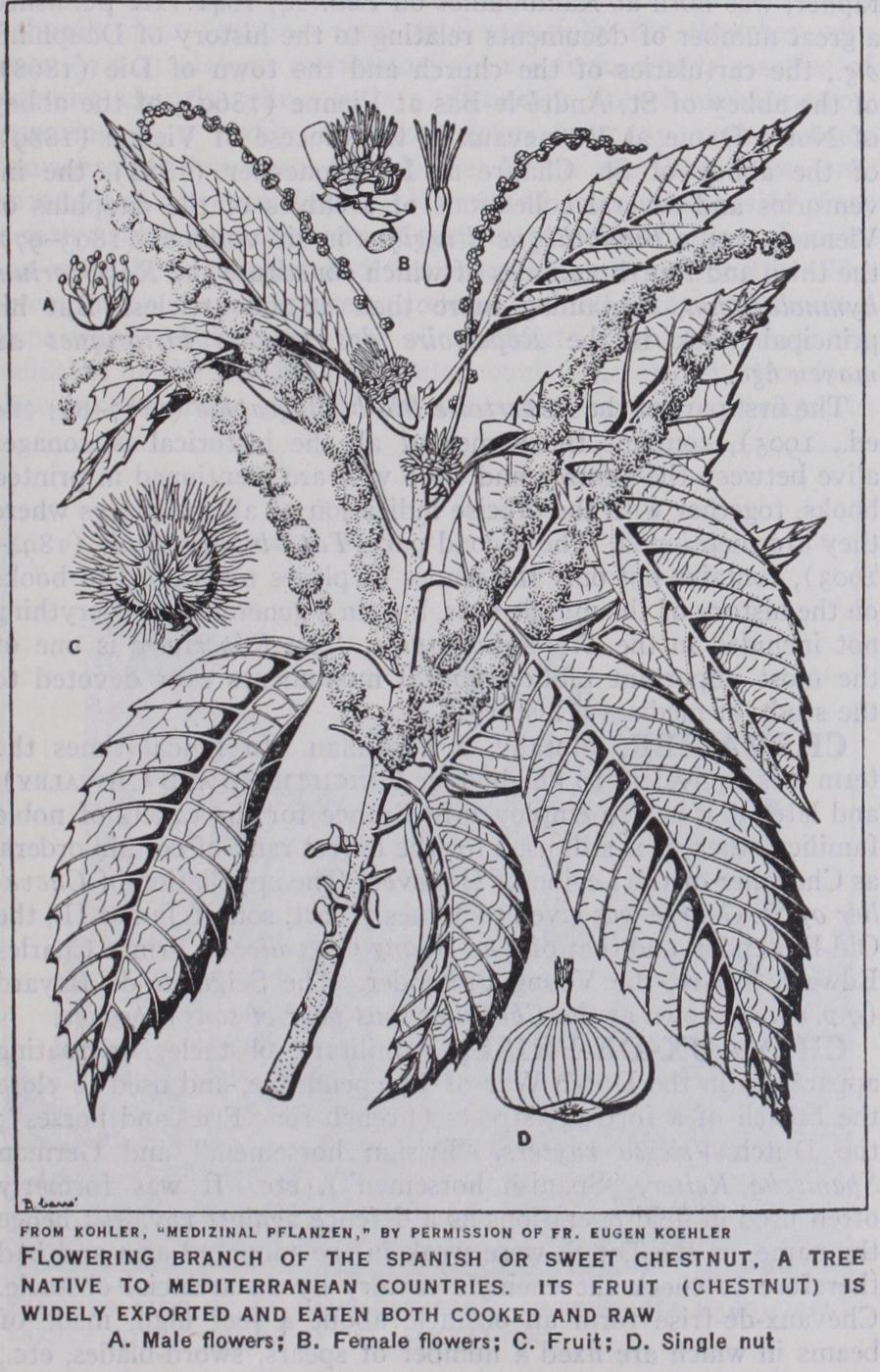
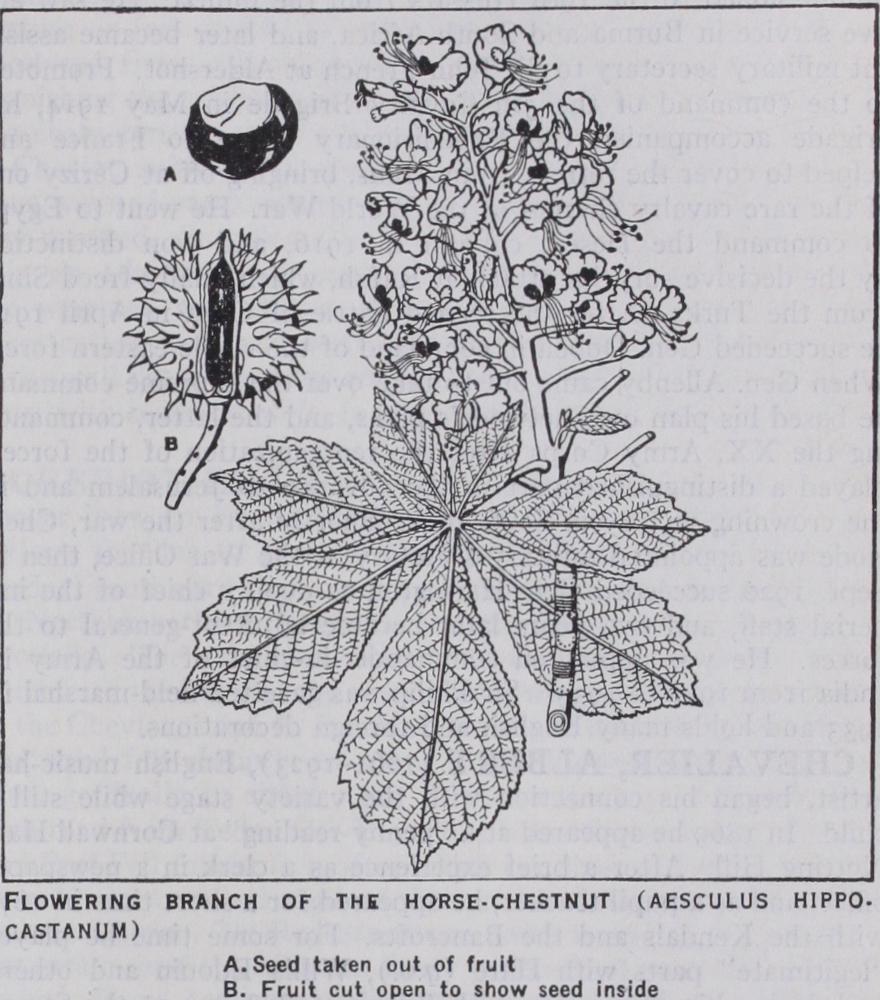
CHESTNUT. This word is used for the common name of trees of the genus Castanea (family Fagaceae) or the edible nuts of these trees. The term "sweet chestnut" is used to distinguish it from "horse chestnut," an entirely unrelated plant but hav ing fruit that resembles the edible chestnut.
There are three main species of chestnut as follows : (1) Cas tanea sativa (vulgaris), known as European, French, Spanish or Italian chestnut, which inhabits forests in temperate regions of Asia and Europe; (2) Castanea dentata, the American chestnut, which occurs in North America from Maine to southern Michigan and southward to North Carolina and central Mississippi; (3) Castanea crenata, the Japanese chestnut, native to Japan and China.
Chestnuts are deciduous trees with large-toothed, lanceolate leaves and with the staminate and pistillate flowers borne sepa rately, the staminate ones occurring in long catkins and the pis tillate as a prickly involucre. The latter are borne three together invested by green bracts which, as the fruit matures, grow to form the tough prickly envelope surrounding the group of nuts. The nuts have long been an important article of food, eaten roasted, boiled, mashed or otherwise as a vegetable. In the raw state they have a sweet taste but are difficult of digestion. The timber bears a striking resemblance to that of oak but may be distinguished by the numerous fine medullary rays. It is very commonly used as finishing lumber because it has prominent grain and takes a high polish.