
CHINA - HISTORY Introduction. The Influence of Physical Environment.- Throughout its course the history of China has been profoundly affected by physical environment. In the first place, what is known as China Proper is singularly fitted for a large and civil ized population. Fertile valleys, the loess soil, great alluvial plains, a fairly large supply of minerals, a favourable climate and a rainfall which is usually adequate, combine to make the re gion a natural seat for powerful and highly cultured peoples. In the second place, the mountains and rivers within China Proper offer no insuperable obstacles to the union of the region under one rule. This is especially true of the part of China embracing the Yangtze valley east of the Gorges and the valleys of the Yellow, the Huai and the North rivers. China is fairly easily welded into an empire. On the other hand, these internal bar riers, especially those in the west and south-west, are sufficiently marked to stimulate a strong provincial feeling and dialectical differences. Not infrequently—often for centuries—they have permitted political division. In the third place, the great plateaux, deserts and mountains by which China Proper is surrounded have been sources of periodic invasions. The sturdy dwellers in these relatively inhospitable wastes naturally looked with covetous eyes upon the fertile and wealthy plains to the south and east. The necessity of defence against them was constantly with every gov ernment of China. Hence the Great Wall. Hence, too, the attempt to control them by the conquest of their homes—Tibet, Sinkiang, Mongolia and Manchuria. Hence, too, the periodic infusion of new blood and the highly mixed character of the present Chinese race. In the fourth place, these land barriers, together with the ocean, until the last hundred years or so prevented many intimate contacts with other seats of culture—India, Persia, Mesopotamia, the Mediterranean and Europe. Some contributions have come from without, notably Buddhism, but on the whole Chinese civ ilization has been indigenous and until recent times the source of the cultures of all peoples whom the Chinese knew well. This may account in part for the intense pride and conservatism of the Chinese. The breaking of these barriers by the West is responsible for the stupendous revolution of the last few years. In the fifth place, the Chinese have not been a seafaring people. The lack of suitable harbours in the north, the absence of near-by large nations with whom profitable commerce could be maintained, and especially the great expanse of desirable land in China itself- enough to engross the energies of the Chinese—aiscouraged mari time enterprise. Not yet have the Chinese occupied all the soil within their natural boundaries, and only within the past 200 years or less have they begun to migrate in numbers across the seas. By their geographic environment, then, the Chinese were encour aged to become a numerous, highly civilized, fairly well unified but mixed race, isolated and self-contained.
The sources of information at present available do not enable us to determine with certainty which, if any, of these conjectures will finally prove to be true. Our oldest Chinese historical litera ture, that in the Situ Ching (Canon of History) parts of it the so-called "ancient text," a late forgery—and the earliest extant collection of ancient songs and poems, the Shih Ching (Canon of Odes), cannot be depended upon for information earlier than the second millennium B.C., and much of that is by no means uncontested. The earliest documents in even these books show a civilization which is already far removed from primitive conditions and contain no certain proof of either a native or a foreign origin of the Chinese. Archaeology has only begun to help us. Researches in Central Asia have disclosed extremely ancient seats of culture east of the Caspian and have suggested the possibility of migrations from what is now Sinkiang and Mon golia and possibly from farther west, and also the possibility of very early transmission of some art forms from western Asia and south-eastern Europe. Recently members of the Geo logical Survey and others have brought to light remains of a neolithic culture in Honan and elsewhere with vessels and imple ments resembling those in use by the Chinese in historic times. Whether these neolithic peoples were the ancestors of the Chi nese and the founders of Chinese culture is at present undeter mined. Palaeolithic remains have also been discovered, but their full significance is not yet known. The excavations of Anyang in Honan, have told much of the second traditional dynasty, the Shang, but give evidence of nothing but a native origin for the rich bronze culture and its highly sophisticated writing. All that we can say with certainty is that Chinese culture had its centres in the present Honan, Shantung, and Shensi, that it was already old, and that it and the people who possessed it were probably the result of several strains from different parts of Asia.
The Chinese believe that they are on more nearly certain ground when they come to Fu Hsi. They regard him as having introduced matrimony, substituting the patriarchate for the matriarchate, as the inventor of the pa kua, or trigrams, much used in divina tion, as having taught his people hunting, fishing and the care of flocks, as the originator of musical instruments, as having substi tuted a kind of hieroglyphs for a system of knot-writing pre viously used, and as having arranged a calendar. Fu Hsi is sup posed to have been followed by Shen Nung, to whom is ascribed the introduction of agricultural implements and the tilling of the fields, and the discovery of the medicinal properties of plants. Shen Nung in turn was succeeded by Huang Ti, or the Yellow Emperor, who is held to have extended the boundaries of the Empire, to have regulated the calendar, to have been the first builder of houses and cities, to have organized a board of histori ographers and to have improved commerce. His consort is said to have invented the manufacture of silk. Various dates are as signed to these last three rulers, but most chronologies agree in placing them somewhere in the third millennium B.C. Whether these emperors ever existed is uncertain. At best they are but legendary figures.
Huang Ti is supposed to have been followed by four other rulers, and these in turn by the famous rulers, Yao, Shun and Yu. These three are the first monarchs mentioned in the Shu Ching and were regarded by Confucius as models. Dates and details are still extremely uncertain, for most of those usually given are of late origin. Even the historicity of the three is to be viewed with decided doubt. Yu is held to have dealt successfully with the problem of draining away the waters of a great flood and to have founded the first dynasty, the Hsia.
The nearly nine centuries of the Chou dynasty witnessed many important developments. First of all, the area of the empire was greatly extended. Expansion carried the Chinese and their culture to the sea on the east, to the Yangtze river on the south, and to the eastern borders of Szechwan. The "barbarians" in these re gions appear to have adopted Chinese culture and to have been assimilated by the conquerors. This expansion was for the most part not due to any leadership provided by the imperial house. After the death of its founders, the dynasty produced few mon archs of outstanding ability. One, Mu Wang, is reported to have been a great traveller and to have extended his journeys to the mysterious "Royal Lady of the West" (Hsi Wang Mu) . Most of the emperors, however, were distinctly mediocre and some are remembered chiefly for their folly. Yu Wang, for example, to amuse his mistress, had the beacon fires kindled, which were set to give notice of forays by the barbarians. When at last the bar barians came and the fires were set in earnest, the chieftains, dis gruntled, refused to respond and Yu Wang was slain. Such rulers could not lead in foreign conquests. The spread of Chinese power was due chiefly to the energies of adventurers and to heads of sub ordinate principalities.
In the second place, the empire, as it expanded and as the quality of the Chou declined, tended to break up into semi independent states. These made war on each other, concluded peace and developed the rudi ments of international law, with scant attention to the authority of the imperial house. The power of the central administration more and more fell into abey ance, until, finally, the result was a condition which in many respects resembled European feudalism.
In the third place, the Chou dynasty is memorable for a marked development in culture, and especially in thought. Because of the uncertain dates of many of the older documents, we are not sure in our descriptions of the culture of the Hsia and the Shang dynasties. Bronze vessels and bones inscribed with archaic characters have come down to us from the Shang, a few poems in the Shih Ching are assigned, with doubtful accuracy, to the Shang, and the Shu Ching contains passages which may preserve Shang traditions.
Before the middle of the Chou dynasty historians begin to be on firmer ground. Civilization was already well advanced. Agri culture was highly developed with irrigation and the regular divi sion of lands, some of the metals were in use, writing had long been devised by the system of characters which the Chinese still use, literature had come into existence, including poetry, history and state archives, schools were to be found, and industry and commerce had sprung up. Religion was highly developed, with divination, the worship of ancestors and of spirits of hills, rivers, stars and other natural objects, and adoration of a Supreme Being variously called Shang Ti and T'ien. Much emphasis was placed on ceremonies and ritual, both in religion and in official inter course, and a keen sense of ethical values had developed, rein forced by the belief that the Supreme Being was on the side of righteousness and hated iniquity. Then, as now, the family was the dominant social unit. Our knowledge of the period is not sufficiently complete to enable us to trace all the growth in cul ture which occurred, nor do we know how much this was due to influences from peoples outside the expanding frontier.
Some developments, however, we do know, chief among them the expansion of thought and the rise of schools of philosophy. Most of the thinkers seem to have been associated with the govern ment. Certainly the problem which chiefly engaged their attention was the welfare of society. Cosmogony did not greatly concern them. To their minds, however, the disorder which attended the breakdown of the central government and the division of the coun try into warring states dominated by autocratic rulers was of great moment, and they sought to build a new order which would bring happiness to all. More is said elsewhere of the teachings of the Chou philosophers. It is sufficient to state here that Confucius B.c.) sought to save society by a return to the way of the ancients. This he believed to involve an emphasis upon ethics—especially upon moral education—and upon ceremonies. By the leadership and example of the educated, and by the care ful regulation of society by the ceremonies which had come down from the past he would bring in a golden age. In his train and to greater or less extent approving his solution came others, chief among them Mencius (372-319 B.C. ) , who stressed the initial goodness of human nature and the right of subjects to revolt against a persistently unjust ruler. Another school, Taoism, had as its foundation classic the Tao Te Ching and attributed this to one Lao Tzu, who is said to have been an older contemporary of Confucius. The solution for the woes of mankind offered by the Tao Te Ching was conformity to the way of the universe. The way of the universe was believed to be the absence of all man-made restraints and freedom from elaborate regulations and from what passed for civilization. This solution was, obviously, quite different from that advocated by Confucius, and members of the two schools engaged in frequent controversy. Belonging to the school of the Tao Te Ching—Taoism—were many other thinkers, notably Chuang Tzu, a contemporary of Mencius. In Chuang Tzu are accounts of men with miraculous powers. These paved the way for the superstitions of the later Taoists—the use of magic and attempts to achieve immortality by an elixir of life and other pseudo-scientific means. Mo Ti, who lived between the times of Confucius and Mencius and who was the precursor of two schools which for several centuries were to have great vogue but were eventually to disappear, taught that institutions should be submitted to the pragmatic test—were they of benefit to so ciety? He was deeply religious, believed that Tien (Heaven) loved men, and that all men should love one another. It was his doctrine of universal love as the basis of ethics which brought against him the vigour of Mencius' dialectic. Yang Chu, a con temporary of Mencius, declined to trouble himself about society, maintained that death ended all, and held that each man should live for himself and for his own pleasure. Hahn Tzu, born in 34o, denied immortality and the existence of spirits, and held that man, although bad by nature, could be improved by regulations and ceremonies. The Legalists, as their name indicates, wished auto cratic rule through the enforcement of law rather than the Con fucian influence of moral example. These and others show how diverse and vigorous was the thought of the age. Never again was Chinese philosophy to be as creative and as little untram melled by the past. Systems then begun were to persist, domi nant, until our own day.
With the consolidation of China went foreign conquests. The major ones date from the long and brilliant reign of Wu Ti (i4o 86 B.C.). The Han arms were directed chiefly against the bar barians on the north-west, especially the Hsiung Nu. Alliances against this common foe were made with other Central Asiatic peoples. Generals and ambassadors were despatched to effect the conquest, notably Chang Ch'ien, who went as far west as Bactria. The power of the Hsiung Nu was broken and the Han rule was extended into what is now Sinkiang. In the dry air of the far north-west fortresses and walls built by the Han to guard the frontier have survived to our own day. The Han also carried their arms south of the Yangtze as far as Tongking, and to the north-east into Korea.
With unity, increased prosperity and conquests came foreign trade. The caravan routes to the West had been made safe by the defeat of the Hsiung Nu, and products from Central Asia and even from the outposts of the Hellenistic world reached China, and Chinese goods were sent in exchange.
Literature and art revived. The first emperor of the Han de clined to remove the prohibition of Ch'in Shih Huang Ti against the ancient books. The ban was lifted by his successor, however; documents which had escaped the holocaust were brought out from their hiding places, and scholars devoted themselves to re storing the texts and writing commentaries on them. The Han cannot boast of as much original philosophical thought as can the Chou : it may be that the emphasis placed by the State upon the study of the classics of the Confucian school discouraged heterodoxy. Taoism was espoused by many in high position, but it degenerated more and more into magic and the search for the elixir of life and for means of transmuting the baser metals into gold. Historiography was greatly developed, however, the out standing work being the monumental Historical Records (Shih Chi) of Ssu-ma Ch'ien. Poetry, too, revived. In art the Han period showed some new forms, several of them influenced pro foundly by contacts with Central Asia and the West.
The Han rule suffered a temporary interruption when, in the ist century of the Christian era, Wang Mang, one of the most interest ing social and economic innovators in Chinese history, set aside an infant emperor (A.D. 8), and for a few years ruled as the "New Emperor." Princes of the Han, however, defeated and killed him, and in A.D. 23 restored the dynasty. The capital was now moved from Ch'ang-an in the present Shensi to Lo-yang in the present Honan. The dynasty after this interruption is known as the Later or—because of the change of capital—Eastern Han as dis tinguished from the Earlier or Western Han. The Later Han re newed the conquests in the west and under Gen. Pan Ch'ao the Chinese became masters of parts of Central Asia. A Chinese em bassy reached the Persian gulf. Because of the control by the Han of the caravan routes to Central Asia, and partly because of the possession of Tongking and the south, commerce was main tained with the Roman Orient—known to the Chinese as Ta Ts'in —both by land and by sea. Chinese silks were carried to the Mediterranean world, and products from Central Asia and the Hellenistic world were brought to China.
Through these contacts with the West came Buddhism. The story, which attributes its introduction to a dream of the Em peror Ming Ti, is a pious fabrication of a later age, but that it entered China under the Han is certain. The Later Han continued the patronage to letters, and especially to the Confucian school, which had been accorded by the Earlier Han. Literature flour ished and was furthered by the invention of paper (c. A.D. r 05) .
The annals of the Han dynasty, like those both of its prede cessors and successors, are punctuated by rebellions and in trigues. As the imperial line became weak, these succeeded in bringing it to an end, and a period of disunion followed which was to last for nearly four centuries. So thoroughly had the Han emperors welded China together, however, that cultural unity and the vision of a single empire were never lost, and to this day the Chinese call themselves the "Sons of Han." Under the Chin and the Han China had for the first time become a great State.
To domestic dissension was being added foreign invasion. Peo ples from the north and west—Mongols, Hsiung Nu and Turks— took advantage of the internal weakness of the fertile lands to the east and south, and seized much of the territory north of the Yangtze. Many ephemeral states and dynasties followed, the in vaders striving to establish themselves in the north, and the Chi nese, from the south, endeavouring to beat them back. The period is accordingly known as the epoch of the northern and southern dynasties. The most prominent among many dynasties of the period were the Eastern Chin (A.D. 317-42o), with its capital at Nanking, the Sung (A.D. 420-479, called Liu Sung to distinguish it from the later and more famous Sung dynasty), also with its capital at Nanking, the Northern or Yuan Wei (A.D. 386-636) of the Toba Tatars, with its capital at the present Ta-t'ung in Shansi, and at its end dividing into the western and the eastern Wei, fol lowed by the northern Ch'i and the northern Chou. In the south ruled the Ch'en.
The period was one of transition in civilization. The invaders adopted Chinese culture, but they could not but modify it. Buddhism now achieved popularity, perhaps in part because with the breakdown of central authority the Confucian school could not offer the resistance that it could under the Han. Many of the monarchs espoused the foreign cult, missionaries came in num bers, and Chinese, the best known of whom was Fa Hsien, went on pilgrimages to the sacred sites in India and returned with Buddhist scriptures. By the time that the empire was once more united, Buddhism had become an integral part of its life and was having profound effects upon other religions, popular thought, literature and art. The Buddhist sculptures of the period are note worthy. During the last years of disunion and during the first century or two of the union which followed, Buddhism was more prosperous than it was ever again to be in China. The many new sects which arose within it testified to its vigour.
Under the Tang the bureaucracy and its accompanying civil service examinations were further developed and the latter were capped by the foundation of the Han Lin academy, in later years charged with the compilation of histories, the drafting of decrees and other literary labours.
Under the Tang prosperity, brought by the arts of peace, flour ished. Painting reached new heights and China's most famous poets wrote. Among the latter the most distinguished were the realistic Tu Fu and the Bohemian and attractive Li Po. From the Tang dynasty dates the earliest known printed book, and paper money then first made its appearance.
Of the many rulers of the T'ang little need be said here. Be sides T'ai Tsung the best remembered was probably HsiIan Tsung (Ming Huang) (reigned 712-756). Under him lived the greatest poets and painters. In him the dynasty reached its apex and toward the close of his reign a disastrous rebellion broke out which marked the beginning of the dynasty's decline. After him inva sions and rebellions decimated the population, and in A.D. 907 the dynasty was brought to an end.
The military misfortunes of the Sung did not prevent the dy nasty from synchronizing with one of the great creative periods of Chinese culture. Painting, under the influence of Buddhism and Taoism, reached its highest point. Philosophical schools con tended with each other, and one, culminating in Chu Hsi (A.D. 1130-1200), gave Confucianism the form which until the 2oth century was to be regarded as orthodox. Notable histories were written, among them that of Ssu-ma Kuang. An interesting ex periment in economic and political reorganization was made under the leadership of Wang An-shih (A.D. 1021-86). Wang An-shih was a brilliant and thorough-going radical. He sought to change the existing educational system and make it of more practical use. He issued original commentaries on the classics, reading new meanings into these ancient documents. For 18 years, as prime minister, he inaugurated and superintended what resembled the European state socialism of the 19th century. His object was to make the State better fitted to cope with its foreign enemies. To this end he would have the Government take over the entire man agement of commerce, redivide the land, regulate prices, make loans to the farmers at moderate rates of interest, and place the burden of taxation on the rich. He also put upon every 'family the burden of military defence and appointed a commission to fix a national budget. Wang inevitably had many enemies and critics, one of the chief being Ssu-ma Kuang. These eventually forced his retirement and restored the status quo.
The Yuan dynasty, brief though it was, was not without notable developments. The Grand Canal was completed, and drama and the novel first became important. The safety of the trans-Asiatic trade routes under Mongol rule and the Mongol method of govern ment brought many foreigners into China. Nestorian Christianity had survived on the edges of the empire since the T'ang and now reappeared in China, Muslims entered in fairly large numbers, and even Armenians were to be found. Now for the first time western Europeans made their way to China. The eastward expan sion of Europe in the Crusades and Italian commerce, and the burst of missionary enthusiasm through the Franciscan and Do minican orders brought Europeans to the western fringes of the Mongol empire. It was natural that European merchants and mis sionaries should make their way to China—or Cathay, as they called it. Most notable among the merchants were the Venetians, Nicolo and Maffeo Polo, and the son of Nicolo, Marco. Marco Polo was for years in the service of Khublai and, returning to Venice, wrote the account of his travels which has made him fa mous. Friars were sent as envoys to the Mongol rulers in Central Asia, but so far as we know the first to reach China was the Fran ciscan, John of Montecorvino, who arrived at Khanbaliq in 1294 and there, in the ensuing three decades or more, built up a Chris tian community numbering several thousands. When the news of his success reached Europe he was created archbishop of Khan baliq, and reinforcements were sent him. In the course of the next few years numbers of other missionaries arrived, notably a papal legate, John of Marignolli. With the collapse of Mongol rule, however, the trade routes became unsafe, an anti-foreign re action set in and Europeans, both merchants and missionaries, disappeared from China and the Catholic Nestorian communi ties passed out of existence.
The Ming Dynasty (1368-1644).—The new and purely Chi nese dynasty, the Ming, was not, as its name had promised, note worthy for its brilliance. Under it, however, the empire was fairly prosperous. The first emperor, Chu Yiian-chang, better known by his reign title, Hung Wu, unified the country and established his capital at Nanking. His fourth son, the third emperor, commonly known by his reign title, Yung Lo, came to the throne through a sea of blood, but proved an able ruler. He was a great builder: he established his seat at Peking, and the palaces and temples which to this day make the city architecturally one of the outstanding capitals of the world were largely his work. He was a patron of literature. He sent expeditions to the south and south-east as far as Java and Ceylon. One of the princes of Ceylon was brought captive to China and for years tribute came from the island. Under a succeeding monarch an expedition was sent by sea as far as the Persian gulf. Under the Ming emperors, moreover, Korea was invaded, Annam for a time became subject to China and frequent wars with the Mongols usually kept those ancient enemies at bay. As time passed the decline which was the inevitable fate of dynasties brought weakness to the empire. The Japanese successfully invaded Korea and for decades Japanese pirates ravaged the coasts.
In cultural achievements the Ming period is not remembered for any marked creativeness. Philosophy was dominated by Chu Hsi, and one thinker, Wang Yang-ming (1472-1528), challenged the orthodox school with sufficient originality and success to be prominently remembered. In literature most of the energy of scholars was expended in compiling encyclopaedias and in col lecting and editing the works of the past. Architecture there was, and ceramics and lacquer of great beauty, but painting did not reach the heights that it had under the Sung. China was populous and wealthy but did not show the ability of some preceding dynasties.
The Ming period was made memorable by the renewed coming of Europeans. The European voyages and conquests of the 16th century brought the Portuguese to India, Malacca, China and Japan, and the Spaniards to the Philippines. The first Portuguese reached China about 1514 and before many years had established themselves at several ports. The first comers were so truculent, however, that before long they were driven out or massacred. For a brief time the Portuguese traded from the island of Shang chuan, south of Canton, but shortly were permitted to form a settlement at Macao—the exact date is uncertain, but was prob ably between 1552 and 1560—and retained that as their base. Missionaries came. St. Francis Xavier died on Shang-chuan in 1552 while engaged in a vain attempt to enter the empire. His fellow Jesuits renewed the effort and before the close of the cen tury had established themselves in several cities in the interior. The ablest of their number was Matthew Ricci (1552-1610), an Italian, who arrived in China in 1582 and in 16o1 succeeded in effecting a residence in Peking. Ricci and his associates corn mended themselves to the scholar-official class by their knowl edge of science, especially of mathematics and astronomy, and were placed in charge of the government's bureau of astronomy in Peking.
The Manchus.—The weakening Ming dynasty was overthrown by invaders from the north-east, the Manchus. The Manchus had been welded into a formidable army by Nurhachu (1559– 1626) and before his death had aspired to the empire. Their op portunity came when, in 1644, a rebel, Li Tzu-ch'eng, made him self master of Peking and the Ming emperor committed suicide. A Ming general, Wu San-kuei, joined forces with the Manchus to oust Li, and a Manchu prince was placed on the throne. Ming claimants did not tamely submit, and it was not until 1662 that the last of them, driven, after stubborn resistance, to the Burmese borders of Yunnan, came to his end. Somewhat later, the suc cessors of Koxinga, who had been implacable toward the Man chus and had harried the south coast and had ruled Formosa, were eliminated.
For a century and a half the Manchus filled the throne with able rulers. The monarchs, whose reigns were named K'ang Hsi (1662 1723) and, after the brief interlude of Yung Ch'eng (1723-36), Ch'ien Lung (1736-96), had, from the standpoint of foreign con quests and domestic prosperity, as brilliant careers as the empire had known. The Manchus ruled as conquerors and maintained permanent garrisons in strategic centres throughout the country, but they adopted Chinese culture, perpetuated the time-honoured administrative machinery and laws, associated Chinese with them selves in the highest boards at Peking, and opened to them all the provincial offices. They guarded against revolt by forbidding a Chinese to hold office in his native province, by frequently shit t ing officials, and by dividing the administrative responsibilty for each province among several officers who could serve as a check on each other. They vigorously put down revolts, notably that of Wu San-kuei, to whose aid they largely owed the throne. They ruled Manchuria, they conquered Mongolia; under K'ang Hsi they added Tibet to their possessions and, under Ch'ien Lung, Ili and Turkistan. Ch'ien Lung's armies penetrated Burma, Nepal, and Annam, and Korea paid tribute. Never had the empire cov ered so much territory, and never had it been as populous. With the reign of Ch'ien Lung the dynasty passed its zenith, and after it the quality of the ruling house declined. In the later years of Ch'ien Lung and under Chia Ch'ing (1796-1820), Tao Kuang (182o-50), Hsien Feng (1850-61) and Tung Chih (1861-75) numerous rebellions kept part or all of the country in turmoil.
In culture, the China of the Manchus was largely a continuation of that of the Ming. Ceramics were elaborated, but painting did not equal that of the Sung. What were probably the greatest of Chinese novels were written. What was called Han Hsiieli, or Han Learning, challenged the dominant Sung philosophy and studied critically the accepted texts of the classics.
The outstanding series of events of the Manchu dynasty was connected with the increasing pressure of European peoples upon China. Catholic missionaries continued to come. To the Jesuits were added in the 17th century Franciscans, Dominicans and Au gustinians from the Philippines, Franciscans from Italy, and mem bers of the Societe des Missions Etrangeres of Paris. In 1692 K'ang Hsi issued what amounted to an edict of toleration, and for a number of years the Church prospered greatly. Missionaries and Christian communities were in all provinces, and by 1700 the Catholics in the empire probably numbered more than 200, 000. Then came a series of reverses. A prolonged contro versy over the question of what Chinese term should be used for God and of what attitude should be taken by Christians toward certain Chinese rites, among them the honours paid to ancestors and to Confucius, divided the foreign staff. When Rome finally spoke, the decision antagonized K'ang Hsi and the Chinese scholar class. Repeated persecutions arose—only in part because of the decision on the rites; in 1773 papal orders dissolved the Society of Jesus, and the Lazarists, in spite of valiant attempts, could not fully take its place. Religious indifference in Europe, due to the Enlightenment, and the French Revolution and the wars of Napo leon, cut off support from home. By 'Soo the Catholics in the empire numbered only about 200,000 and were badly demoralized. Between i600 and 180o, however, Catholic missionaries had helped to acquaint China with European science and religion and, by their writings, had spread in Europe a knowledge of China.
European merchants did not penetrate the empire as did the missionaries, but they continued to come. Although their com merce declined, the Portuguese retained Macao. The French, Dutch and British opened trade with China, and in 1784 came the first ship from the United States, the precursor of many more. By the middle of the i8th century British trade was more impor tant than that of any other Occidental people and was the official monopoly of the English East India Company. Chinese teas, silks and cottons were in great demand in Europe, and for a time were paid for largely by specie. Eventually, however, the importation of opium, chiefly from India and on British ships, brought a rever sal of the balance of trade.
Commerce was carried on under great restrictions. By the close of the i8th century only one port, Canton, was open to merchants from abroad. The Europeans were there confined to a small area --the "factories"—and were ordered to spend the quiet months in Macao. Business could be conducted only through an officially designated group of Chinese merchants, the co-hong. The absence of fixed tariff charges, the exactions of venal officials, the unwill ingness of the Chinese to permit official intercourse on the basis of equality, the prohibition against a Chinese teaching a foreigner the language, the subjection of the foreigner to Chinese laws and courts, were all galling to the Westerner. Russia had little if any better treatment. K'ang Hsi had momentarily checked the Russian advance by the capture of Albazin (1 685) and there followed the first treaty to be signed with a European Power, that of Nerchinsk (1689), which, with its successor, the treaty of Kiakhta (1727), provided for trade, diplomatic intercourse—in part through a resident Russian mission in Peking—and the extradition of criminals.
Repeated attempts were made to obtain better terms. Portu guese, Dutch and British embassies travelled to Peking, notably those of the British in r 793 and 1816, led respectively by Ma cartney and Amherst, but to no avail. The Chinese had never been accustomed to dealing with other governments on the basis of equality and regarded all foreign envoys as bearers of tribute.
The First War with Great Britain and the First Group of Foreign Treaties a condition of affairs could not endure. The industrial revolution inaugurated a period of renewed expansion of the Occident, and the West desired admission to China to market the products of its factories and to obtain raw materials. Pressure first came from Great Britain, the European nation in which the industrial revolution began. On demand from British merchants the monopoly of the China trade by the English East India Company was abolished and friction between the English and the Chinese followed. Lord Napier was appointed the first "superintendent" of British trade in Canton (1834), but Chinese officials looked upon him as a head merchant and refused to deal with him as an equal. Lord Napier died under the strain of his anomalous position and his successors were unable to effect any improvement in the situation. Armed conflict was all but inevitable. British merchants were insisting upon more privileges than the Chinese were willing to concede, and British and Chinese ideas of international inter course were fundamentally at variance—the one government being accustomed to a family of equal nations, the other knowing only an empire and subject peoples. Conceptions of law differed: the Chinese, with their emphasis on group responsibility, holding the entire British community liable for the misdemeanour of any of its members and insisting upon a life for a life, even when death had been accidental, and the British contending that upon the individual and not the community should be placed the responsibility for misdeeds. The conflict came to a head over the question of the importation of opium. This had long been pro hibited by the Chinese government, but foreign merchants brought it in ever-increasing quantities and corrupt Chinese officials connived at its introduction. After many futile attempts at enforcement, Peking at last took vigorous action and despatched a special commissioner, Lin Tse-hsii, to stamp out the trade. Lin arrived at Canton in 1839 and promptly set about his task.
Foreign merchants were compelled to surrender their stocks of opium for destruction, and pressure was put upon them to give bond not to engage further in the importation of the drug. The British objected to what seemed to them high-handed measures, and in November, 1839, hostilities broke out. The Chinese were repeatedly defeated. The war dragged out until 1842, however, for the British contented themselves largely with attacks on centres south of the Yangtze, and their victories alternated with unsuccessful attempts at negotiation. Finally, when Chinkiang at the intersection of the Yangtze and the Grand Canal—was taken and Peking's communications with the south were threat ened, the imperial authorities were frightened into concessions, and on Aug. 29, 1842, the Treaty of Nanking was signed.
This document provided for the cession of the island of Hong kong to Great Britain, for the opening to foreign residence and commerce of five ports, Canton, Amoy, Foochow, Ningpo and Shanghai, for liberty to appoint consuls at each port, for com munication between British and Chinese officials of the same rank on the basis of equality, for an indemnity to the British, for the abolition of the co-hong, and for a "fair and regular tariff." In 1 843 regulations for trade were agreed upon and published, and a supplementary treaty was signed which fixed the tariff rates, assured to the British "most favoured nation" treat ment, and contained the rudiments of extraterritoriality. Other western nations took advantage of China's defeat. The Americans sent a commissioner, Caleb Cushing, who negotiated a treaty which conceded, in general, the same commercial privileges to Americans which had been granted to the British, and which, among other things, removed American citizens engaged in the opium traffic from the protection of their government, elaborated extraterritoriality, and provided for the revision of the treaty at the end of 12 years. In 1844 the French obtained a treaty which had much the same provisions for trade and official inter course as were guaranteed by the British and American docu ments. At the instance of the French, imperial edicts were issued providing for the toleration of catholic Christianity and for the restoration of the Church property which had been sequestered in the persecutions of the previous century. In the next few years the Belgians and the Swedes were also given treaties.
The Second Foreign War and the Second Group of Treaties, 1856-60.—The years between 1842 and 1856 were in effect a troubled truce. The treaties of 1842 and 1844 were satis factory neither to foreigners nor to Chinese. From the stand point of the foreigner they did not grant enough. No provision was made for travel in the interior, for residence in other places than the five open ports, or for direct diplomatic intercourse through representatives resident in Peking. The Chinese, on the other hand, believed that the treaties conceded too much, and since they had been extracted by force, the authorities were not disposed to abide by them any more than they were compelled to do. The Chinese were no further inclined than formerly to treat Western "barbarians" as equals. Clashes were frequent. Moreover, the British treaties said nothing about opium, and the traffic in the drug continued, a constant source of friction. While the Americans, the British and the French were demanding that revision of the treaties which had been promised in the docu ments of 1844, war between the British and the Chinese broke out—as is often the case in times of international tension—over a comparatively minor incident, the violation by the Chinese of a British flag and the arrest of the crew, all Chinese, on a Chinese owned but British-registered craft, the lorcha "Arrow" (Oct. 8, 1856). The French, then closely associated with the British through the Crimean War, found in the judicial murder of a Roman Catholic missionary, Chapdelaine, in Kwangsi (Feb. 29, 1856), an occasion for joining in the conflict. The two Powers did not at first press the war, for they were just emerging from the struggle in the Crimea and difficulties with Persia in 1856-57, and the Sepoy mutiny, which blazed out in India in 1857, en grossed the attention of the British. Late in 18S7, however, the British and French took Canton, and in the following year their squadrons went north to Tientsin, thence to threaten Peking into submission. The Taku forts, commanding the entrance to Tien tsin, were captured, and to save the capital the Chinese granted the desired treaties. The Russian and American representatives, although not in the war, were on hand to profit by the French and British successes and also obtained treaties. The Russians ob tained all the Chinese territory north of the Amur.
The treaties of Tientsin (1858) in general contained the fol lowing provisions : (I) the tariff was modified, and by the fixing of a rate for opium the importation of that drug was legalized; (2) the residence in Peking of diplomatic representatives of the powers was promised; (3) foreigners were to be permitted to travel in the interior ; (4) the activities of Christian missionaries were sanctioned, and Christians, both foreign and Chinese, were guaranteed freedom in the practice of their faith; (5) foreign merchant vessels were allowed on the Yangtze; (6) several additional ports were opened to foreign residence and trade, in cluding Chef oo and Newchwang in the north, one on Hainan, two on Formosa, and four on the Yangtze; (7) extraterritoriality was further elaborated; (8) regulations for trade, including the collection of customs, were developed; and (9) indemnities were promised.
When, in 1859, the envoys came to exchange the ratifications of the treaties and to take up their residence in Peking, they found the road by Tientsin blocked and the Chinese prepared to conduct them to the capital by the port which was used by the bearers of tribute from subject states. The Chinese, moreover, proposed the reconsideration of the treaties. The American min ister chose to go to the capital by the suggested route and returned after the ceremony. The Russians were received by still another route. Neither gained much in dignity. The British and French, however, attempted to force their way past the Taku forts and were repulsed. The two Powers accordingly renewed the war and in 186o fought their way through Tientsin to Peking. Peking was captured, the emperor fled to Jehol, and the British, in retaliation for the violation of a flag of truce and the death of some of its bearers, set fire to such of the summer palace as had escaped marauding Chinese troops. The Chinese were now constrained to sign conventions by which they agreed to observe the treaties of 1858, to pay an additional indemnity, to open Tientsin to trade, and to permit—more definitely than agreed upon in 1858—the permanent residence of foreign min isters in Peking. The British were ceded the Kowloon promontory opposite Hongkong, and through the French was obtained treaty sanction for what had been promised earlier, the restoration of confiscated catholic church property. In the Chinese, although not in the official (French), text of the French convention was also permission for French missionaries to lease or buy land and build houses in the interior. The Russians, still fishing in troubled waters, obtained a modification of their frontier by which the territory east of the Ussuri was awarded to them. This territory was a long stretch of coast which included the site of Vladi vostok.
The treaties of 1842-44 and 1858-6o defined the legal basis on which intercourse between the Occident and China was to be conducted. They have since been modified in details, but in their main outlines they are still the basis of the legal status of foreigners in China. While at the time they seemed to solve a troublesome situation, they weakened Chinese sovereignty and threatened the existence of the State—partly by removing for eigners from Chinese jurisdiction, partly by their regulation of the tariff, and partly by making Christian communities imperia in imperio.
The T'ai P'ing Rebellion and Other Revolts and the Re vival of the Manchu Power.—While the Powers by their blows from without were lowering the prestige of the Manchus and were weakening the Imperial structure, a rebellion which had its roots partly in foreign contacts was threatening the Manchu rule from within. This rebellion had its origin in a Hakka, Hung Hsiu-ch'iian. Hung, a school teacher and an un successful competitor in the civil service examinations, in his young manhood suffered a serious illness which was accompanied by bizarre visions. These visions he later interpreted in the light of some books prepared by Protestants and which had been given him years before while he was in Canton. He believed that he was called by God to wean the Chinese from the worship of idols. To this end he preached (in the '4os) in Kwangtung and Kwangsi. His followers formed themselves into societies, seem ingly chiefly at the instance of a companion, Feng Yiin-shan, and about 1848 were welded into fighting units and a political force with aspirations to the throne, probably by an adventurer, Chu Chiu-t'ao. In 1852 they seized a city of some importance in Kwangsi but there lost Chu—captured and executed by the Manchus. In spite of this loss, the insurgents moved north into Hunan and from there down the Yangtze, until in 1853 they took Nanking. Their serious expedition to the north failed, but at Nan king they ruled for over a decade, a fanatical sect whose faith was an ill-assorted blend of misunderstood Christianity and native Chinese beliefs. They showed an utter lack of ability to organize their conquests and owed their temporary success more to the weakness of the imperial government than to their own prowess. They were eventually (1864) put down, chiefly by Tseng Kuo fan, but with the aid of a picturesque foreign-officered force which was headed first by an American, Ward, and later by an English major, Charles George Gordon. The rebellion had cost millions of lives and had wasted some of China's fairest provinces.
During the T'ai P'ing rebellion the imperial government, in desperate straits for revenue, resorted to likin (internal transit taxes on commerce) and, the crisis once past, continued it. Dur ing the rebellion, too, as a convenience for the imperial authori ties, the system began of collecting the maritime customs through the agency of foreigners. This expedient was first adopted in Shanghai, but proved so acceptable to both Chinese and foreign ers that it was extended to other ports. The Imperial Maritime Customs service so developed was in 1 863 placed under the direction of Robert Hart, and through his genius was officered by an able foreign staff and became not only a dependable source of revenue but an agency for the charting and lighting of the coasts and the inauguration of a postal system. Being national, not provincial, it was, moreover, a means of centralizing the govern ment in the hands of Peking.
Other rebellions threatened the power of the Manchus, espe cially in Shensi, Kansu and Sinkiang, but these were all sup pressed. The Manchu dynasty, indeed, for the moment took on a new lease of life. The able empress-dowager, Tzu Hsi, who had had the good fortune to bear the heir of Hsien Feng, ruled as co-regent during the minority of her son, the emperor T'ung Chih, and then on his death (18 7 5) obtained the succession for another minor—known by his reign name of Kuang Hsii—and was dominant not only during his boyhood but after her nominal re tirement (1889). Unscrupulous, but vigorous and able, she prob ably prolonged the life of the dynasty.
Increasing Foreign Pressure on China, 1860-94.—The years between 186o and 1894 were marked by no major crises in China's foreign relations, and Chinese life and culture went on nearly unaltered by the presence of the Westerner. Pressure was steadily accumulating, however, occasional minor clashes occurred, and the stage was being set for revolutionary changes.
From time to time new ports were opened, and through these and the ones previously available foreign commerce was growing. As before 186o, the British continued to lead. In the treaty ports foreign colonies arose, and in some of them special districts were set aside, usually either as "concessions" or "settlements" (some of them dated from before 186o), which, as a development of ex traterritoriality, were under the administration of the foreigners, through the consuls and usually a council elected by the foreign tax-payers.
Christian missionaries, both Roman Catholic and Protestant, rapidly increased in number. The first Protestant missionary, Robert Morrison, of the London Missionary Society, arrived in 1807, and under the impulse of the vigorous new life in Protes tantism in Europe and America, during the ensuing century rep resentatives of many societies followed—British, American and European. Protestant missionaries emphasized the translation and distribution of the Scriptures and of religious and secular literature, preaching, schools, medical relief and the formation of churches. They were largely responsible for China's first con tacts with Western education and medical science. Roman Cath olics reinforced their missionary staffs, emphasizing the winning of converts and the care of children in orphanages. By 1890 Protestant Chinese numbered about 5o,000 and Roman Catholic Chinese about 500,000.
Occasional crises arose with foreign Powers and usually resulted in fresh concessions to the Westerner, either in privileges or in territory. The massacre of some foreigners, chiefly French, at Tientsin, in 187o, through anti-Catholic sentiment, and anti Christian riots in the Yangtze valley in 1890 and 1891 were only the most prominent incidents arising out of the presence of mis sionaries. Interference by missionaries—usually Catholic—on be half of converts was a constant source of friction. In 1875 a British exploring expedition was attacked, and an interpreter, Margery, was killed on the border between Burma and Yunnan. Great Britain took the occasion to demand not only redress but the adjustment of other outstanding questions. In the resulting Chef oo Convention (18 76) a number of new regulations for trade and official intercourse were agreed upon, and four more cities were opened to foreigners. In the '7os China and Russia nearly came to blows over the occupation by the latter, during a rebellion in Chinese Turkistan, of Ili., By the final settlement (1881) Rus sia restored all but a small part of the region. In 1881, after prolonged friction, China recognized Japanese jurisdiction over the Liuchiu islands. In the '8os, from difficulties arising out of the extension of French authority over Annam, the desultory Franco-Chinese war broke out. It was terminated in 1885 by a treaty surrendering Chinese suzerainty over Annam. China for mally recognized (1886) the British annexation of Upper Burma, with the provision that the decennial tribute-bearing mission should be continued to be despatched to Peking. This fell into abeyance after 1900.
In spite of imperial prohibition, the emigration of Chinese was constant. Chinese had long been settling in adjacent lands to the south—the Philippines, Borneo, Java, the Malay Peninsula, Siam and Burma. In the 19th century the movement was accel erated, and large overseas Chinese communities arose, chiefly in the lands above mentioned. Some of the migration extended much farther, however—to the Pacific coast of the United States, the South Sea islands, Australia, Peru, the West Indies, the Guianas and Central America. Now, as previously, nearly all of the volun tary expatriates came from Kwangtung, Fukien and Chekiang. Much of the emigration after the treaties was under the form of contract labour, which often was thinly disguised slavery. Many abuses were connected with it—kidnapping, and intolerable con ditions on shipboard and after arrival. After much agitation and by a succession of steps, by about 1875 the worst evils were elimi nated. Chinese immigration to the United States was never under contract, but it gave rise to much ill-feeling. At first welcomed, the Chinese soon met with opposition from white labour, especially in California. Several decades of trouble followed. In part with the acquiescence of China, the United States suspended for set periods the immigration of labourers. After 1900, without the consent of China, that suspension was made permanent.
The growing pressure of the West began slowly to take effect. Before 1895 no startling changes in the structure of Chinese life occurred, but here and there were indications that China would not remain as she had been. In the first place, she somewhat grudgingly began to enter into the diplomatic life of the world. In 1866 a Manchu was sent to Europe with Mr. (later Sir) Robert Hart to observe and report. In 1867 Anson Burlingame, who was retiring as United States minister in Peking, was asked to head a mission to present China's case to the governments of the West. Burlingame went first to the United States and there negotiated a treaty (1868) which among other things promised respect for the territorial integrity of China and freedom of immigration of Chinese labourers to the United States and recip rocal rights of residence and travel. The latter provisions proved embarrassing when the United States attempted to restrict immi gration. From Great Britain and France the mission obtained assurances that pressure would not be applied inconsistent with the independence and safety of China. In 187o, after visiting several courts, and while in St. Petersburg, Mr. Burlingame died and his colleagues returned to China. The mission was much criticized, especially for Burlingame's optimistic speeches, but— with the exception of a much earlier one to Russia (1733)—it was China's first formal embassy to that West with which she must henceforth deal. Before 188o resident envoys had been appointed to most of the leading capitals of the world. In 1873 and again in the early '90's, the foreign envoys in Peking were given audience by the emperor, but always with a subtle suggestion that they were considered as coming from tributary states. Not until were they received on the basis of full equality.
In the '7os, at the instance of Yung Wing, who had graduated from Yale in 1854, the Chinese government sent several scores of youths to the United States to be educated, but in 1881 a con servative brought about their recall. Two government schools were founded to train men for diplomatic service. By 1894 tele graph lines and a few miles of railway were built, and some attempts were made to reorganize China's naval and military forces and to construct coast defences according to western models. Chinese officialdom was, however, far from enthusiastic about such innovations. It was especially reluctant to borrow western capital, for foreign interference might follow.
The Chino-Japanese War and the Beginning of Rapid Changes.—China could not hope long to remain semi-isolated. The Occident was continuing to expand, Japan, at China's very doors, was rapidly adopting and adapting western culture, and the Middle Kingdom must sooner or later adjust itself to the new world.
The beginning of rapid change was brought by war with Japan. Korea had long been in an ill-defined position of vassalage to China. Japanese, on the other hand, had invaded the peninsula at least twice, the latest occasion having been in the last decade of the 16th century. With her re-organization in the '6o's and '70's, Japan once more adopted an aggressive foreign policy, and in doing so came into conflict with China, for the latter, under the advice of Li Hung-chang, was inclined—with some vacillation —to assert more actively than in the past her authority as suzerain. Japan refused to recognize China's suzerainty and the two nations came to blows over the despatch of troops by both to put down an insurrection in Korea. War was declared Aug. 1, 1894, and China was quickly and overwhelmingly defeated. By March 1895, the Japanese had successfully invaded Shantung and Manchuria, had captured Weihaiwei and Port Arthur, forti fied posts which commanded the sea approaches to Peking, and the Chinese sued for peace. By the resulting treaty (of Shimono seki) China recognized the independence of Korea, ceded to Japan Formosa, the adjoining Pescadores Islands, and the Liaotung Pen insula (in Manchuria), agreed to pay an indemnity of 200,000,000 taels, opened four more ports to trade, and promised a satisfac tory treaty of commerce. Russia was not disposed to see Japan make gains which would threaten her own ambitions in the Far East, and, backed by her ally, France, and by Germany—who pro fessed fear of the "Yellow Peril"—protested against the cession of the Liaotung territory. Japan had no other recourse but sub mission, and the retrocession to China was made in return for a face-saving increase in the indemnity.
The victory of Japan was the signal for a scramble among the Powers for leases, concessions and special privileges. The weak ness of the Middle Kingdom had been unmistakably disclosed and for a few years it looked as though the Powers, driven by earth hunger and fear of each other, would partition it. Russian, French, British and German bankers angrily contested for shares in the loans through which China was to pay the Japanese in demnity. In 1895 Russia obtained permission to carry the Trans Siberian railway directly across Manchuria instead of by the longer all-Russian route of the Amur and Ussuri. France secured a "rectification" of the frontier in the Mekong valley and rail way and mining privileges in China. Great Britain, alarmed, de manded and received concessions on the Burmese frontier. Ru mours were soon afloat (1896) of further grants to Russia in Manchuria and of a promise to that same Power of a lease on Kiaochow bay in Shantung. Russia, too, extended her influence in Korea. In Nov. 1897, German forces seized Tsingtau, giving as an excuse the murder of German missionaries in Shantung, and the following March that port and land controlling Kiaochow bay were leased to Germany for 99 years, and railway and mining concessions in Shantung were assured her. Russia made the German seizure of Tsingtau the signal for the occupation of Port Arthur and Talienwan (Dalny), and in March 1898 a portion of the Liaotung peninsula, which included these two ports, was leased to her for 25 years. Within a few weeks France was given a 99 years' lease to Kwangchow-wan in Kwangtung and Great Britain acquired Weihaiwei "for so long a period as Port Arthur shall remain in the occupation of Russia." Great Britain also acquired a 99 years' lease on an additional portion of the Kowloon prom ontory, opposite Hongkong.
Concurrently with the seizure of these leaseholds, the Powers delimited "spheres of interest," by which they meant, by im plication, prior rights to provide capital for the development of mines and railways, and the promise of non-alienation of territory to another power. In case China should be partitioned, spheres of interest might become formal annexations. In 1897 France secured from China a "declaration of non-alienation" of Hainan to any third Power. In 1898 Great Britain obtained a similar declaration for the provinces adjoining the Yangtze, France for the provinces bordering on Tongking, and Japan a promise that none of Fukien would be alienated to any Power whatsoever. Germany claimed Shantung as her sphere and Russia the terri tory north of the Great Wall. In 1899 Russia and Great Britain agreed not to interfere in each other's preserves. Great Britain, too, exacted from China a promise that the inspector-general of the maritime customs should be of British nationality, at least so long as the trade of Great Britain exceeded that of any other country. Several of the Powers, too, took advantage of the general scramble to demand "concessions" and additions to existing settle ments in some of the treaty ports.
Still another form of the struggle for a slice of the Chinese melon was the competition for the privilege of providing capital for railways. The details of the story are extremely complicated, but in general the results were that Russia acquired a monopoly on railway building in Manchuria ; Belgian financiers—behind whom France and Russia were suspected to stand—provided the money for the road from Peking to Hankow ; Germans furnished the capital for lines in Shantung and for the northern section of the road from Tientsin to Pukow (on the Yangtze, opposite Nanking), Britons for the southern half of the road and the line from Shanghai to Nanking, and France was granted con cessions for railways in her sphere of interest—Kwangtung, Kwangsi and Yunnan. An American syndicate was given the concession for a road from Hankow to Canton, but the Belgians later acquired a controlling interest in the company, and the Chinese, irritated, bought back the grant. The French got from the Russo-Chinese bank the contract for a road connecting Taiyiianf u with the Peking-Hankow line, and a Franco-Belgian syndicate the contract for a line from Kaif engf u to Honanfu. Mining concessions, which need not be enumerated here, were also obtained by various foreign groups.
To prevent the threatened disruption of China three major and widely different attempts were made. One was by the United States. In the autumn of 1899 John Hay, the American secretary of State, asked from England, France, Russia, Germany, Japan and Italy assurances that within their respective spheres of inter est they would not interfere with any treaty port or vested inter est, that no preferential harbour dues or railway charges would be given their subjects, and that the Chinese government should collect the customs duties and only according to the Chinese tariffs. This "open door policy" was not, strictly speaking, new, but was founded upon the most favoured nation clauses. Nor was it entirely disinterested. The United States held aloof, to be sure, from the scramble for leases and concessions, but this was partly because Americans were too engrossed in developing the virgin resources of their own land to engage in ventures abroad. On her recent acquisition of Hawaii and the Philippines, however, the United States had awakened to a livelier interest in the Far East, and did not wish doors to be slammed in the faces of her mer chants and bankers. All the Powers assented to the American note, although Russia did so with slight reservations.
The other major attempts to save China were by the Chinese themselves. After the war with Japan clubs sprang up advocating "reform"—reorganization on the Occidental pattern. That, so the members urged, had been the secret of Japan's victory. The great viceroy, Chang Chih-tung, came out with a widely read pamphlet, "Learn," urging reform, although without the abandon ment of the best of China's heritage. Some of the extremists, notably the brilliant but erratic K'ang Yu-wei and his disciple, Liang Ch'i-ch'ao, a master of Chinese style, obtained the ear of the emperor and for a little over three months in the summer of 1898 edict after edict poured forth from Peking ordering some of the changes which the radicals desired. Compared with what was to happen in the next 25 years, these were moderate enough, but at the time they seemed revolutionary. The civil service examinations were to be reformed, new schools with western as well as Chinese subjects were to be founded, western military methods and equipment were to be introduced, and steps taken looking toward a national army based on conscription, reforms in the courts of law were projected, a government bureau to trans late foreign works, and a ministry of arts, commerce and agri culture were to be established, patent and copyright laws were to be introduced and rewards offered to authors and inventors, annual budgets of receipts and expenditure were sanctioned, and many sinecure offices were abolished.
Skilled statesmen might have succeeded in carrying through these reforms without provoking a major crisis, but the young emperor knew little of the world of men outside his palace walls, and his radical advisers had little or no experience in government. The inevitable storm was, therefore, intensified, and in Sept. 1898 the empress dowager suddenly intervened and inaugurated a third attempt to save China—by a return to the conservative status quo. The coup d'etat was precipitated by the emperor's plan to thwart the reactionaries by placing restrictions on the empress dowager and executing her most loyal henchman, Jung Lu. Information seems to have come to Jung Lu through Yuan Shih-k'ai, and Tzu Hsi acted promptly. On Sept. 22, 1898, she reassumed the reins , of government. She kept the emperor a virtual prisoner and but for the Powers might have had him assassinated. As many re formers as could be apprehended were executed, and most of the reform decrees were annulled. Tzu Hsi attempted to restore the government as it had been and to strengthen it to resist foreign encroachments.
Although the Powers had not declared war on China, they deemed a formal settlement necessary to exact reparation and to guard against a recurrence of the outbreak. After negotiations, which were prolonged by disagreements among the victors, in Sept. 1901 a protocol was finally signed. This document provided for the punishment, by China, of some of the officials held chiefly responsible, for memorial monuments for some of the murdered foreigners, for formal missions of apology to Berlin for the death of the German minister, for the suspension for five years of civil service examinations in towns where foreigners had been killed or mishandled, for the prohibition for at least two years of the im portation of arms and ammunition, for an indemnity of 450,000, 000 taels, to be paid in 39 years and to be secured by the revenues of the imperial maritime customs, for the fortification and policing by foreigners of the legation quarter, the razing of the Taku forts, and the maintenance by foreign troops of communication between Peking and the sea, for edicts against anti-foreign agitation, for the amendment of the existing commercial treaties, and for trans forming the foreign office (Tsungli Yamen) into the chief of the ministries of State, under the name of the Wai Wu Pu.
1900-11. The Era of Change to the Overthrow of the Manchus.—The Boxer year inaugurated momentous changes. The empire was clearly at the mercy of the Powers, and foreigners acted as though they were living in a conquered country. With the exception of Manchuria, encroachments on Chinese sover eignty were not as marked as in 1898 and 1899. The Russians continued their aggressions. The disorders of 1900 had spread to Manchuria and thither Russia quickly despatched large bodies of troops, ostensibly to protect her subjects and her investments. The Russian forces ruthlessly suppressed all opposition and occu pied much of the three provinces. Late in 1900 an agreement be tween China and Russia promised the latter extensive control in southern Manchuria and was modified only on protest from the other Powers. Both Great Britain and Japan were alarmed, the former because of her general fear of Russia in the East and the latter because of the threat to Korea, where Russian machina tions were increasing. In defence against the common foe, the Anglo-Japanese alliance was formed (Jan. 3o, 1902) . Russia, subjected to pressure from these two Powers and the United States, promised to respect the commercial rights of all nations, and agreed with China (April 8, 1902) gradually to withdraw her troops from Manchuria. However, she found pretexts for delays and sought from China, in return for evacuation, compensations which would have strengthened her hold on the debated territory.
Great Britain, the United States and Japan sought to check Russia. Japan was especially concerned and strove by direct negotiations with St. Petersburg to obtain recognition of her inter ests in Korea and the promised evacuation of Russian troops from Manchuria. Russia was obdurate and Japan had recourse to arms (Feb. 1904). In the ensuing months the Japanese captured Port Arthur, drove the Russians out of southern Manchuria, and destroyed the Russian fleets. In 1905 President Roosevelt prof fered his good offices, hostilities were suspended, and by the re sulting Treaty of Portsmouth (Sept. 5, 1905) Russia recognized Japan's interests in Korea, transferred to Japan her rights in the Liaotung Peninsula, ceded to her the southern section of the Manchurian railway, and the southern half of Sakhalin, and both Powers agreed to withdraw their troops from Manchuria, to use the railways in Manchuria, cept those in the Liaotung sula, only for economic and dustrial and not for strategic poses, and not to obstruct ures common to all countries which China may take for the velopment of the commerce and industry of Manchuria." In this struggle over her terri tory China was a helpless spec tator. Both belligerents promised to respect her neutrality, but the Chinese were not very successful in enforcing it. In a Treaty with Japan (Dec. 22, 1905) in which China confirmed the Treaty of Portsmouth in so far as it con cerned her, secret protocols were inserted which Japan later used in an effort to close the door in Manchuria to other foreign railways than her own.
The war merely substituted Japan for Russia in southern Manchuria, and the former was no more scrupulous in respecting China's rights than was the latter. Many Japanese contended, in deed, that having spent blood and treasure for Manchuria they had better rights there than the Chinese. By the annexation of Korea (1910) Japan moved her boundary to the south-eastern edge of Manchuria and strengthened her interests in Kirin and Fengtien, the southern two of the three provinces. Almost immediately after the war complaints began to be made that Japanese author ities in Manchuria were discriminating against the nationals of other countries. Great Britain's hands were tied by the Anglo Japanese alliance—renewed in 1905—but the United States, in contrast to a pronounced friendliness during the war which Presi dent Roosevelt had almost cemented into an alliance, actively strove to secure the open door in Japan's new sphere of influence. Americans offered to buy parts of the railways. The Department of State supported American capital in seeking a railway con cession in Manchuria, and in 1909 Secretary of State Knox pro posed to neutralize the Manchurian roads by a joint loan from the Powers for the purchase of existing lines and the construction of new ones. The Knox proposal brought Russia and Japan together in a convention (1910) to safeguard their respective interests in the three provinces.
The suppression of the Boxer outbreak by the Powers and the subsequent war between Japan and Russia seriously weakened China. The governmental machinery, which had worked fairly well as long as China had not been in intimate touch with nations as powerful as herself, proved inadequate to meet the strain im posed by the coming of the Occident. The Manchus would have to show unusual ability if they were to save their throne, and the Chinese if they were to avoid anarchy.
After 1900 and especially after 1905 both Chinese and Manchus set about the reorganization of the country. Even the most con servative could not fail to read the signs of the times, and the empress dowager, doubtless reluctantly and with many misgivings, attempted to direct the reform which she could no longer avert. In 1902 the Court returned to Peking and the empress dowager set herself to win the friendship of the foreigners, addressing herself especially to the ladies of the legations. Much more im portant was the sanction which she gave to decrees which sought to aid and to regulate the introduction of Western civilization. In 1902 orders were issued to remodel public instruction by the creation of new schools and by the introduction of Western subjects to the curriculum. In Sept. 19o5 a decree was promul gated abolishing that most characteristic feature of the old edu cational system, the civil service examination. Partly as a result of these orders and partly in consequence of the general move ment for reform, schools teaching Chinese and Western subjects sprang up by the thousand. The old examination stalls were razed and on some of the sites rose buildings dedicated to the new learning. Many a temple was converted for educational purposes. By the end of I 91 o there were 3 5,1 98 government schools, with 875,76o pupils. Protestant mission institutions, once the un popular representatives of a new learning, were now thronged and new ones were opened. Students by the thousand flocked to Japan, there to study in modern schools, and hundreds went to Europe and America. When, in 1908, the United States announced its purpose to return a portion of its share of the Boxer indemnity, the sums remitted were set aside for scholarships to enable Chinese to study in America. With the new schools came a flood of literature treating of Western ideas, and publishing houses, notably the Commercial Press, arose to give it circulation.
With educational reform went efforts to put the country in a better state of defence. The foreign drilling of the northern army continued ; throughout the country troops were trained in the new ways, greater honours were paid to military officers, and in 'goo steps were taken toward the creation of a national force as contrasted with the older provincial ones. Naval construction was not seriously undertaken, although societies were started to collect funds for that purpose (190 7) and in 1909 a naval com mission was sent abroad to study methods of reorganization.
In 1910 slavery was abolished, but since that institution was never as prominent in China as in parts of the Occident, the step did not entail marked revolution. Vigorous efforts were made to stamp out opium, an imperial edict of Sept. 1906 inaugurating the campaign. The British government, under whose protection was much of the foreign trade in the drug, in 1907 agreed to re duce the importation concurrently with the progressive abolish ment of the domestic growth of the poppy, at a rate which would extinguish the trade in ten years. The restriction on poppy-grow ing proved so much more rapid than was anticipated that in 191 I Great Britain agreed to the complete exclusion of the foreign drug from the provinces where the culture had ceased.
Governmental reorganization was also undertaken In 1902 a commission on juridical reform was established and in 1905 re ported recommending the modification of the laws. As a begin ning, torture, except in criminal cases, and certain cruel forms of punishment were ordered to be abolished. The reorganization of laws and judiciary was not sufficiently thorough-going, however, to cause the Powers to dispense with extraterritoriality. The re form of the currency was discussed, but nothing effective was ac complished, and with the appearance of new coins the previous confusion became worse confounded.
Most important of all the governmental reforms was the at tempt to introduce a constitution with representative assemblies. In 1905 a commission was sent abroad to study constitutional methods, and on its return, in 1906, a promise was made to intro duce a parliamentary form of government. That same year, as a preliminary, changes were made in the organization of the central administrative boards in Peking. Among these was an attempt at a more direct control of the imperial maritime customs service, which resulted in the retirement of Sir Robert Hart from the in spector-generalship in which he had given such noteworthy service.
In Aug. 1908 an edict promised the convocation of parliament in nine years, but the death of the emperor and of the empress dowager in November of that year brought postponement. The new emperor, a nephew of the childless Kwang Hsu, was an infant of two-and-a-half years, and his father, Prince Chun, was appointed regent. The new reign was given the title of Hsiian T'ung. Shortly after its beginning the regency was deprived of the support of one of the strongest Chinese by the forcible retire ment of Yuan Shih-k'ai, as a punishment, so rumour had it, for his alleged betrayal of the regent's brother, the late emperor, in 1898.
Constitutional reform was only delayed by the change in rulers, and that briefly. In 1909 provincial assemblies met, chosen by a limited electorate, and in Oct. 191 o the national assembly con vened, one-half of it elected and half appointed by the Throne. The national assembly demanded the right to legislate, but for the time could merely gain the promise of the convocation of a par liament with legislative powers in 1913 rather than in Along with changes in education and government went other sweeping alterations in the nation's life. Several of the railways authorized before 'goo were constructed, bringing great modi fications in transportation. Foreign shipping increased on the coastal waters and the Yangtze, telegraph lines were extended, and the business of the post office multiplied. Foreign commerce more than doubled in the decade after 1 go1, and foreign mer chandise penetrated to the remotest hamlets. The numbers of missionaries rapidly increased, and both the catholic and prot estant communities showed a phenomenal growth.
The Passing of the Manchus.—In 1912 the rising tide of change swept aside the Manchus. Ever since the conquest in the 17th century most of the Manchus had lived in comparative idleness, supposedly a standing army of occupation, but in reality inefficient pensionaries. All through the 19th century the dynasty had been declining and in the death of the empress dowager it lost its last able leader. In 1911 the emperor was an infant and the regency utterly incompetent to guide the nation through the stormy waters ahead. The unsuccessful contests with foreign Powers had shaken not only the dynasty but the entire machinery of government. The ferment of new ideas was already weakening the ancient wineskins, and only strong and wise leadership could prevent loss to both. "Reform" was in the air and secret revo lutionary societies in and out of China were agitating for still more radical action. Under the circumstances almost any incident might have toppled the Manchus off the throne.
The chain of events immediately leading to the revolution began with the signing (April 5, 191 I), with a four-power group of foreign bankers, of the Hukwang railway loan agreement for the construction of roads in Central China. The Peking govern ment decided to take over from a local company a line in Szechwan, on which construction had been barely begun, and to apply part of the loan to its completion. The sum offered did not meet the demands of the stockholders and in Sept. 191I the dissatisfaction, mishandled, boiled over into open revolt. On Oct. io, in consequence of the uncovering of a plot in Hankow which had little or no connection with the Szechwan episode, a mutiny broke out among the troops in Wuchang, which is regarded as the formal beginning of the revolution. The mutineers soon captured the Wuchang mint and the arsenal at Wuchang, and city after city declared against the Manchus. The regent, panic stricken, granted the assembly's demand for the immediate adop tion of a constitution, and urged Yuan Shih-k'ai to come out of retirement and save the dynasty. Yuan, after much hesitation, accepted on his own terms, and at the end of October took the field at the head of the northern armies. In November he was made premier.
Had Yuan acted vigorously he might have suppressed the up rising and so have delayed the inevitable. He dallied, however, and by the end of the year 14 provinces had declared against the Manchus, in several cities Manchu garrisons had been mas sacred, the regent had been forced out of office, a provisional republican government had been set up at Nanking, and the arch revolutionist, Sun Yat-sen, had returned from abroad and had been elected president.
In December, Yuan agreed to an armistice and entered upon negotiations with the republicans. On Feb. 12, 1912, the boy emperor was made to abdicate the throne in a proclamation which transferred the government to the people's representatives, de clared that the constitution should henceforth be republican, and gave Yuan Shih-k'ai full powers to organize a provisional govern ment. The Nanking authorities agreed that the emperor was to re tain his title for life and to receive a large pension. To unify the country, Sun Yat-sen resigned the presidency and Yuan was chosen in his place. Li Yiian-hung, who had come into prominence in Wuchang in the initial stages of the rebellion, was elected vice president. A provisional constitution was promulgated in March 1912 by the Nanking parliament, and in April the government was transferred to Peking.
The republic, established with such startling rapidity and com parative ease, was destined to witness the progressive collapse of national unity and orderly government. The causes for this chaos were, in the main, three. In the first place, traditional processes were being repeated. The demise of every dynasty had been followed by civil strife, in which rival military chieftains struggled for the throne. The disorder usually lasted for decades, and once, after the downfall of the Han dynasty, was prolonged for nearly four centuries. The peaceful transfer of power to Yuan Shih-k'ai under the guise of a republic for a time mitigated the struggle and even seemed to have averted it. Yuan, however, as we shall soon see, did not prove strong enough to hold the country together. Until after 1928 no one else came as near to success as did he, and the country was broken up into ever smaller frag ments, most of them ruled by military chieftains. Figures came and went from the political stage with bewildering rapidity, and after YUan's death (1916) the political map was seldom the same two years in succession.
In the second place, the chaos was accentuated by new ideas from the West. For 2,000 years a change in dynasty had been followed by no very great alteration in the form of government. Each ruling house took over, with some modification, the laws and institutions of its predecessors. This, however, was no longer possible. The governmental machinery which had on the whole worked better over a longer period than any other ever devised by man for so numerous a people, was being abandoned. It was ill adapted to the new conditions, and theoretical radicals, imbued with Occidental ideas, and militarists tended to ignore it or to modify it more greatly than at any • time since the Han. Such thorough-going political experimentation meant chaos, and new institutions were not quickly evolved for so enormous a section of mankind.
In the third place, the disorder was increased by the inter ference of foreigners. Japan was vitally concerned in the fate of her huge neighbour. Her population was steadily increasing, no adequate relief could be had through emigration, and her only recourse was to add to her income by engaging in industry and commerce. If she were to do this, she must have access to raw materials, including coal and iron, and to markets. For these she most naturally looked to the adjoining continent, and espe cially to China. Her life depended, therefore, upon keeping open the door into China, and it is not surprising that she sought to control portions of the republic and at times meddled in Chinese politics. To Japan were added the Western Powers, especially Russia. Beginning about 1922, but especially after 1925, Russian communists sought to extend their influence into China and to foment the kind of revolution which they had achieved at home.
It must be noted, however, that foreign activities helped to bring union as well as disunion. Resentment against the foreigner was the one issue on which the vocal elements of the nation could unite ; railways and telegraph lines—both of foreign origin— helped to bind the country together, and the foreign-controlled imperial maritime customs service and the foreign-organized postal system were the only governmental agencies which continued to function over all the country.
The Republic Under Yuan Shih-k'ai.—For four years Yuan Shih-k'ai was able to delay the further disintegration of China. He faced no easy task. The radicals, who in August 1912 took the party name of Kuomintang, regarded him with suspicion, and, obtaining a majority in the parliament which assembled in 1913 under the provisional constitution of 1912, demanded a type of government in which the legislature should be supreme and the president a figurehead. Rival military leaders were beginning to appear, and grave financial difficulties faced a government whose fiscal machinery, already decrepit, had been disturbed by the revolution. The confidence of the Powers, moreover, was not yet given the new regime.
In the face of all these difficulties Yuan for a time achieved marked success and gradually restored in the provinces the author ity of the central government. In April 1913, after prolonged negotiations, he concluded a "reorganization" loan with a financial group representing Great Britain, France, Russia, Germany and Japan. The loan, a large one, was secured by a lien on Chinese revenues, chiefly on the income from the salt monopoly—now put under foreign supervision. His financial position and the moral support of the Powers thus assured, Yuan proceeded to defy the members of the Kuomintang. The latter had sought to block the loan and saw in its conclusion grave danger to them selves. They continued obstructionist policies, and, as Yuan still prevailed, in the summer of 1913 some of them, including Sun Yat-sen and Huang Hsing, declared a "punitive" expedition against him and for a while held Nanking. Yuan promptly put down the rebellion, and, after obtaining the ratification of the articles of the "permanent" constitution which had to do with choosing the president, and being elected under them (Oct. 1913), he outlawed the Kuomintang (Nov. 1913) and unseated its members of parliament. A few weeks later he disbanded what remained of parliament, replacing it with an administrative council selected by himself. In March 1914 the provincial assemblies were dissolved. A new constitution, framed by a body controlled by Yuan, was promulgated in May 1914. The president's power was greatly strengthened, his term was lengthened to ten years, and he might be rechosen by the Council of State or control the election of his successor. In 1914 Yuan performed the imperial ceremonies in the Temple of Heaven at the winter solstice. He seemed to be winning against the opposition and in 1915 prepared to take the further step of having himself formally chosen and proclaimed emperor. In the summer of 1915 the Chou-an Hui, made up chiefly of Yuan's adherents, organized an energetic propaganda for the restoration of the monarchy, and, in spite of some plain-spoken objections, notably by the distinguished scholar, Liang Ch'i-ch'ao, and the disapproval of the vice-presi dent, Li Yuan-hung, and even of some of his former supporters, Yuan, after going through the form of a "referendum," and, as precedent demanded, declining the initial requests of the Council of State announced the restoration of the monarchy. Opposition continued to develop, however, for radicals were not slow to denounce this usurpation by their arch-enemy, and military chiefs had no desire to see Yuan seize the coveted prize. Moreover, Japan, backed by Great Britain, Russia and France, cautioned delay. Yuan accordingly postponed the coronation. By the end of 1915 rebellion, led by Ts'ai Ao, had broken out in distant Yunnan, and by the end of March 1916 so many of the provinces had declared their "independence" that Yiian's remaining friends advised him to resign the presidency. This Yuan declined to do, but he did consent to the restoration of parliamentary government. Yiian's concessions merely strengthened the opposition and the Kuomintang leaders established a provisional government at Canton and elected Li Yiian-hung president. At this juncture (June 6, 1916) Yuan fortunately died, prostrated by chagrin and rage.
With Yuan removed, the country appeared quickly to unite. Li Yuan-hung, unopposed, succeeded to the presidency; Tuan Chi-jui, appointed by Yuan in the last few weeks of his life, continued as premier and brought to the support of the new government some of the northern military chiefs, and the parliament of 1913, reassembling, brought back to Peking many of the Kuomintang. The government seemed to be further strengthened by the election to the vice-presidency of Feng Kuo chang, dominant in the lower part of the Yangtze valley. The very strength of the new goverment was, however, its weakness, for it was made up of elements which were fundamentally discord ant and which any crisis might set at loggerheads. This crisis was to grow out of international reactions in which China was inex tricably involved.
The outbreak of the World War, however, brought serious diffi culties. With Europe absorbed in internecine strife, Japan saw a golden opportunity to extend her power in China. The Anglo Japanese alliance afforded her a welcome excuse for seeking to eliminate Germany from the Far East. Accordingly, in Aug. 1914 she despatched an expedition to Shantung, and, with the co-operation of a small British force, captured Tsingtao and the other German possessions in the province. Through her premier, Japan averred that she had "no ulterior motive, no desire to secure more territory, no thought of depriving China or other peoples of anything which they now possess," but she disregarded Chinese neutrality and protests, and later went beyond any privi leges ever granted to Germany in demarcating a railway zone and establishing a civil administration along it.
The occupation of the German properties in Shantung was only a beginning. In Jan. 1915 Japan presented to Peking a formidable array of 21 demands in five groups.
1. In Shantung, China was to agree to any transfer of German possessions to Japan that the latter might obtain. China was not to alienate to a third power any territory in the province ; she was to declare additional cities to be open ports and was to grant certain railway privileges.
2. In south Manchuria and eastern Inner Mongolia, the lease of Port Arthur, Dairen (Dalny), and the railways were to be ex tended to 99 years. Anywhere in these regions, Japanese might lease land and travel or reside. There were, too, demands for mining and railway privileges, and for the Japanese control of loans and the employment of Japanese official advisers.
3. The Han-yeh-p'ing Company, the largest Chinese iron-min ing and smelting concern, was to be made a Chino-Japanese enter prise and China was not to sell her interest in it without Japan's consent.
4. China was to promise not to cede or lease to any third power any harbour, bay or island along her coast.
5. China was to employ Japanese as advisers to the central gov ernment ; the police departments in certain districts were to be jointly administered by Japanese and Chinese; China was either to buy 5o% or more of her munitions from Japan or to establish a Sino-Japanese arsenal, which was to use Japanese materials under the direction of Japanese; Japanese were to be granted the privilege of buying land in the interior for schools, hospitals and churches ; certain railway concessions in the Yangtze valley were to be promised, and Japan was to be allowed to scrutinize all proposed loans of foreign capital for mines and works in Fukien.
Japan attempted to keep the demands secret, but they became known and a wave of indignation swept over China and criticism was publicly and vigorously expressed in Great Britain and the United States. The Japanese were constrained to make important concessions, but they had the upper hand and knew it, and pre sented an ultimatum, to which China, helpless, had no recourse but submission. By a series of treaties and exchange of notes China agreed to the first three groups, with important modifica tions in her favour; group four was met by a presidential man date which directed that no part of China's coast should be ceded to any power, and group five was reserved for further negotia tions except for a promise from China that no nation should be permitted to construct a dockyard, a coaling station or a naval base on the coast of Fukien.
In Aug. 1916 trouble broke out between Chinese and Japanese troops on the Manchurian-Mongolian border which led to fresh demands upon China—demands from which, however, Tokyo subsequently largely retreated. Then, in Feb. and March of 1917, Japan made secret arrangements with Great Britain, France and Italy, whereby these Powers assured her their support to her de mands at the peace conference for the former German holdings in Shantung.
China's Entrance into the War and Further Internal Difficulties.—As the World War progressed, pressure was brought upon China to induce her to enter the struggle on the side of the Allies. In Feb. 1917 the United States invited the Chinese government to follow its example in protesting against Germany's submarine campaign and severing diplomatic relations, and the Franco-Japanese secret notes of March 1, 1917 promised Tokyo's support to the effort to induce Peking to take the step. On Feb. 9 the Chinese foreign office sent warning to Germany, and on March 14 broke off diplomatic intercourse.
The question of whether China should go further and declare war on Germany now aroused a discussion which severed the bonds, never strong, between the discordant elements which had made up the national government since the death of Yuan Shih-k'ai. The country was once more plunged into civil strif e— strife from which, stimulated by other factors, China was in 1928 only beginning to emerge. The premier, Tuan Chi-jui, wished China to enter the war and convened a conference of mili tary governors which on April 26 voted for that action. A few days later the cabinet unanimously voted to support it. Members of parliament, however, alarmed at the attempt to coerce it into assent and by rumours of secret agreements between Tuan's group and Japan, held back. On May 19 parliament declined further to consider the question until the cabinet had been reconstituted. Tuan countered by demanding of the president the immediate dissolution of parliament. On May 23 the president dismissed the premier, and the latter, taking refuge with northern military leaders in Tientsin, declared his defiance. Among Tuan's sup porters were the military governors of several of the provinces north of the Yangtze, and these now proceeded to set up a pro visional government with an aged ex-viceroy, Hsu Shih-chang, as titular head. Since the recalcitrants had military control of the north, Li Yuan-hung found himself in sore straits. He called to his assistance the swashbuckling Chang Hsun, who with his army had been sitting astride the Tientsin-Pukow railway, and, at his insistence, dismissed parliament (June 12) . Chang Hsun was, however, not content to play Li's game, and on July 1 electrified Peking by declaring the restoration of the boy emperor. Li, defenceless, sought refuge in the Japanese legation. The northern military chiefs were, however, no more favourably disposed to Chang Hsun in power under the thin disguise of a Manchu resto ration than they had been to parliament. Tuan, therefore, led an army to the capital, ostensibly to defend the republic, Chang Hsun capitulated (July 12), and the young emperor was consigned once more to the tranquil dignity of his court without a kingdom. Tuan Chi-jui now resumed the premiership with enhanced pres tige and power. Li Yiian-hung had so greatly lost face that he could not well reassume the presidency, and retired to private life. He was succeeded by the vice-president, Feng Kuo-chang. Tuan and his supporters now being in control in the north, they carried through their purpose which had precipitated the crisis, and on Aug. 14, 1917 formally declared war on Germany.
The Kuomintang members of the dismissed parliament de nounced the Peking government as illegal, and, under the leader ship of Sun Yat-sen, in Sept. 1917 organized a provisional govern ment which they declared to be the only constitutional one in China. The Powers did not grant it recognition, however, and it maintained a precarious and chequered existence, usually with headquarters at Canton.
In the north Tuan Chi-jui and his supporters, the so-called Anfu group, were for some years in the ascendant. To give the appearance of constitutionality, an assembly was convened which revised the law for elections to parliament. This having been duly promulgated, a new parliament was chosen in time to deal with the quinquennial election of the president. Feng Kuo-chang was passed over because he could not work with Tuan Chi-jui, and the elderly Hsu Shih-chang was selected (Sept. 4, 1918).
She permitted, it is true, the recruiting of about 175,000 of her citizens for labour battalions for service behind the lines in France, Mesopotamia and Africa, but the initiative was taken and the transportation and organization were conducted by the Allies. She seized, too, the German and Austrian vessels interned in her ports, and chartered some of them in the service of the Allies. China gained slightly by her entry into the war. She took over the German and Austrian concessions in the ports, cancelled the unpaid portions of the Boxer indemnities due her enemies and was permitted to suspend for the time payments on the sums due to the Allies. She was assured a seat at the Peace Conference. In contrast with these gains, however, was an increased control by Japan. In Nov. 1917 the United States, in an effort to adjust her difficulties with Japan, entered upon the Lansing-Ishii agree ment (terminated Mar. 30, 1923), by which she recognized that because of "territorial propinquity . . . Japan had special in terests in China," and so seemed to have delivered the latter over to the island empire. A "war participation board" with a Japanese adviser and an "arms contract" (Jan. 1918) betokened the growth of Japanese influence at Peking, and in May 1918 Japan and China entered into an agreement for defence against possible invasion from the north. The Anfu clique around Tuan Chi-jui concluded agreements with Japan for the construction of railways in Shantung, Manchuria and Mongolia (Sept. 1918) and borrowed extensively from the Japanese on the security—some of it ex tremely dubious—of railways, mines, forests, telegraphs, taxes and bonds.
China was not, however, to emerge from the war without some gains. She obtained membership in the League of Nations by signing the treaty with Austria, for that document did not contain the objectionable Shantung clauses, and in her separate treaty with Berlin the German share of the Boxer indemnity and German extraterritorial privileges were cancelled. A significant breach had been made in the wall of foreign "rights" in China.
In 1921 and 1922, moreover, the United States called the Washington Conference (q.v.) and China again had the oppor tunity to lay her case before the world and to ask for the elim ination of the special privileges that foreigners enjoyed within her borders. Not all the agreements and treaties which arose out of the conference affected China, but the Chinese question loomed larger than any other except possibly that of disarmament. The most important actions, in so far as they concerned China, were as follows:— I. The treaty limiting naval armaments and fortifications had the effect of confirming Japan in the domination of the north eastern coast of Asia. No sea power could now hope to pene trate by force through her curtain of islands to the coast of China.
2. Nine Powers agreed by treaty to respect the sovereignty, independence and territorial and administrative integrity of China, to give China opportunity to develop a stable government, to maintain the principle of equal opportunity in China for the commerce and industry of all nations, and to refrain from taking advantage of conditions in China to seek special privileges that would abridge the rights of subjects or citizens of friendly states.
3. The customs schedule of duties was within four months to be raised to an effective 5%, and provision was made for the convening of a special tariff conference and for the periodical readjustment of the customs tariff.
4. A board of reference was to be established in China to which questions connected with the enforcement of the "open door" and equal railway rates could be referred.
5. A resolution expressed the sympathy of the Powers with China's desire to see removed "immediately or as soon as cir cumstances will permit existing limitations upon China's political, jurisdictional and administrative freedom," and provided for the early establishment of a commission to inquire into the prac tice of extraterritoriality in China and the progress in judicial reforms.
6. On Jan. 1, 1923, foreign postal agencies in China were to be abolished.
7. The Powers declared their intention to withdraw their armed forces from China as soon as China "shall assure the protection of the lives and property of foreigners," and resolved that as soon as China should request it they would appoint representatives to see whether these conditions had been fulfilled.
8. There were resolutions concerning radios in China.
9. There were resolutions concerning the unification of the railways of China, the employment of foreign technical experts for these railways and the Chinese Eastern railway.
Jo. The conference expressed the hope that immediate steps would be taken by China to reduce her military forces and expend itures.
I I. There was provision for machinery by which the Powers were to be notified of all treaties, conventions and agreements with or concerning China.
The Washington Conference also afforded Japan and China an opportunity to come to an understanding over the thorny Shantung question. Following the signing of the Treaty of Ver sailles, Japan had made attempts to adjust the dispute, but always on conditions which had been repulsed by the Chinese. Now, however, Japan adopted a much more conciliatory attitude, and an agreement was reached whereby the former German holdings in Shantung were to be returned to China. However, the Jap anese retained a share in some mines in the province and large commercial interests and land-holdings in Tsingtao. China bor rowed from Japan on the security of the railways the sum needed for the redemption of the roads, and during the continuation of the loan the roads were to have a Japanese traffic manager.
Several of the promises made to China at Washington were carried out. The foreign post offices were discontinued at the designated time. A special conference on the tariff convened in Peking in Oct. 1926 and, going beyond the assurances previously given, permitted the consideration of the entire question of tariff autonomy. Because of the disintegration of the Chinese govern ment, the gathering broke up before a treaty was framed, but the foreign delegates agreed to the removal of tariff restrictions and consented to the putting into effect the Chinese national tar iff law on Jan. 1, 1929. The Chinese for their part promised to enforce the national tariff law and to abolish likin, long obnoxious to foreigners, on the same date.
The promised commission on extraterritoriality reported in 1926, describing the status of consular jurisdiction as then prac tised and of Chinese laws and administration of justice, outlining the changes desired before extraterritoriality would be removed, and suggesting immediate mild modifications of extraterritoriality and the correction of abuses.
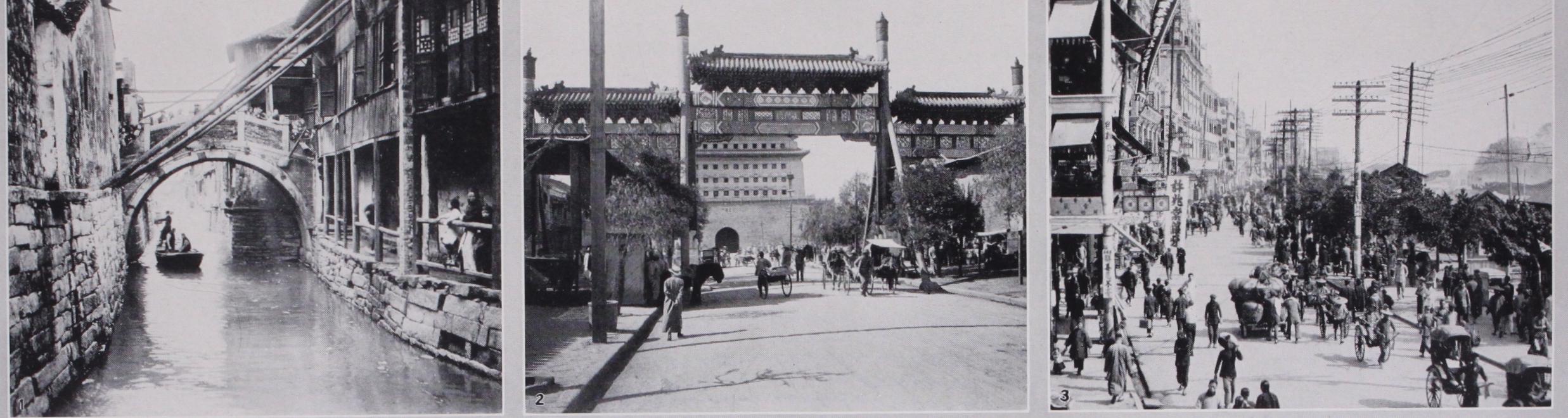
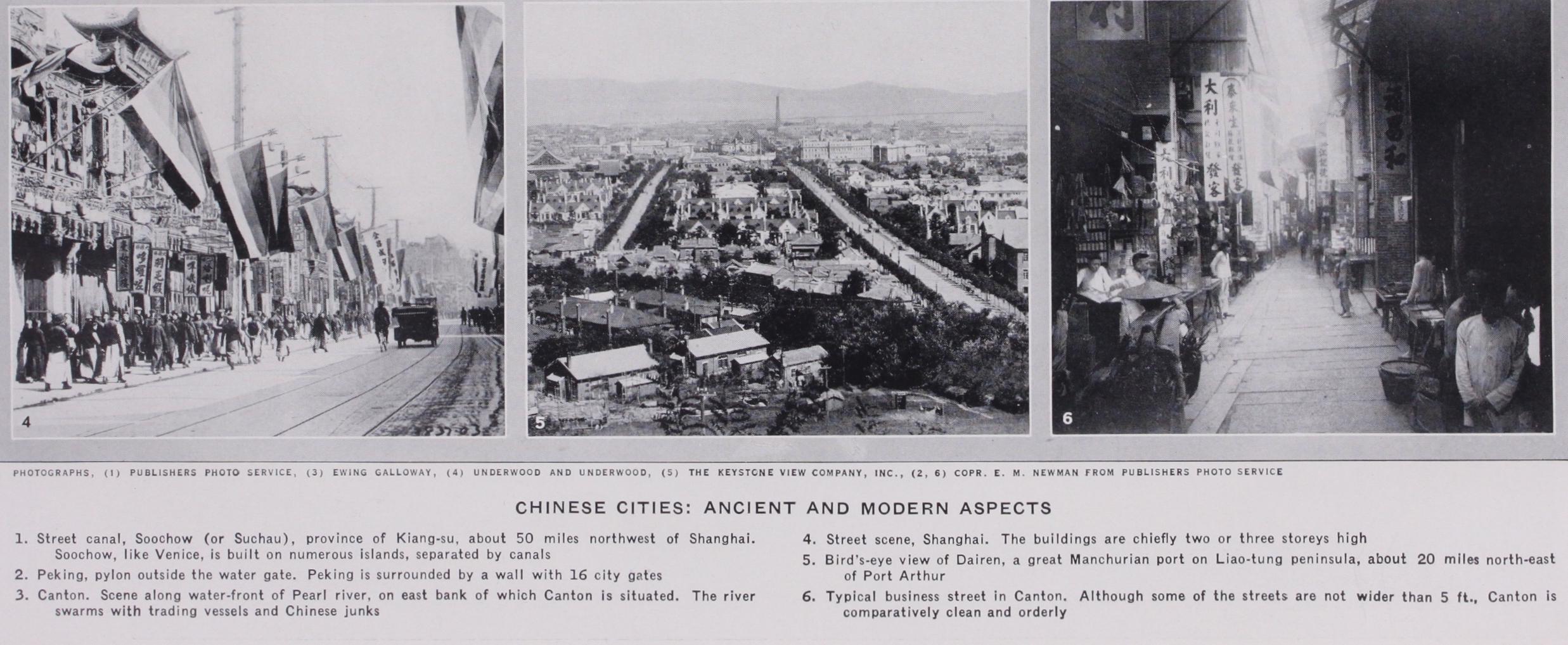
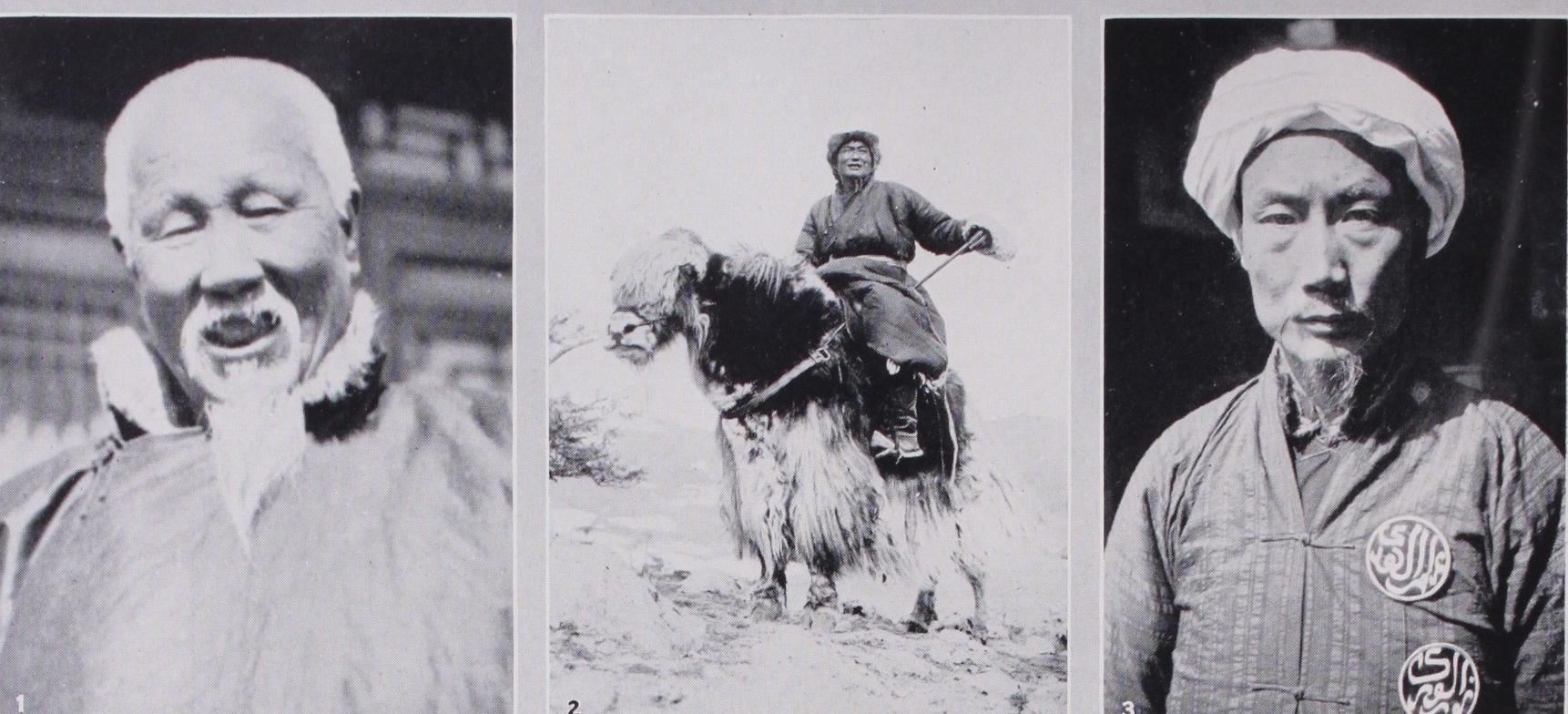
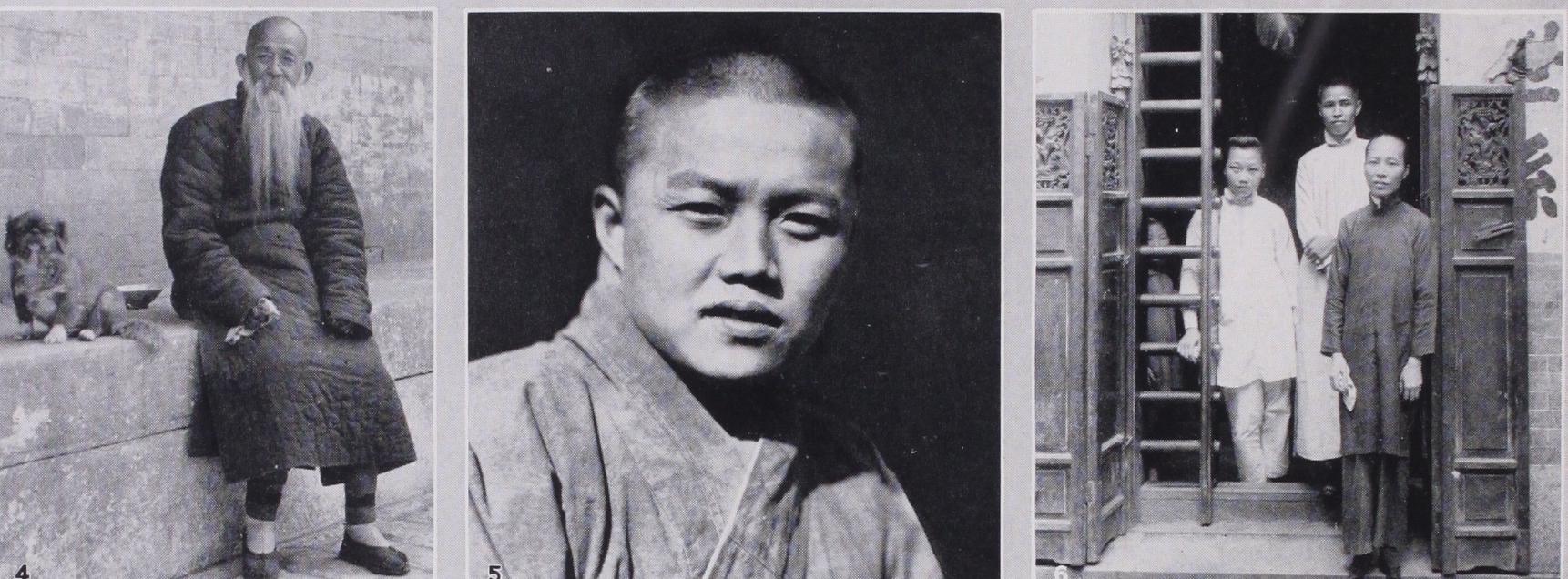
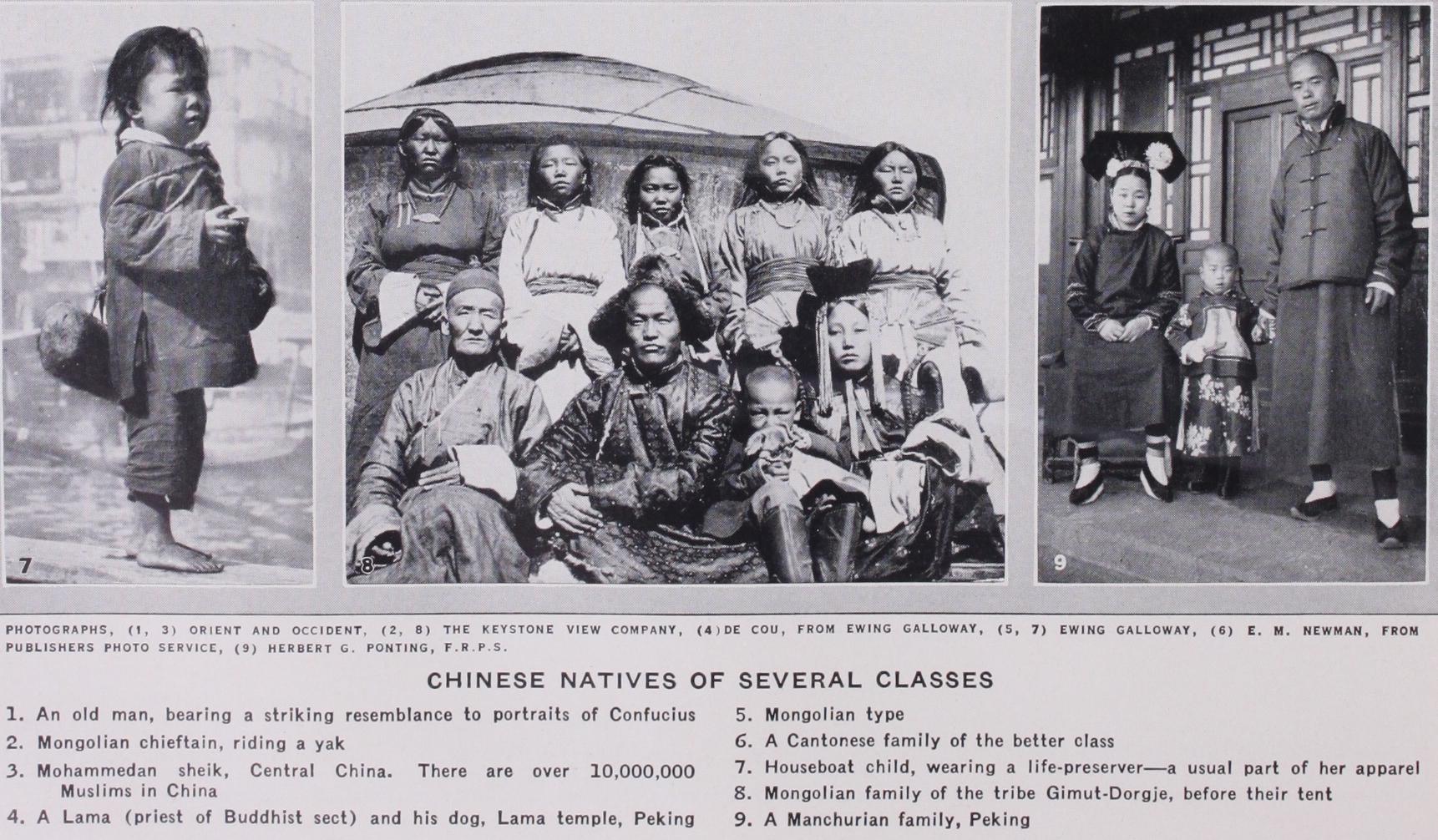
Japan, moreover, continued conciliatory. Whine she declined to accede to the Chinese demand, made in 1923, for the abroga tion of the agreements of 1915, she entered upon no new marked aggression. In 1927 and 1928, to be sure, when anti-foreign agita tion and civil war endangered her nationals she at times acted vigorously, and she seemed to be entering upon a new advance in Manchuria, but she was much more careful to respect Chinese sensibilities than she had been during the World War.
The Powers also seemed about to remit the unpaid portions of the Boxer indemnity. The United States acted finally in May 1924, and Great Britain, France, Japan, and Russia took pre liminary steps looking toward the same end. All plans for re mission, however, called for the allocation of the funds to educa tional or other cultural projects and there was danger that they would be used to build up educational "spheres of influence." Domestic Politics After the World War.—While China was making progress toward regaining the special privileges which had been wrested by the Powers, internally her Government was rapidly disintegrating.
At the close of the World War, it will be recalled, Hsu Shih chang was in the presidential chair and Tuan Chi-jui was in con trol. A separate Government was maintained at Canton, largely by members of the Kuomintang, under the leadership of Sun Yat sen. For a time Sun was ousted from Canton by a Kwangsi fac tion, but he was restored by Ch'en Ch'iung-ming, and in April 1921 he was elected "president of the Chinese republic" by such members of the parliament of 1913 as could be got together. However, he secured only a precarious foothold in Canton and a part of Kwangtung. Most of southern China was a medley of petty factions and quarrelling war lords.
Conditions were little better in the north. In 192o the out standing leaders were Wu P'ei-fu, his titular superior, Ts'ao Kun, and Chang Tso-lin, the master of wealthy Manchuria. In the summer of 1920 these three united to drive Tuan and the Anfu leaders out of power. Wu P'ei-fu and Chang Tso-lin could not long co-operate, and in 1922 Wu defeated the latter and drove him back into Manchuria.
Wu now took steps which he hoped would unify the country. Hsu Shih-chang resigned the presidency, Li Yuan-hung was re instated in that office, and the parliament of 1913 was recalled to Peking. Thus the last officers on which the entire country had seemed to unite were put back into power.
Hopes for a unified China, however, proved illusory. Funds were insufficient, cabinets unstable, parliament venal, and in June 1923 Li Yuan-hung again fled from the capital. In Oct. 1923 parliament, probably as the result of heavy bribes, elected Ts'ao Kun to the presidency and a "permanent" constitution was promulgated.
In 1924 Wu and Chang renewed their war, Wu was defeated, and Ts'ao Kun was ousted. This bouleversement was due to the defection of one of Wu's subordinates. Feng Yii-hsiang. Upon Wu's defeat, Chang and Feng conferred at Tientsin with Tuan Chi-jui, and late in Nov. 1924 Tuan assumed the office of chief executive (not president) and announced a provisional Govern ment. A "reorganization conference" was called but accom plished nothing. Sun Yat-sen came north to have a part in the new regime, and on March 12, 1925, died in Peking.
Feng and Chang could not co-operate any more successfully than had Chang and Wu, and in 1925 Feng, since 1923 master of Peking, aided by the treachery of one of Chang's generals, com pelled Chang to retire once more to Manchuria. Chang Tso-lin eliminated the traitor, however, and early in 1926 he and his quondam enemy, Wu P'ei-fu, united by their common hatred of Feng Yu-hsiang, joined to drive the latter out of Peking and into Mongolia.
In the late spring of 1926 a new and startling factor appeared on the scene in the form of a revived Kuomintang. Sun, in dying, did more for the Kuomintang than he had been able to do when alive. He was a revolutionist, not an administrator or organizer, and as long as he was its head his party could not hope long to achieve national success. Immediately after his death, however, his party made him a national hero, and in his last will and testa ment to the Chinese people and in a book which he had written, the San Min Chu I, it found a program. This program was three fold: democratic government, a higher standard of living for the masses, and the recovery of the rights granted to foreigners. Pending the unification of the country the full realization of de mocracy was to be postponed and dictatorship by a single party, the Kuomintang, was to be substituted. Stress was, accordingly, laid on the last two objectives. Better living conditions for the proletariat were to be achieved in part by the organization of labour and peasant unions. The movement against the "unequal" treaties, growing ever since the Peace Conference, had been ac centuated by events in 1925. On May 3o of that year the Brit ish-commanded police of the international settlement in Shanghai fired into a crowd of students who had gathered before the police station to demand the release of their comrades arrested for agita tion in connection with a strike in Japanese-owned cotton mills. Anti-foreign and especially anti-British agitation spread like wild fire over China. Aggravated by a skirmish between Shameen, the foreign settlement in Canton, and the Chinese, an anti-British boycott was instituted which was particularly effective in the south.
Russian Communists, chief of whom was Borodin, led in fram ing and executing the Kuomintang's program. They had origi nally been called in as advisers by Sun Yat-sen and the small Chinese Communist Party had been incorporated into the Kuo mintang. Russians, moreover, drilled the officers of the Kuomin tang or Nationalist Army.
By no means all the leaders of the Kuomintang were in sym pathy with the Communists but hoped to utilize them to achieve the Nationalists' aims.
In the summer of 1926 the Nationalist armies, led by Chiang Kai-shek, began a triumphant march northward and by the com ing of winter they had driven Wu P'ei-fu into Honan and prac tically eliminated him, were in possession of the Wuhan cities Hankow, Wuchang and Hanyang—and the Kuomintang had moved its capital there.
The victories had been achieved as much by skilful propa ganda as by force of arms. Wherever the Nationalist forces came, trained agitators directed popular sentiment against the treaties and foreign merchants, and against Christian schools, churches, and hospitals as "imperialistic." Enmity was chiefly directed against the British, but Americans also suffered, and Protestants were more in disfavour than were Catholics.
Kuomintang agitators also organized labourers and peasants to make exorbitant demands of employers and landlords, and in some places, notably in Hunan and Hupeh, a reign of terror fol lowed in which many of the propertied class were dispossessed and even executed.
Educated Chinese, weary of the long civil strife and smarting over China's feeble position among the nations, hailed the ad vance of the Kuomintang as the harbinger of better days. That advance continued with amazing rapidity and by March 1927 the Chinese had taken over the British concessions in Hankow and Kiukiang, British and American merchants and missionaries were being evacuated from much of the Nationalist territory, Sun Chuan-fang, recently strongly entrenched in Chekiang and Kiangsu, was in full flight, his armies a disorganized rabble, and only strong forces of foreign marines kept the Nationalist armies out of the foreign settlements in Shanghai. The northern mili tary chiefs, alarmed, had put themselves under the direction of Chang Tso-lin to stem, if possible, the oncoming flood.
The Kuomintang, however, broke down on the eve of its tri umph. On March 24, 1927, Nationalist troops, entering Nanking on the heels of fleeing remnants of the northern forces, savagely looted foreign dwellings, robbed foreigners, killing three or four of them, and further loss of foreign life was prevented only by the fire of the foreign gunboats on the Yangtze. One of the effects of the outrage was to widen the breach between the Com munists and moderate elements of the Kuomintang. Within a few weeks Chiang Kai-shek had set up a Government at Nanking which denounced the radicalism of the Wuhan leaders.
The Nationalist advance was halted by these internal dissen sions and the party continued to divide. By autumn 1927 the anti-Communist reaction was in full swing, Borodin and other Russian advisers were ousted from Wuhan, and in many places Chinese Communists were being hunted down and executed.
In 1928 the Nationalists, reorganized under moderate and con servative leaders, and with headquarters at Nanking, began a new northward advance. Chiang Kai-shek led, in co-operation with Feng Yii-hsiang and Yen Hsi-shan. A serious clash with Japanese troops occurred in May in Tsinanfu and a partial re-occupation of Shantung by Japan followed. In spite of this, however, the Na tionalists pushed on and in June entered Peking. Chang Tso-lin was killed by a bomb as he was retiring into Manchuria, and his son, Chang Hsiieh-liang, succeeded to the command of his forces. Because of Japanese opposition, Manchuria did not formally join the Nationalists, but Chang Hsiieh-liang was given a place on the chief council of the Nanking Government. The major armed op position to their rule having been eliminated, the Nationalists moved the capital from Peking (now renamed Peiping—"Northern Peace") to Nanking, and in October set up an Administration re organized to conform to Sun Yat-sen's program, with Chiang Kai shek as the ranking official.
The chief internal movements against the authority of Chiang Kai-shek after 1928 can be quickly summarized. Yen Hsi-shan and Feng Yii-hsiang could scarcely be expected to submit tamely to the hegemony of this young arrival from the south. In the summer of 193o they joined forces against Chiang. By autumn of that year, however, Chiang had vindicated his power against them. The "Young Marshal," Chang Hsiieh-liang, until the autumn of 1931 in possession of the major military machine in the north, continued loyal to Nanking and to Chiang.
More serious was the recalcitrancy of the south and west. Only slowly, and then largely because of the necessity of presenting a common front against the Japanese did Kwangtung, Kwangsi, Yunnan, Kweichow, and Szechwan fall into line with Nanking. The greatest domestic menace to Chiang Kai-shek and the Kuomintang, however, was the Communists. Armed bands re garded as Communist existed in a number of parts of the coun try, particularly in the Yangtze basin east of the gorges. In the southern part of Kiangsi and in the mountains and hills where Kiangsi bordered on Fukien, Kwangtung, and Hunan, they en trenched themselves and offered stubborn resistance to the Nan king forces. How far they embodied the ideals of Russian Com munism is a matter of debate. Their leaders espoused the Russian program and objectives, but probably they obtained no direct sup port from Moscow. They appealed to tenant farmers and others upon whom the existing rural order bore heavily and were, in es sence, a peasants' revolt. Terror was widely invoked and persons of property were cruelly dealt with.
To the armed forces of Nanking the Communist bands offered prolonged and stubborn resistance. Of the Kuomintang and the Nanking Government Chiang Kai-shek and his armies were the chief buttress. The needed financial support came largely from the Chinese moneyed interests in the rich cities of the lower Yangtze, principally Shanghai. Chiang, accordingly, had numbers and phys ical equipment vastly superior to the proletarian peasant bands.
In 1934 and 1935 the Communist forces, compelled to retreat, skilfully made an heroic march through the mountains of the west and established themselves afresh in the north-west. With their stronghold in Shensi, Chiang Kai-shek continued to seek to eliminate them. Allied with him were the armies of Chang Hsiieh liang. After the debacle in Manchuria (see below) these eventu ally were moved into Shensi with headquarters at Hsianfu. When, however, late in 1936 Chiang Kai-shek went in person to Hsianfu to push the campaign, he was seized by Chang Hsiieh-liang, who demanded the end of the civil war against the Communists, a re organization of the Government with more toleration for the op position, and, above all, a united front against Japan. Although Chiang Kai-shek was released without publicly acceding and Chang Hsiieh-liang was technically punished, in effect the dra matic incident was the precursor to the easing of the war against the Communists and to the eventual co-operation of the latter in the defence against Japan.
In an attempt to improve morale, what was termed the New Life Movement was officially inaugurated and pushed.
The improvement in internal order must not be exaggerated. Much of it depended precariously upon the life of one man, Chiang Kai-shek. Dissensions among leaders had not been elim inated. Over several provinces even of China Proper Nanking ex ercised no effective control. In the outlying dependencies, only in Sinkiang, in portions of Inner Mongolia, and here and there on the borders of Tibet did Nanking exert even a shadow of power. The world-wide financial depression brought embarrassment, espe cially beginning in 1934 with a marked rise in the price of silver and, accordingly, with a fall in other price levels. In the autumn of 1935 the Government felt itself forced to nationalize all the sil ver and to go officially on a managed currency. Yet nearly every year witnessed some gains. Even those provinces which did not tolerate the interference of Nanking in their internal affairs usu ally permitted the Nationalist Government to speak for them in relations with other nations. One post office administration and one customs service extended throughout the country. In educa tional matters practically all the provinces co-operated with Nan king. Painfully and with occasional relapses China was advancing toward unification and a better and more stable government. In 1937, but for one important factor, China seemed nearer that goal than at any time since the downfall of Yuan Shih-k'ai. That one factor was foreign, the policy of Japan.
For more than two years after 1928 China seemed to be making progress toward emancipation from the "unequal treaties." In 1929 the British returned to Chinese administration their con cession in Chinkiang and the next year their concession in Amoy. In 1929 Belgium consented to the cancellation of her concession in Tientsin. In 1928 and 1929 nearly all the Western Powers formally assented to the resumption by China of her tariff auton omy, followed, in 193o, by Japan. On Feb. 1, 1929, accord ingly, the Chinese Government put into effect a schedule of duties determined by itself. Moreover, effective Chinese control over the customs administration increased. China, too, seemed to be making headway toward the abolition of extraterritoriality. Sev eral of the smaller Powers assented to the jurisdiction of Chinese laws and courts over their citizens. In July 1928, the Nanking Government announced that all "unequal treaties . . . which have already expired shall ipso facto be abrogated" and that it would take immediate steps to end those "unequal treaties which have not yet expired and conclude new treaties." A number of the Powers against whom China adopted specific measures protested. Eventually several assented, but only on certain conditions. How ever, Great Britain, Japan, France, and the United States, to gether with some of the smaller countries, held out. In Dec. 1929, Nanking announced that extraterritoriality would come to an end on Jan. 1, 193o, but postponed putting the order into effect pend ing suitable provision for the trial of cases involving foreigners. The needed regulations were framed and were announced to be operative on Jan. 1, 1932. Before that day arrived, however, events in Manchuria precluded carrying out the plan.
For several years after 1927 the relations of Nanking with Moscow were much of the time either strained or decidedly un friendly. The Nanking Government had been established in an anti-Communist reaction and could scarcely be expected to look upon Russia with cordiality. The joint operation by Russians and Chinese of the Chinese Eastern railway, in Manchuria, made for irritation. In 1929, indeed, the Chinese dismissed and arrested the Soviet officials associated with the railway. In Jan. 193o, a Russian invasion forced the Chinese to assent to the restoration to Russia of her 'former share in the control of the line. Russia, moreover, had the sovietized Outer Mongolia in her orbit and ap peared to threaten the remnants of Chinese authority in Sinkiang. By the end of 1932, however, Russo-Chinese relations became much more friendly, especially since both nations found common cause in their apprehension of Japan.
In the meanwhile in Manchuria a serious conflict was brewing. Here the Chinese were especially restive under the privileges held by the Japanese. Chinese formed the vast majority of the popula tion and the legal title of the region was held by China, yet Japan controlled much of South Manchuria through her railways and her leasehold on the Liaotung peninsula, and in other ways com promised Chinese sovereignty. The Chinese began building a series of railroads which would in part encircle the Japanese lines, debouch at Hulutao, a port which the Chinese were developing, and make them partially independent of the Japanese. Chang Hsueh-liang, the ruler of Manchuria, was disposed more and more to ally himself with Nanking and to sympathize with the Kuomin tang and its desire to rid China of foreign control.
The Japanese, on the other hand, had large investments in Manchuria. In the overcrowded state of their islands and in the necessity which they were under of finding markets and raw materials 'for the industries which were their only relief, they looked upon Manchuria as their "life line" against national ruin and as a bulwark against Russia and a source of food, coal, and oil in case they should go to war with a naval power. In the sum mer of 1931 the friction expressed itself in minor incidents. The element in control of the main body of the Japanese forces in Manchuria believed that the time had passed for temporizing and compromise, and on the night of September 18-19, alleging that Chinese had blown up part of the track of the South Man churian Railway Company near the city, seized Mukden.
In the next few weeks the Japanese occupied other cities in Manchuria and demolished Chang Hsiieh-liang's power north of the Great Wall. Having destroyed the only effective Chinese rule in Manchuria, the Japanese, compelled to preserve order to pro tect their own interests and not disposed to annex the region outright, stimulated native leaders, largely Chinese, to set up local governments. Early in 1932 these were organized, with Japanese assistance, into a new State denominated Manchoukuo which on Feb. 18, 1932, declared its independence and called to its head Pu Yi, the last Manchu emperor of China. Later in the year Japan accorded Manchoukuo official recognition and entered into a defensive alliance with it.
Nanking, unable to offer effective armed resistance to Japan, presented its case to the League of Nations. The League found in it the most difficult crisis which that young organization had yet faced, attempted to induce Japan to withdraw its troops to the zone of the South Manchurian railway, and in time appointed a commission, headed by Lord Lytton, to investigate. The com mission's report, made in the autumn of 1932, in the main found Japan to be at fault and proposed a procedure for settling the dispute which would preserve China's sovereignty. Feb. 24, the Assembly of the League took action against Japan, recom mending a method of effecting an adjustment which Japan would not accept. Soon thereafter Tokyo announced its resignation from the League.
The United States, at times acting in close co-operation with the League, attempted to induce Japan to keep the peace and de clined to recognize Manchoukuo. Russia, while deeply interested, was not disposed to go to war to keep Japan out of the Russian sphere of influence in Northern Manchuria.
The Chinese, powerless to oppose effective military resistance, had at hand a weapon in the boycott. They invoked this at great cost to Nipponese trade. The Japanese objected, friction became acute at Shanghai, and Jan. 28, 1932, Japanese forces occupied Chapei, a section of Shanghai, and in the ensuing fighting laid waste a large portion of the city. The Chinese offered a much more sturdy defence than had been expected, but eventually were driven back. Due in part to the good offices of the League, fight ing ceased in March 1932.
Chinese anti-Japanese activities continued in Manchuria, largely through "irregulars." Chang Hsueh-liang, for a time with his headquarters at the nearby Peiping (Peking), was a source of irritation. The Japanese, too, wished to add the province of Jehol to Manchoukuo. In Jan. 1933, Manchoukuoan-Japanese forces occupied Jehol, and Chang Hsiieh-liang, his prestige badly dam aged, soon resigned and left for Europe. When he returned, it was to a post in Hupeh and then in Shensi. In April 1933, the Japanese, annoyed by raids from south of Jehol, advanced within the Great Wall. The Chinese were forced to withdraw and late in May and early in June Nanking found it advisable to enter into a truce, setting up a demilitarized zone south of the Wall, in the north-eastern part of the province of Hopei. Strangely enough, however, in all this time war was not officially declared and regular diplomatic relations were maintained between the two Governments. The truce of May 1933 established a modus vivendi which was practically a treaty of peace and which tacitly (al though not explicitly) acquiesced in the Japanese occupation of Manchuria. The articulate among the Chinese, however, re mained unreconciled to the existence of Manchoukuo. Moreover, only two foreign Powers besides Japan, Italy and the small Cen tral American El Salvador, formally and fully accorded the new State official recognition.
Japan, however, persevered in consolidating her position in Manchoukuo. She acted against banditry and entered upon a vast program of railway building which opened up more of the land and connected it with Korea. In 1934 Pu Yi was officially crowned monarch of the new State.
After long negotiations, moreover, Japan obtained the sale of the Russian interest in the Chinese Eastern railway and thus eliminated the last legal trace of the former Russian sphere of influence.
Japan was not content with confining her control of China to regions north of the Great Wall. In the spring of 1934 a pro nouncement from Tokyo in effect declared all China to be a Japanese preserve in which no Power could take important action without the consent of the Island Empire. In 1935, moreover, Japanese forced the withdrawal from Hopei and Chahar of any officials and armed forces and the disbandment of any organiza tion which might prove unfriendly to her. The provinces of Hopei and Chahar passed partly into their control, and Suiyuan, Shansi, and Shantung were threatened. Chiang Kai-shek dared not offer open opposition for fear of bringing a Japanese avalanche upon his head.
In July 1937, what proved to be a life and death struggle broke out between China and Japan. The exciting incident was a minor clash between Chinese and Japanese troops not far from Peking on the night of July 7. The conflict early ceased to be localized. The Japanese came to feel that since Chiang Kai-shek and the Nationalist Government would not yield to their wishes they must be eliminated. To the Japanese, the rising tide of nation alism in China, directed, as much of it was, against them, had become intolerable. Governments, so they held, must be set up in China which would co-operate with them.
Within the course of two years Japan obtained possession of most of the ports, of the majority of the chief cities as far west as Hankow, and of the larger part of the railways. Peking and Tientsin were occupied in July 1937. After fierce fighting, the Chinese Armies were driven out of the Shanghai area by the middle of Nov. 1937. Nanking fell on Dec. 13, 1937. The capital was moved west to Hankow. The Japanese followed, and took that city in Oct. 1938. In that same month, the Chinese lost Canton. The Japanese pressed northward and westward 'from Peking along the railway lines into Shansi and Inner Mongolia. They dominated Shantung. They took possession of the Peking Hankow, the Tientsin-Pukow, and the Lung-hai railways and of the lines in the lower part of the Yangtze valley. They had com plete command of the sea. Always superior in the air, before many months they had all but destroyed the Chinese air force and bombed Chinese cities at will. The loss of life, particularly to Chinese, both soldiers and civilians, was enormous.
The Chinese, although possessed of a much larger reservoir of man-power, were paying dearly for their tardiness in adopting the machines of the Occident. In the latter half of the 19th cen tury, when Japan was actively acquiring the mechanical appli ances of the West, China had sought to hold the West at arm's length. As a result, in the industrial basis for modern war, in arms, in mechanized equipment, in naval strength, in the air, and in modern troops and officers, China, although having made im provement, was badly behind her island neighbour.
Yet the Chinese did not yield and the war was prolonged far beyond Japan's expectation. Chiang Kai-shek moved his capital to Chungking, in Szechwan, at the western end of the difficult Yangtze gorges. Much of China's leadership migrated to the far west, notably to Szechwan and Yunnan. Here, in "Free China," they prepared for prolonged resistance. In "Occupied China" Ja pan was unsuccessful in inducing many Chinese of standing to take office in the governments which she endeavoured to set up. Indeed, even here her control was confined to the cities and the railway lines: outside these it was challenged, often successfully, by guerrilla bands which professed allegiance to the Nationalist Government. In January 1940 it appeared that the struggle might be greatly prolonged and prove exhausting to both antagonists.
The Progress of the Cultural Revolution.—Preoccupation with political and international developments under the republic must not be allowed to obscure the changes, some of them much more significant, in other phases of China's life. These are cov ered more fully elsewhere in these pages, but the picture would not be well rounded if they were not also mentioned here. The impact of the Occident was affecting every phase of the nation's culture and the process was hastened by the collapse of the ancient politi cal structure. Social customs were passing, including many of the older forms of politeness. The patriarchal family was beginning to disintegrate, and youths were insisting upon making their matrimonial arrangements independently of parental control. Women were demanding greater privileges, often in bizarre ways. By a revolution comparable only to that which occurred in Europe when the vernaculars were substituted for Latin, a digni fied form of Mandarin was taking the place of the older literary style. New religious and philosophical ideas were abroad and old ones were revived. Nothing, whether Chinese or foreign, was too well established to be questioned. Factories were beginning to supplant the older handicrafts and labour unions the ancient guilds. Modern means of transportation were multiplying. A few new railways were being built. Motor roads, some of them metalled, were being constructed by the hundreds of miles and were plied by motor buses. A network of aeroplane lines covered the country.
These changes were, naturally, most marked in the cities, par ticularly those of the coast, and here and there in the rural dis tricts the old China survived almost unaltered. More than any other section of the nation, the students were committed to the new ways. China, led by her intellectuals, was in process of re organizing her culture and fundamental convictions more thor oughly than at any time since the Chou dynasty.
General Histories. The longest is J. A. de Moyria de Mailla, His toire generale de la Chine (1777-85). Others of fairly large dimen sions are Henri Cordier, Histoire generale de la Chine (1920) ; K. S. Latourette, The Chinese: Their History and Culture (1934) ; Wieger, Textes historiques (1904). Among the shorter histories are Gowen and Hall, An Outline History of China (1926) and K. S. Latourette, The Development of China (5th ed., 1937). For bibliography of works in Chinese see C. S. Gardner, Chinese Traditional Historiography (1938) ; of works in Western languages, H. Cordier, Bibliotheca Sinica (19o4–o8, 1922).
Special Phases of Chinese History.—For the ancient period see H. Maspero, La Chine antique (1927) ; H. G. Creel, The Birth of China (1936) ; E. Chavannes, Memoires historiques de Se-ma Ts'ien (1895 1905) . For biography see H. A. Giles, A Chinese Biographical Diction ary (1898) ; A. W. Hummel, A Biographical Dictionary of the Ch'ing Dynasty (1940). For recent history see P. Monroe, China: A Nation in Evolution (1928) ; A. N. Holcombe, The Chinese Revolution (193o) ; L. Wieger, Chine Moderne (1921ff.) ; J. B. Condliffe, China To-day, Economic (1932) ; Owen Lattimore, Manchuria, Cradle of Conflict ; T. A. Bisson, Japan in China (1938) ; L. Sharman, Sun Yat sen ; E. Snow, Red Star over China (1938) .
For China's intercourse with the Occident see F. Hirth, China and the Roman Orient (1885) ; H. Yule, Cathay and the Way Thither (new ed. by Cordier, 1916) ; H. B. Morse, The International Relations of the Chinese Empire (1910-1918) ; Soothill, China and the West (1925) ; J. V. A. MacMurray, Treaties and Conventions with and Concerning China (1921) ; W. W. Willoughby, Foreign Rights and Interests in China, 2nd ed. (1927) ; H. B. Morse, The East India Com pany Trading with China (1926) ; K. S. Latourette, A History of Christian Missions in China (1929) ; Hirth and Rockhill, Chau-Ju-Kua (191I) ; P. Joseph, Foreign Diplomacy in China (1894-190o) ; H. B. Morse and H. F. MacNair, Far Eastern International Relations (1931) ; S. W. Griswold, The Far Eastern Policy of the United States (1938) ; T. E. La Fargue, China and the World War (1937). (K. S. L.)