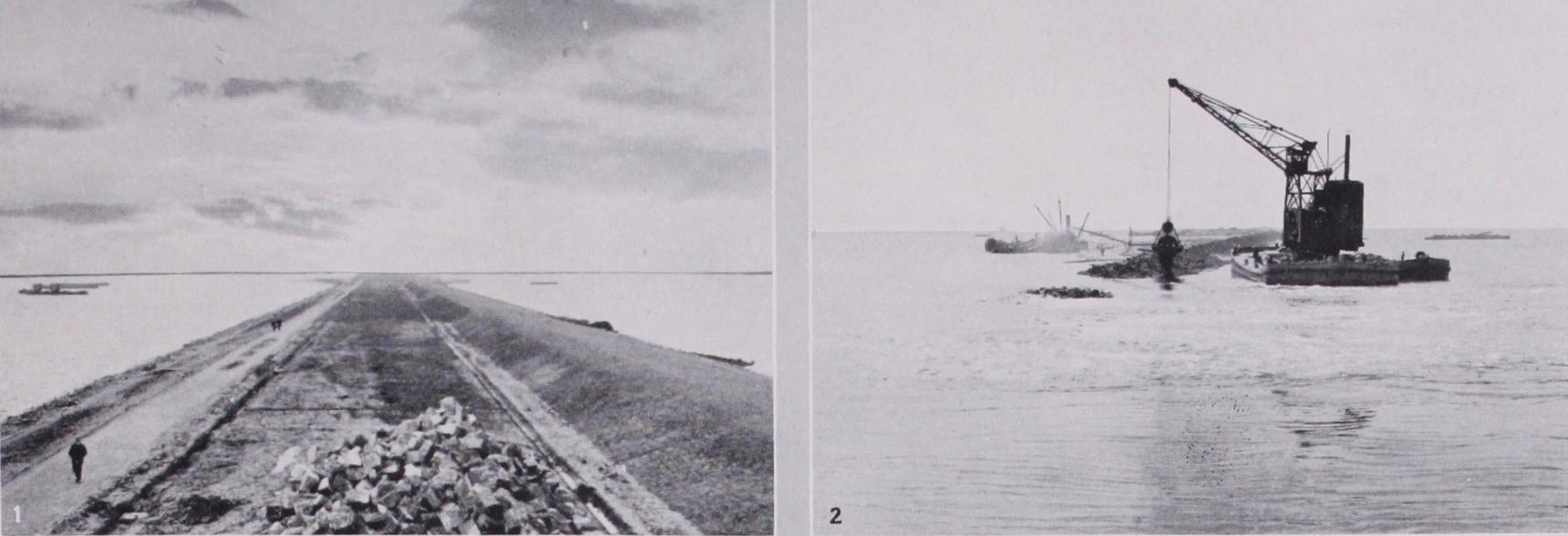
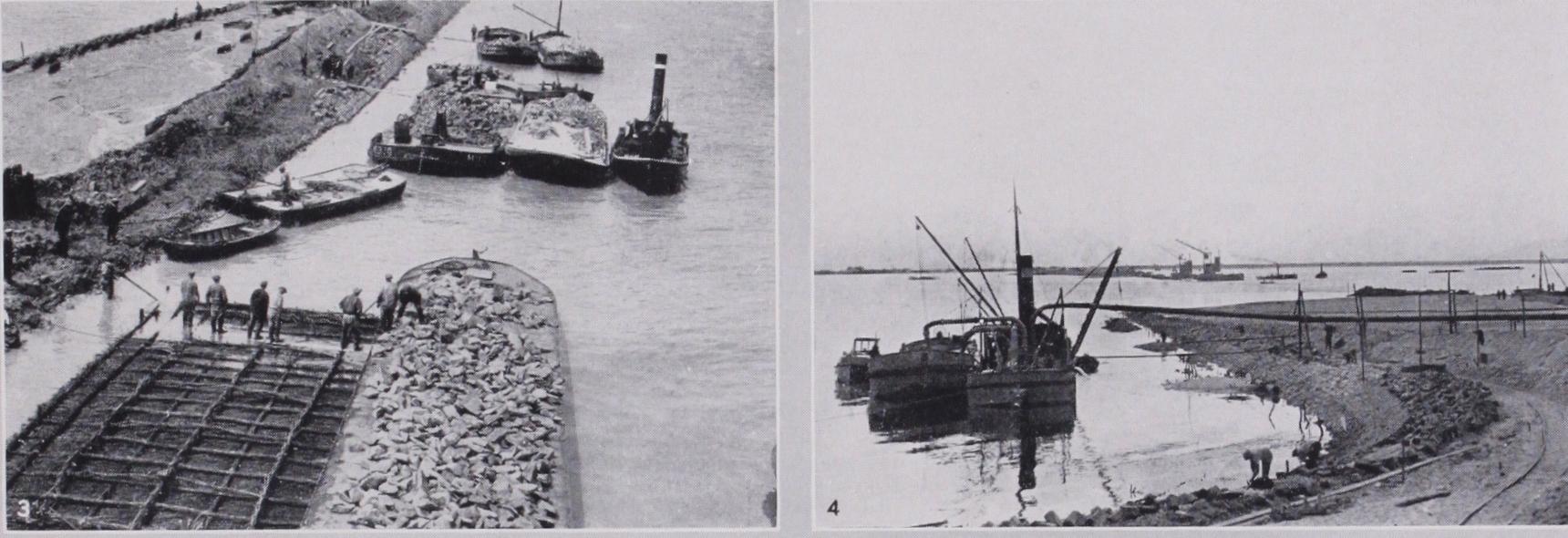
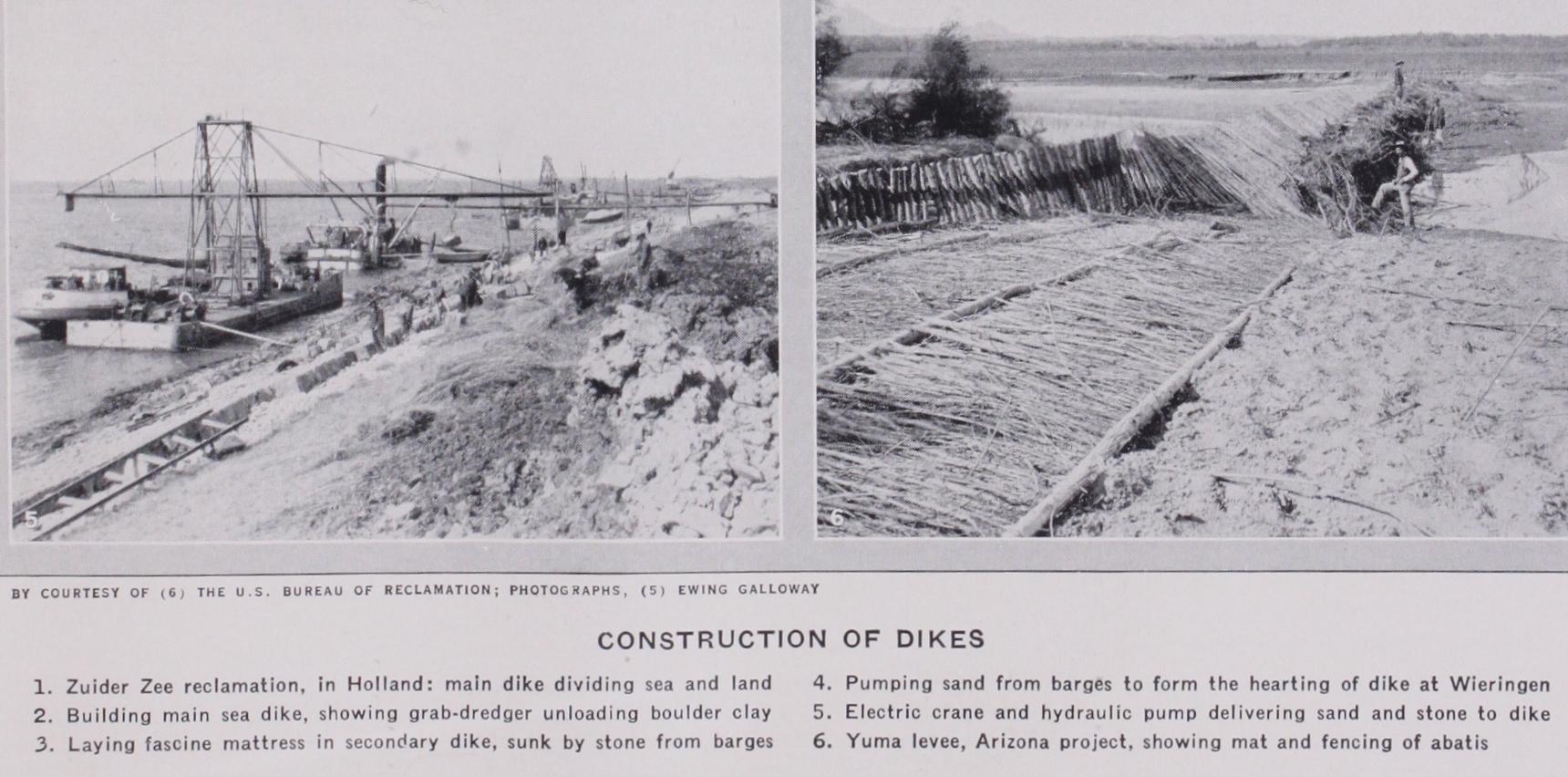
THE RECLAIMING OF THE ZUIDER ZEE The partial reclamation of the Zuider Zee, undertaken by the Dutch Government in 1918, is the greatest work of its kind ever attempted. The earliest plans for regaining the submerged lands of the Zuider Zee date from the i 7th century, but it was not till the middle of the 19th century that serious proposals began to be considered. Among these plans were those of van Diggelen, 1849, Leemans, 1877, and the various schemes of the engineer C. Lely, subsequently Minister of Public Works, which appeared between 1887 and t 891; the last of which is substantially that on which work was actually commenced in 192o. The finally approved scheme as shown in the plan fig. 4 includes : (I) a sea dike about I gym. long between the mainland of north Hol land and the island of Wieringen, completed in 1926; (2) a drainage and navigation canal for small vessels, also finished in 1926, extending from the western end of the Wieringen dike near van Ewijcksluis along the coast of North Holland to Helder. This canal will maintain the access from the Texel channel to the old North Holland canal at de Kooi by a lock at that place, and connect with canals to be formed along the eastern coast line of North Holland up to Amsterdam; (3) the main sea dike, about 18m. long, from the eastern end of the island of Wieringen to the Frisian coast near Zurig (figs. 4, 5 and Plate). Two sets of sluices will be provided, one set near each end of the dike, the total width of the sluice openings being about I,000f t. Navigation locks for vessels up to about 2,000 tons in capacity are also to be built near the ends of the dike. This part of the work was com menced in 1926 and is expected to be completed in A large part of the section of the sea dikes is formed of boulder clay dredged from the Zuider Zee, brought to the depositing sites in barges and unloaded by grab dredgers. The sand filling of the dikes is pumped; (4) the reclamation of four areas (polders), by the construction of secondary dikes inside the sea dikes, aggregating about 553,000ac. thus increasing the total land area of Holland by about 7% and the arable land alone by 1 o% ; (5) The formation, inside the main sea dike, of an inland fresh water lake of about 247,000ac. called the Yssel lake, to provide for the disposal of the flood waters of the river of that name, and a canal, about im. wide, connecting this lake with a smaller one (Y lake) to the east of Amsterdam. This canal will separate the south-west polder from the south-east polder and will have a regulating lock and sluices at its entrance from Lake Yssel.
The draining of the reclaimed land will be accompanied by a shrinkage, the amount of which, it is expected, will vary between one and three feet. All the polders will be at levels considerably below sea level, and the lowest drainage channels will be as much as 2 2 f t. below the Yssel lake level. Pumps will be installed at points on the borders of the polders to provide for the drainage of the land. They will lift land water up to the level of the lake and discharge it over the secondary dikes. _ The reclaiming of the north-west polder (Wieringen) was com menced in 192 7 ; and it is proposed to begin the work on the three remaining polders as soon as the main sea dike is com pleted, probably in 1934. The north-west polder will be finished about 1932, but cultivation will not be possible till three or four years later. It is calculated that the lands will not have become so free from salt as to reach their full capital value until the i4th or 15th year from this commencement of the reclamation of a polder.
In addition to the main features already mentioned, the scheme includes many important subsidiary works such as minor canals, locks and sluices, drainage arrangements, roads and bridges. The latest estimate of the total cost of the work amounts to inclusive of interest during construction and de velopment, but not including the compensation of the Zuider Zee fisheries and some other items. It is estimated that, when the last of the lands to be reclaimed has acquired its full capital value about the year 1959, the undertaking will have shown a profit to the State of at least £8,000,000. The average selling value of the land at full maturity is estimated at about f go per acre.