
CONVOY, a term given to troops or warships acting as escort to supplies or merchantmen respectively. Sometimes it was ap plied to the things escorted, e.g., "the Baltic convoy." In early days there was little to distinguish an armed merchantman from a man-of-war. All merchantmen were more or less armed. Thus the ships of the Hanseatic league and of Venice were required to sail in convoy for mutual protection. Both these methods con tinued to be employed, until, with the advent of iron ships and steam power, merchantmen ceased to be armed. In the meantime many nations had entered into treaties for the purpose of exempt ing from visit and search (q.v.) ships under convoy, from which arose the so-called "right of convoy." This right Great Britain re fused to recognize and the United States took the same view. It was put to the test during the war between Great Britain and France, when a fleet of Swedish merchantmen with naval stores on board, under convoy of a Swedish frigate, resisted the exercise of visit and search by a British squadron. The merchantmen were captured, sent in for adjudication and condemned with their car goes. Lord Stowell held that the right of visit and search could not be displaced by the intervention of the neutral sovereign or by the fact of the vessel being under convoy (see The Maria, I C., Rob. At the Naval conference of 1908, however, in view of the general acceptance of the doctrine of the "right of convoy" Great Britain expressed her willingness to come into line. By Art. 61 of the Declaration of London "Neutral vessels under national convoy are exempt from search. The commander of a convoy gives in writing at the request of the commander of the belligerent warship, all information as to the character of the vessels and their cargoes, which could be obtained by search." By Art. 62 "If the commander of the belligerent warship has reason to suspect that the confidence of the commander of the convoy has been abused, he communicates his suspicions to him. In such a case it is for the commander of the convoy alone to investigate the matter. He must record the result of such investigation in a report, of which a copy is handed to the officer of the warship. If in the opinion of the commander of the convoy, the facts shown in the report justify the capture of one or more vessels, the protection of the convoy must be withdrawn from such ves sels." With the abandonment of the Declaration in 1916 Great Britain reverted to her former practice, and when the Dutch Gov ernment in 1918 declared that certain vessels would be convoyed by a Dutch warship to the East Indies, she refused to recognize the right of convoy and eventually agreed not to exercise the right of visit in this instance only upon terms agreed between the two governments (see Parl. Papers [Cd. 9028] ).
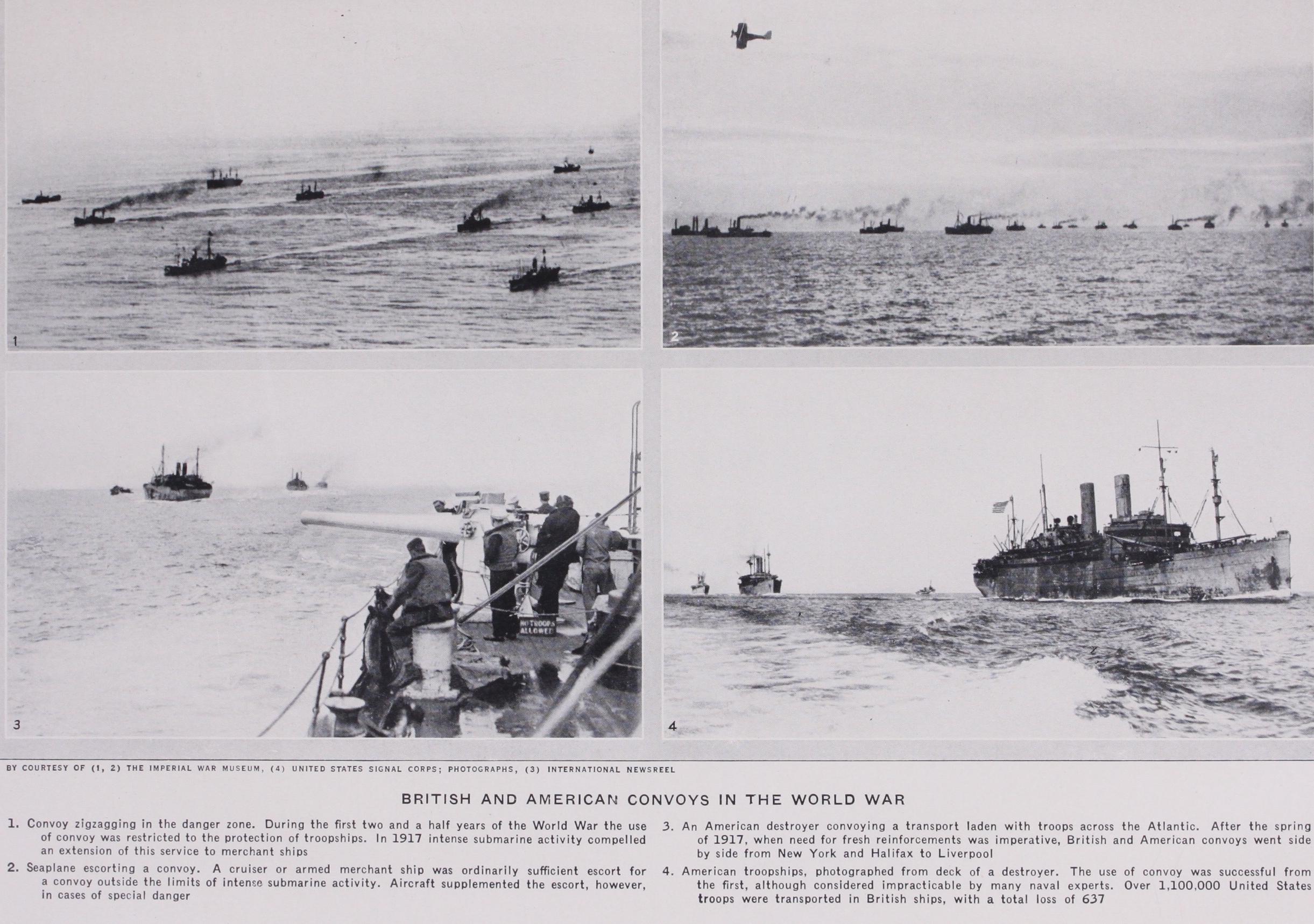
The use of belligerent convoy by neutral vessels is analogous to shipping neutral goods on an enemy armed vessel. On principle the use of belligerent convoy is a good ground for seizure, and resistance will justify condemnation. By the U.S.A. Naval Instruc tions, 1917, "any vessel under convoy of a vessel of the enemy is liable to capture." This is in accord with the British practice.
(H. H. L. B.)