
DRESS MANUFACTURING. No phase in the history of dress is more remarkable than that which has been witnessed in the opening of the loth century. Class distinctions, in so far as they are indicated outwardly by dress, have disappeared. It is not easy to detect differences of degree among the great bulk of the people. Partly, this is due to the spread of democratic ideas and institutions. Cheap means of transport, for example, bring all classes together. The intermixing produces similarity in style of attire. Partly, also, the cause is economic. There are more wage earners, at better rates of pay. There has been a tremendous increase in the number of women wage-earners. Every one has more money available to spend on dress.
Mass-Production of Clothes.—A not less important cause is the mass-production of clothing. This both created a demand and developed in response to it. That section of the public of modest means who would have been slow to leave their clerical blue serge, their homespun, their corduroys and large feathers—the mark of their occupation or class—have been educated into buy ing copies of the garments worn by the better-to-do, copies pro duced under the factory system by the hundred thousand. The men's ready-made clothing industry is a phenomenon; in the women's trade, dress everywhere has been completely revolu tionized. Thirty years ago the woman of means had recourse ex clusively to the dressmaker, the sempstress, the ladies' tailor. The latest fashions from Paris were reproduced for her by them, from actual models brought over or illustrated in the fashion journals. It was all hand process and slow, and "the latest" never percolated through to the mass of the female population. Then arose the trade movement which was to alter all this. It had actually begun in Germany two or three decades earlier, and was bound up with the improvements then being made in textile machinery and with the state of employment. A number of retail shopkeepers dealing in dress materials and articles of clothing found employment for their workers by starting the manufacture of "stock size" gar ments when orders for made-to-measure clothes were scarce. They were so successful and the service proved so popular that establishments were opened solely for this branch of manufacture. Factories were started in the provinces. Nearly the whole of the trade at first was confined to mantles, the basic and staple gar ment from which this now remarkable industry has grown.
The German Industry.—In the '7os the industry in Germany was well-established and important. In Berlin alone some 6o firms catered for it, and already were turning their attention from the home to the foreign market. The value of the total output in 1871 reached 3o million marks, and the number of workers em ployed, amounting to some 35,000, exceeded the number of those engaged in any other German industry at the time. In 1875 Great Britain bought three million marks' worth; in 1876 double that quantity; and two years later ten million marks' worth, the rate of importation thereafter steadily increasing until in 1897 the purchases reached a figure in excess of 88 million marks.
From that date Germany has been losing her monopoly of the world's markets. Almost every one of the chief importing coun tries—Great Britain, the United States, Austria, Italy, Switzer land, Holland, the Scandinavian countries—began to offer compe tition. Manufactories, one by one, were quickly opened; and although the German industry continued to grow, for only the "fringe" of the needs of the women of the world had yet been touched, manufacturers in other countries set themselves steadily to supply the wants of the home consumer. They were handi capped on the score of prices, for the longer experience, lower wages, and higher organization of the Germans told heavily against them, but in another respect they had an advantage.
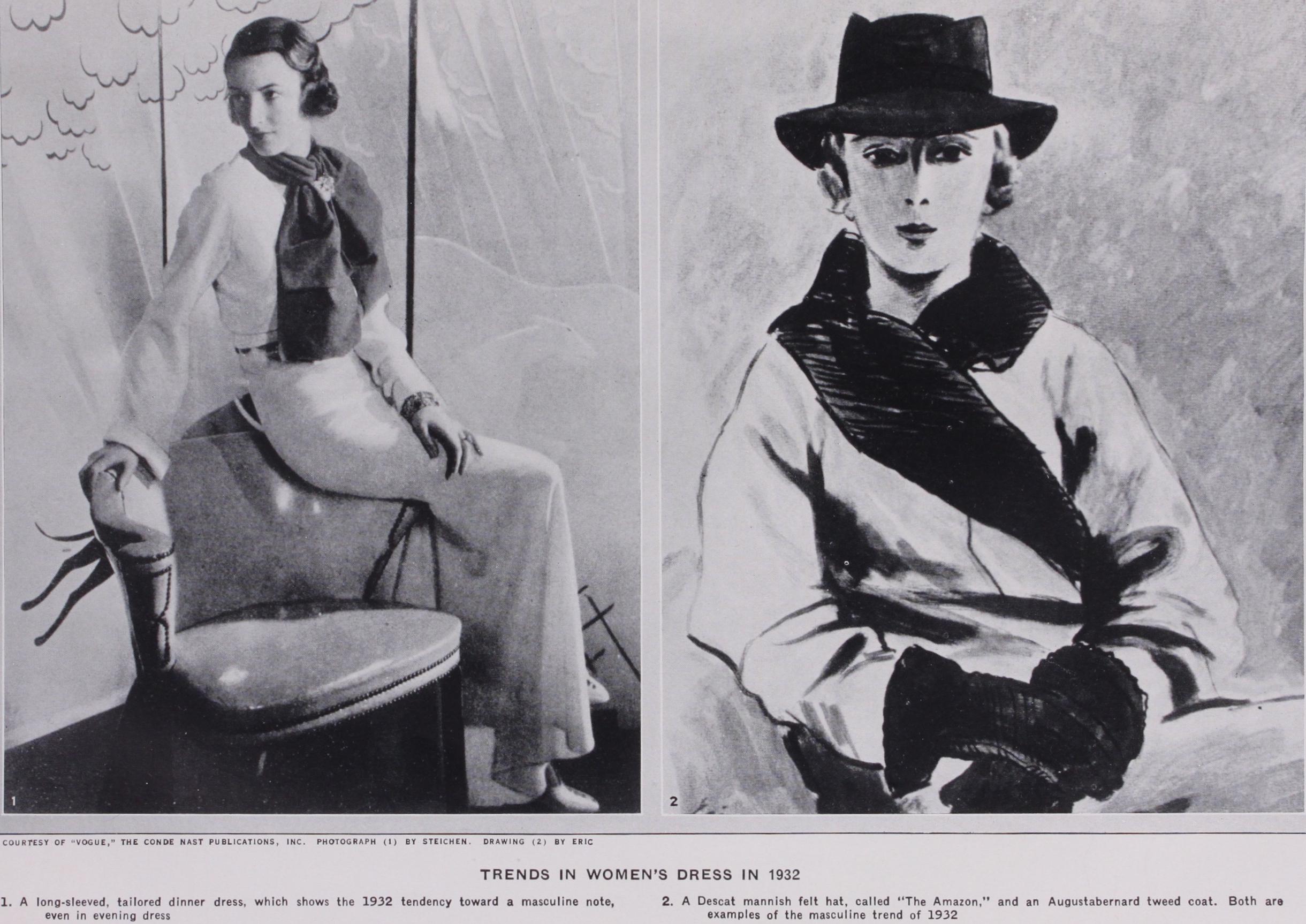
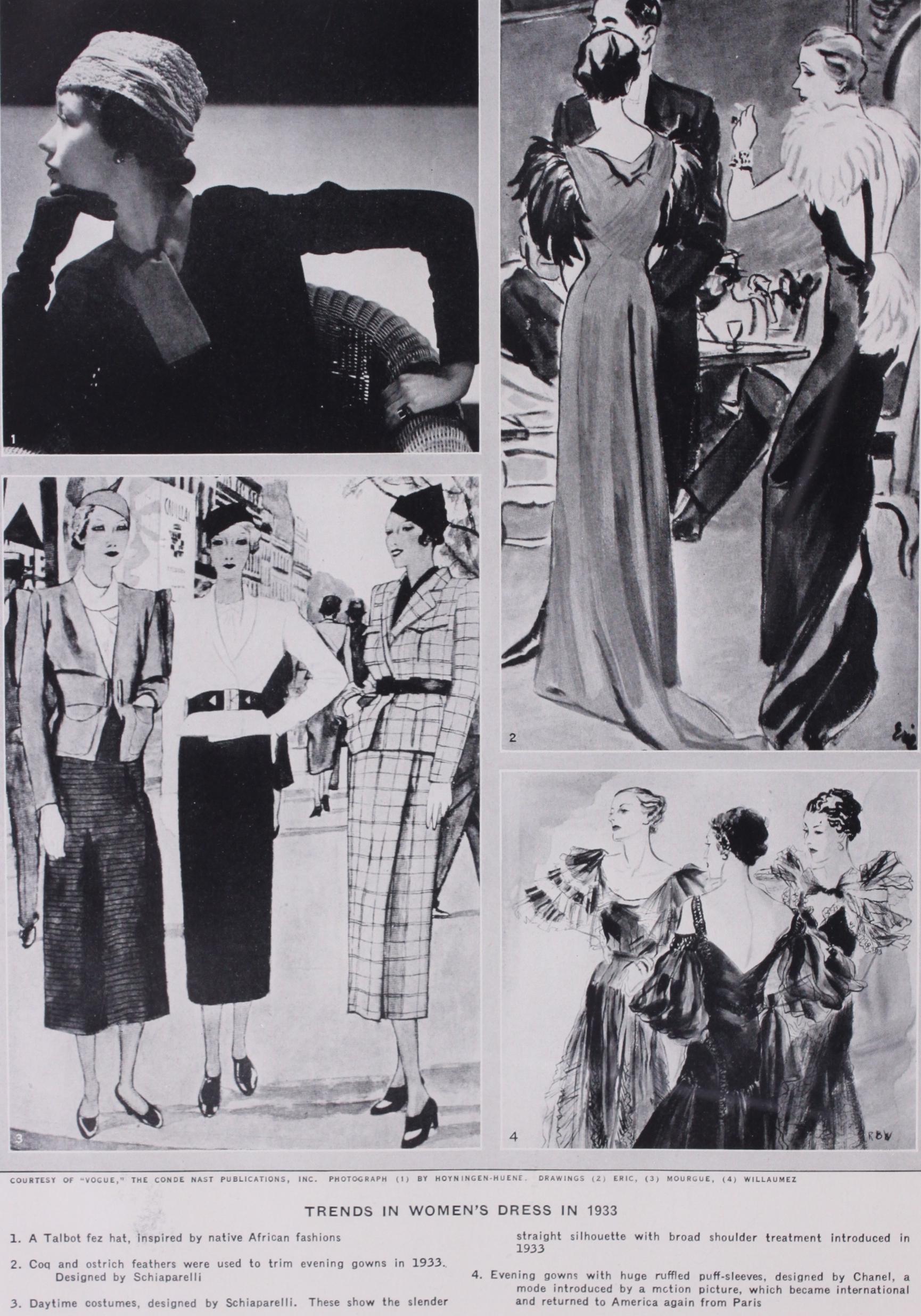
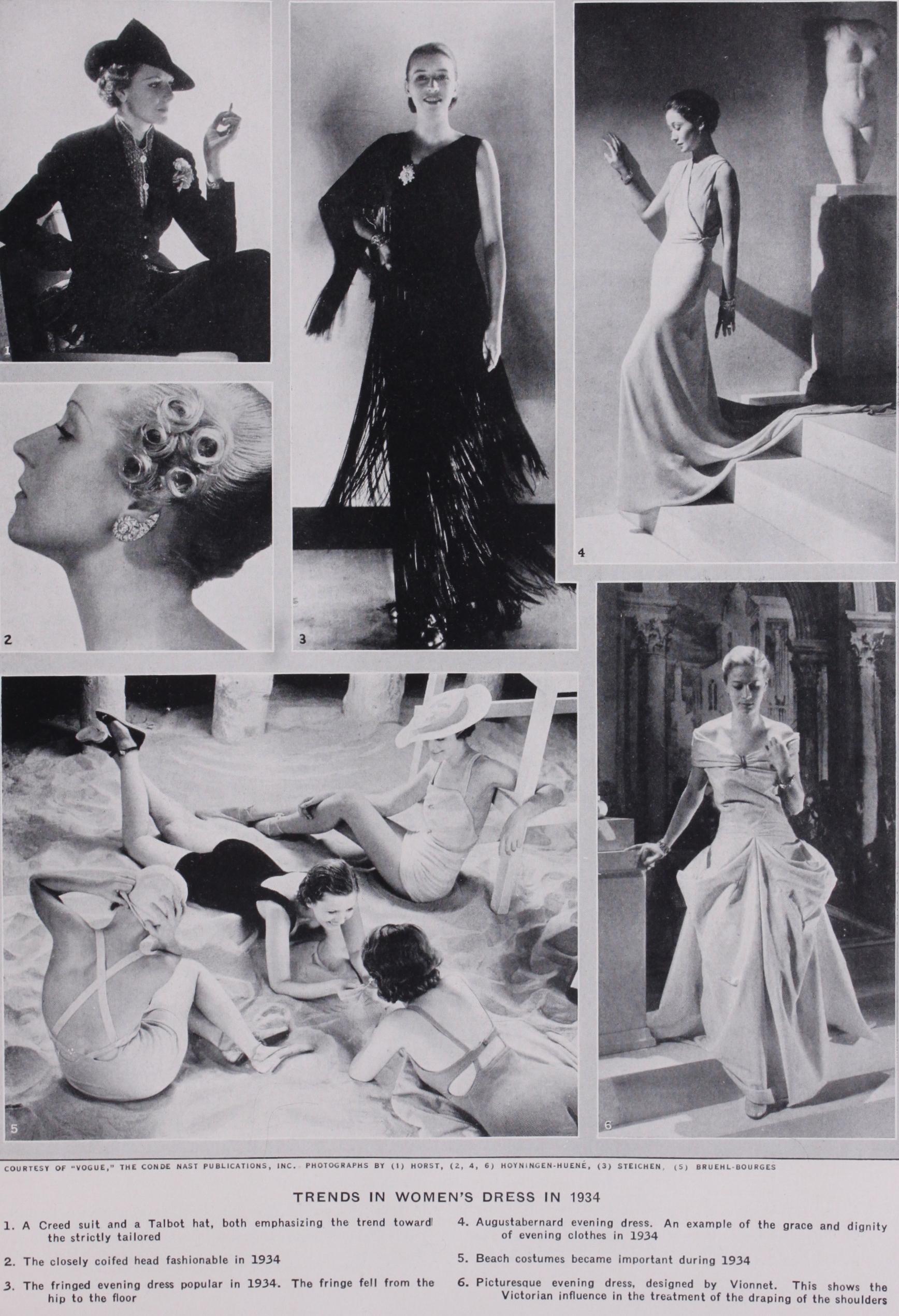
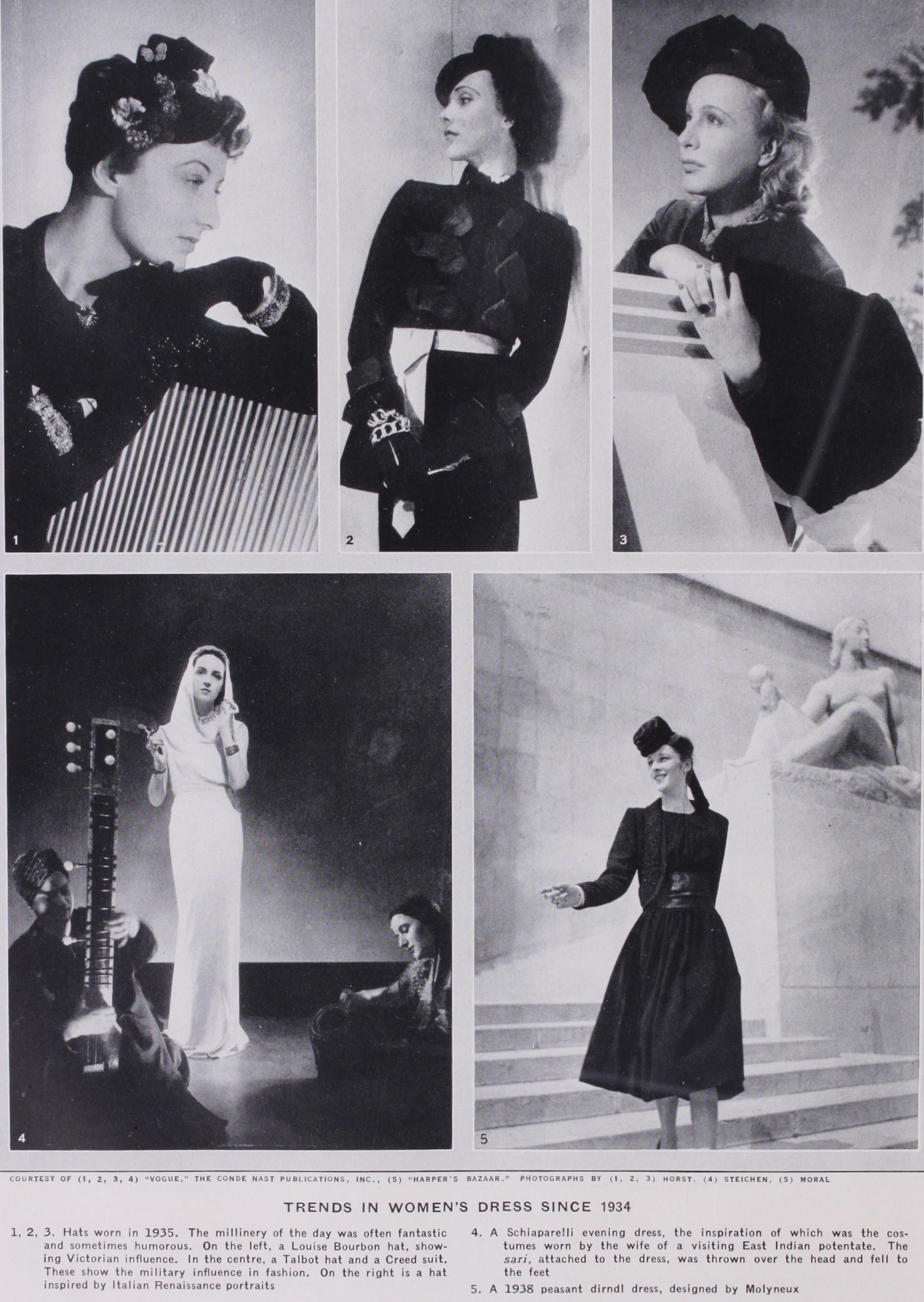
The German standard models were in the main not specially well-adapted to the non-German market. The women of Ger many are heavier in build—"stockier"—than their sisters in the principal importing countries, and although the German manufac turers were quick to appreciate this and to modify the cut accord ingly, still it was a compromise and benefited the maker on the spot who made exclusively for, and knew precisely, the needs of his own womenkind.
Growth of American and British Costume Trade.—The industry abroad began to get into stride, particularly in the United States and the United Kingdom. For the latter, 1897 appears to have been the pivot year, for, after spending on German mantles no less than 88 million marks, British consumers bought from the same source in 1898 only 65.3 million marks' worth, while in 1899 the drop was bigger still—to 28.4 millions. The decline in subse quent years was in smaller ratio, but steady, until the World War, when the cutting off of supplies from Germany stimulated manufacturers elsewhere to supplant entirely the products of that country, not only at home but in foreign markets. After the War German "ready-mades" began very slowly to regain their former markets, the volume of imports from that country into the United Kingdom, e.g., being valued at about half a million pounds ster ling; the actual figure ten years after the outbreak of hostilities shown by the Board of Trade official import and ex port list classification of women's and girls' outer garments of woven fabrics: (a) costumes, dresses, coats, skirts and the like, and (b) mantles and cloaks—was Machine-made Clothes.—Concurrently with the rise of the industry throughout the world, manufacturing processes under went remarkable development, and it may be said that there are now few figures and tastes which cannot be suited from the up-to date manufacturer's stock. The style, fit and finish of even the cheapest "lines" have come to be a technical triumph. Costly and elaborate machinery and processes enable garments to be turned out markedly superior to the bulk of the old-time dressmaker's or hand-tailored product, and quality for quality (speaking of ma terial) at about half cost. The term "mantle," originally in gen eral use, by which was understood in the main a loose-fitting coat or cloak, usually sleeveless and worn over the dress, is becoming obsolete. It is still in some use, as broadly denoting the industry, but in England manufacturers prefer to be identified with the "coat and costume" and in America with the "cloak and suit" trade, in order to get away from a word which associates the product too closely with the early German cheap trade. The coat, deriving from the mantle, is now important, but the costume and suit, the complete dress consisting of coat and skirt, are the basis of the industry.
The trade owes much, however, in connection with the devising and perfecting of scientific, speedy and efficient processes of pro duction to America. American manufacturers set a standard of excellence in this field, in the making of apparel, both for men and women, for all the world to follow. They were the first to realize the great possibilities of the trade and to determine to re move from it the deserved reproach which hitherto had attached to "ready-mades" and all too often had signified "slop made." They saw that it need only be a question of research, organization and patient improvement of mechanical processes to enable their factories to turn out garments to suit the figure, purse and taste of every conceivable type and class of wearer, and it is well recognized now that in the United States, above all countries, the woman shopper can walk into a store and in the majority of cases be supplied from an immensely assorted stock with a costume or dress which not only exactly meets her fancy as regards fashion, material, colour and accessories, but fits her elegantly, no matter how widely she may diverge from the average or "stock" size. Height, Width and Girth.—Quite in the early days of the gar ment industry in the United States steps began to be taken to al low for every variation of the human frame, in height, width, posture and girth, the requisite fullness or reduction of material and measurement being provided, in their minute differences, by no chance or rule-of-thumb methods but on a scientifically-based system of anthropometric variation—such as, for example, that propounded by the late Dr. Henry Wampen to the effect that, in the case of abnormal figures, height or depth quantities are to be calculated from a scale based on the height of the figure, while width quantities are to be based on the breast circumference.
In comparison, the manufacturers of other countries were slow to realize how much the future success of the trade depended upon their ability to cater for the almost infinite series of gradations in the human figure, with the result that for a long time, as in Eng land, the chief customers for "ready-mades" were those of "stock size" proportions rather than those not of the average. Seek ing to meet all requirements, the United States took the lead, and still retains it, so far as bulk production on the biggest scale is concerned, and to its enterprise in this particular section of the industry is due to no small extent the fact that American women are among the most smartly-dressed of any women in the world.
American methods of production in both the women's and men's ready-to-wear trade, involving so or more principal separate processes, hand and mechanical, and numerous minor operations, American methods of subdivision of labour, and also the types of plant used in the States, are now models for the apparel industry in all countries. It is difficult to estimate the precise extent of the trade in America, as the census returns associate together manufacturers in related branches of trade. Taking as some guide the corporation income tax returns which the United States au thorities have published in recent years, we find that in 1924 the number of corporations in the women's and children's clothing and suit industry was put at 1,664, and that they paid tax on profits of $8,210,038. As the figure 1,664 is the fourth highest, in regard to the number of corporations engaged per industry, in a list taken from a report obtained for the purpose of this article, it is clear that the American cloak and suit trade, comprising pri vate firms in addition to corporations, constitutes a very important part of the manufacturing activities of the United States as a whole.
English Styles.—There is a certain demand for English styles in women's costumes in the United States. In 1926 the purchases of such garments from the U.K. amounted to . 59,33o; the U.K. in return purchasing in 1925 (last available figures) L15,771 worth of U.S. costumes, etc.
To return to the trade of the United Kingdom, women's ready•• to-wear garments of the category under discussion are bought principally from (in addition to Germany, figures for which have already been given) France, Belgium, Switzerland, Austria, the Netherlands, Italy and Czechoslovakia. In 1924 the British im ports from France were valued at f 3,08 7,000.
In estimating values, also, the course of the French franc since the World War needs to be borne in mind, together with the low cost of labour as compared with that of the United Kingdom.
In 1926 the British exports of fabric garments were worth f 1,890,000. The British colonies and dominions are by far the best customers of the British costume manufacturer. As to the geo graphical distribution of the trade in the United Kingdom, London is an important centre as regards both manufacturing and distribu tion. For wholesale distribution, the earliest and still a consider able centre is St. Paul's churchyard, Cannon street, Friday street and Old Change, London. At the manufacturing end, the industry is also firmly established in a number of provincial towns and areas, including Manchester (where a speciality is the raincoat and waterproof), Leeds, Glasgow, Bristol, Birmingham and Bradford. (C. J. S.)