
ONDARY EDUCATION IN THE U.S.) In England it underlies the pro posals of the Report of the Consultative Committee of the Board of Education on the Education of the Adolescent (1926). It has also inspired the post-war changes in the State systems of the Ger man Reich. In part these developments have no doubt come about because modern industry and forms of government demand in the average citizen a higher standard of knowledge and training than formerly sufficed. But the fundamental explanation is to be found in the conception that a community should place the best oppor tunities of self-development and realization within the reach of all of its members who are capable of profiting by them.
Curriculum.—(For United States see below.) From these con siderations it is natural to descend to the curriculum. What ought boys and girls to learn at school? The principle underlying any sound answer to this question follows from what has already been said about the purpose of education. It is the function of the school, continuing, supplementing and (too often) correcting the influences of family life, to bring to bear upon the pupil the spiritual forces which are typical of the national ethos and to train him to take his part in conserving and developing the life of the community.
To perform that function a school must, in the first place, be a genuine society inspired by the best ideals of the national char acter and therefore able to transmit to and confirm in its pupils the traits which enter into those ideals. The so-called "public schools" (q.v.) of England have won their repute mainly because they are deemed to have been successful in this fundamentally important part of the work of a school. It is well-known that respect for physical vigour and prowess, good manners, public spirit, self restraint and a training in the responsible use of freedom and self-government are the main ingredients fused in the powerful social ideals of those schools. All these are valuable elements in the formation of any citizen, and should, accordingly, find their place in the life of schools of every type.
In the second place the school must offer its pupils instruction in a number of "subjects." Here the principle we follow admits of a variety of interpretations. One may take either a short or a long view of the life and needs of the community. Upon the short view the community requires at the moment certain kinds of knowledge and skill to carry on its economical and other activities; and it is the business of the schools to turn out young people equipped with such forms of knowledge and skill. Upon the long view it is less important to consider the utilitarian needs of the present day than to bring the pupil into fruitful contact with those elements which are deemed to have most enduring and vital significance in the historic life of the people. The contrast between these views develops in different ways into the antitheses between a "vocational" and a "liberal" education, between a "modern" and a "classical" education and, less directly, between an education that stresses the value of knowledge and one that emphasizes the importance of "mental training" or "discipline." A well-based theory of the curriculum should find a place for all that is sound in the conflicting ideas involved in these antith eses. Such a theory must undoubtedly start from what was called above the long view. In other words its leading principle will be that the school society must include among its formative influences all those modes of intellectual, aesthetic and practical activity which have played a major part in the evolution of the human spirit and have shaped the mind of the present age. Letters and art, music and handicraft, mathematics and science, geog raphy and history are thus indicated as necessary constituents of the complete curriculum; but not only may they enter into it in a variety of ways, they must do so if the principle is to be elastic enough to fit the varying needs of different types of scholars. For instance, training for a specific vocation conforms with the prin ciple if it aims not merely at imparting skill in the use of tools or empirical technical knowledge, but at putting the learner to school in the ethical and scientific or aesthetic traditions of some essential occupation or profession which has played and con tinues to play an important part in our civilization. Thus con ducted, a vocational training may be, for large sections of the population, the appropriate way of completing and rounding off a truly liberal education. On the other hand a training based mainly upon the study of the ancient classics is not entitled to be called liberal unless given in such a way as to make the student a freeman of the modern world, sensitive to its ideas and awake to the significance of its intellectual and social movements.
The idea that the cultivation of mental training or discipline is one of the chief aims of education has played and continues to play so large a part in educational theory and practice that it needs careful analysis. It is expressed in a popular and epigram matic form in the statement that a man's education consists in what he retains after he has forgotten everything he learnt at school. But the interesting question is : What does he retain? According to the cruder view school studies serve to develop cer tain faculties or powers of the mind, and that development is the real reason for pursuing them. For instance, the Latin verses a boy learns daily may all be forgotten soon after he leaves school, but (it is held) the learning has served to strengthen his memory, and that is its sufficient justification; he may never have occa sion to use the knowledge of chemistry and physics he has ac quired, but that does not matter if he has gained from those studies powers of observation and inference which are universally valuable and the habit of applying the scientific method to all sub jects of discussion. Similarly, geometry is held to train one's reasoning powers and algebra to develop mental accuracy. The assumption made here is that the strength or training a faculty acquires by being exercised upon a particular kind of material fits it to deal competently with any other kind of material to which it can be applied. The weakness of the argument is that in the eyes of modern psychology this assumption is, to say the least, very questionable. It has, for instance, been shown clearly by most careful experiments that a person who "trains" his memory by (say) prolonged exercise in learning verse is rid better able than before to remember the substance of a prose passage. Similarly there is no reason to believe that an acute observer in the field of botany or geology has acquired by his training a quickness and sureness of eye that will serve him usefully when he drives a motor-car through the streets of London. Ascertained facts and general considerations such as these have tended greatly to dis count the idea of mental training ; yet it is difficult to suppose that there is nothing in a notion which has been held not only by thinkers of the eminence of John Locke but also by a long line of able and experienced schoolmasters. The clue to the right view of the matter was given by Herbert Spencer who, in his famous work on Education, declared, in effect, that the antithesis between the knowledge-value and the training-value of school studies was a false one. If, said Spencer, we give our pupils the knowledge which is "of most worth"—that is the knowledge which has indispensable practical value in regulating the affairs of life—we shall at the same time give them the best possible mental training; for it is incredible that the pursuit of the best kind of knowledge should not also afford the best mental discipline. This interesting dogma must, as far as Spencer himself is concerned, be regarded as part of the faith of an evolutionist ; but it may also be regarded as following from the general principle of the curriculum stated above. The most educative activities, it was said, are those which have made the most essential and enduring contributions to the tissue and growth of civilization. Those contributions have actually been brought about by the geniuses of the race : the great artists, craftsmen, poets and men of letters, musicians, men of science, statesmen. They have shaped and refined the activities to which they gave themselves and have thus created traditions of activity, intellectual, aesthetic, practical, having defi nite and characteristic forms. In this way the traditions of poetry and fine letters have grown up out of the universal habit of com munication by speech, architecture and the crafts out of the universal needs of the physical life, science out of the universal gift of curiosity and the equally universal need of exact knowl edge for endless practical purposes, and so with the other cardinal activities represented in the curriculum. In so far as a pupil's studies tend to affiliate him to these traditions or to enable him to absorb them, so far his mind acquires the form and habit of the great minds that fashioned them and is disciplined, In short, the discipline of school life and studies consists in learning to become in a small way a brother-poet to the poets, a fellow-crafts man with the craftsmen, an inquirer looking out upon the world through the eyes of the men of science, and a citizen following the civic ideals of the great citizens. Discipline or training of this kind is concrete, not abstract, and is of universal value because the activities which give it are the fundamentally important activities of civilized life.
Nothing has hitherto been said about religious instruction as an item in the school curriculum. Little can be usefully said in a brief review, partly because the term religion embraces so im mensely complicated a mass of phenomena, partly because men's attitudes towards religion are so varied and are often in such deeply felt opposition. Besides the adherents of warring creeds there are many (by no means necessarily disciples of Karl Marx) who would teach morality without religion because they hold religion to be a spiritual disease or at best an illusion of the child hood of humanity which should disappear from modern life. Per sons who hold that extreme view would exclude religious instruc tion upon the principle which would normally be thought to make its presence in a school essential—for they deny that it represents a factor of vital and enduring value in the life of nations. It may nevertheless be maintained that even these intransigents live by a faith which sees supreme value in certain ideals, recognizes that those ideals rightly demand service, and has some influence in "cleansing the inward parts." If it be granted that any such faith must be called religious because it is of the essence of all true religion, then the doubt whether the general principle of the cur riculum applies to religious instruction disappears; for it must be admitted that religion in this wide sense is one of the cardinal factors in the maintenance and development of human communi ties, and therefore that religious instruction must necessarily be a factor in the school society. But there remains the question of the relation between religious instruction, in the very general sense here given to the name, and the specific creeds, and this is one upon which agreement is not easily to be reached, even in principle. Probably the proposition that will lie most widely ac cepted is one which seems to follow from what is now known about the general features of mental development : namely, that the credal elements in religion, being of the nature of an organized theory about the sources and objects of religious devotion, should at least be little emphasized until the age of adolescence. But even if this proposition be granted, its application leaves abundant room for controversy.
School Government.—Somewhat the same theoretical diffi culty arises in connection with the broader question of school government. There is no ignoring the fact that the school society rests upon an artificial form of compulsion essentially different from the compelling forces which bear upon the citizen of the great society. In brief, the essence of the school polity consists in a regulation of the lives of the young by adults for purposes which the adults have selected. Yet since the chief of these pur poses is that boys and girls may learn to live worthily, as men and women, the common life of the great society, it would seem that the fundamental features of that life should in some form be represented in the school society. The uncertainty about the application of this principle is naturally greatest where the demo cratic faith .still prevails. In recent years a good many attempts have been made in England, the United States, Germany and elsewhere, to conduct school government upon a thorough-going democratic basis, the pupils exercising, together with their teachers, the functions of the legislature and the judiciary in their little state. Experiments of this kind, opposed as they are to deeply engrained traditions concerning the upbringing of children and (some psychologists would add) to deeply rooted impulses towards the exercise of power, were bound to meet with great difficulties. They seem to have been most successful where it was b. question of redeeming young delinquents whose faults were due less to corruption than to the misdirected actions of authority. Elsewhere authority has tended to slip back into the hands of the adult members of the school society by whom it was delegated. Nevertheless a comparison, at any rate in England, between schools to-day and the schools of the last generation shows that there has been a notable general advance in the direction which the bolder reformers may have followed too far. The autocratic attitude once generally characteristic of teachers has been sensibly modified; in effect they act not as absolutists imposing their will upon their subjects but rather as the natural guardians of an order which it is the interest of all to have maintained. And in addition to this implicit but very real appeal to the consent of the governed there is in schools of all kinds an increasing tendency to entrust authority and management to pupils who are old enough to under stand and to bear the responsibilities involved. Here is a principle which goes a good deal farther than the oligarchical principle of prefect-government as Arnold (see ARNOLD, THOMAS) conceived it; for it recognizes that self-responsibility, exercised under ade quate adult supervision, is highly educative at all stages in the growth of character.
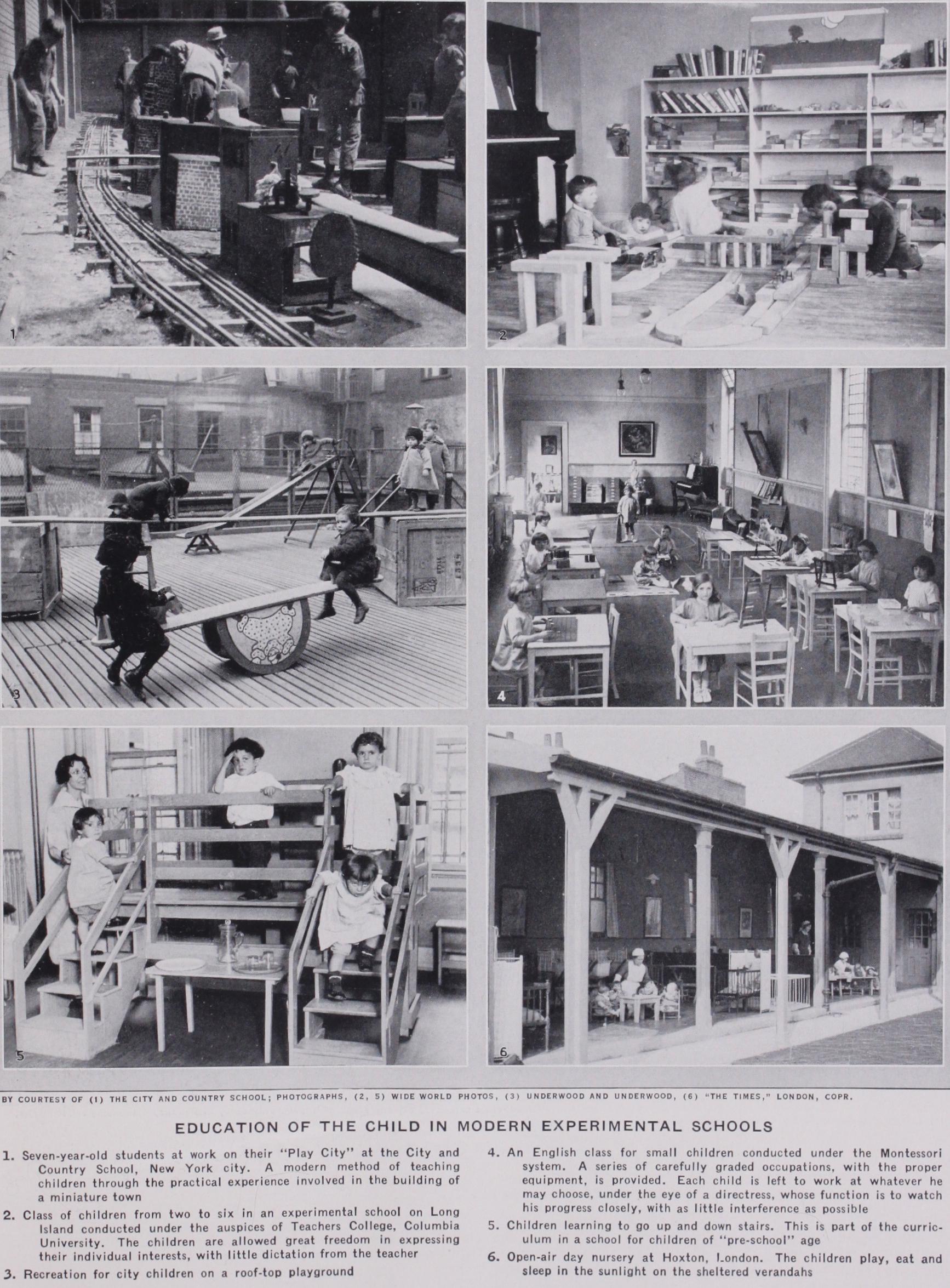
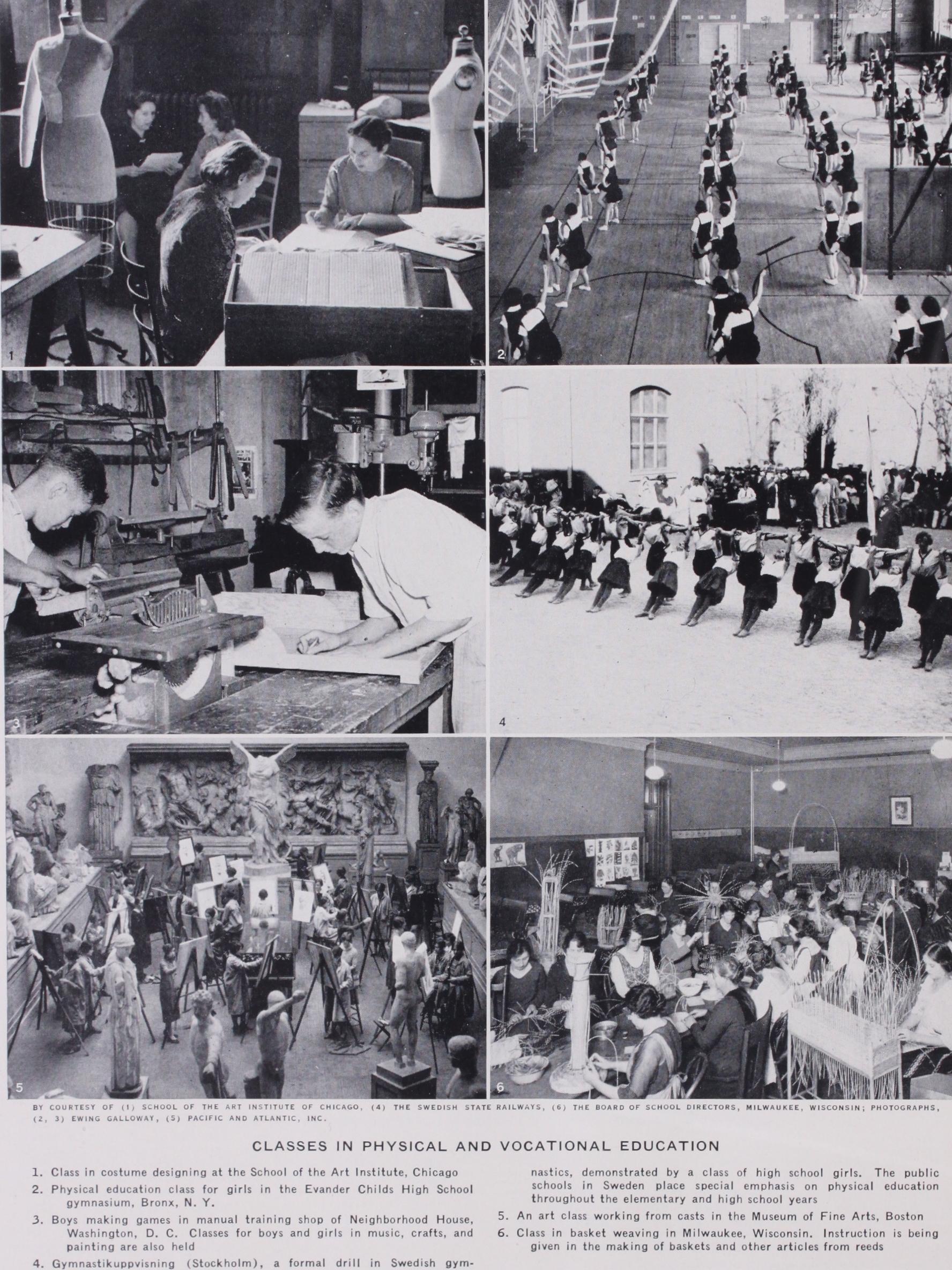
Punishment.—An important change of attitude with regard to the theory of the government of children entails a change, equally radical, in one's attitude towards punishment; for punishment (whatever else it may be) is an instrument of government. It is scarcely if at all too much to say that it was once the main instru ment of government in schools ; but the schoolmaster no longer uses it, especially in its more violent forms, with the old confi dence in its propriety and efficiency. This is not due merely to the humanitarianism of the age, for, with increasing understanding of the theory of his profession, the teacher feels with increasing discomfort that the necessity of punishment is often a symptom of discordance between the true needs of his pupils and the general conditions of school rife—a discordance for which he is largely responsible. Accordingly he is less prone to turn to repres sion as a remedy for evil than to seek to amend those conditions. Such a policy is in conformity with the general principle that the function of the school is to encourage positive activities of a wholesome and valuable kind and that moral as well as mental discipline comes by learning to do the right thing in the right way. No doubt perversity will crop up in a school no matter how scientifically it may be conducted; for the schoolmaster has to reckon not only with his pupils' human tendency to err but also with the unwisdom of parents in their early dealings with that tendency; the elimination of wrong-doing and its correlative punishment is accordingly a consummation which no one is likely ever to see, however devoutly it may be desired. Nevertheless the treatment of youthful wrong-doing without sentimentality, along scientific lines, promises a vastly greater amelioration than blindly repressive methods ever secured.
By Plato and Aristotle the theory of education was considered in close connection with political theory and in the foregoing dis cussion the lead given by those great thinkers has again been fol lowed; it was, however, not easy to exclude references to other sciences whose development has had to await modern times. Of these sciences ancillary to the theory and practice of education the most obvious is psychology. To psychology all writers on edu cation have had to make some appeal, since all have been com pelled to recognize that teaching and training cannot be effective in the absence of knowledge about the mind which is to receive them. It must nevertheless be admitted (though the criticism does not justly lie against Aristotle) that until recently the professional psychologists, owing to their preoccupation with the purely intel lectual processes, have given less help than might have been ex pected in the elucidation of educational problems. The pedagogy of Herbart and his successors threw valuable light, it is true, upon the nature of interest, and prepared the way for the modern treatment of this centrally important topic ; but academic psychol ogy had, on the whole, comparatively little to give the educator until it was fertilized by contact with the conceptions of biology— especially with master-conceptions of growth and development and the notion that mental, like physical, behaviour is to be re garded as a reaction to environment. Herbert Spencer, whose Principles of Psychology first appeared in 1855, must receive credit for initiating the new orientation of psychology. In James Ward's famous article in this Encyclopaedia (1886) there was effected a fusion between some of Spencer's ideas and the concep tions of Kant and the German school of psychologists, while in William James's unsystematic but vastly influential Principles of Psychology (1891) the influence of biological science was strong and apparent. The "child study movement" in America (see EDU CATION, SCIENCE OF) and elsewhere was a significant expression of the new tendency to look at human behaviour and development from the biological point of view; it produced in Stanley Hall's Adolescence (1904) a monumental work in which that tendency dominated almost every page. The same tendency was expressed more formally in William MacDougall's theory of instinct, first worked out fully in his Social Psychology 0908). The trend of the biological school of psychologists towards external observa tion as opposed to the introspection of the older school has in recent years reached its extreme limit in the "behaviourism" of the American psychologist J. B. Watson and his followers. Be haviourism rejects introspection as a means of gaining psycho logical knowledge, substituting observation of the reactions of human beings under clearly defined experimental conditions. The investigations in the laboratory of the reactions of very young children now being conducted by workers in this typically modern school may lead to interesting results. Meanwhile it is claimed, with some justice, that some of the most useful applications of modern psychology to education—especially the whole field of "mental tests" (see EXAMINATIONS)-are, in principle, applica tions of behaviourism, in as much as they consist in the study not of events supposed to occur in the child's mind but of his observ able reactions to situations deliberately arranged.
Among the features in current educational psychology which derive from the influence of biology are the studies that have been made of the meaning and function of play, the role of imitation and suggestion in the genesis of individuality, and the exploitation of McDougall's theme that the complexities of adult human behaviour are developed from a moderate number of dis tinct sources of energy—the instincts—which, unlike the corre sponding instincts in the animals, are indefinitely plastic and capable of entering into the permanent systems called by Shand "sentiments," and regarded by him as the main constituents of human character. From biology, again, came the "functional psy chology" of John Dewey, his pragmatic theory of reasoning, and the applications of his doctrines in pedagogy (see below) .
It may also be remarked here that hygiene, which must be included among the sciences ancillary to the theory and practice of education, has tended in recent years to be not merely a body of applications of human physiology but to derive from biology a broader outlook. It is, in brief, becoming a study of the best conditions and ideal development of the physical human life as a biological process.
In spite of a good deal of hostile criticism the movement which may be called comprehensively, if not very accurately, the psy chology of the unconscious (q.v.), is now seen to have increasing importance for educational psychology. In this field the dis coveries and doctrines of Freud attracted most attention, though those of Jung and Adler are not to be ignored. It is well known that Freud attached very great importance to the role of sexuality (defined in an extremely wide way) in the development of mind and character, and referred most disturbances of that development to deviations from sexual normality in the earliest stages of life. It remains to be seen whether his interpretations will survive further knowledge and criticism without considerable modifica tion ; but there can be no doubt about the general truth of his conceptions of the influence upon behaviour of unconscious fac tors, of the early origin and persistent activity of some of these factors, of the harmful effect of unconscious mental repressions and conflicts, and of their profound bearing upon the happiness, conduct and mental efficiency of boys and girls as well as of adults. Further it can hardly be questioned that many of the perversities which bring young people into conflict with authority and many weaknesses and misdirected developments of character are first caused by unwise or wrongly motived parental treatment, or, in general, by abnormality in the relations between young children and those upon whom they are dependent. In his later works, too, Freud had begun to work out ideas upon the nature and growth of the ego or self which seem likely to have much value for educators.
Experimental psychology, if it has not fulfilled the rather extravagant expectations of some optimists, has nevertheless made some useful contributions to educational science. It has thrown valuable light upon processes of memorization and learning and the nature of some of the higher intellectual processes ; it has exploded some fallacies on the subject of mental training; above all it has given birth to the idea and guided the practice of mental tests. Possibly of more far-reaching importance than the practical applications of experimental psychology in education are the de velopments of theory to which it has led. Among them a promi nent place must be given to Spearman's "two factor" theory of intellectual ability, his formulation of the three noegenetic laws in terms of which he analyses all mental processes, and the "form psychology" of some recent German writers. All these have an important bearing upon general educational theory or upon the principles of teaching.
Comparative psychology is a science which throws useful side lights upon educational problems, particularly through its studies of the growth of habits and of rudimentary reasoning in the higher animals. Mention must also be made of anthropology and the psychology of primitive races. These branches of learning, though still young, promise to illuminate not only questions concerning the education of the races for whose welfare the more civilized nations have accepted responsibility, but also to bring into relief principles that have importance for education wherever it is practised : for instance, the necessity of relating instruction to the actual needs and conditions of life of a people, and the influence of differing mental backgrounds upon the attitude of men towards their fellows and towards nature. (T. P. N.) The science of education is the systematic study by exact methods of all phases of the educative process, and is being rapidly extended. One of the earliest advocates was Herbart, the German philosopher and educator. He took the position that if education is to be scientific, it must be guided by psy chology, the science of human nature, and by ethics, the science of social behaviour. The psychology and ethics of his day, how ever, were so theoretical and so deficient in scientific methods that he found it impossible to justify the practical suggestions which he made regarding educational methods. It remained for a later generation, and for the educators of America to develop a science of education.
One group of followers of Herbart did much to improve meth ods of teaching. Another endeavoured to improve the technique of scientific investigation of mental phenomena. As a result of the efforts of this second group empirical psychology was de veloped. Wundt, the founder of modern experimental psychology, frequently acknowledges his indebtedness to Herbart and the investigators who adopted Herbart's methods of psychological analysis. It was not, however, until empirical psychology was transplanted to America during the '8os, that it became possible to apply psychology to the study of school procedures and results.
The schools of Europe were and are conducted under the direct supervision of the central Government, and are not readily sub jected to critical examination by scientific methods. American schools, on the other hand, are locally controlled and are so variable in their practices that they encourage studies of their relative efficiency.