Lace
laces, industry, workers, century, developed and thread
Germany.—The German presses produced the earliest pat tern books, and German lace de rived its technique from Flemish workers who emigrated at the time of the Spanish Inquisition and settled in Saxony. German tradi tion centres about the historic figure of Barbara Uttmann who, in 1561, organized an industry that developed rapidly and in time employed some 30,00o persons in the manufacture of lace work which had its origin in the net work used for miners' caps. Dresden in the i8th century was noted for its drawn-work, European fashion for the moment demanding "Dresden ruffles" and "Dresden aprons." Drawn-work of this period followed contemporary lace patterns. In North Germany bobbin laces for native head-dresses, often referred to as Niiremberg lace, resembled the Valenciennes and Mechlin types but were worked with coarser thread which resulted in a much less delicate texture. In central and southern Germany the i8th and early i9th century peasant laces, like those of Russia, are of the serpentine braid` type, coarsely worked on crudely drawn pat terns; modern peasant laces from this district are of the coarse torchon or Cluny variety. In the 19th century black silk guipure laces were made in Saxony.
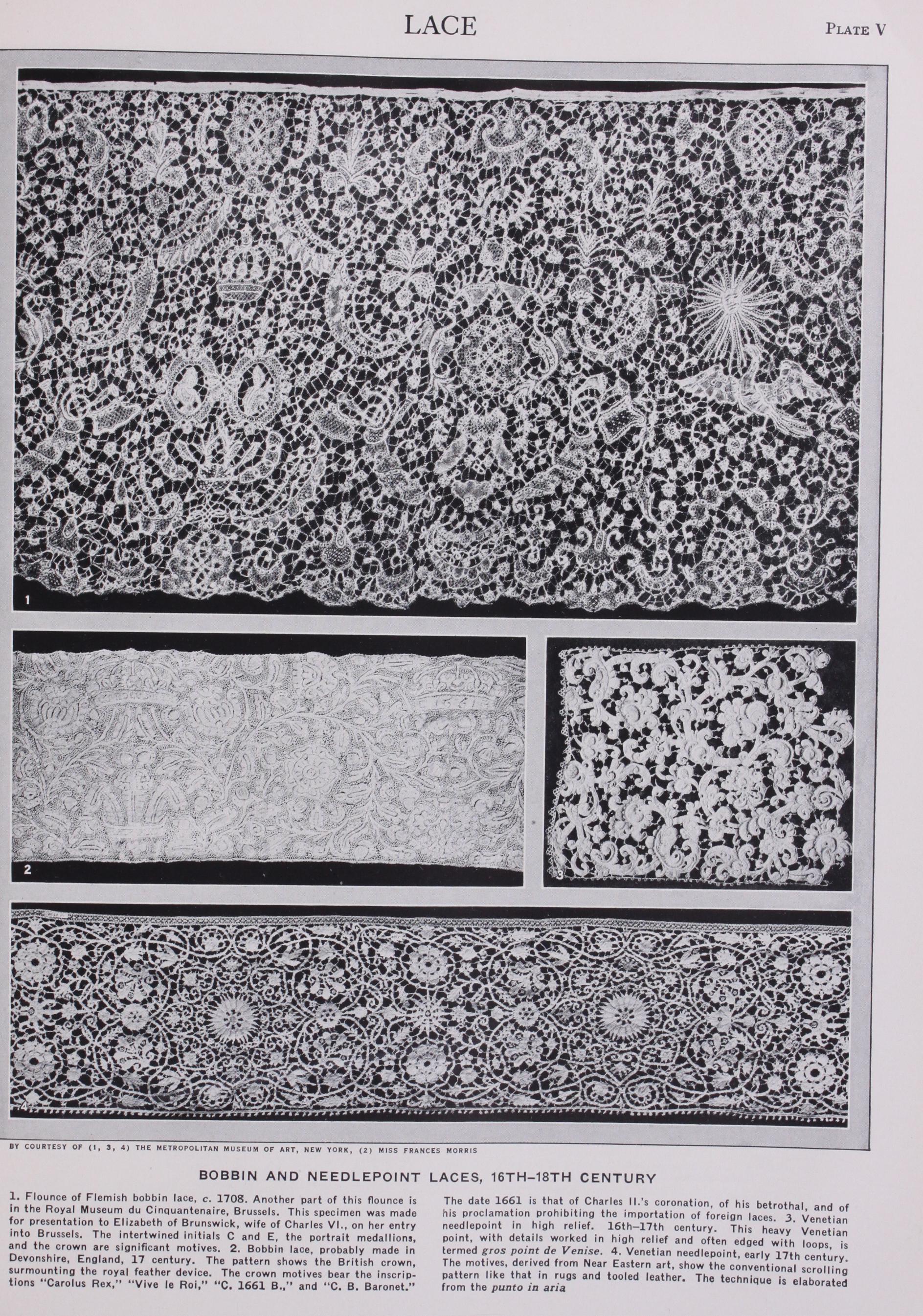
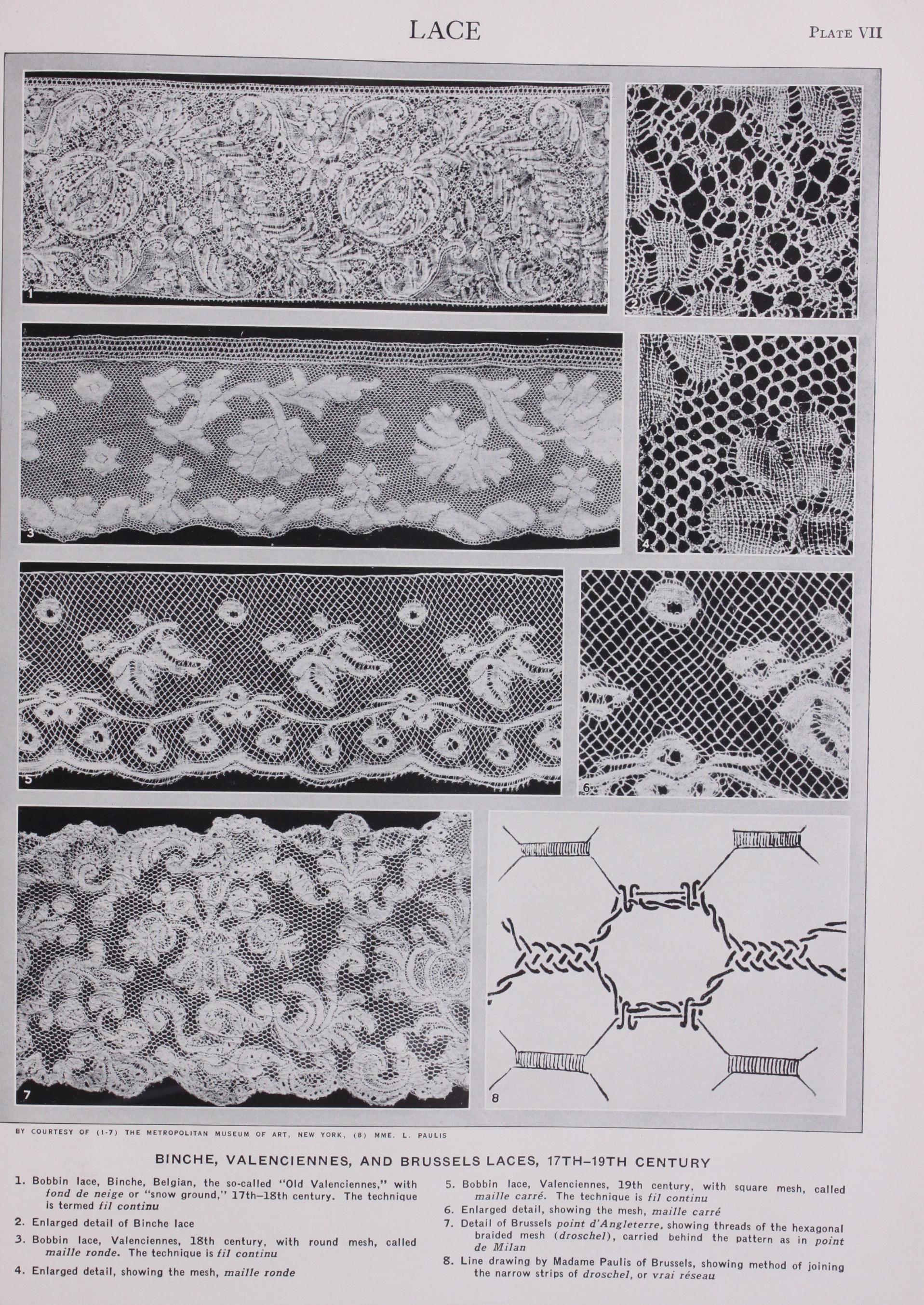
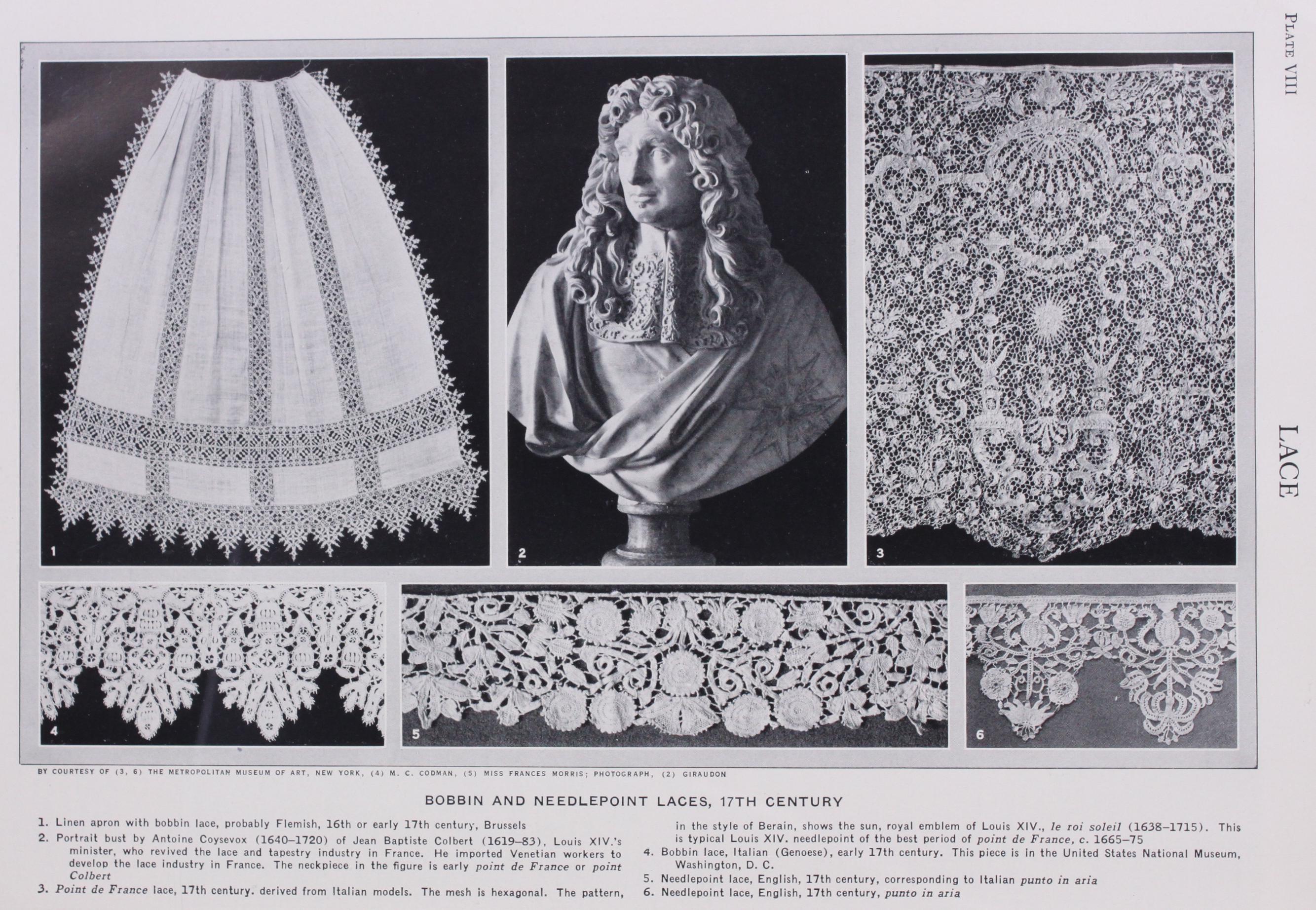
Switzerland.—Here also, the first lace-workers were immi grants, French refugees having settled at Geneva in the 16th cen tury; its most important centre, however, developed at Neufchatel, where lace schools still teach the art, the laces produced resem bling those of Lille and Brussels. Switzerland also has to her credit the publication of several early pattern books, one printed in Ziirich in 154o, and another, a reprint of Vicellio's Corona printed at Saint Gall in 1593.
Denmark and Scandinavia.
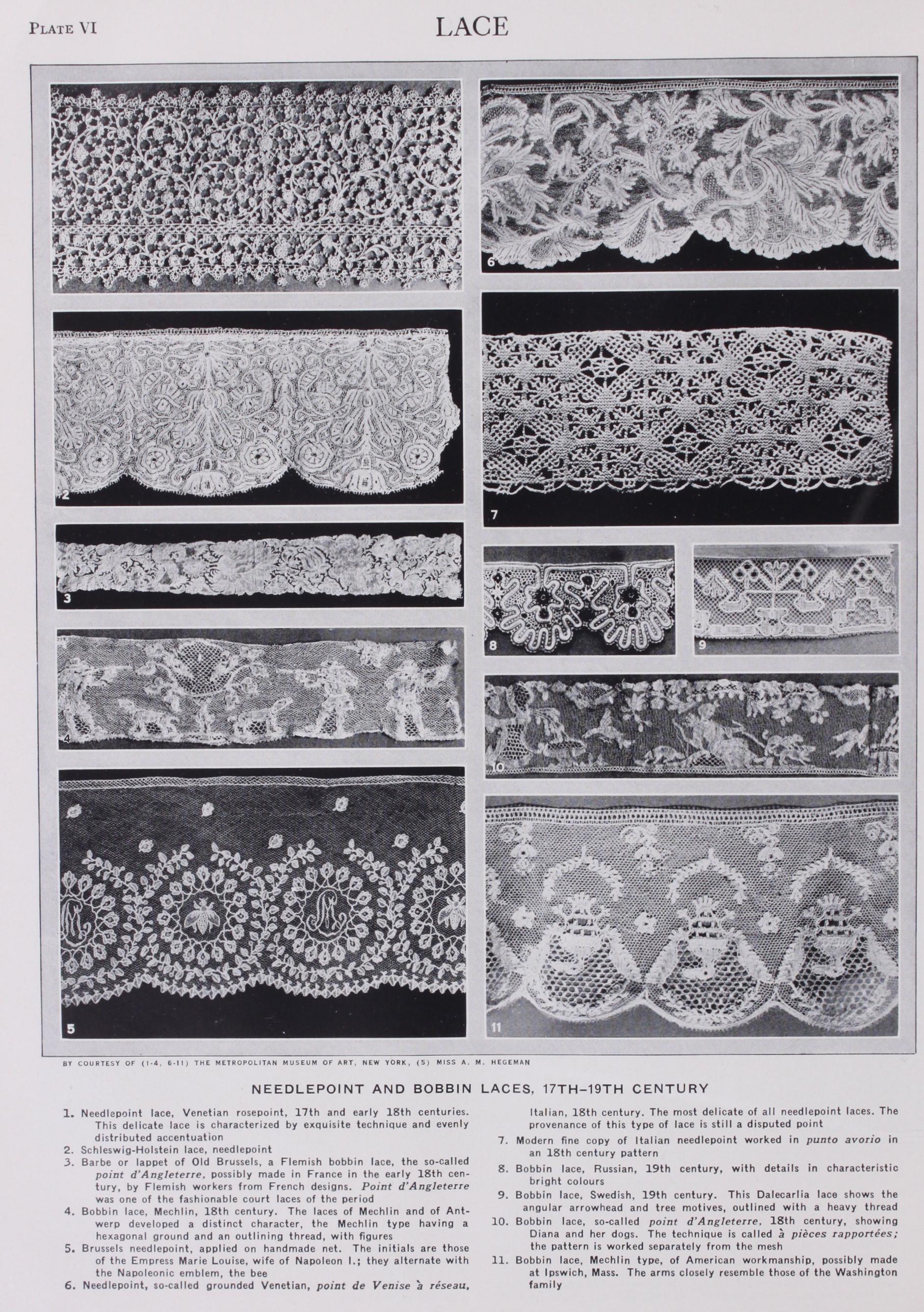
In Denmark an act of records the interest of Christian IV. in the native industry. What is described as Schleswig Holstein lace is that shown in the por trait of Christian IV. in the Hampton Court Palace collection, alace closely allied to that in the Charles II. fabric illustrated in Pl. VI. fig. 2. The industry at Tonder that in recent years has been revived was founded in 1647 when workers were imported from Westphalia to teach the art; the modern lace resembles that of Mechlin. Danish cutwork termed Hedebo is closely allied to similar Swedish work; the patterns are based on the Greek key motive. Native drawn-work follows the contemporary type found in France, Germany and the Netherlands. In Sweden the 17th century lace preserved in the Stockholm museum is of the same general type as the pointed bobbin laces of northern Italy. The modern lace industry centres are at Dalecarlia, Rattvik and Wadstena—the laces of Dalecarlia having the angular arrow head and tree motives outlined with a heavy thread, while those of Rattvik are made of finer thread worked in a lozenge pattern with no distinctive outline.