Landscape Painting
art, nature, claude, landscapes, french, painters and poussin
In the painting of landscape Rembrandt was much influenced by Adam Elsheimer and Hercules Seghers. He was not naturally a landscape painter and, like Rubens, did it in his advanced years. Being of all artists the greatest in intensity of feeling and the most profound, it follows that he would produce significant work in this field. His known landscapes are fewer than 15 in number. "The Mill" is probably the most outstanding.
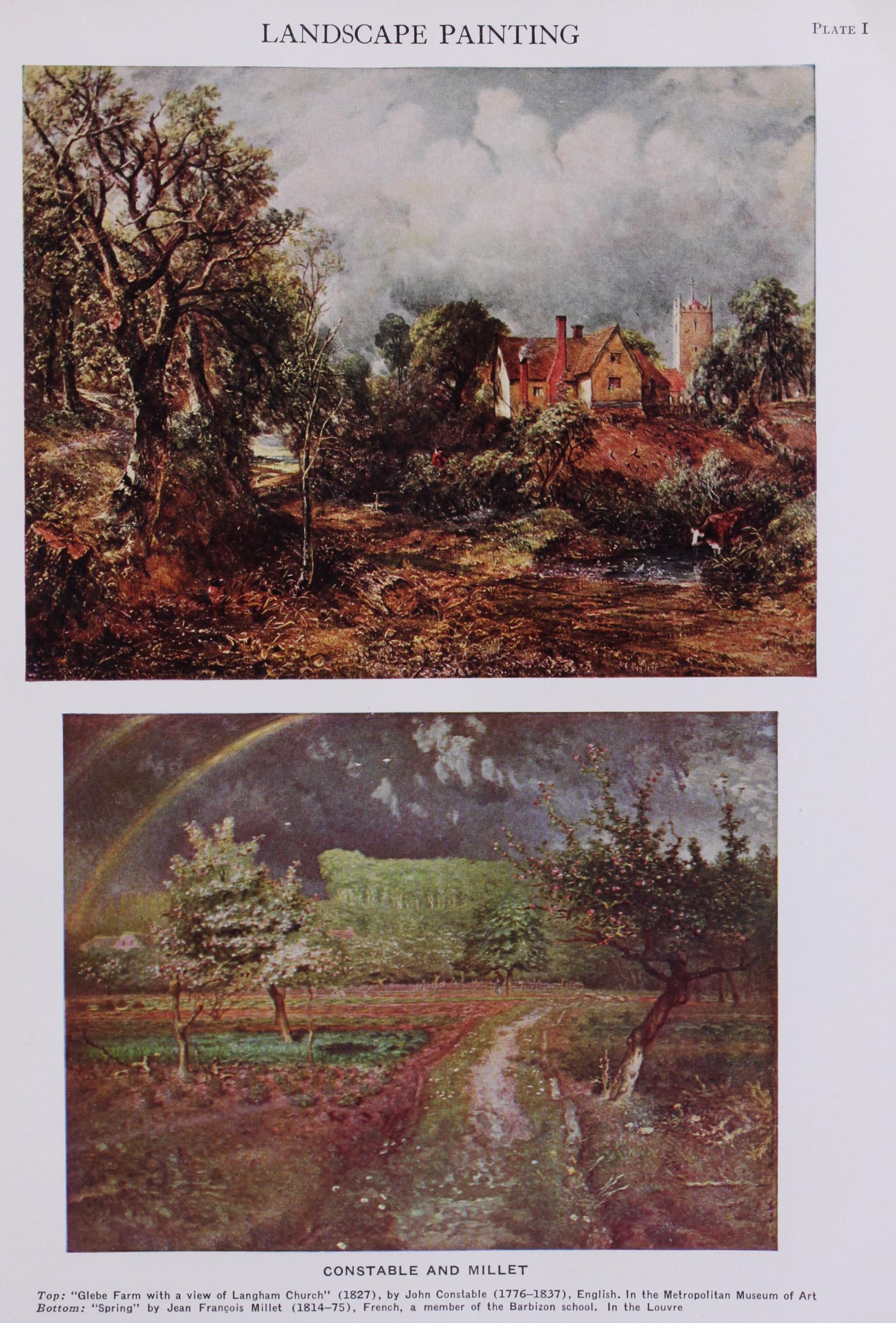
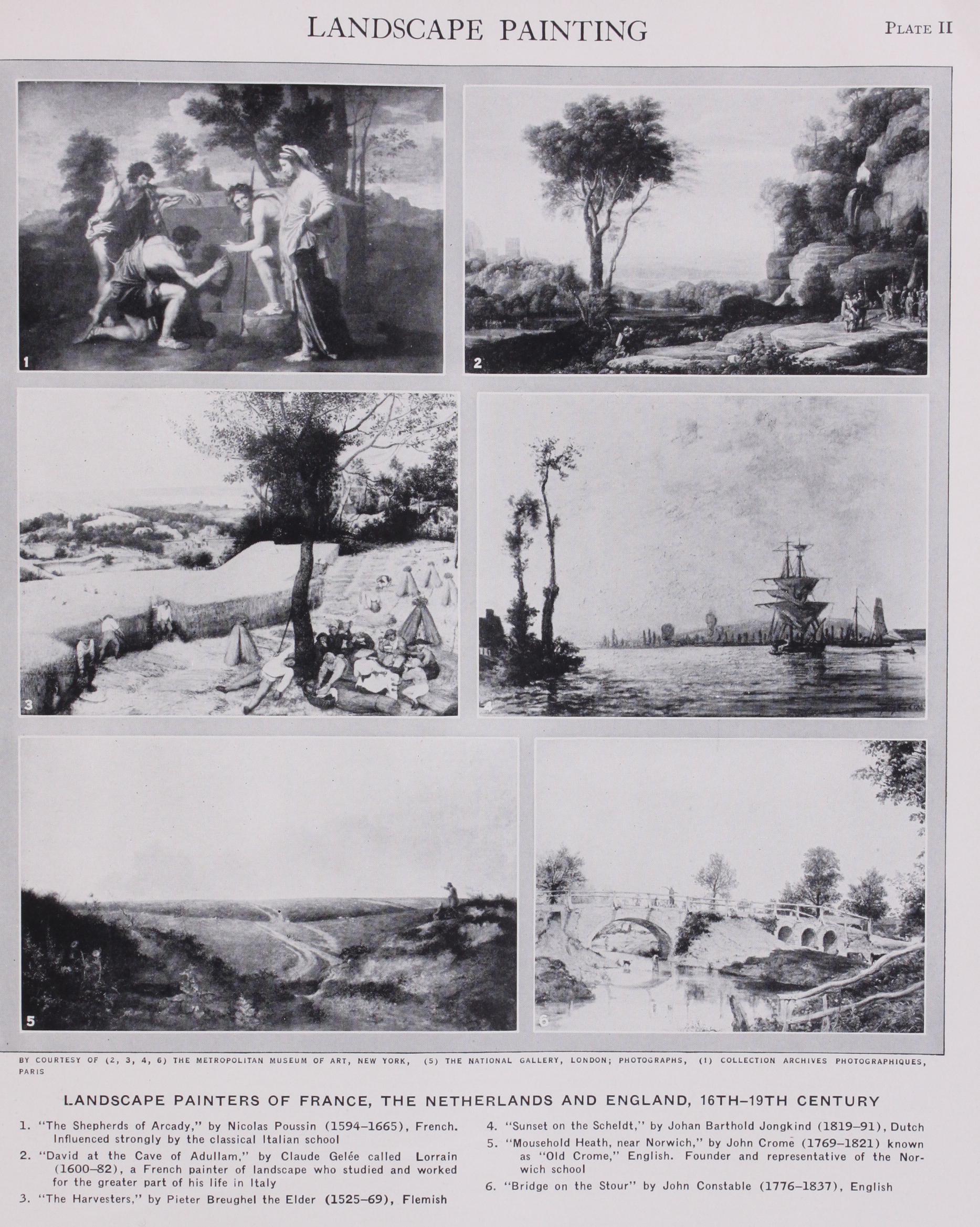
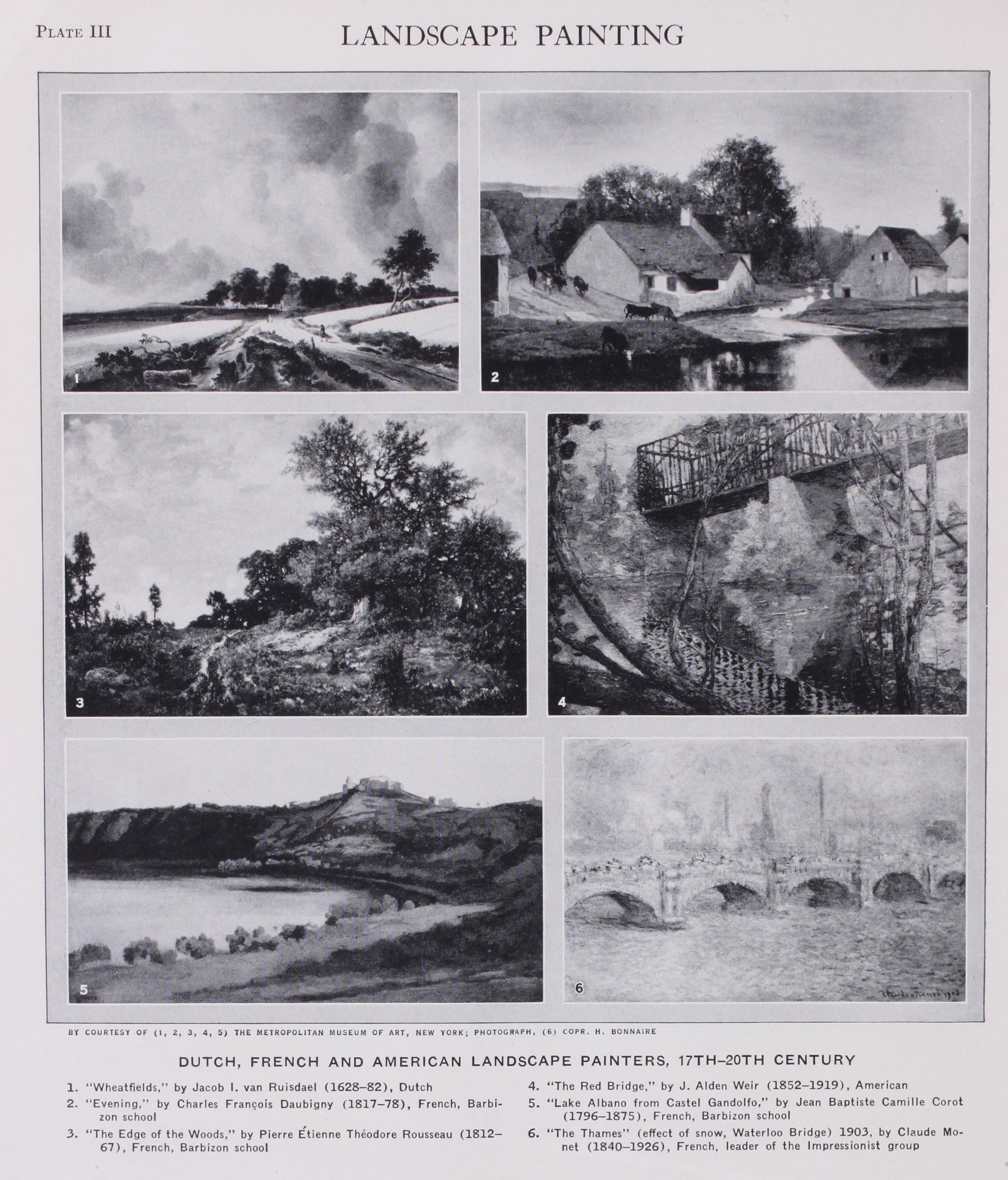
Italy.
In Italy Canaletto (1697-1768) and Guardi (1712-93) of Venice were famous for their Venetian scenes. Salvator Ross (1615-73) did wild savage-looking landscapes peopled with ban dits. Italy produced no pure landscape painters of the first rank. While the art of the Netherlands was developing in the north two artists of French birth were maturing in Italy: Poussin 1665) and Claude Lorrain (1600-82). The latter was a pupil of the landscape painter Tassi whose master was Bril. The French painters inclined far more to Italian influences than did the northern painters, though in the 19th century the Romanist French school sought its inspiration from the Dutch painters. Both Claude and Poussin caused landscape painting to be raised to a place of dignity that it had never previously enjoyed, much as George Eliot raised the novel to a high place in English litera ture. At first sight Poussin seems cold and austere, as masculine as Claude is feminine, warm and radiant, but with intimate ac quaintance one comes to understand that Poussin's was a passion ate temperament held in restraint. His touch was heavy, bold and firm ; he often worked upon a dark red ground. His land scapes depicted ragged ground and sharp contrasts of light and shadow and introduced rolling storm clouds. In his rigid style he recorded nature faithfully and grandly. He considered that the idea to be expressed should first be clearly conceived, then expressed in noble symbols of trees, flowers, sky and mountains. His "Shepherds of Arcady" is one of the treasures of the Louvre. Of Claude, one writer has said, "He was a worshipper of sun light, transmitting ideal expression in an adoration of nature." He worked with indefatigable enthusiasm, staying in the country from earliest dawn until night to learn how to express the blazing fires of daybreak, the setting sun or the falling night. Much ofhis painting he did in the presence of nature. Modern painters highly value Claude as an innovator in going to nature for a revelation of her wondrous loveliness. He is spoken of as "the greatest lyricist of nature." Posterity gives him the pride of place as the innovator of the modern landscape, for the fire of originality found in his approach to landscape painting.
France.—After the superlatively good work of Claude and Poussin, no notable landscape painting appears in France for a long time. The vogue for architectural ruins dwindles and Pous sin's fine painting of "Cherubs" descends to the frivolous painting of Boucher's cupids. Art is led away from nature and follows the dictates of fashion, which was to paint idyllic pictures and of these Watteau's (1683-1721) are most noteworthy. His landscapes have the charm of sparkling colour, a prophesy of modernism to come.
Shepherds and cupids went out of fashion as the Influence of Winckelmann and Lessing aroused Europe to an awakening of the merit of antique art. French art in particular became classic under the patronage of Napoleon (if not classic, at least en amoured of the sterner virtues) and landscape art almost suf fered extinction in consequence of it.
Far East.
Early in the 16th century commerce and the con sequent exchange of thought developed between Europe and Asia. We can guess that the artists of Europe, China and Japan studied the prints of the age and in some degree appreciated the subtleties of each other's art. French art took from the Japanese only what it liked—a delight in lovely contrast of movement.
Until her ports were forced open, Japanese art had been feudal, but with this event the popular and vulgar school of painting arose. It produced Japan's greatest landscape artist, Hokiisai, who did the Ioo views of Fujiyama and other sets of masterpieces in landscape drawing. Hiroshige is the second famous and very fine painter of Japanese landscapes. Some of his work has been compared to Claude's because his colour print landscapes give a revelation of light in a masterly intellectual statement in line drawing.