Lighting in Practice
light, objects and eye
LIGHTING IN PRACTICE The process of depends upon three factors, namely, the eye, the task or objects being viewed, and the light. The human organs of sight are designed to function essentially as a camera wherein the pupillary opening involuntarily enlarges or contracts, corresponding to the camera diaphragm; wherein the adjustable eye lens produces the proper focus and takes the place of the elongation of the camera box; and wherein the network of nerves composing the retina corresponds to the photographic plate or film. Improper lighting may not only be responsible for a bad eye-picture but may cause permanent injury including headaches, near-sightedness, and complicated nervous tensions. The objects viewed are seen because they or their backgrounds reflect light to the eye and would be invisible or dim regardless of the illumina tion on them if they absorb light unduly, or if they occupy less than about one half minute of solid angle, or if they are not in sharp contrast against the surroundings. When luminous radi ation from a, standard candle flame falls on a flat surface one foot distant, then the intensity of illumination on that surface is termed I foot-candle. Outdoors in direct sunlight the intensity
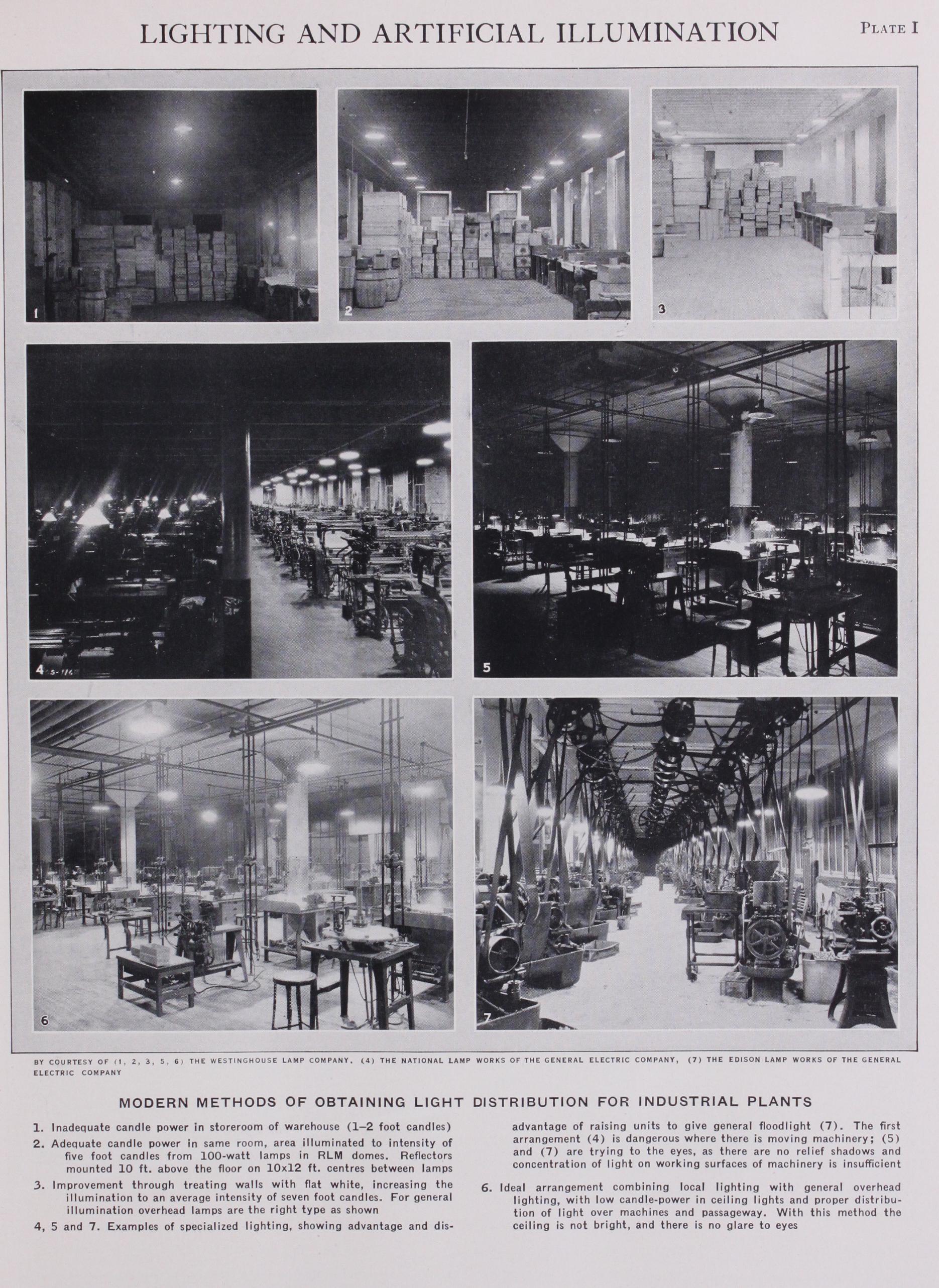
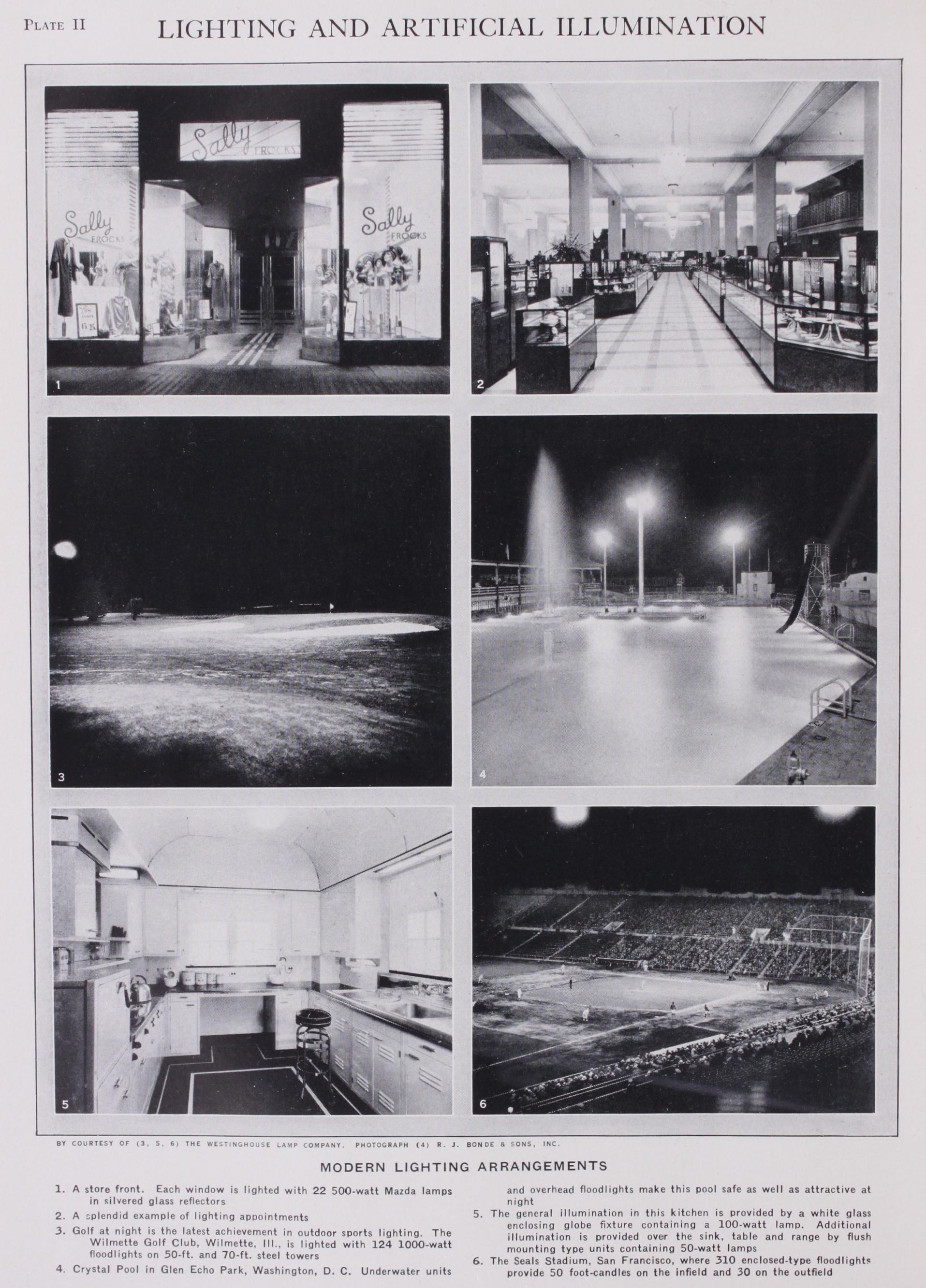
is often io,000 foot-candles and in the shade of a tree or building, i000. Indoors the artificial light provided in schools, offices and factories seldom averages over io foot-candles and in the home may vary from less than i .o in halls and centres of rooms, to 50 on the pages of a book under a good reading lamp. The intensity of moonlight is about .02 foot-candles. Thus the eye can function over a wide range of intensities but it neverthe less has evolved through many centuries to see best under nature's outdoor lighting where the illumination is high, the seeing tasks relatively easy because objects are large and usually at fair dis tances, and where normally the source of light is not in the field of view. Indoors man has imposed extraordinarily heavy tasks upon his eyes by changing from distant to close vision ; by com plicating the seeing task with small objects, and by attempting to use a small fraction of the amount of light under which nature has developed the eye-camera.