Building Construction
fig, beams, sill and tier
BUILDING CONSTRUCTION In the East, spruce and hemlock are commonly used in the framework of cottages, and occasionally oak in the better class of buildings. In the South and West, other materials indigenous to the par ticular locations are employed.
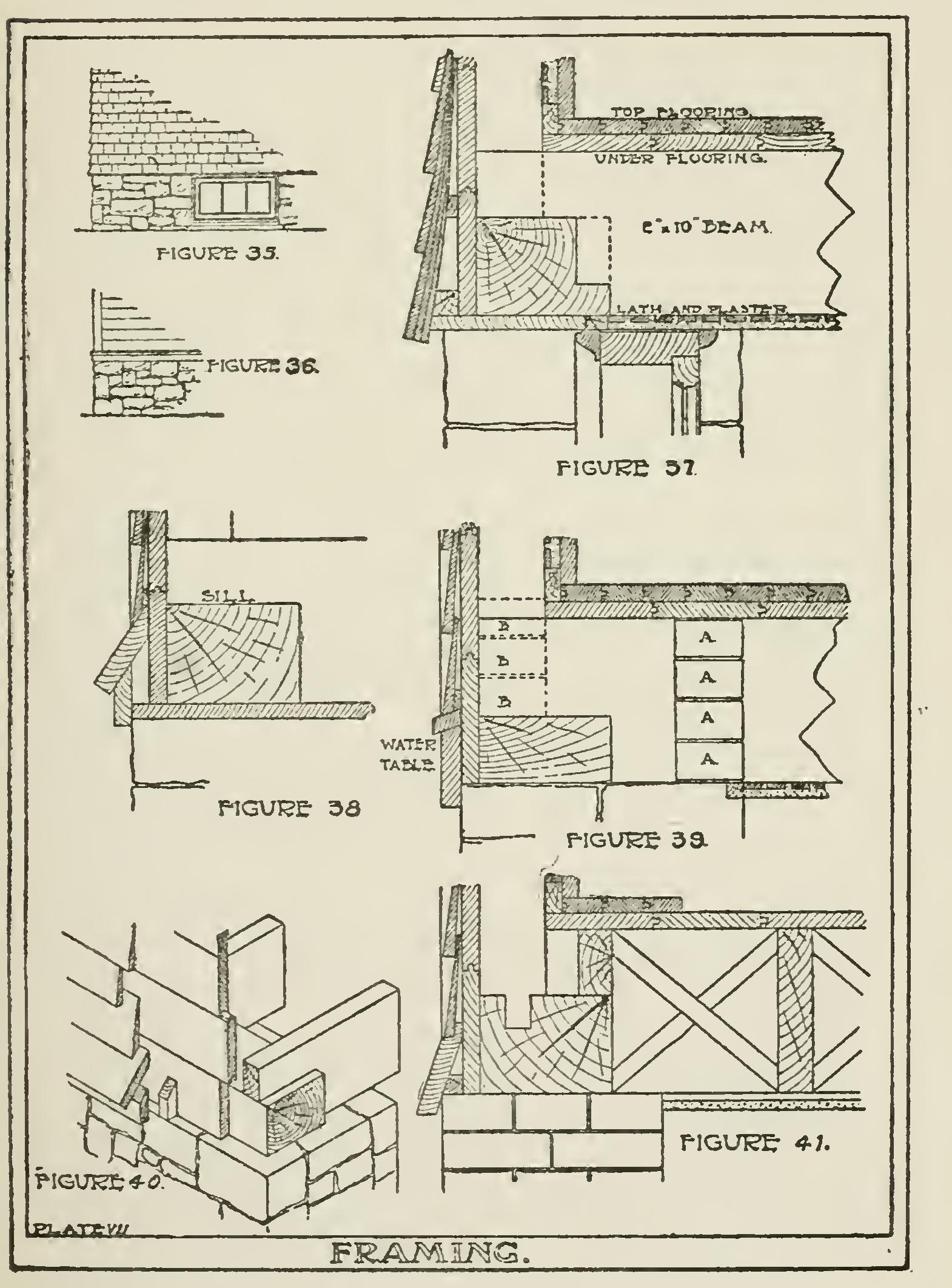
Fig. 35 shows the use of shingles for the exterior covering of a house, and Fig. 36 illustrates the use of clapboards.
Fig. 37 is a section showing the construction of the framework at the first tier of beams. The main sill is the first piece of timber to be put in place, and should be well bedded in mortar on the walls so that it may have an even bearing at every point. It should have a halved joint at all corners, and if splicing is necessary, it should be done by means of a scarfed joint. This cut also shows a base course of shingles. Three forms of base courses, where clapboards are used, are shown in Figs. 38, 39 and 41.
At "A, " Fig. 39, is shown a fire stop of bricks laid between the floor beams, which should never be omitted. It also serves as a stop for wind and vermin. It is frequently built on the sill as indicated by the dotted lines at "B. " Fig. 40 shows an isometric view of the base of the framework.
Fig. 41 shows the cross bridging between the floor beams. There should be a row of cross
bridging for every eight feet of span. This cut also shows the studs mortised into the sill, a con structive feature only used in the best grade of work.
Fig. 42 shows an elevation at the corner of a building, from the sill to the rafters. The girts are mortised and tenoned into the corner posts and pinned with hardwood pins. The braces are mor tised and tenoned into the corner posts, sills, girts, and plates, and are pinned with hardwood pins.

The second tier of beams are notched over the girts, the ribbon strips, or ledger boards, as they are also called, are notched one inch into the studs, braces, and posts, and should be well spiked. The third tier of beams should be notched over this ribbon strip.
All timber should be sound, well seasoned, and free from any imperfections materially impairing its durability or strength, and should be set with the crowning edge up.
Care should be exercised in framing so that im portant timbers will not require cutting for pipes, chimneys, etc. All timber should be kept at least two inches from the outside of the chimneys, and in no case allowed to rest on the chimneys.