Roof Framing Simplified
cut, hip and shown
The lengths of the rafters are given from the edge of the plate to the center lines, as shown by the dotted line on the hips and valleys. There fore, for the common rafters a reduction should be made for one-half the thickness of the ridge piece, by measuring square back that amount from the plumb cut.
It is not necessary to make any reduction for the jacks that rest on a plate, because the lengths given, if used for the long side, will make the jacks space all right, since the length is sup posed to be taken along a line at the middle of the back. But a reduction equal to the diagonal of the thickness of the hip or valley should be made for the jacks that come in between a hip and valley. This also applies to the side cut of the hip where it rests against the ridge piece, by deducting half of the thickness of the diagonal of the piece. However, this is of small concern; and more than likely the variation, if not made, would go unnoticed.
In this example are shown some self-support ing hips and valleys, formed by letting one run by the other to a solid bearing. This is an im portant matter, which is too often overlooked; and consequently a sagged roof is the result.
There are other points about this plan that might be brought out. The figures to use on the square for a one-foot basis are as follows : 12 and 10—Seat and plumb cut of the common and jack rafters.
12 and 15 7/12—Side cut of the jack. 5 and 15 7/I2—Side cut of the jack.
13 and 10—Seat and plumb cut of octagon hip. 17 and 10—Seat and plumb cut of hip or valley. 17 and 19%—Side cut of hip or valley.
The study of a rafter plan like this is valu able, for it contains practically all the elements of any roof.
A
Common Mistake. We wish to make a small note right here which may set right some of the younger members of the craft and a few of the older heads who have never paid any at tention to it. It is in the manner of adding the projection for cornice. Fig. 58, at the shows the wrong way, and makes the rafters too short, causing the ridge joint to open as shown in the middle part of the figure. The right way of get ting this length is shown in the right-hand part of the figure.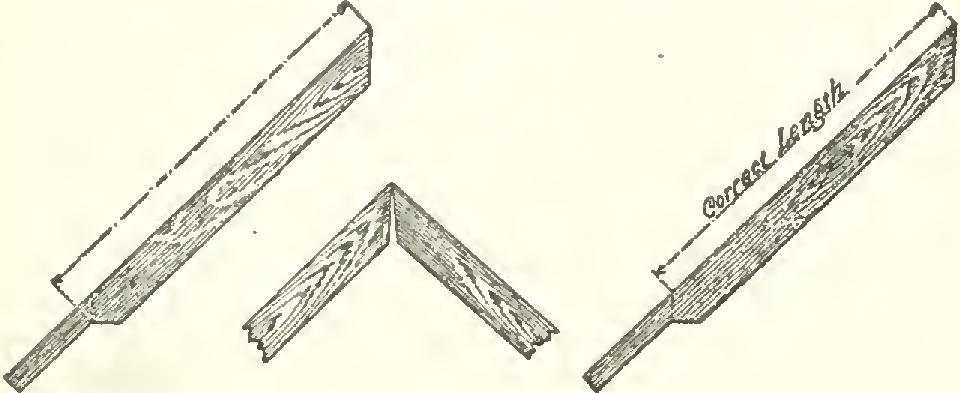
Fig. 58. Wrong and Right Methods of Figuring Rafter Lengths.