Strong Purlin Post Bracing
barn, center, fig and girder
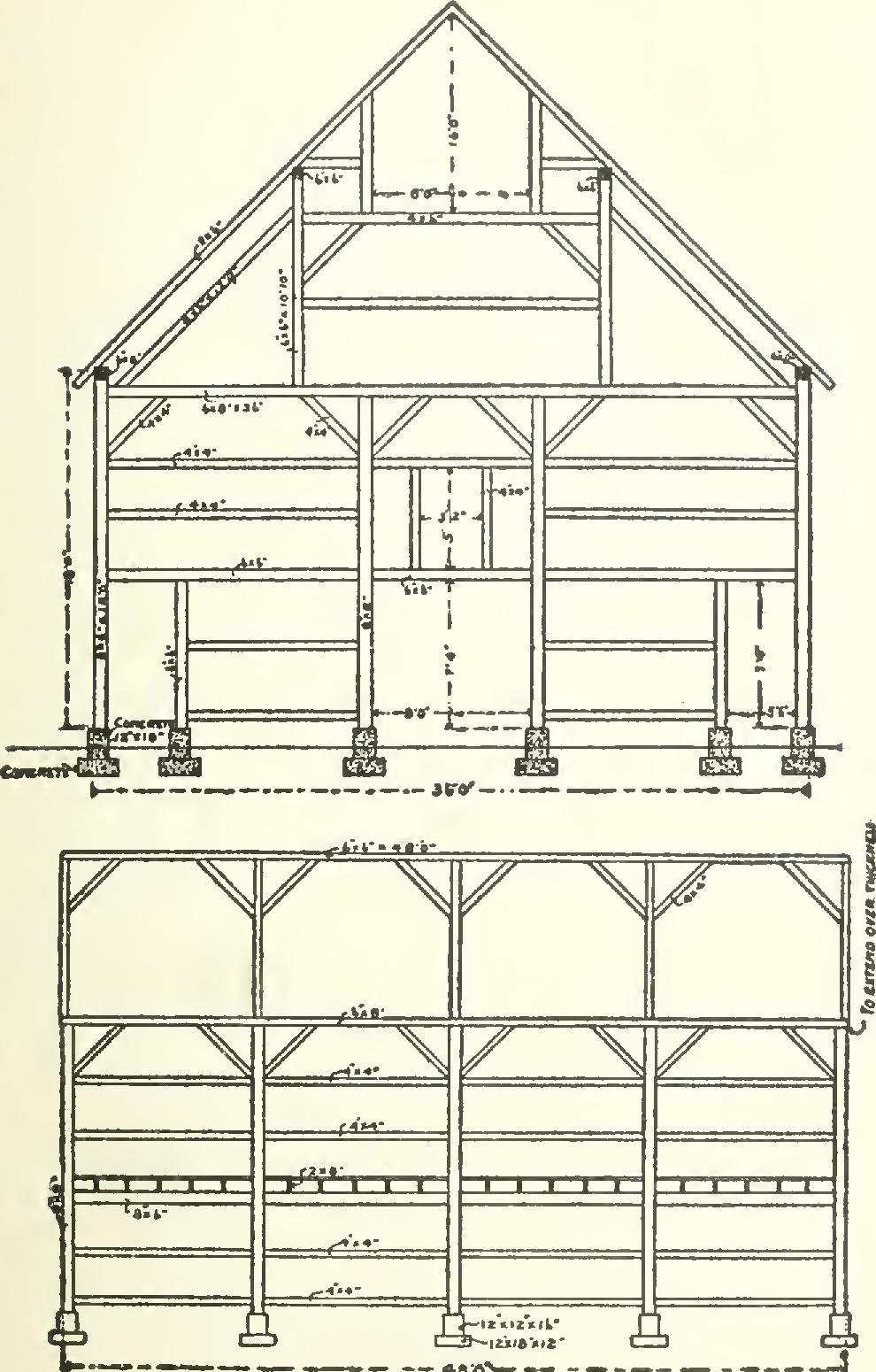
STRONG PURLIN POST BRACING. Fig. 124 shows a method of framing the center bents of a barn, Fig. 124. Center Bent, Showing Purlin Post Bracing.
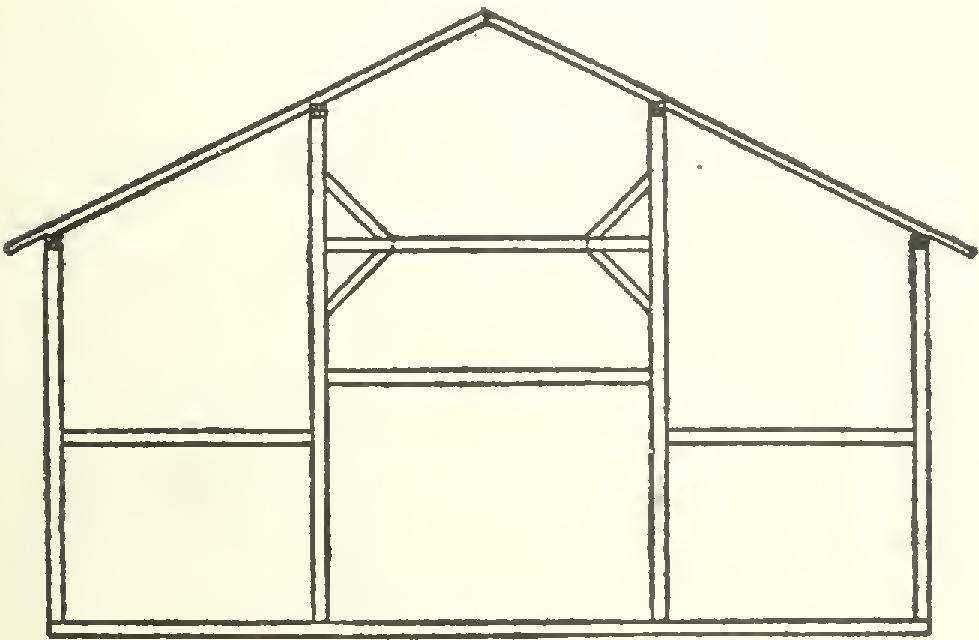
which is especially adapted to barns having flat roofs and equipped with hay carriers. A very strong bond is needed in such barns between the purlin posts, to prevent the excessive weight placed on the top rafters by the hay carrier from spreading them apart. The girder is also low enough for the loaded hay carrier to pass over it.
There is no girder between the top of the shed post and the purlin; for, when the purlins are framed as described, there is no need of rig. 125. Mortise Joint for Cross-Tie.
such a girder, as the rafters will hold the shed post to its place if it has a tie at the bottom and a loft tie up some 8 or 9 feet. Of course, where the barn is extremely high, it is well to put in this girder.
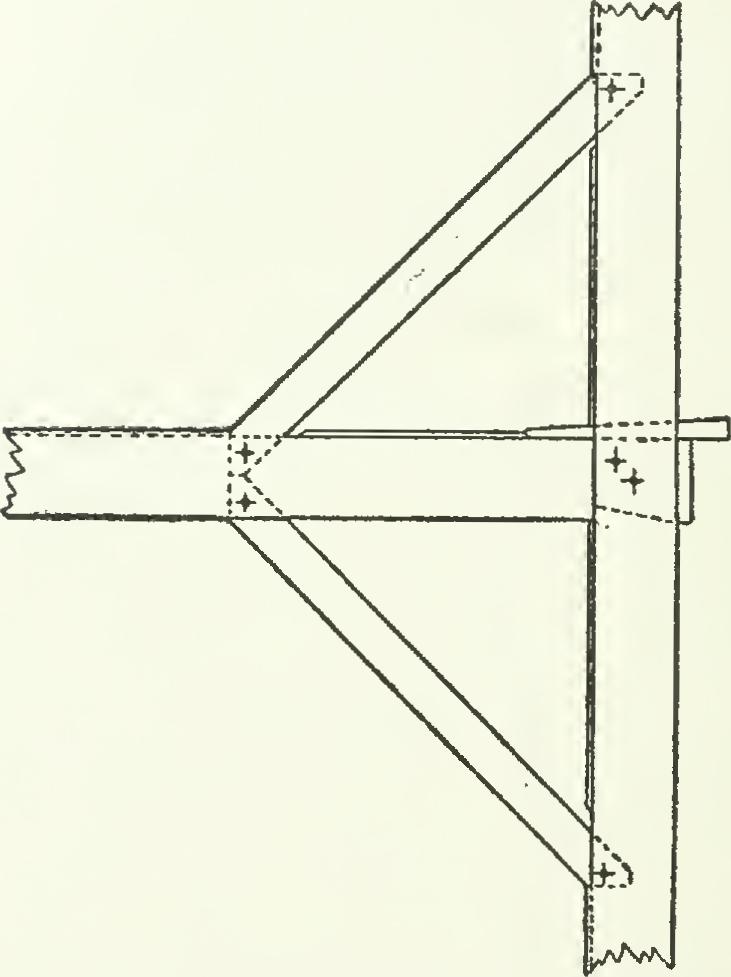
Fig. 125 shows a section of the purlin post, center girder, and braces, drawn to a large scale to illustrate the method of dovetail mortise joint used.
Expert advice was asked not long ago con cerning the best method of construction for a barn somewhat similar to this one. It was to be a barn for 50 acres of land; its dimensions 26 by 46 feet, and 18 feet to plate, with a solid concrete wall under the entire barn. Would it
be advisable to use big timbers mortised and 07063 cSEcrion.
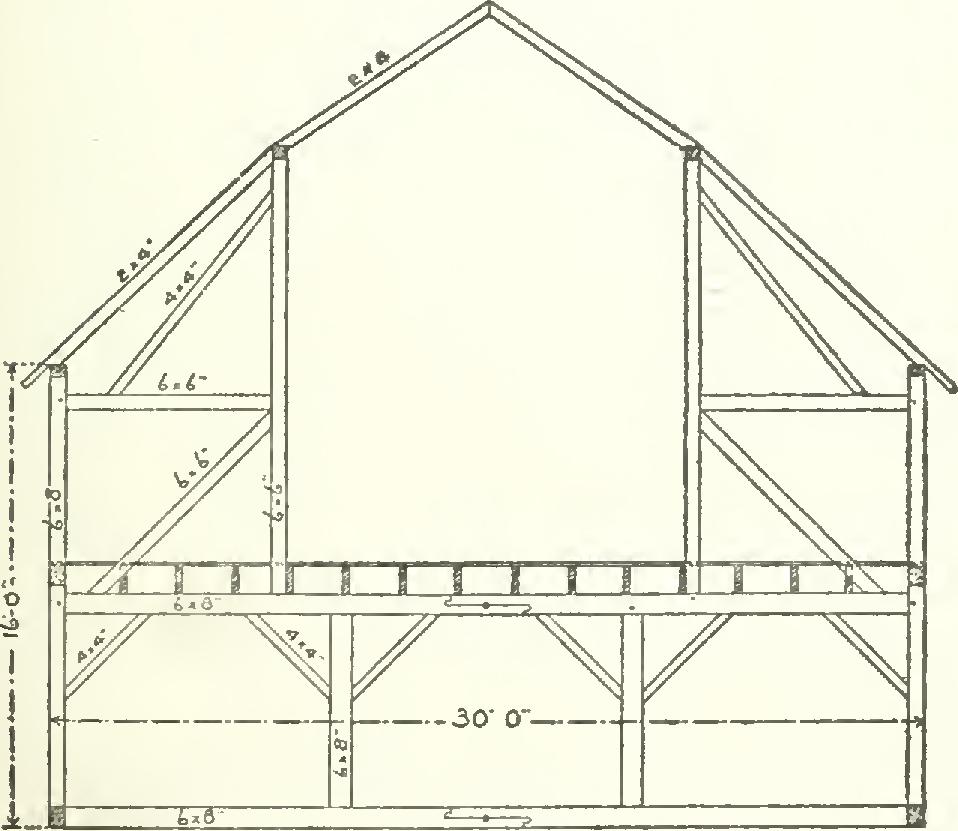
Fig. 126. Center Bent of Hay Barn.
tenoned together, or a balloon frame with 2 by 4's placed on 2-foot centers and sided with pat ented siding? How should it be tied together? Would 2 by 8 inches, 26 feet long, be all right with tight mow floor over all except driveway? Will 2 by 6-inch rafters be all right for that width to be used with a shingle roof'? These were the points inquired about. As this barn is not large, it would not be necessary to use heavy timbers, except for the sills; and for this, not more than 6 by 8 inch, properly Fig. 127. Center Bent of Hay Barn.
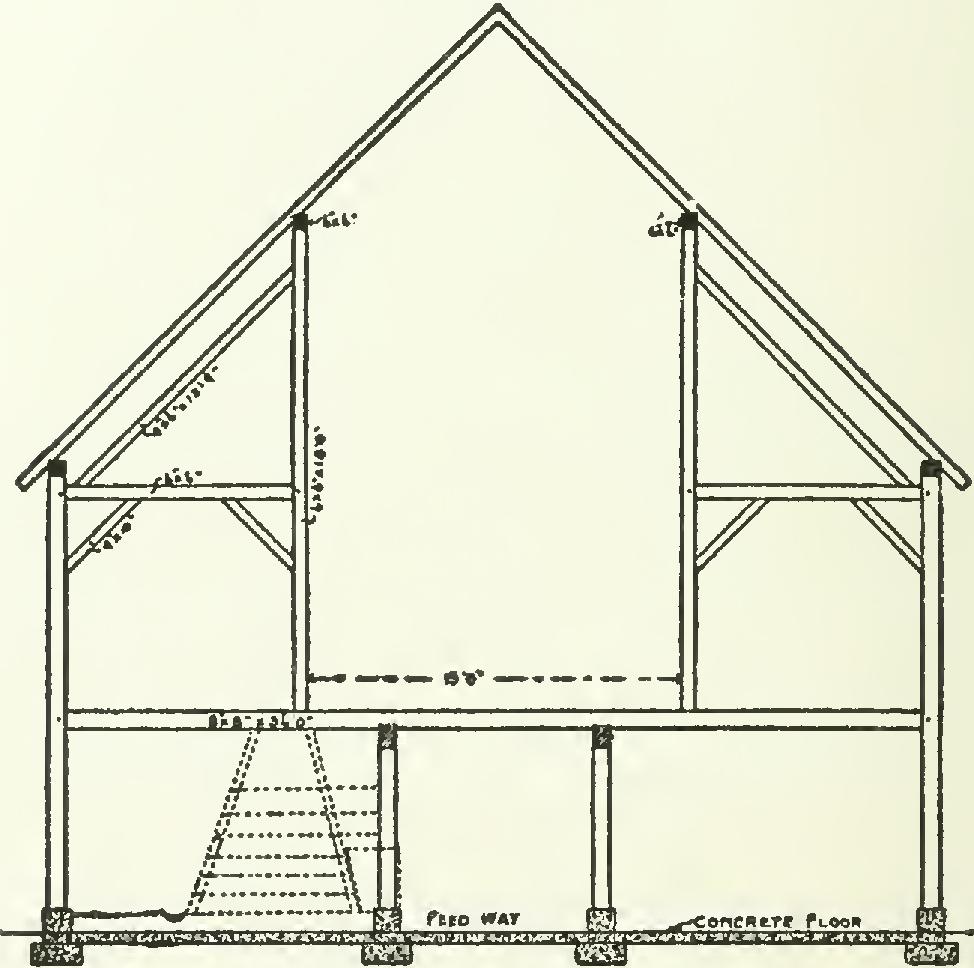
framed and anchored to the concrete with bolts. Two-by-four studding set on 24-inch centers would be all right, but heavier than 2 by 8-inch joist should be used for the hay-mow floor, unless there is to be a support through or near the center. About every third studding above Fig. 128. End and Side Wall Framing for Hay Barn.
the hay-mow floor should be tied with braces to the joist to prevent spreading of the walls. Two by six-inch rafters set on 24-inch centers will be amply heavy for this roof for all that will be required of it.