Concrete Bridges
bridge, steel, time and built
Taking the qualities of strength and stability first, it is easy to show the advantages of rein forced concrete construction. Reinforced con crete is now well understood, and designs may be made upon a rational basis, the steel carrying the tensile stresses, and the concrete the com pressive stresses. The steel is well protected and can never deteriorate, while the concrete gains in strength as the years go by. The mass and weight of the concrete work make it proof against vibration and the danger of floods and winds.
The first cost of reinforced concrete bridges is slightly greater than that of wooden bridges, about the same as that of steel bridges for short spans, and considerably less than that of stone bridges. The analysis of comparative costs is thoroughly treated in the article on "Compara tive Cost of Concrete Bridges." The cost of maintenance is a large item for wooden and steel bridges, and both kinds must be renewed within 10 to 25 years; the mainte nance cost for a concrete bridge is nothing, and the bridge should last forever.
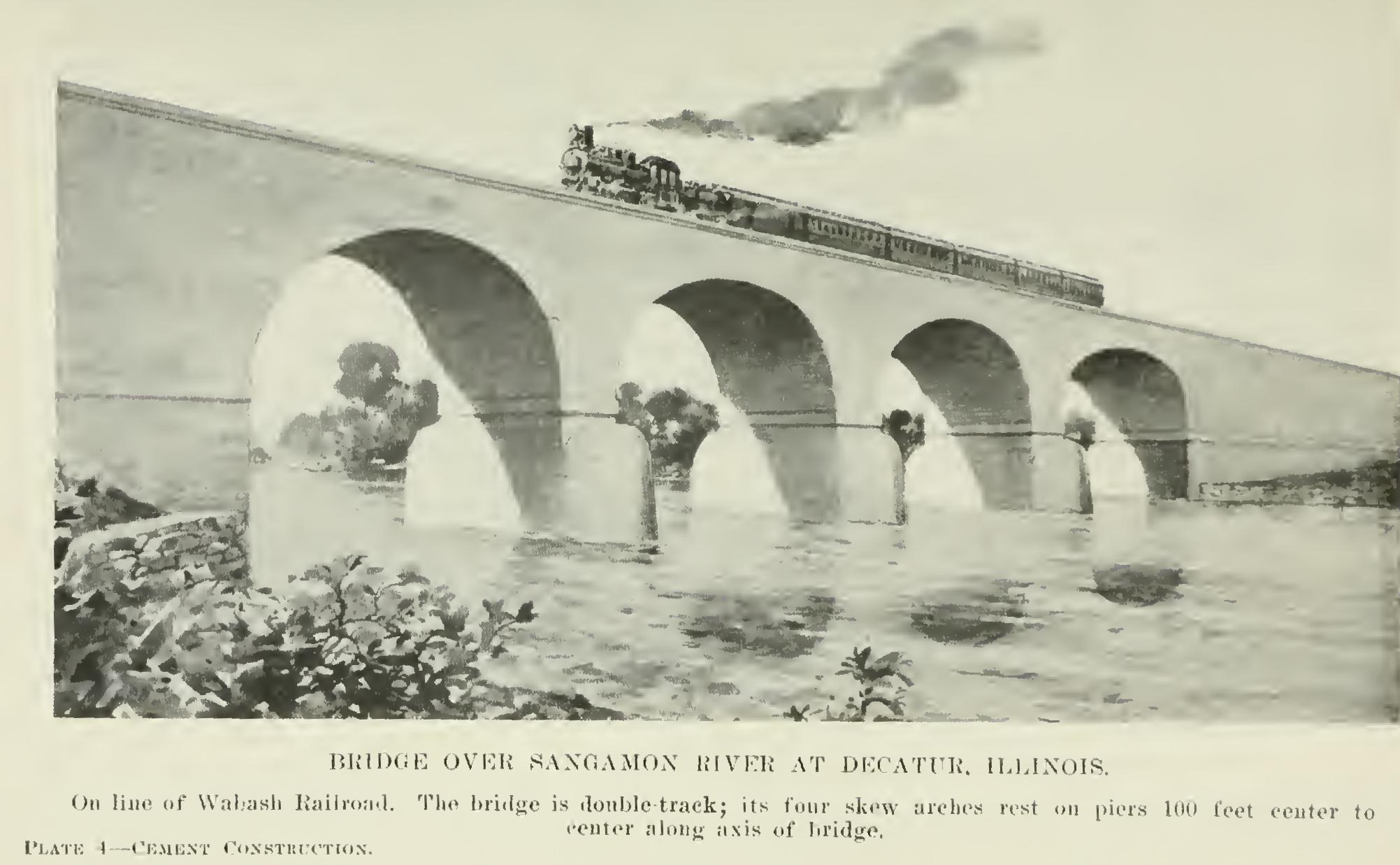
A bridge company which makes a specialty of reinforced concrete highway bridges adver tises the following advantages for this type of construction: A properly constructed concrete bridge is absolutely indestructible.
A concrete bridge is the only bridge that grows stronger with age.
As time passes, traffic on our highways grows heavier ; steel and wooden bridges grow weaker ; concrete bridges grow stronger. To build a concrete bridge, then, is just
plain common sense.
Portland cement is the most perfect coating known for the protection of steel.
A concrete bridge provides a continuous gravel road way. floors for bridges are an expensive nuisance. Concrete bridges require no floor renewals.
Concrete bridges are rust-proof, frost-proof, flood proof, and fireproof.
Concrete bridges require neither painting nor repairs. Concrete bridges are permanent improvements.
A concrete bridge can be widened at any time without re-building.
To make a bridge flood-proof, pave the bed of the stream to prevent scour, and then build the bridge in a solid monolithic mass so that it will stay.
A concrete bridge once built, is built for all time.
Concrete bridges are built with labor hired from the immediate vicinity of the bridge ; with gravel or stone purchased in the immediate locality; and with cement secured from local agents. The greater part of the ex pense for such a bridge is thus returned to the county.
The money that taxpayers expend for a concrete bridge is returned to the taxpayers for labor and mate rial.
The beauty of horseshoe concrete arches lies in their common sense.
Concrete bridges are the handsomest for park bridges, the most durable for highway bridges, the most service able for railway bridges.
Bridges built of concrete will endure as monuments for all time.