Reinforced Concrete Brick Struction
rods, cement, building, bricks, blocks, metal and frame
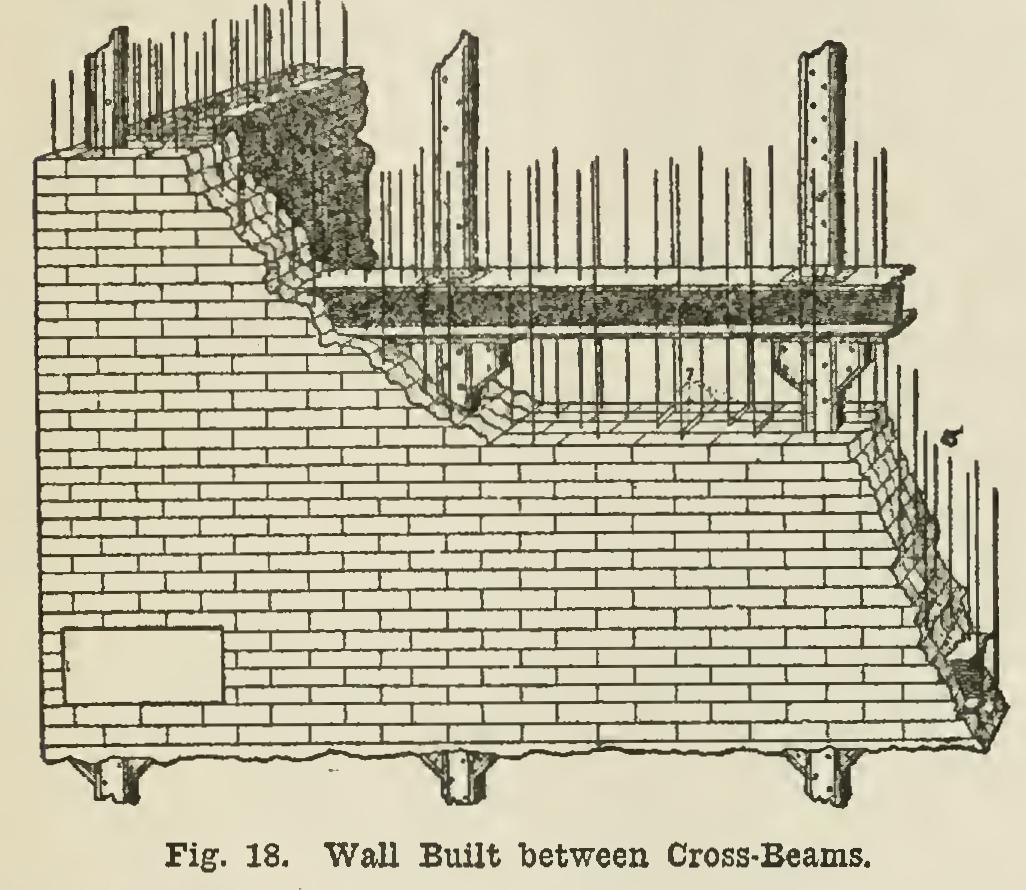
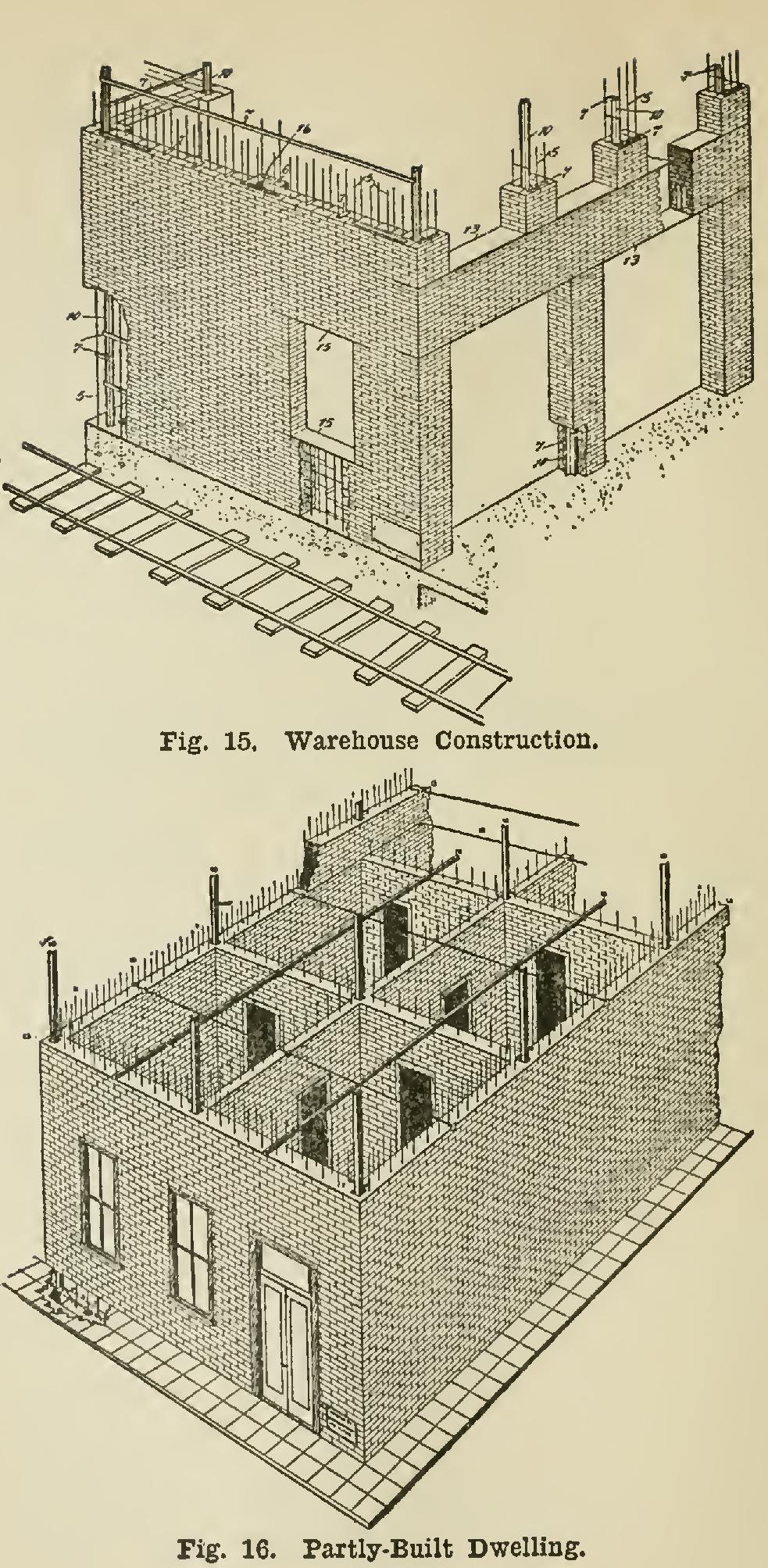
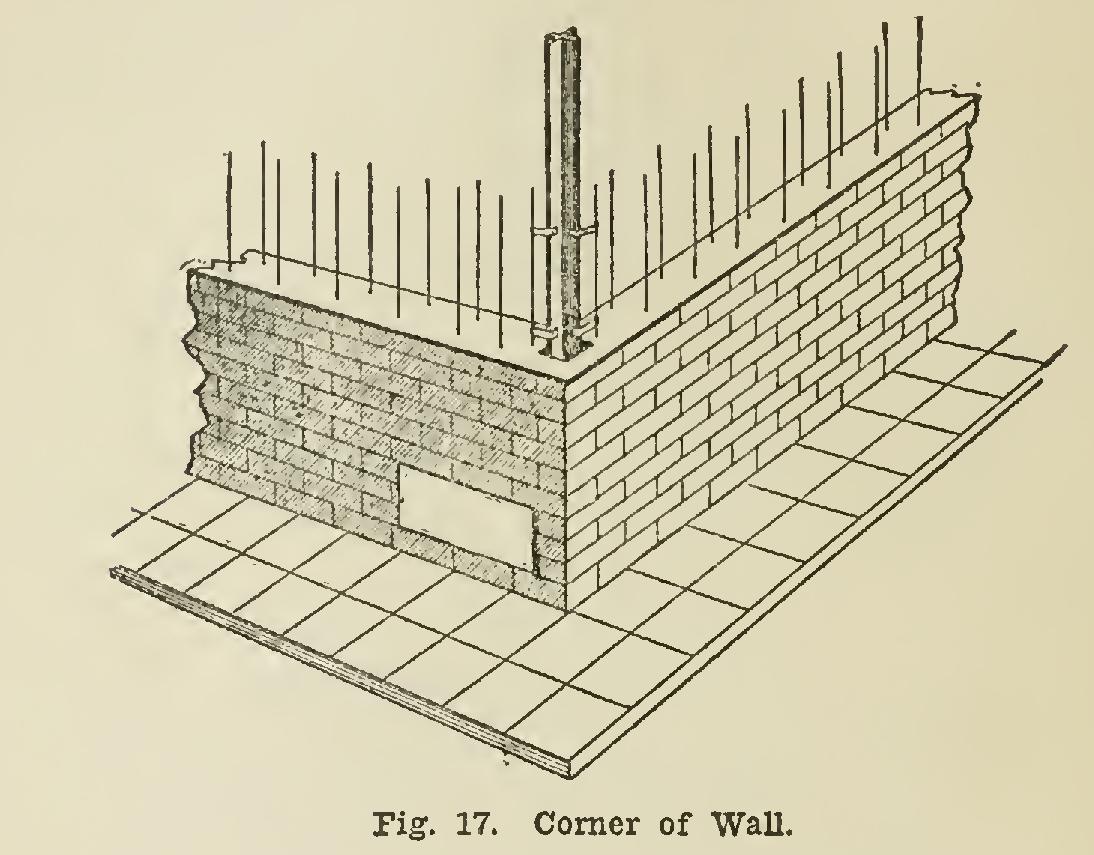
REINFORCED CONCRETE BRICK STRUCTION Joseph A. Hofmann, a California inventor, has offered to the building world a system of reinforced brick construction that has been adopted already by many builders who seek a system of construction that will defy earth quakes and other violent forces. His system pro vides for a perforated cement or clay brick which, when placed in a wall and strung on rods, so to speak, will hold the wall in one mass against any force that may be brought against it. In regard to his system, Mr. Hofmann says: "These bricks or blocks are laid up in usual break joint courses, with a suitable filling of cement or cement mortar and metal rods passing through the bricks or blocks and between the blocks. These rods are com posed of sections, each four or five feet long, so the brick layer can pass the bricks over the rod in laying them, and are firmly embedded in the foundation, in various ways ; and as the courses reach the end of the section of the rod, another section is added to it by welding, or screwed in a socket connection, or otherwise; the rods being bonded together by a bond-iron. Where the bond irons (which are made of wire) are used, they fit in a groove. Where flat bond-irons are used, they, being thin, are laid between the bricks either horizontally or ver tically; the bond-irons are made with eyes or perforations, through which the rods pass. See Figs. 14, 15, 16, 17, and 18.
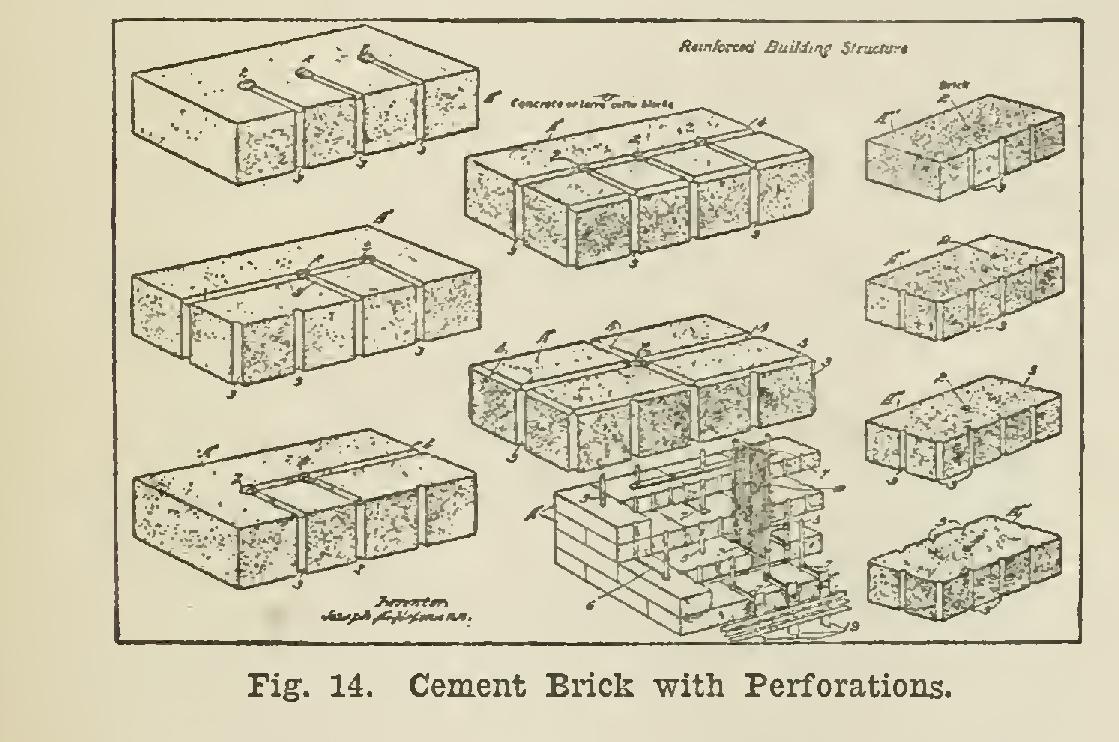
"The bricks or blocks may be made either of clay, of cement, or of other material of suitable size and shape, with the perforations of any size or shape, in the center or elsewhere. The rod may be made of steel, iron, or other material of any size or shape desired.
"When the top of the building is reached, the rods pass through a plate of steel, or iron, or other material, of suitable thickness, and are then riveted or bolted firmly, or fastened in any other way most convenient.
"When piers are to be built, as at the corners or elsewhere, a hollow space is left, in which is placed a metal column, which is cruciform in cross-section. This column is bonded to the bricks by the bonding ties, the rods passing through the eye at one end and being riveted at the other end to the column, the edges of the column being shaped to fit the corresponding vertical grooves in the adjacent blocks and the space left open for gas or water pipes if desired, or filled in with concrete or cement.
"This structure is particularly adapted for use in conjunction with a steel frame which is provided with lateral projecting plates at suitable intervals, say at each story, which extend part way between the courses of the brick, and are perforated so as to pass the vertical rods. The walls, being strongly braced across at each story by heavy metal rods or girders, give increased rigidity to the structure, especially in very tall buildings, the above plates being firmly welded, bolted, or riveted to the cruciform columns or steel frame.
"At a window opening, the frame carries the top and bottom plates ; at these window openings the vertical rods are cut and riveted, bolted, or fastened to the plates in any way desired. At occasional intervals the steel frame is bonded to the vertical rods by the bonding ties.
"The pier columns can be arranged at greater or less intervals in a long wall, according to the character of the building and the strains it may have to undergo, and also when needed to act as a flue or flues for a chimney when the metal column is left out.
"A structure bonded together in the manner indi cated, and laid in the best cement or cement mortar, the joints being well grouted, has the extreme of rigidity and staunchness, and is capable of withstanding the severest shocks, twists, strains, and vibrations, rendering the high est buildings proof against the forces of the heaviest winds and storms.
"The partitions betwaen the rooms and hallways can be built of brick, making the structure thoroughly ilre proof ; and they may be supplied with metal doors, con crete floors, ceilings, etc.; also insuring a sound-proof and vermin-proof building.
"This style of building is particularly adapted for warehouses, dwellings, flats, tenement and apartment houses, at about the same cost as that of an ordinary well-built brick building, and a good substantial struc ture is assured, making it as safe to live in as any frame house or building during an earthquake or cyclone."